





















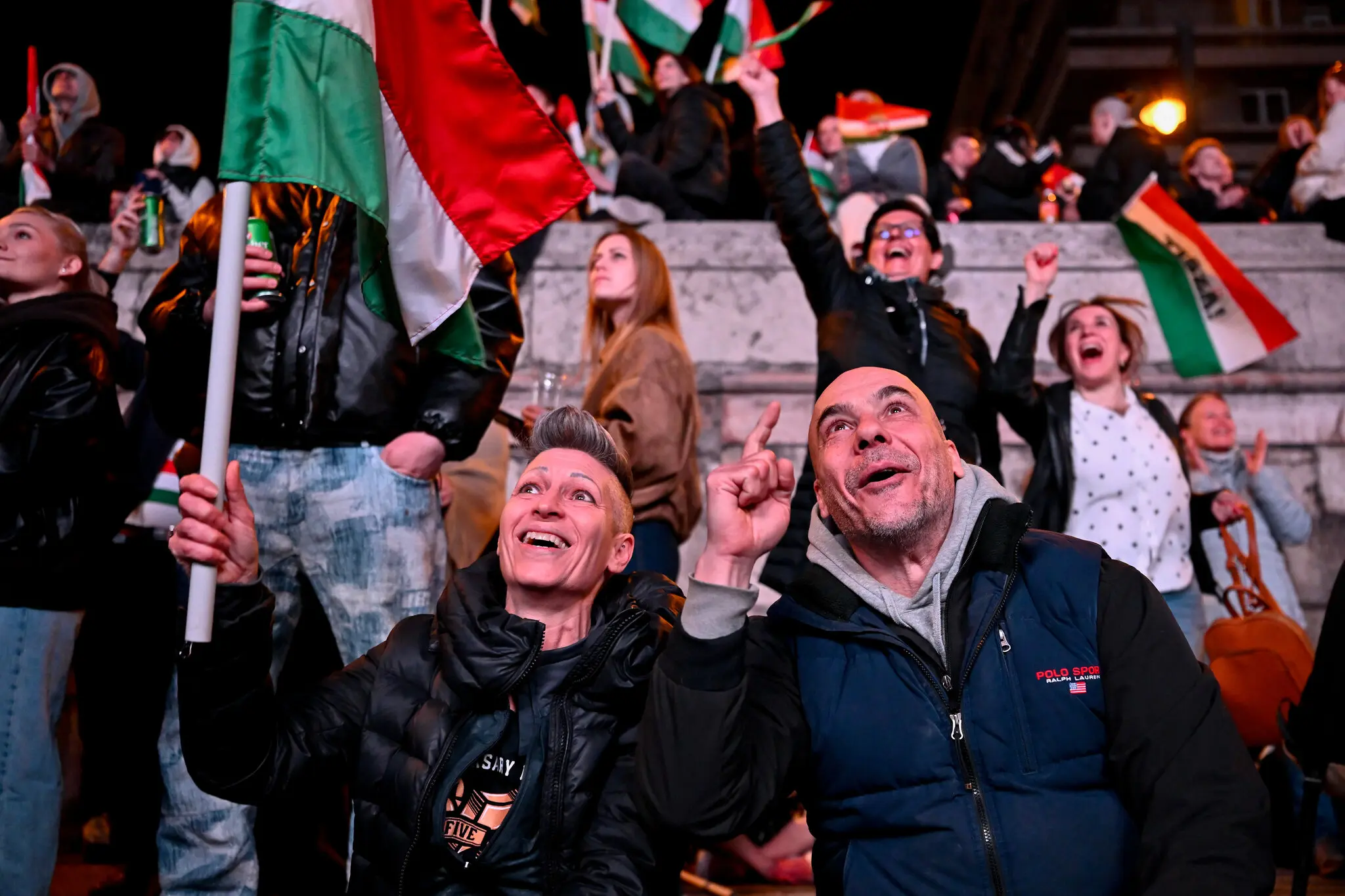
Viktor Orbán did not truly lose the moment he lost his majority. He lost the moment he stopped looking politically inevitable. That is the real meaning of Hungary’s election on April 12. After sixteen years in power, the man who had become a symbol for right-wing populists in Europe, the United States and Latin America was forced to concede defeat before the full count was complete.
The arithmetic of the vote only illuminated a deeper process. Turnout rose above 77 percent, the highest in Hungary’s post-Communist history. In systems built on a stable governing core, that kind of mobilization usually means that not only disciplined loyalists came to the polls, but also those determined to move the regime. For Orbán, that was especially dangerous because his model had long depended not just on support, but on convincing voters that the alternative was weak, fragmented or doomed in advance.
This time that psychological monopoly broke. The opposition no longer looked like a club of permanent losers. It looked like a force that could win. And once voters stop treating power as inevitable, even the most polished political machine begins to weaken faster than its formal levers would suggest. As Daycom noted in earlier analysis, systems of this kind rarely crack because of a single scandal or a single bad campaign. They begin to fail when public discontent stops being diffuse and acquires a political form that can no longer be dismissed as marginal.
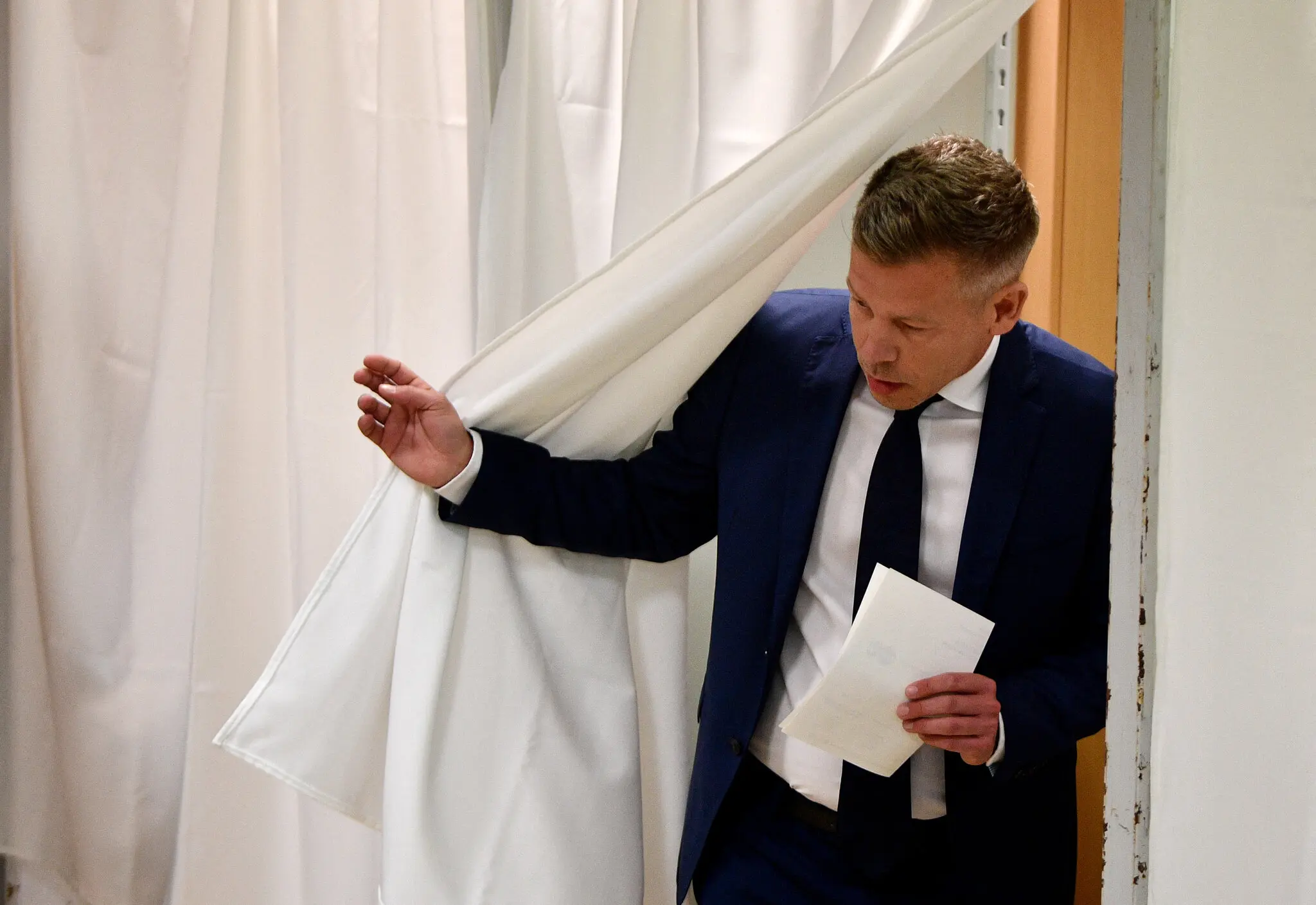
Péter Magyar became dangerous to Orbán for exactly that reason. He did not arrive from outside the world Orbán had built. He came from within it. He understood its language, its rhythm, its vulnerabilities, and he spoke to voters not as a moral lecturer from the liberal opposition, but as a former insider explaining why the system no longer worked even for the country it claimed to protect.
In that sense, this was not an ordinary change in the party cycle. It was closer to the collapse of a political formula Orbán had spent more than a decade exporting as a model of success. His “illiberal democracy” rested on several pillars at once: a subordinated media ecosystem, loyalists installed in courts and quasi-independent agencies, an electoral structure tilted toward the ruling party, permanent mobilization against external enemies, control over the distribution of resources, and a rhetoric of cultural siege. For years it worked because it seemed to offer voters a simple exchange: less institutional freedom in return for stability, identity and predictability. The election showed that this bargain had run out.
The reason was not ideological fatigue alone. More important was the everyday dimension. Orbán spent years telling Hungarians that only he could protect the country from migration, Brussels, war, “gender ideology,” liberal elites and geopolitical disorder. But the longer such a system lasts, the more it risks colliding with a simple and corrosive question: if the state is so strong, why does ordinary life feel increasingly weak? That was where Magyar struck most effectively. He did not build his campaign around abstract anti-Orbánism. He gathered what had been accumulating for years: corruption, decaying public services, hospitals, stagnation, damaged relations with the European Union, and the sense that the country had been trapped inside a system working primarily for a narrow circle of insiders.
Corruption proved especially toxic for Orbán. His regime could withstand outside pressure, conflict with Brussels and even international isolation so long as it retained control at home. But when corruption stops sounding like an opposition cliché and starts being experienced as the daily mechanism of injustice, it undermines not just the reputation of power but its moral claim to historical purpose. A government that speaks constantly about sovereignty and national dignity then begins to look like a machine for redistribution in favor of its own network.
What makes the result even more consequential is that Orbán lost despite the system he had spent years calibrating for self-preservation. Even a few days before the vote, it seemed possible that a Tisza lead in the polls might not translate into parliamentary dominance because single-member districts, media asymmetry and the administrative machinery still gave Fidesz a serious structural advantage. That is why the outcome is so destructive to the Orbán myth itself. It shows that a political wave can become large enough to overwhelm even an electoral architecture designed to protect the ruling power. When a party that controlled the rules of the game loses this convincingly, the erosion has gone deeper than even its critics may have assumed.
But that does not mean Orbán’s system disappears with his government. The most important lesson of this election is that governments can change faster than states do. Over the years, Fidesz embedded itself in the judiciary, regulatory institutions, the bureaucracy, the media market, the business sphere and even in the habits of political administration. Magyar’s victory may therefore mark not the end of an era, but the beginning of a far more difficult struggle: how to govern a country in which the old power has already lost an election, but its institutional imprint remains everywhere. Even a commanding parliamentary majority would not guarantee the rapid dismantling of what Orbán spent sixteen years constructing.
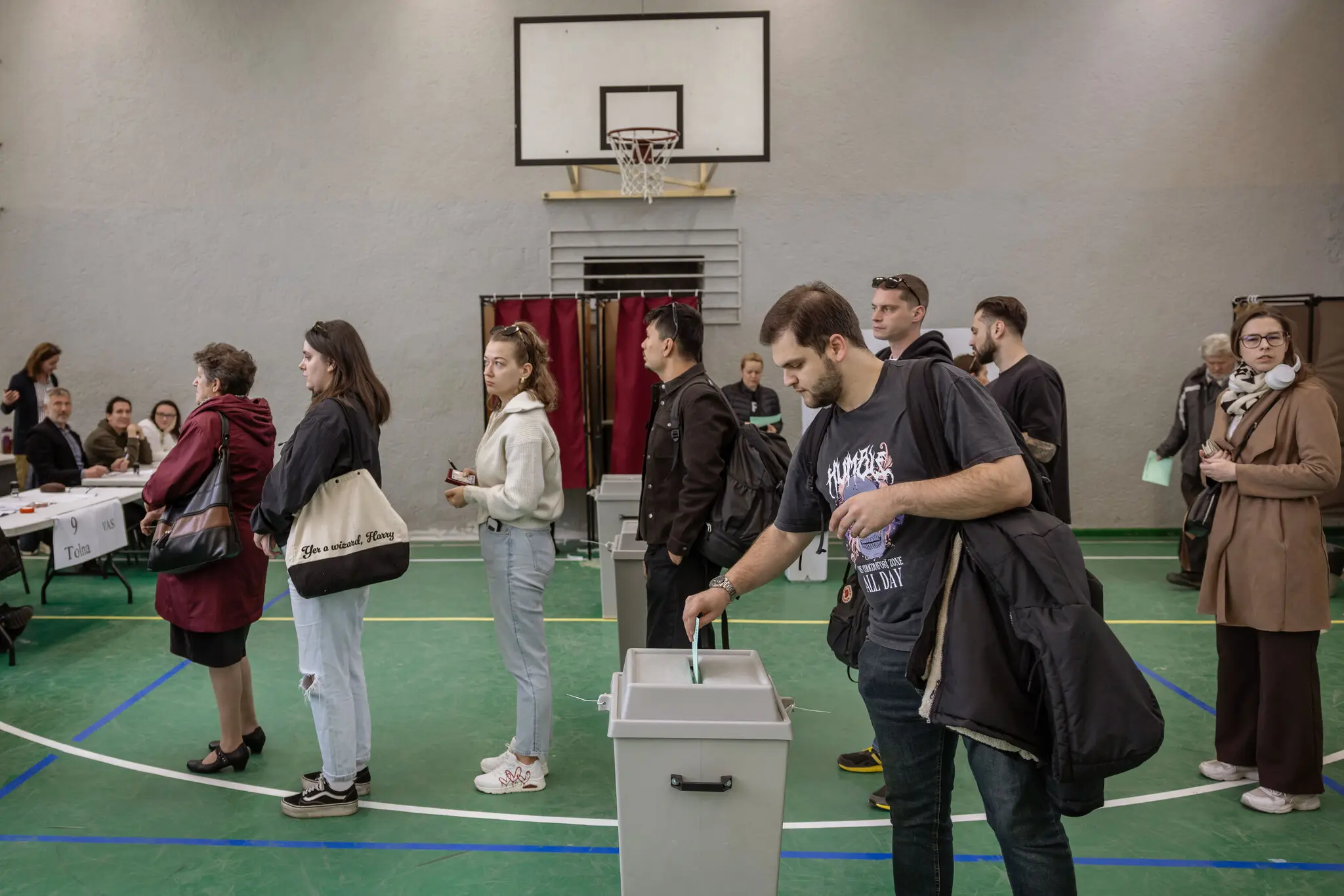 Повідомляється, що явка виборців була дуже високою. Виборча дільниця в Будапешті в неділю — Янош Куммер
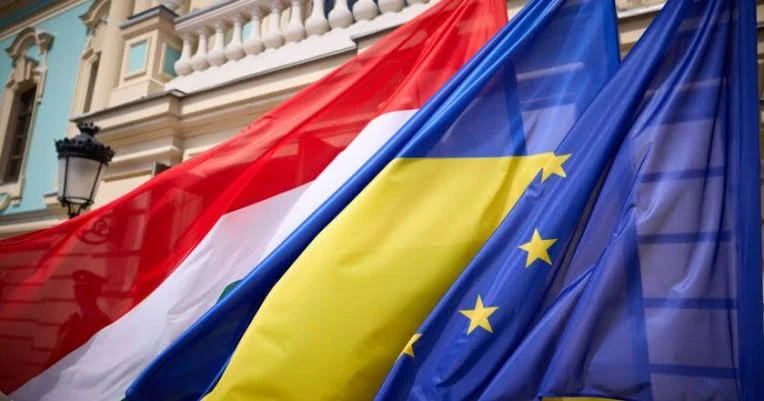
The external consequences are no less important than the domestic ones. For the Kremlin, Orbán was not merely a partner. He was an especially valuable voice inside the European Union, someone able to slow assistance to Ukraine, dilute sanctions packages and repeatedly promote the idea that the chief threat to Europe came not from Russia but from Ukraine and Brussels. His defeat does not automatically transform every European decision. But it clearly means that Moscow loses one of its most convenient political channels inside the EU. For Kyiv, that is one of the most important indirect consequences of the election: even if a new Hungarian government does not become sharply pro-Ukrainian, it will almost certainly be less systematically pro-Russian than the previous one.
The wider right has reason to read the result just as carefully. Orbán was more than the leader of a small Central European country. He was proof, for populists around the world, that culture war, conflict with liberal institutions, demonstrative sovereignty and political aggression could produce not just episodic victories, but durable rule. That is why his defeat is painful not only for Fidesz. It strikes at the myth of invulnerability surrounding this kind of regime. If a leader supported by Donald Trump and admired by right-wing movements across Europe can ultimately lose at home, then the appeal of the “Hungarian model” has to be reconsidered.
At the same time, Orbán’s defeat should not be confused with an automatic liberal restoration. Magyar did not present himself as a progressive messiah. He avoided making culture-war issues central to the campaign and kept his appeal firmly in the center, at times even in conservative terrain. His strength lay not in radical ideological contrast, but in offering change without cultural shock. That means Hungary is likely to become less confrontational toward the European Union, less visibly corrupt in public life and less toxic on Russia, but not necessarily a model of liberal ideological reversal. In one sense, that makes the outcome even more interesting: society voted not for symbolic revolution, but for practical reset.
 У неділю перед будівлею парламенту в Будапешті зібралися натовпи людей — Мартон Монус
The deeper point is this. Orbán did not lose because his opponents suddenly became more skilled than he was in the mechanics of power. He lost because the technology of power that had for years compensated for the country’s real problems stopped convincing people that no other path existed. That is a lesson not only for Hungary, but for every country in which strong leaders slowly substitute themselves for institutions. As long as such a system appears unshakable, it can look almost eternal. But once a figure emerges who can speak to the electorate not in the language of the protest fringe, but in the language of the country itself, even the most tightly assembled political machine begins to show its limits.
Hungary’s 2026 election will enter history not only as the defeat of one prime minister. It will stand as the moment when a society demonstrated something larger: control over the state does not necessarily mean control over the future.