




















A confrontation near Second Thomas Shoal in the South China Sea has turned a remote reef into another test of the American alliance system in Asia. Chinese Coast Guard vessels closed in on Philippine forces stationed aboard the Sierra Madre, the aging warship Manila deliberately grounded there to maintain its territorial presence.
During the encounter, a Filipino serviceman suffered a head injury after being struck with a wooden baton. Beijing offered a sharply different account, accusing the Philippines of deliberately provoking the clash. Behind the competing versions lies a larger struggle over who can establish the rules in contested waters without triggering a wider war.
These incidents can be more strategically consequential than large military exercises. They remain below the threshold of open conflict while steadily changing conditions on the water. China can increase pressure in increments, each one too limited to justify a military response but significant enough to alter the balance over time.
As Daycom has previously assessed, Beijing does not need to prove that the United States is incapable of winning a major war. It only needs to raise doubts about how many crises Washington can manage simultaneously before its allies begin questioning whether American guarantees are still credible.
The Philippines matters because it occupies a unique place in Southeast Asia. It is the only country in the region bound to the United States by a formal mutual defense treaty. Washington has repeatedly made clear that those commitments cover attacks on Philippine armed forces, aircraft and government vessels operating in the South China Sea.
Secretary of State Marco Rubio reinforced that message during his visit to Manila, describing the alliance as enduring and reaffirming U.S. commitments to freedom of navigation. For the Philippines, such declarations matter. But the central question is no longer what the treaty says. It is whether those promises still appear enforceable when American military resources are already being consumed elsewhere.
The war with Iran has exposed how demanding modern conflict can be. U.S. forces have relied on bombers, fighter aircraft, aircraft carriers, submarines, destroyers, Patriot batteries, THAAD systems and large stocks of precision weapons and air-defense interceptors.
Those are many of the same assets that would become critical in a crisis in the Indo-Pacific. Asian governments are therefore not necessarily preparing for the collapse of American military power. Their concern is narrower and more immediate: what happens if a serious confrontation around Taiwan or the Philippines erupts while a substantial part of U.S. capacity remains tied to another war?
China, meanwhile, is displaying the opposite pattern — concentration rather than dispersion. In July, the Chinese military conducted a rare test of a strategic missile launched from a submarine, demonstrating an increasingly sophisticated ability to project nuclear deterrence beyond the Chinese mainland.
Chinese and Russian naval forces have also continued to exercise together, rehearsing reconnaissance, air and missile defense and strikes against maritime targets. None of these activities alone signals an imminent war. Together, however, they reinforce the impression of a power methodically strengthening its regional military position while its principal rival divides attention across several theaters.
Washington faces another disadvantage that military deployments cannot solve. China is not merely a security threat to some Asian states; it is also indispensable to their economies. For many Southeast Asian countries, trade with China is deeply embedded in manufacturing, infrastructure, supply chains and domestic growth.
That economic reality shapes regional strategy. Governments may want the United States as a security counterweight to Beijing, yet few can afford a commercial rupture with China. Their response is increasingly not alignment with one side, but constant hedging between both.
The Philippines illustrates the dilemma most clearly. Manila has expanded American access to military facilities, intensified joint exercises and drawn Japan more deeply into regional defense cooperation. In 2026, American, Philippine and Japanese forces trained together in increasingly complex scenarios that would have been politically difficult only a few years ago.
Yet stronger military cooperation does not erase the economic imbalance. The Trump administration has tried to broaden the relationship through semiconductor manufacturing, artificial intelligence, infrastructure and technology initiatives. Those efforts remain modest beside the scale of China’s commercial presence across Southeast Asia.
Washington is also increasing defense support for the Philippines. The contrast is revealing: the United States remains most visible where security, weapons and deterrence are concerned. China is often most visible in the everyday movement of goods, investment, raw materials and industrial production.
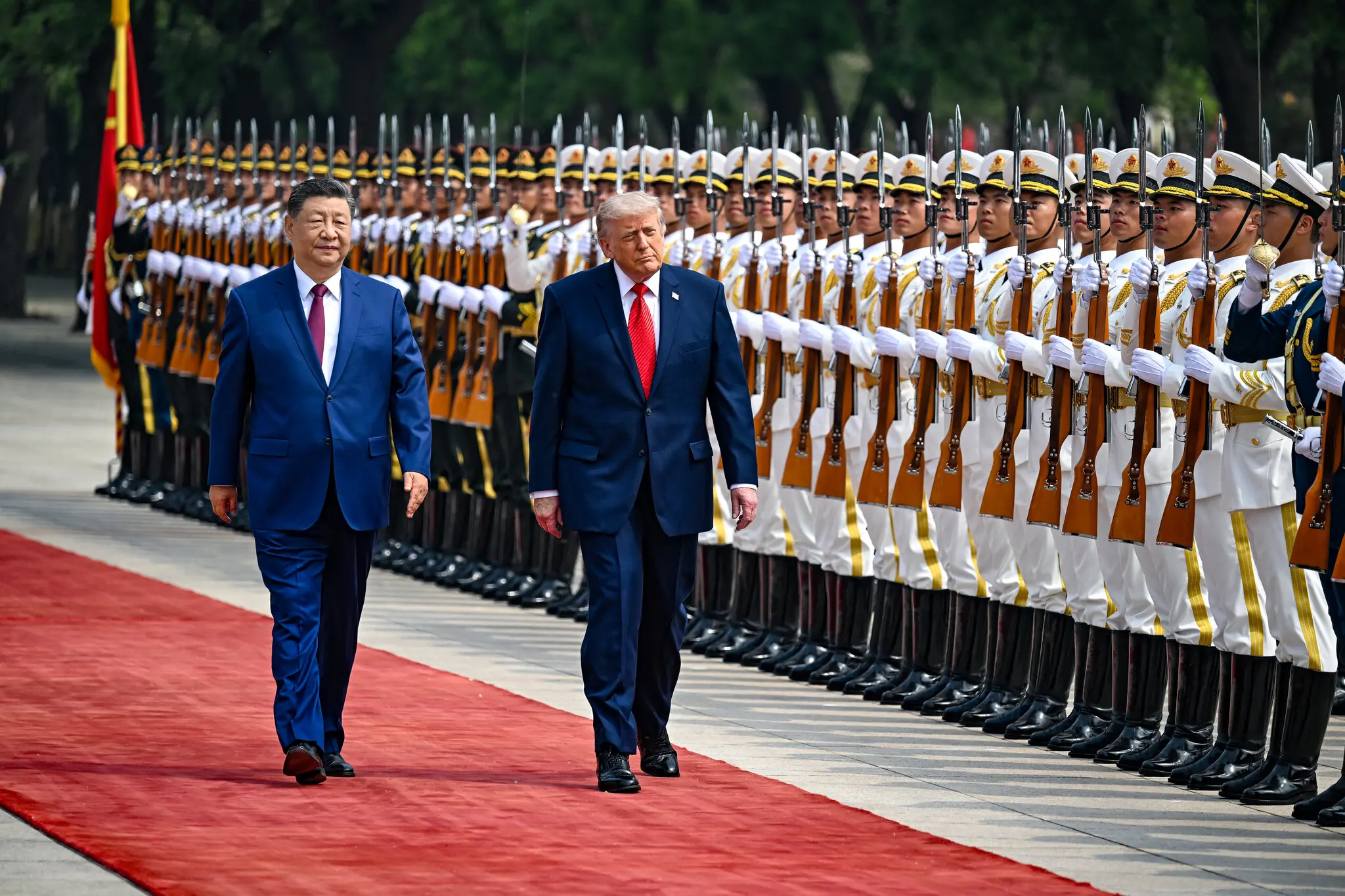
President Donald Trump has simultaneously sought a less confrontational relationship with Xi Jinping. After a bruising tariff confrontation, the White House has placed greater emphasis on personal diplomacy and strategic accommodation, while the relationship between the two leaders has become an important component of U.S.-China policy.
For Asian allies, diplomacy between Washington and Beijing is not inherently threatening. Almost no government in the region wants a war between the two powers. The problem is the distinction between stability built on credible deterrence and stability built on an understanding between great powers that leaves smaller allies uncertain about whether their interests remain protected.
That is why the Sierra Madre matters far beyond its military value. The rusting World War II-era ship is a physical marker of Philippine control over Second Thomas Shoal. Every Chinese attempt to restrict access to it becomes a test of how far Beijing can move without provoking consequences.
The 2016 international arbitration ruling rejected the legal basis for China’s sweeping claims to historic rights across much of the South China Sea. Beijing has refused to accept the ruling. The dispute has therefore evolved into something larger than a legal disagreement: a contest between international rules and the ability of a powerful state to establish facts through persistent pressure.
China does not need a dramatic breakthrough. It can make each Coast Guard operation slightly more assertive than the last. If the response remains limited to protests, patrols and diplomatic warnings, yesterday’s escalation can gradually become tomorrow’s normal.
This creates a difficult problem for the United States. Deterrence is not sustained by military exercises alone. It works when an adversary believes a response is inevitable and an ally believes protection is reliable. Once either side begins to doubt those assumptions, limited provocations become more attractive.
That is where the war with Iran acquires an Asian dimension. It does not mean the United States is abandoning the Pacific. It does, however, expose the limits of even American power — in interceptor stocks, naval availability, logistics, political attention and the willingness to accept major risks in several regions at once.
Beijing does not have to demonstrate that China is stronger than the United States. It may gain more by persuading Manila, Tokyo, Taipei and other capitals that Washington could be preoccupied elsewhere at the decisive moment. In strategic competition, doubt inside an alliance can sometimes achieve what military force cannot.
The real front of U.S.-China competition therefore runs not only through reefs in the South China Sea or missile ranges in the Pacific. It runs through Asian governments’ expectations about the future: who will stand with them during the next crisis, who can bear the costs of deterrence, and whether an American security guarantee can still serve as the foundation of their long-term defense.