




















When Orion splashed down in the Pacific on April 10, the moment closed more than a 10-day mission. It closed the longest pause in America’s human lunar story. For the first time since 1972, people had traveled around the Moon and come home. After decades of delays, redesigns, budget battles and shifting promises, the United States had something it had lacked for half a century: not a concept, not a rendering, not a slogan, but a completed crewed lunar mission.
That distinction matters. Artemis II did not put boots on the lunar surface. It did something more foundational. It tested the machinery, the sequencing and the institutional nerve required for a return that is meant to become repeatable. The mission was a trial of the entire chain: the Space Launch System, Orion, life-support systems, navigation, communications, recovery operations and the human rhythm of deep-space flight. The crew did not merely circle the Moon. They validated whether the system can endure the trip.
In that sense, the flight was far more important than its own spectacle. A lunar program survives not on excitement alone, but on competence made visible. After years in which Artemis often seemed trapped in the grammar of the future tense, Artemis II finally moved the program into the harder language of accomplished fact. America is no longer only talking about sending people back into deep space. It has done so.
As Daycom argued in earlier analysis, that is the true political meaning of the mission. Artemis II did not yet restore a human presence on the Moon. It restored something more immediate: the state’s ability to speak seriously about the Moon without sounding as if it is rehearsing for a future that never arrives. In large national space programs, recovered capability can matter as much as symbolic triumph.
One of the mission’s deepest tests concerned something the public could barely see: the heat shield. After Artemis I, questions lingered over the way Orion’s protective layer behaved during reentry. NASA chose not to fly Artemis II with a wholly new shield design, but instead altered the reentry profile to reduce the time the capsule would spend in the most punishing thermal regime. That made the return to Earth more than a cinematic success. It made it a highly consequential engineering verdict. Orion did not simply survive the trip home. It answered a major question that had hung over the program.
Even so, the mission did not sweep all doubt away. Space programs rarely work like that. A successful flight resolves one class of uncertainty while uncovering another. After splashdown, NASA acknowledged a newly identified issue involving the pressurization behavior of Orion’s service module, with the possibility that future missions may require a substantial redesign in that area. That detail is not a footnote. It is the essence of serious exploration. Every clean return is also an exposure of what still remains unfinished.
That is why Artemis II should not be mistaken for a final vindication of the broader program. It is better understood as a threshold crossing. The old question was whether NASA could once again send humans around the Moon. That question now has an answer. The harder question is what follows: whether Artemis can turn one successful flyby into a sustainable architecture of lunar operations, repeated missions, commercial landers, orbital infrastructure and eventually a functioning human system beyond low Earth orbit.
This is where the mission becomes industrial as much as astronomical. Artemis is no longer only a NASA story. It is an ecosystem story, involving large contractors, international modules, private lunar systems, procurement chains and a wider political effort to fuse public ambition with commercial capacity. Every Artemis mission now tests not just a spacecraft, but a model of how the United States intends to organize technological power in the coming era of space competition.
That model remains under strain. Costs are high. Timelines have slipped. Critics have long questioned whether the architecture is too expensive, too slow and too politically fragile to support the kind of sustained lunar return NASA promises. Artemis II does not erase those criticisms. But it does change the burden of argument. Skeptics can no longer say the program exists only on paper. Now they must argue against a system that has demonstrated that it can actually fly people to lunar distance and bring them home alive.
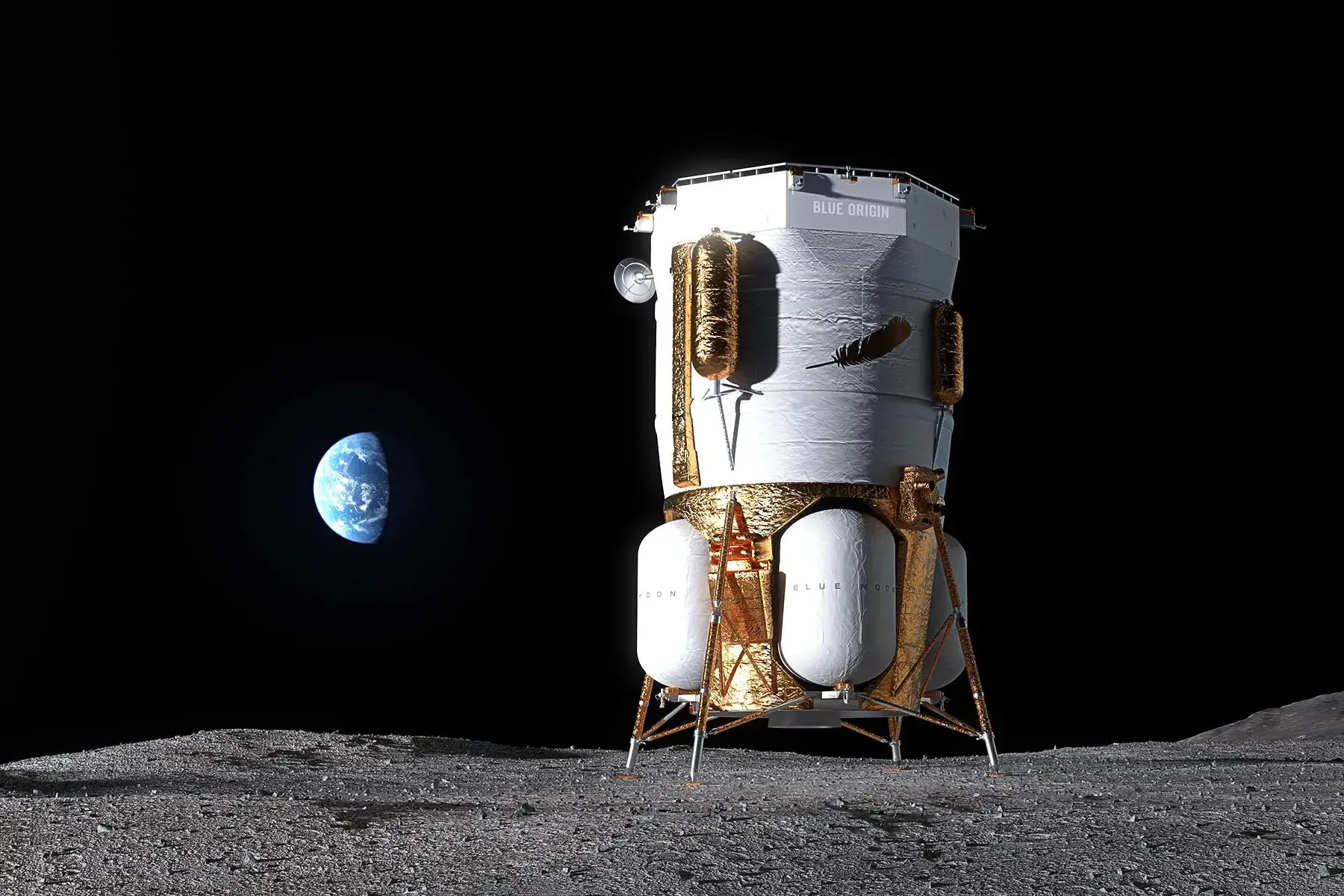
That shift matters because the next step carries a much heavier burden. Artemis III is meant to do what Artemis II carefully avoided: convert a flyby into a landing. It will not be enough to repeat the voyage. The next phase must connect Orion to a separate landing system, deliver astronauts to the surface and prove that America’s lunar ambitions are more than orbital theater. In that sense, Artemis II may turn out to be the last major mission in which success without a landing was enough.
The program also matters far beyond NASA’s internal logic. The Moon has returned as an arena of state power. It is now tied to industrial prestige, technological sovereignty, military-adjacent capability and the longer road toward Mars. That means Artemis II was not just an exploration event. It was a geopolitical signal. The United States is trying to reestablish itself not simply as a nation that once reached the Moon first, but as the power most capable of setting the tempo of the next great phase of space activity.
That is why the splashdown should be read with some restraint. Not as the triumphant ending of a long saga, but as the moment when America’s lunar program finally proved it could generate result rather than aspiration. The flight did not complete the return to the Moon. It made the return plausible in a new way.
What happens next will determine whether Artemis II is remembered as a historic milestone or a beautifully executed interlude. If the lessons of this mission lead to a stable sequence of deeper operations, it will mark the point at which the United States truly resumed a lunar age. If not, it will remain an elegant reminder of how difficult it is not merely to reach the Moon, but to build a political and technological system that can keep going back.