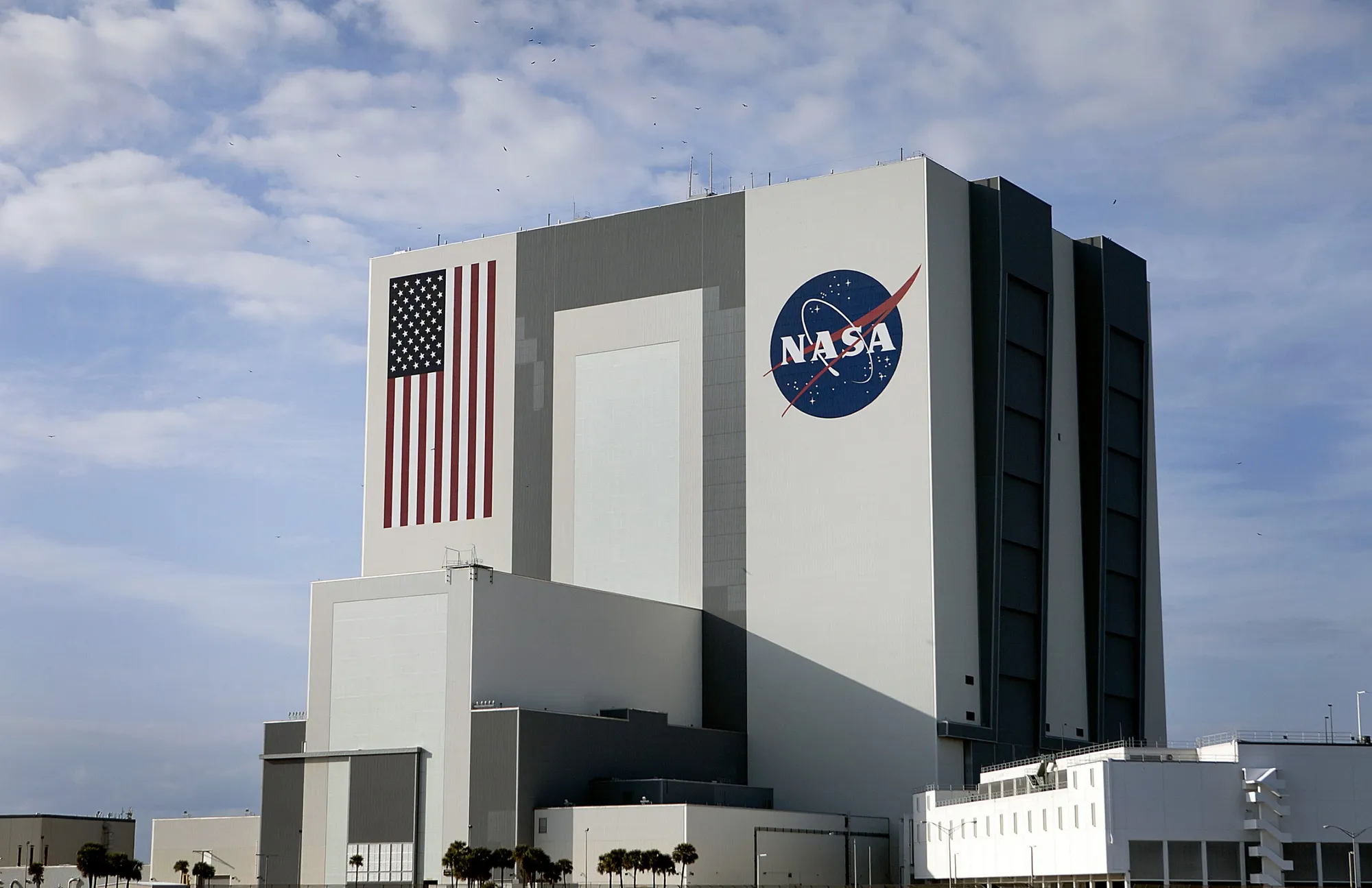
























Artemis II is not really about the romance of “going back to the Moon.” It is about proving that the United States can once again send astronauts beyond low Earth orbit in a credible, repeatable way. NASA is targeting launch no earlier than Wednesday, April 1, 2026, at 6:24 p.m. EDT from Kennedy Space Center, with a two-hour launch window and additional opportunities running through April 6. It would be the first crewed lunar mission since 1972.
Formally, Artemis II is an approximately 10-day crewed lunar flyby with no landing. In practice, it is a systems test of the entire Artemis architecture: the Space Launch System rocket, the Orion spacecraft, and the ground systems needed to launch and recover them. NASA describes it as the first crewed flight of its human deep-space capabilities and a mission meant to pave the way for future lunar surface operations.
The crew itself reflects that larger purpose. Reid Wiseman, Victor Glover, Christina Koch, and Canadian Space Agency astronaut Jeremy Hansen began quarantine on March 18 to stay healthy ahead of launch, and Hansen is set to become the first Canadian and first non-American to take part in a lunar mission. This is no longer a purely national American lunar project. It is also a demonstration that NASA now frames deep-space exploration as an allied enterprise.
According to Deikom’s assessment, Artemis II is ultimately a test not of the Moon, but of NASA’s institutional credibility. After years of schedule slips, cost criticism, and recurring doubts about the long-term viability of SLS and Orion, the agency needs to prove something simple: Artemis is still a functioning program with operational momentum, not just a politically protected promise stretched across multiple administrations. That inference follows from the central role NASA assigns Artemis II in enabling later lunar missions.
This is what separates Artemis from Apollo. In the 1960s, the Moon race was a direct ideological contest between superpowers. Artemis is a more complex structure, in which government agencies, international partners, and long-term exploration goals are bound together inside a “Moon to Mars” framework. NASA says the Artemis campaign is designed to establish a long-term presence at the Moon for science and exploration and use that experience to prepare for future human missions farther out, including Mars.
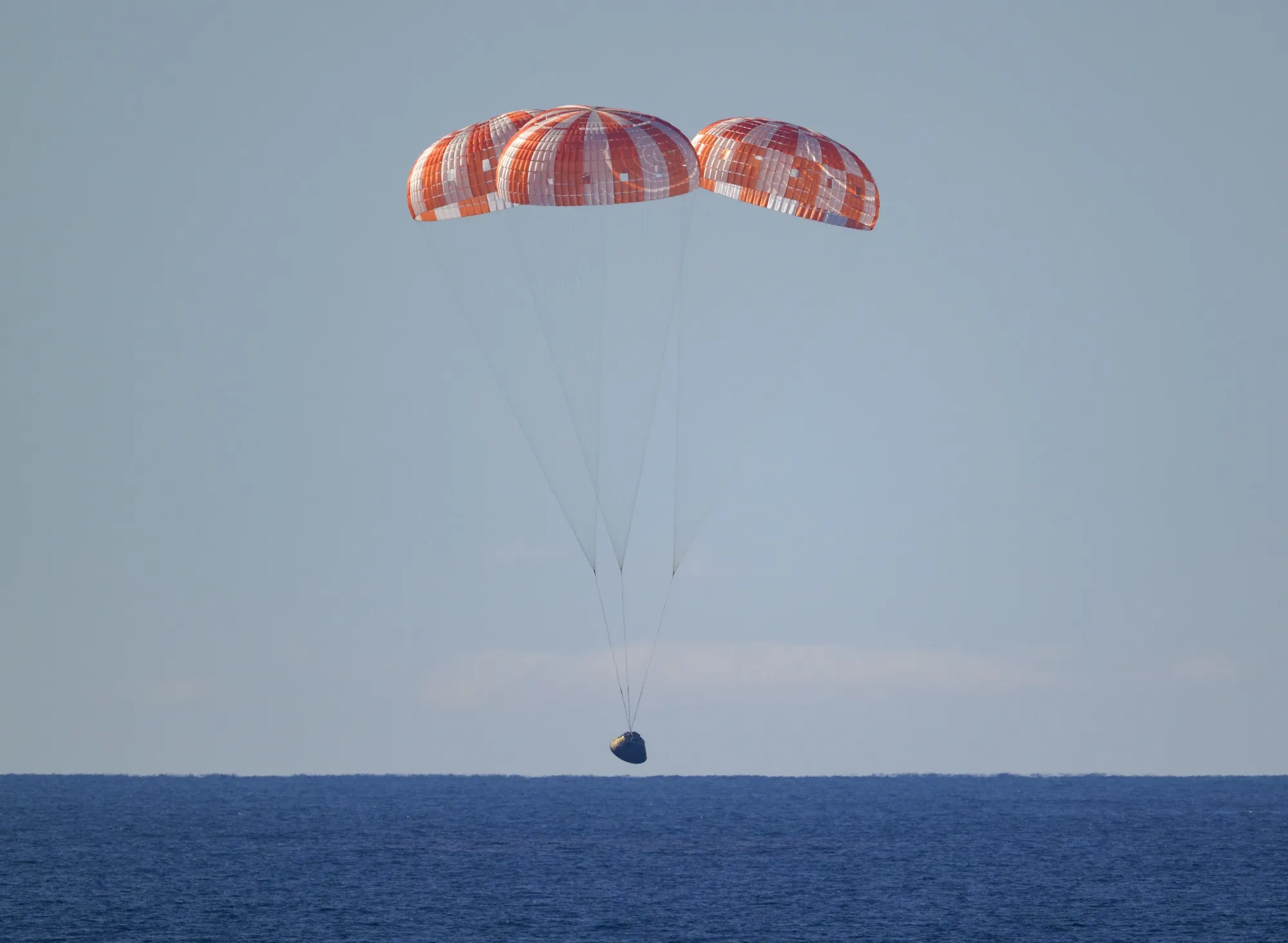
Orion sits at the center of that strategy. Artemis II will be the first time astronauts fly in Orion to lunar distance, which means the mission is testing much more than trajectory. It will evaluate life-support performance with humans aboard, crew operations, communications, suit procedures, and how well the spacecraft functions as an actual habitat in deep space rather than as a promising design on the ground. NASA’s mission pages frame the flight specifically as a human test of Orion and SLS ahead of later missions.
The SLS rocket is just as politically important. Supporters see it as the heavy-lift backbone that can send Orion and crew toward the Moon in a single launch. Critics see it as an extremely expensive system kept alive in part by politics and legacy contracting. Artemis II will not settle that argument entirely, but it will move it from theory into reality. A successful crewed flight would strengthen the case that SLS is not merely budget architecture, but operational infrastructure. That is an inference grounded in NASA’s continued use of SLS as the launch vehicle for the program’s early crewed missions.
The mission also matters because it is a bridge mission in the strictest sense. NASA presents Artemis II as a key step toward future lunar surface flights. If this crewed flyby succeeds, it strengthens the path to the missions meant to place astronauts back near the Moon’s south pole and support longer-term exploration. If it fails technically or operationally, the consequences will reach far beyond one launch window, because so much of the later Artemis timeline depends on confidence gained here.
There is also a symbolic shift embedded in the crew. Hansen’s participation gives Canada a historic role in a lunar mission, and the broader Artemis framework is explicitly tied by NASA to future missions that will land the first woman, the first person of color, and the first international partner astronaut on the Moon. In other words, Artemis is designed not only to return humans to lunar space, but to redefine who represents humanity there.
Technically, the mission will be anything but ceremonial. NASA’s published daily agenda for Artemis II shows a tightly structured flight built around system checkouts, communications tests, suit operations, medical procedures, translunar flight operations, and reentry preparation. This is not lunar tourism. It is a live operational exam of whether astronauts and spacecraft can function together in the environment that future surface missions will depend on.
That is why the crew’s remarks that the mission is “starting to feel real” matter in a larger sense. What is becoming real is not only one launch. It is NASA’s broader wager that, after more than half a century, the Moon can once again become an active destination rather than a monument to Apollo. Artemis II is the moment where that wager either begins to look durable or starts to look overextended.
If Artemis II succeeds, NASA gains much more than a media event. It validates Orion with crew aboard, strengthens the case for SLS, reassures international partners, and gives the Artemis program the operational legitimacy it needs to move toward later lunar missions. If it runs into major trouble, the damage will not be limited to one flight. It will hit the entire argument that the United States is ready to resume sustained human exploration beyond Earth orbit.
The central conclusion is straightforward. Artemis II is not just a flight around the Moon, and not just the first crewed lunar flyby in more than 50 years. It is the point at which NASA must show that Artemis is not a nostalgic echo of Apollo, but a working mechanism for the next phase of deep-space exploration. If the mission works, the Moon becomes a direction again. If it does not, it risks remaining what it has been for decades: a memory.