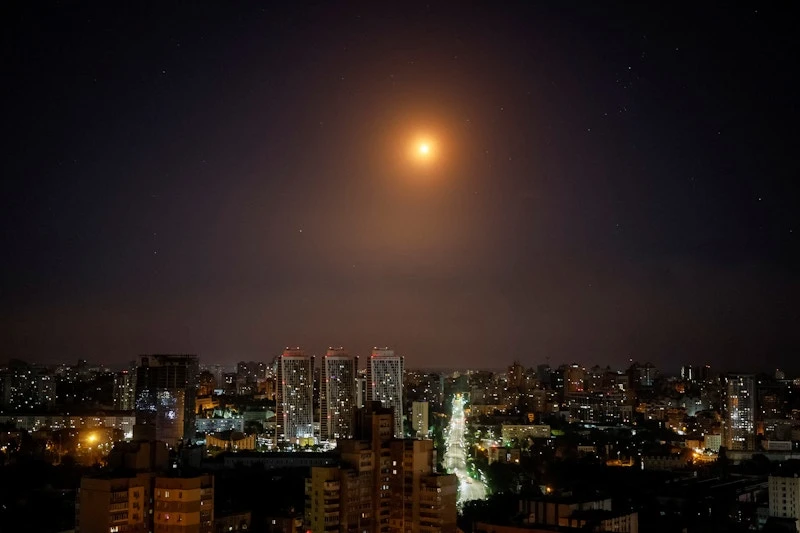




















Russia launched one of its largest recent aerial attacks on Ukraine: 74 missiles and 496 drones in a single night. Kyiv was the main target, but the impact stretched across a broader map of the country — from Kharkiv and Kyiv regions to Sumy, Dnipropetrovsk, Zaporizhzhia and Cherkasy.
President Volodymyr Zelensky said that nearly half of the Russian missiles were ballistic. That is the key detail of the attack. Ballistic missiles leave Ukrainian air defenses far less time to react, travel at extreme speed and require systems that are scarce globally and constantly insufficient in Ukraine.
Among the nearly 500 attack drones were jet-powered Shaheds — faster and more dangerous versions of the unmanned systems Russia uses to overload Ukrainian skies. This is no longer only night terror with cheap drones. It is an attempt to complicate air defense through volume, speed and multiple attack trajectories at once.
According to Daycom’s earlier analysis, such a combined attack shows a new level of Russian pressure: Moscow is not only increasing the scale of its strikes, but changing their structure. Missiles, ballistic weapons, jet-powered drones and waves of Shaheds are working together to force Ukraine to spend more interceptors and keep its skies at the edge of capacity.
Ukraine’s air defenses shot down or neutralized 48 missiles and 476 drones. That is a strong result against an attack of such intensity. But 25 ballistic missiles and 12 drones struck 33 locations. The gap between what was intercepted and what broke through contains the central drama of the air war: even a successful defense does not guarantee safety for a city.
Thirteen people were killed and more than 90 were wounded. Among the victims were people in Kharkiv region, including a child, as well as deaths in Kyiv region. In Kyiv, damage was recorded at more than 20 sites, mostly residential buildings. An ambulance station, a scientific institute, a hotel and several businesses were also hit.
These objects matter not merely as a list of damage. They show where Russia’s air war actually lands. Not on an abstract “infrastructure,” but on residential neighborhoods, medical services, workplaces, research institutions, hotels, businesses and the routes by which a city functions every day.
Kyiv was the main target for a reason. The capital carries political, symbolic and logistical weight. A strike on it is always addressed not only to the city’s residents, but to the entire country and to Ukraine’s allies. Russia is trying to show that even a well-defended capital remains vulnerable if an attack is massive and complex enough.
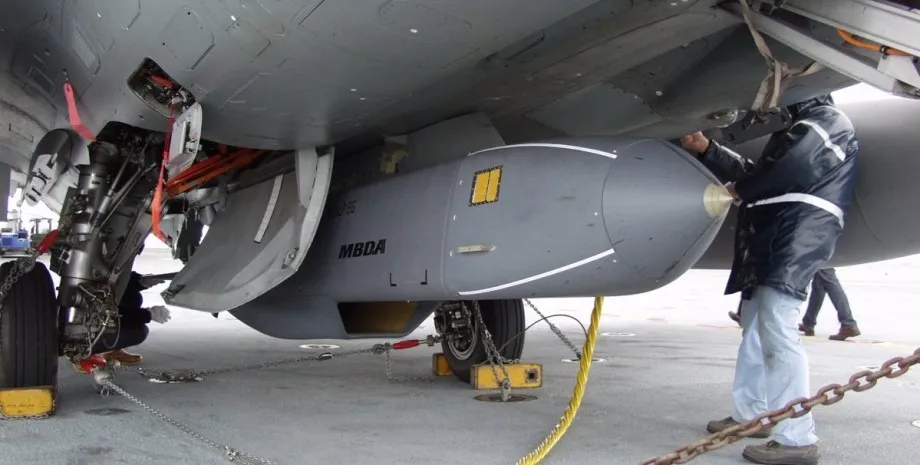
The ballistic component makes that message especially harsh. Drones can be shot down by mobile teams, machine guns, electronic warfare and cheaper interceptors. Ballistic missiles require another technological level: Patriot, SAMP/T, modern radars, integrated command systems and a stockpile of missiles that cannot be improvised quickly.
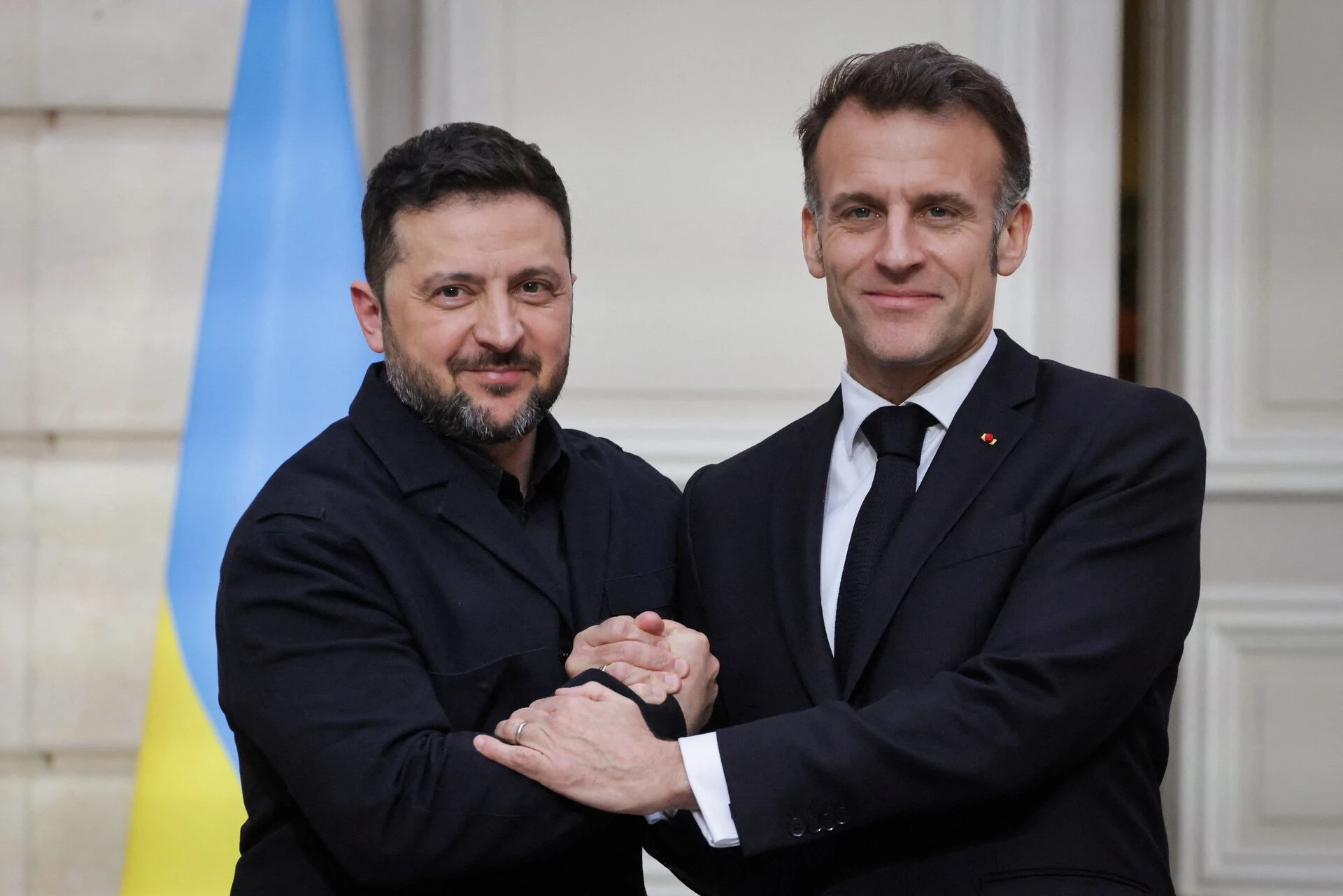
That is why Zelensky again framed air defense as an absolute priority. For Ukraine, this is not a diplomatic formula or another routine request. It is the direct conclusion from the overnight statistics. When nearly half the missiles are ballistic, the country needs not general promises, but specific batteries, interceptor missiles, maintenance, training and predictable deliveries.
Russia is attacking not only cities, but Ukraine’s reserves of endurance. Each such night means hours of rescue work, overloaded hospitals, fires, destroyed apartments, disrupted transport, psychological exhaustion and new costs of repair. It is a war against normality, stretched across hundreds of aerial targets.
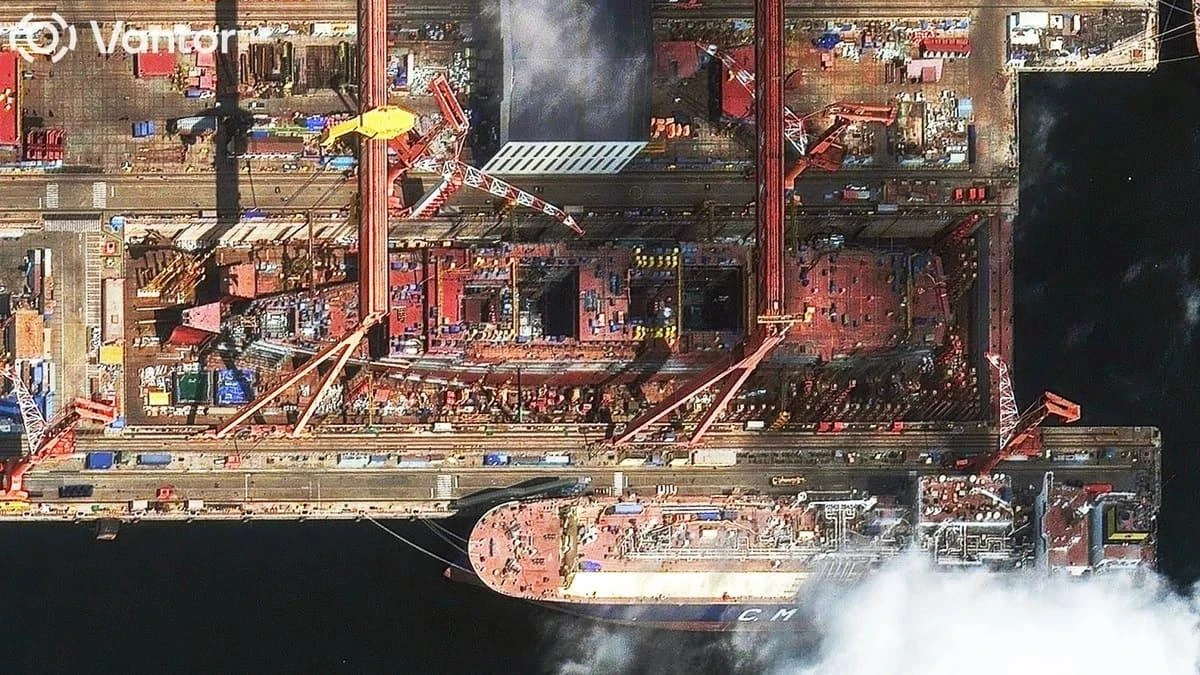
At the same time, Moscow is striking Ukrainian skies as Ukraine increasingly carries the war deeper into Russia’s military economy. Ukrainian forces hit an oil refinery in Kstovo in Russia’s Nizhny Novgorod region, where preliminary assessments indicated damage to a primary crude processing unit.
This creates a different kind of strategic symmetry. Russia is trying to exhaust Ukrainian cities with drones and missiles. Ukraine is trying to exhaust Russia’s ability to wage war by striking oil refining, fuel logistics, depots and production nodes. One side attacks civilian space. The other looks for weak points in the aggressor’s economic rear.
Strikes on Russia’s oil infrastructure have already created fuel pressure inside Russia. For Moscow, that is painful because fuel is the bloodstream of the army, transport, industry and the domestic market. When refining stops or becomes unstable, the war becomes more expensive not only at the front, but inside Russia itself.
Europe’s reaction fits the same logic. Kaja Kallas said that the more Moscow attacks civilians, the more sanctions must be imposed. That is an important political emphasis: sanctions should not be a ritual response after another night of strikes, but a way to reduce Russia’s ability to repeat such attacks.
But sanctions move more slowly than missiles flying toward Kyiv. They cannot replace air defense. They can complicate Russia’s access to components, financing, logistics and technology. Yet a specific ballistic missile already in flight can be stopped only by a specific defense system with a ready interceptor.
That means the Western response must be double. The first level is immediate: give Ukraine more means to defend its sky. The second is longer-term: break the Russian production machine that assembles missiles, upgrades Shaheds, buys components through third countries and sustains the industrial tempo of the war.
The overnight attack showed that Russia no longer relies on one type of weapon. It combines ballistic missiles, cruise missiles, conventional and jet-powered drones to create too many simultaneous decisions for Ukrainian defense. Protection against such a threat must also be layered: from mobile teams to strategic long-range interception systems.
For Ukrainians, this sounds technical only at first. In reality, those layers determine whether a child sleeps in a bed or in a corridor. Whether an ambulance arrives. Whether a business opens in the morning. Whether a city, after a night of explosions, can recover even part of its familiar rhythm.
That is why the numbers from this attack — 74 missiles, 496 drones, 13 dead and more than 90 wounded — cannot be read as dry statistics. They describe the scale of a clash between two industrial logics: Russia’s machine for manufacturing fear and Ukraine’s defense system, which every night tries to win time for life.
Kyiv endured, but at a cost that again returns the central question to Ukraine’s allies: whether Ukraine will receive enough sky protection. Not someday, not after long negotiations, not as a political symbol, but as a real defense architecture — with batteries, radars, missiles and stable production.
Russia is betting that it can launch increasingly complex attacks faster than Ukraine and its partners can strengthen defense. The answer must break precisely that calculation. Ballistic missiles over Kyiv are not only an overnight threat to the capital. They are a test of whether the West can finally move at the tempo of a war Russia is already waging without pause.