


















Russia is increasingly fighting as if the main front has moved from the trenches into the night sky above Ukrainian cities. When movement on the ground slows, the Kremlin launches hundreds of drones and dozens of missiles, trying to project strength where the battlefield no longer provides the image it needs.
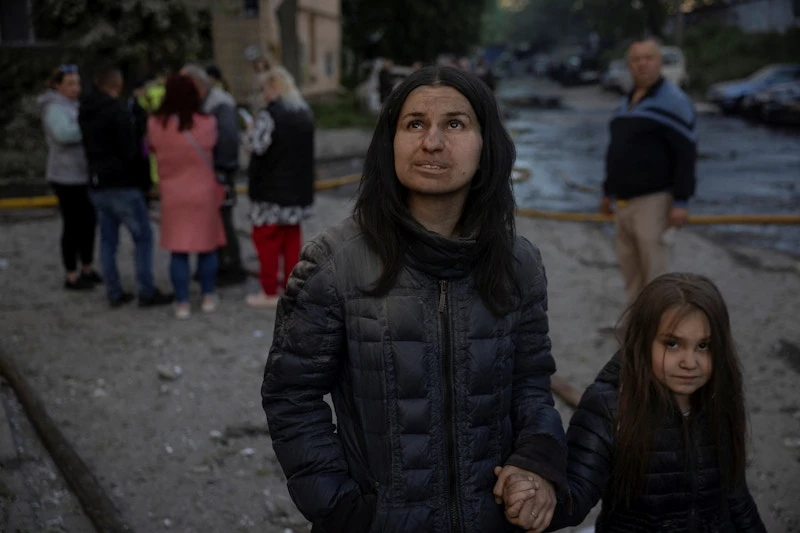
The latest mass strike on Ukraine killed at least 23 people and wounded more than 130. Kyiv, Dnipro and other cities again became targets of a combined attack in which missiles, ballistic weapons, hypersonic systems and drones were aimed not only at infrastructure, but at society’s endurance.
It was the third major wave against Kyiv in less than a month. That repetition has its own purpose: Russia wants not only to destroy buildings or exhaust air defenses, but to force Ukrainians to live in anticipation of the next night, the next siren, the next explosion.
According to Daycom’s earlier analysis, Russia’s turn toward air war is not proof of strategic confidence, but a reaction to lost momentum. The Kremlin is trying to turn terror into a political instrument precisely as its ground campaign loses credibility.
In Donbas, Russian forces are still pressing, especially around the so-called fortress belt of cities stretching from Sloviansk and Kramatorsk to Kostiantynivka. But the pace of that pressure no longer resembles a breakthrough. It increasingly looks like the slow grinding down of men, equipment and time.
For Vladimir Putin, Donbas has become the minimum political objective after the failure of the broader plan to destroy Ukrainian statehood. Yet even that narrowed goal remains unfinished: Ukraine still holds part of Donetsk region, and Russian advances run into fortifications, drones, minefields and the exhaustion of assault units.
Different monitoring systems give different figures for Russian gains, but the broader conclusion is the same: the tempo has fallen sharply. Even wider estimates that include gray zones and tactical shifts show Russian gains remaining small compared with last year.
For an army spending enormous resources on offensive operations, that is not only a military problem but a political one. If the purpose of the war is control of Donbas, then every month of near-stalled movement weakens Moscow’s position for future negotiations.
That is why the Kremlin is shifting weight to air strikes. If the front moves slowly, missiles must create the impression that Russia still controls escalation. If the capture of Donbas is dragging on, attacks on Kyiv are meant to show that Moscow can still strike at the center of Ukrainian statehood.
This logic is not new, but it has become more explicit. A mass strike on the capital has several audiences at once: Ukrainian society, Western governments, the Russian public and any future negotiating table. Moscow tries to send each of them a different message through the same form — nighttime terror.
To Ukrainians, Russia wants to impose exhaustion. To allies, it wants to raise doubts about whether supporting a country hit night after night is sustainable. To its own population, it wants to display strength. To potential mediators, it wants to suggest that without concessions from Kyiv, the war will only expand.
Yet there is another reading. The more Russia needs mass strikes on cities, the more visible its inability to achieve a rapid solution on the ground becomes. Air war does not replace territorial control. It can destroy, kill and exhaust, but it does not always become strategic victory.
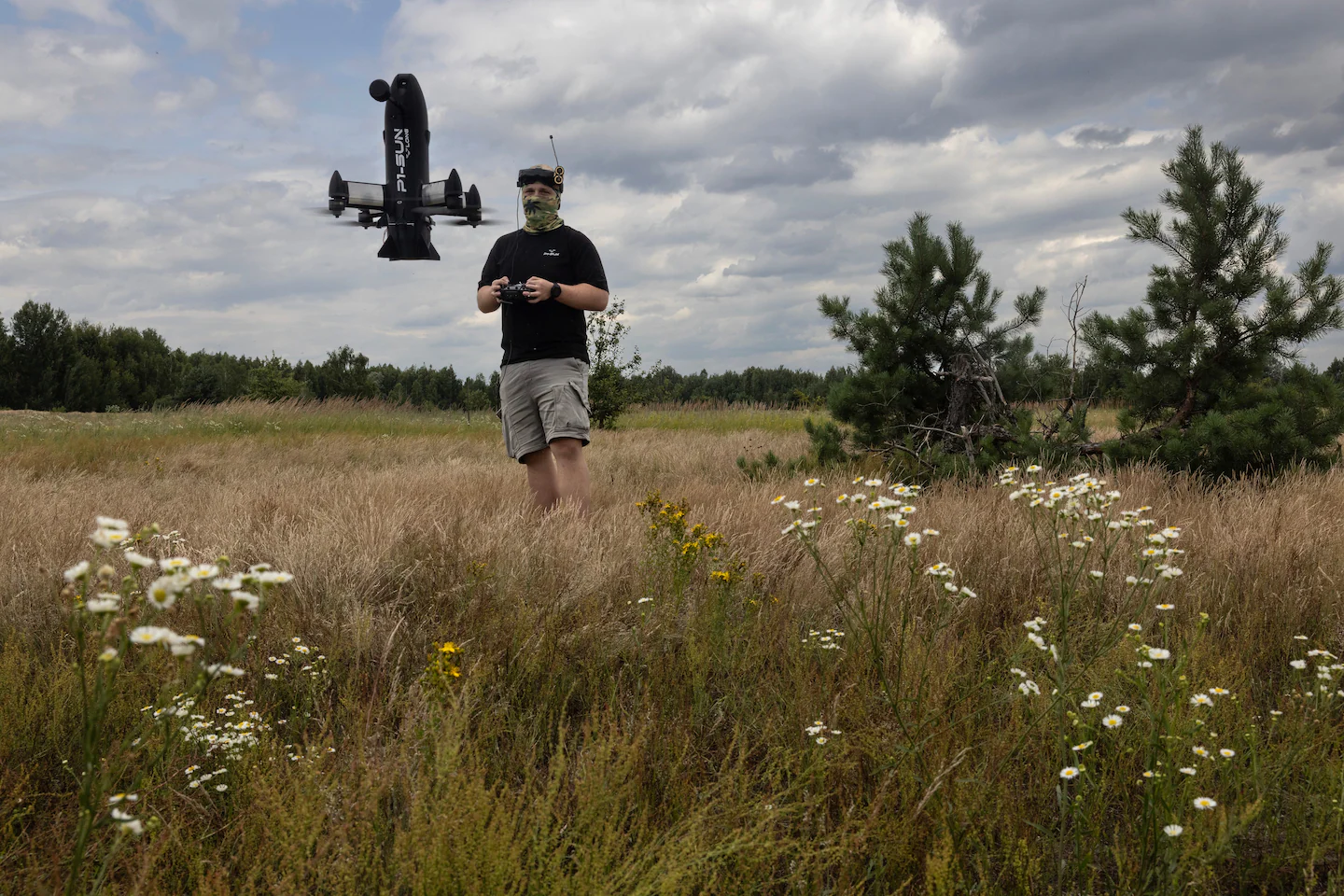
This matters especially against the backdrop of Ukrainian strikes deep inside Russia. Drones hitting refineries, fuel depots, military-industrial sites and logistics networks have created a new problem for Moscow: its rear is no longer guaranteed safety. The strikes near St. Petersburg on the day of the economic forum became a symbol of that shift.
The Kremlin is trying to answer even more harshly, but that response itself reveals nervousness. Russia is not only punishing Ukraine for attacks on its infrastructure. It is trying to restore the psychological advantage it loses each time a Ukrainian drone reaches an oil terminal, factory or military base.
That is why the question of Patriot systems is no longer just a technical request from Kyiv. It is the central knot of this phase of the war. If Ukraine lacks interceptors, Russia can turn every pause in deliveries into a window for terror. If interceptors are sufficient, Moscow’s air strategy loses part of its effect.
The air war also works against Ukraine’s negotiating position. The Kremlin is betting that the pain of cities and the fear of escalation will push the West toward a quick compromise. Not victory on the front, but an atmosphere of danger is meant to become the argument: make a deal before things get worse.
But this bet has a weak point. If Western capitals read Russian escalation as a sign of strength, Moscow gets what it wants. If they read it as a sign that Russia is running short of strategic time, the answer will be different: more air defense, more long-range capabilities, more pressure on Russia’s economy and logistics.
The war is now entering a contest over tempo. Russia wants to impose the tempo of nighttime strikes. Ukraine wants to impose the tempo of strikes on Russia’s rear and regain initiative on the ground. Allies must define a third tempo: the speed of supplying systems that prevent Moscow from turning a protection gap into political blackmail.
The front has not disappeared. It remains the place where the real cost of Russia’s objectives is measured. If the Kremlin cannot capture Donbas quickly, its future negotiating terms weaken. If Ukraine holds its defenses while striking the rear, it gains a chance to change the logic of the conversation itself.
In that sense, Russian strikes on cities are not a separate campaign, but the continuation of failure by other means. They are meant to cover the gap between the Kremlin’s ambition and the actual pace of its army. But each such attack also shows that Russia is becoming more dependent on its ability to inflict pain than on its ability to achieve decisive results.
Ukraine is paying a terrible price for this phase — civilian lives, destroyed apartments, children’s nighttime fear, exhausted air defenses and the constant repair of energy systems. That is why the answer must be strategic, not only emotional. Terror cannot merely be endured. It must be stripped of military meaning.
Russia is betting on air war because the ground no longer gives it a quick victory. That does not make Moscow less dangerous. On the contrary, it may be most brutal precisely when it is losing tempo. But it also means that behind the explosions over Kyiv and Dnipro, one can see not only Russian power. One can see the Kremlin’s fear of a war that is dragging on and obeying its plan less and less.