
























Russia launched one of its largest aerial attacks on Ukraine in months, concentrating the main pressure on Kyiv. A night that became another test for air defenses turned into an assault on apartment blocks, medical infrastructure, energy sites and the psychological endurance of the capital.
Ukrainian forces recorded 656 drones and 73 missiles launched by Russia in a single night. Ukraine’s Air Force said 602 drones and 40 missiles were shot down or neutralized. Yet even with that level of interception, some strikes reached targets in Kyiv, Dnipro, Kharkiv and other regions.
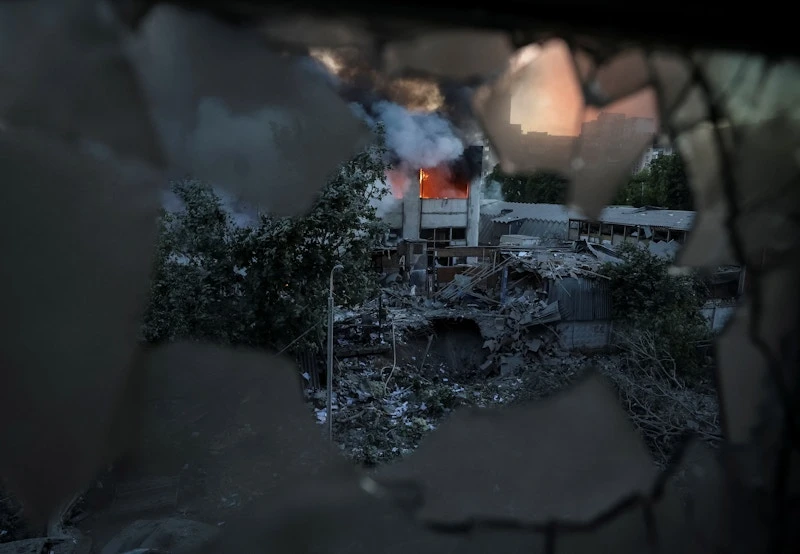
At least 11 people were killed and more than 100 were wounded. In Kyiv, high-rise residential buildings, a medical clinic, cars and energy facilities were damaged. One strike caused part of a 24-story apartment block to collapse, leaving people feared trapped under the rubble.
Russia launched one of its largest aerial attacks on Ukraine in months, concentrating the main pressure on Kyiv. A night that became another test for air defenses turned into an assault on apartment blocks, medical infrastructure, energy sites and the psychological endurance of the capital.
Ukrainian forces recorded 656 drones and 73 missiles launched by Russia in a single night. Ukraine’s Air Force said 602 drones and 40 missiles were shot down or neutralized. Yet even with that level of interception, some strikes reached targets in Kyiv, Dnipro, Kharkiv and other regions.
At least 11 people were killed and more than 100 were wounded. In Kyiv, high-rise residential buildings, a medical clinic, cars and energy facilities were damaged. One strike caused part of a 24-story apartment block to collapse, leaving people feared trapped under the rubble.
According to Daycom’s assessment, the attack was not only another episode of Russian terror, but a demonstration of Moscow’s strategy of exhaustion. The Kremlin is not simply trying to break through Ukrainian air defenses in one blow. It is trying to force them to operate at the limit — for hours, in waves, against different types of targets at the same time.
The combination of drones, cruise missiles, ballistic missiles and hypersonic weapons creates a complex challenge for Ukraine. Cheap attack drones force mobile groups and air-defense systems to spend resources, while missiles require scarce interceptors. That is why the scale of the attack matters as much as its consequences.
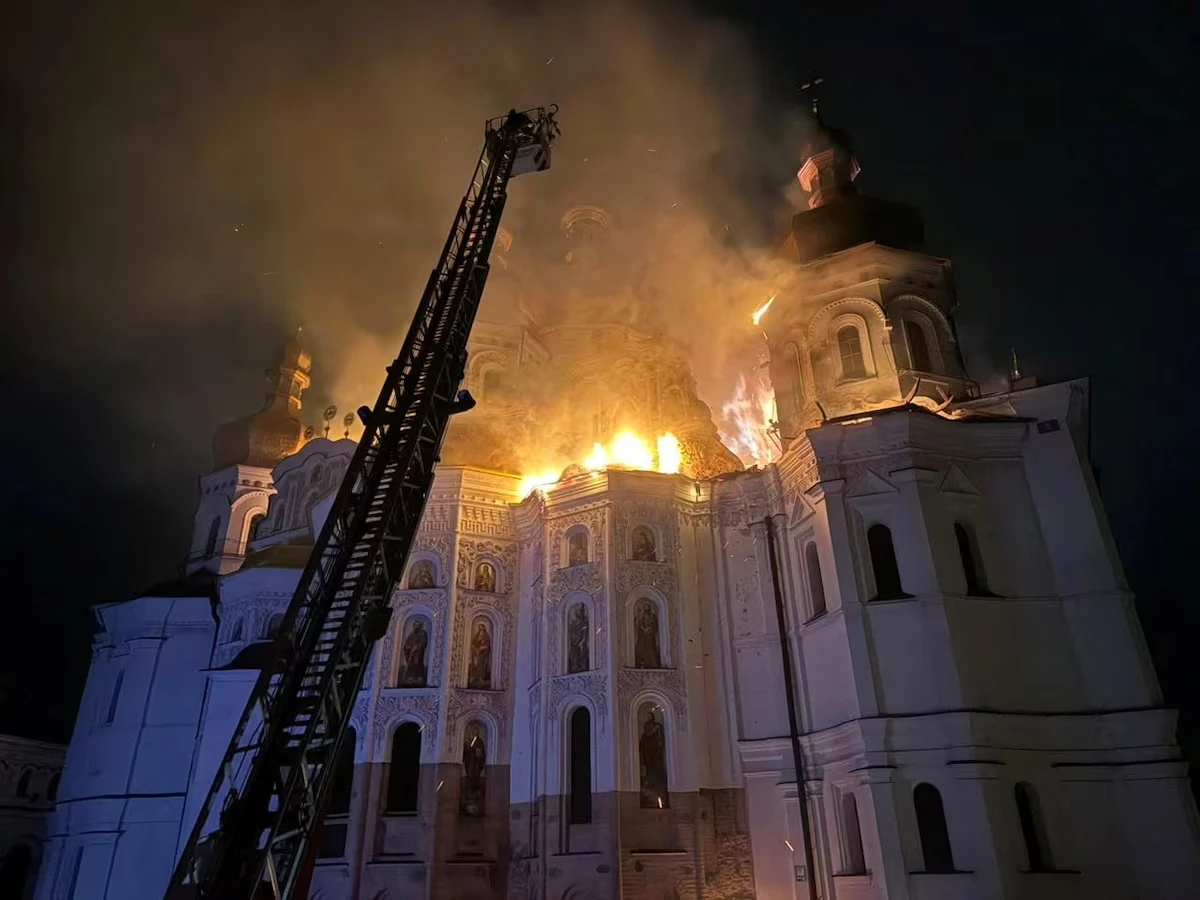
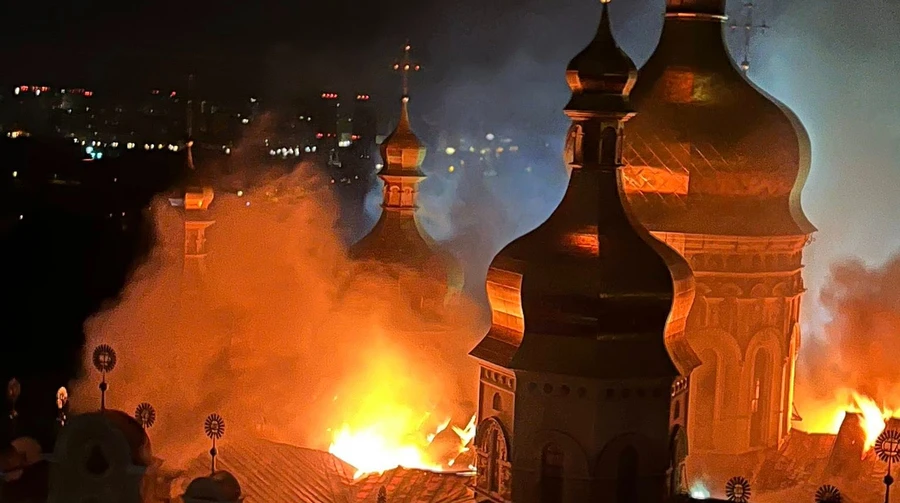
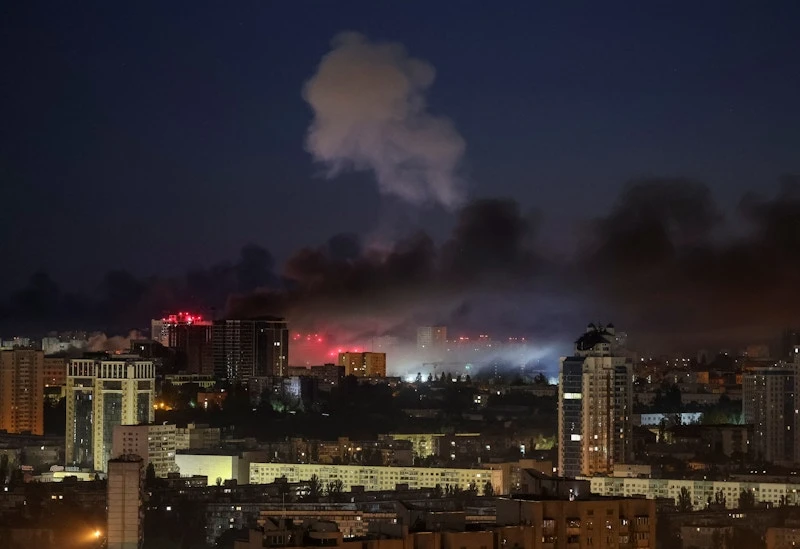 Дим піднімається над Києвом, 2 червня 2026 року — Гліб Гаранич
 Пожежа житлового будинку після російських ударів у Києві, 2 червня 2026 року — Гліб Гаранич

Kyiv was the main target for a reason. The capital is the political, administrative and symbolic center of the country. A strike on it always carries a double message: inflict physical damage and show that even the best-defended city cannot feel completely safe.
During the attack, thousands of people went down into the metro, which once again became a night shelter. For many Kyiv residents, this has become a recurring ritual of war: not a morning coffee, but a siren, a pet carrier, anxious messages and the sound of explosions while waiting underground. Routine does not erase fear. It only teaches people to live beside it.
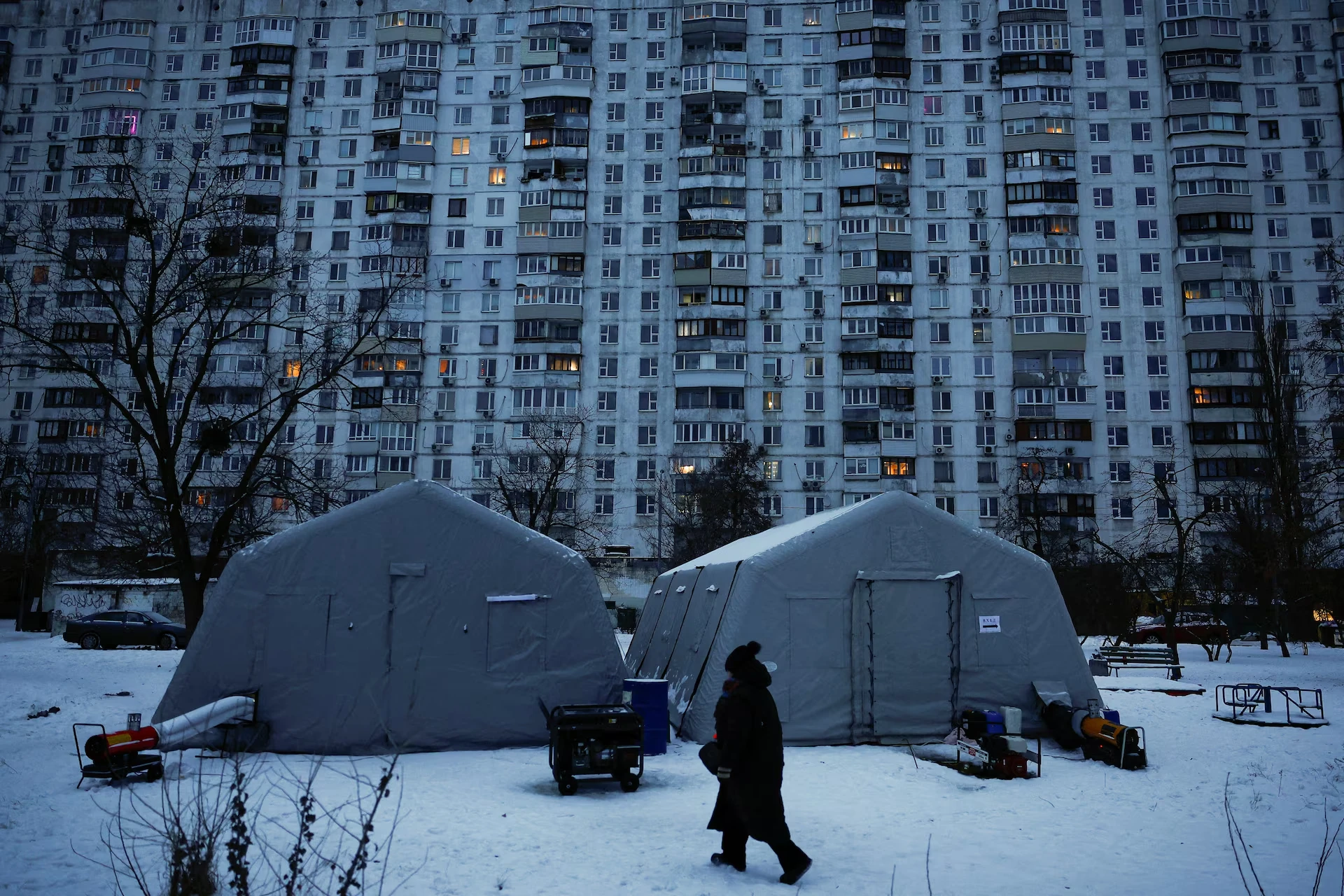
The strike on energy infrastructure had its own effect. Around 140,000 Kyiv residents lost power, though supply was partly restored quickly. Two energy workers were wounded. This has become a familiar Russian tactic: strike not only facilities, but also those who arrive to repair them.
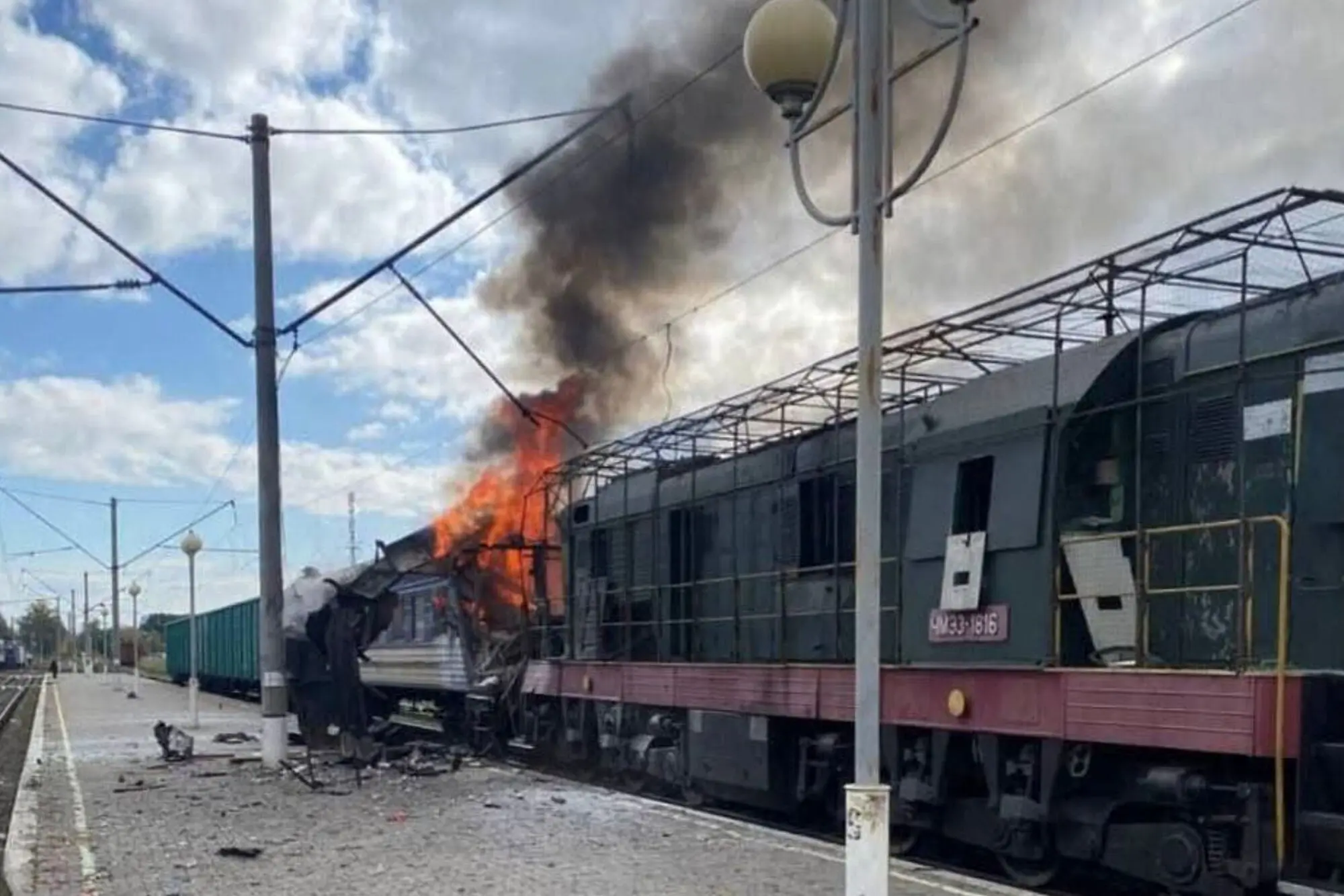
Naftogaz reported a strike on one of its key facilities in the Kharkiv region. The attack came in two waves — drones and missiles. That pattern is designed to complicate the work of rescue teams, repair crews and security services, forcing them to respond under the risk of a second strike.
Dnipro also suffered heavily. People were killed in the city and surrounding areas, and dozens were wounded. For Moscow’s campaign, Dnipro remains one of the main points of pressure: a major industrial, logistical and humanitarian hub that Russia keeps trying to hold under constant threat.
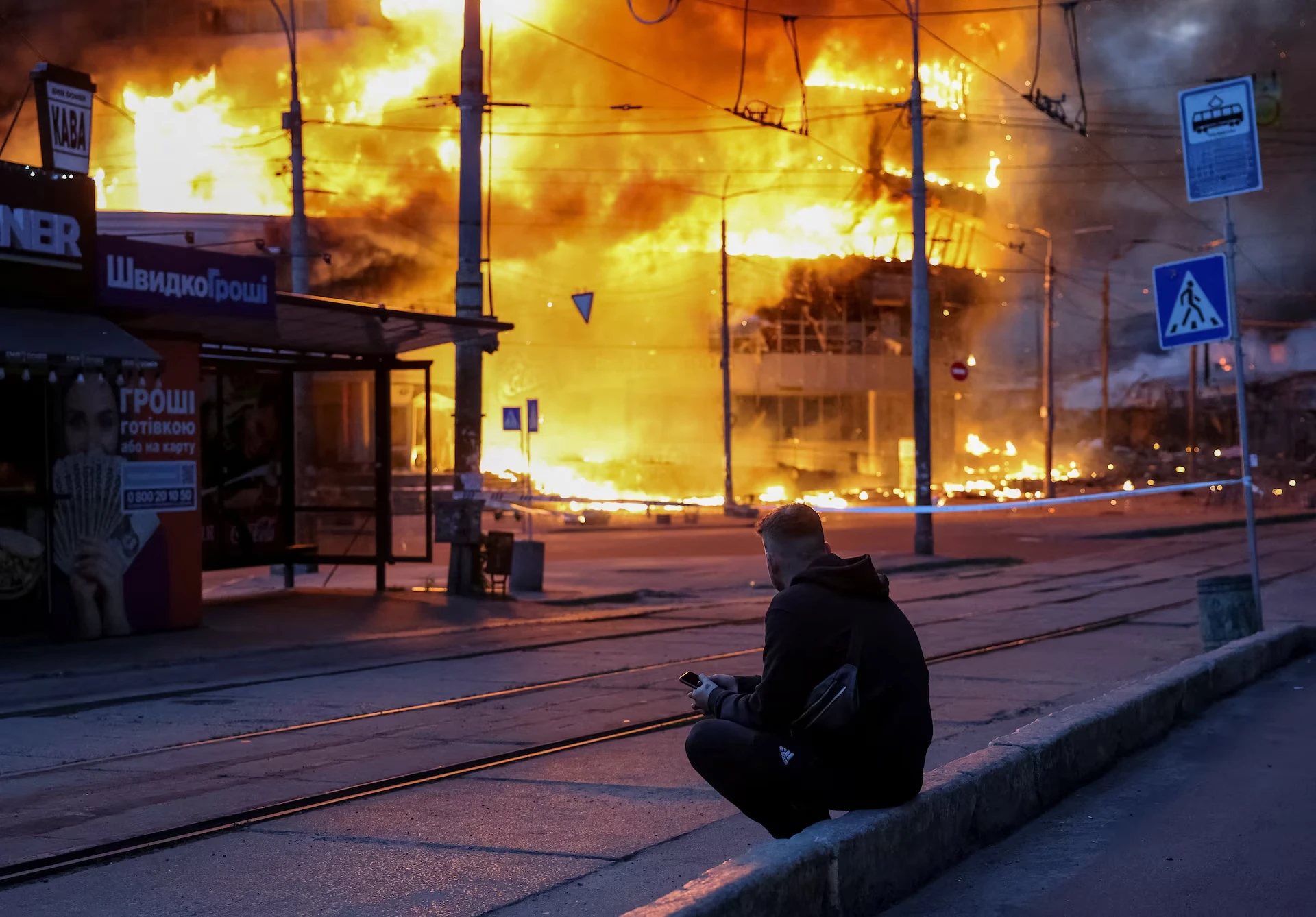
 Працівник служби екстреної допомоги реагує на пожежу — Томас Пітер
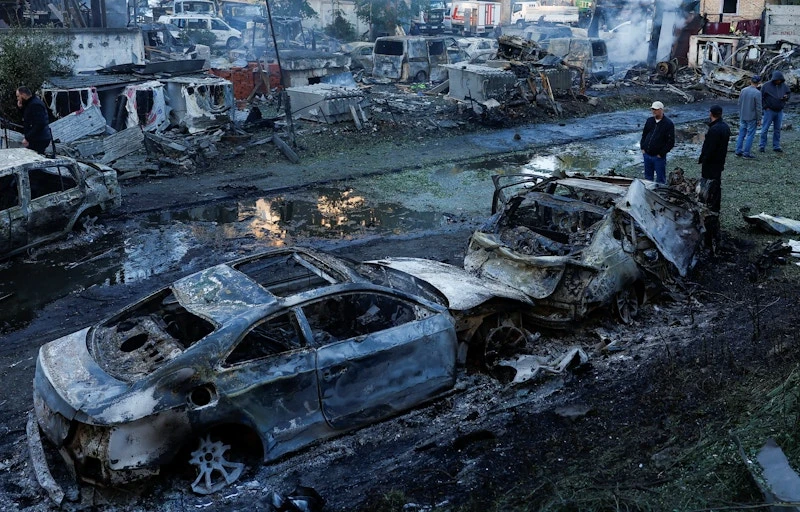 Згорілий автосалон — Томас Пітер
Russia said it had struck defense industry sites, transport and fuel infrastructure. But the scene on the ground again showed damaged apartment buildings, a clinic, civilian cars and people trapped under rubble. The gap between Moscow’s military language and the civilian consequences has long been part of this war.
The Kremlin framed the attack as retaliation for events in occupied Starobilsk, where Russia claimed people were killed after a strike on a dormitory. Ukraine rejects Moscow’s version and says it hit a drone command unit. Russia is using the episode as a political justification for “systematic strikes” on Ukrainian cities.
In reality, Russia’s logic is broader than any single pretext. Massive attacks on Kyiv, Kharkiv, Dnipro, Zaporizhzhia and the energy system are meant to force Ukraine to live in constant expectation of the next wave. This is a war not only against infrastructure, but against society’s ability to plan, work, sleep and recover.
The reported use of Zircon missiles is especially alarming. Ukrainian officials said Russia used eight of these hypersonic missiles during the attack. If confirmed, it would be one of the largest uses of Zircons since the beginning of the full-scale war.
This is where the question of Patriot systems returns. After the attack, Zelensky stressed that U.S. assistance with missiles for those systems is absolutely necessary. Ballistic and hypersonic missiles remain one of Russia’s most serious advantages, because stopping them requires the most scarce and expensive defensive tools.
 Пошкоджений багатоквартирний будинок у Києві, 2 червня 2026 року — Томас Пітер
Europe faces its own task as well. Zelensky has spoken of the need for anti-ballistic defense across the continent, and this is no longer an abstract formula. Poland scrambled military aircraft to protect its airspace during the Russian strike on Ukraine. The war again showed that Ukraine’s sky is the forward line of security for all of Eastern Europe.
At the same time, Ukraine struck Russian energy infrastructure. The Ilsky oil refinery in Russia’s Krasnodar region caught fire after a drone attack. The facility has repeatedly been targeted by Ukrainian drones. Kyiv presents such strikes as an effort to limit the fuel base of the Russian army and the financial capacity of the aggressor state.
This creates a new symmetry in the war. Russia strikes Ukrainian cities and energy systems to break civilian endurance. Ukraine responds by hitting refineries, fuel nodes and facilities that support the Russian army. The difference lies in the targets: Moscow attacks the life of cities; Kyiv increasingly targets the resources of war.
For Ukrainians, however, the main conclusion from the night is simple and brutal: even record interception numbers do not mean full protection. When the enemy launches hundreds of drones and dozens of missiles, a few breakthroughs are enough to destroy a home, kill civilians, wound rescue workers and leave districts without power.
That is why the problem cannot be reduced to one attack. Ukraine needs not one-time support, but a stable system of interceptor deliveries, new air-defense batteries, radars, mobile groups, energy protection and domestic production of defensive tools. The air war has become a contest not only of technology, but of stockpiles.
 Семеро людей загинули та 36 отримали поранення внаслідок ракетного обстрілу та атаки безпілотників на місто Дніпро та його околиці — Stringer
 Семеро людей загинули та 36 отримали поранення внаслідок ракетного обстрілу та атаки безпілотників на місто Дніпро та його околиці — Stringer
Russia is trying to prove that it can raise the tempo faster than Ukraine’s allies can strengthen protection. Ukraine is trying to prove the opposite: that even the largest strikes will not break the state’s ability to function, maintain services and respond against Russia’s military-economic base.
The overnight attack was another reminder that the war has entered a phase of exhaustion not only on the front line, but in the sky. Every drone, every missile, every interceptor and every hour of work by energy crews is now part of the same equation. Its outcome depends on whether Ukraine can receive protection faster than Russia can prepare the next wave.

















 23 травня 2026 року в Дніпропетровській області, на тлі російського вторгнення в Україну, військовослужбовець 148-ї окремої артилерійської Житомирської бригади Збройних сил України веде вогонь з гаубиці M777 по російських військах — Анатолій Степанов









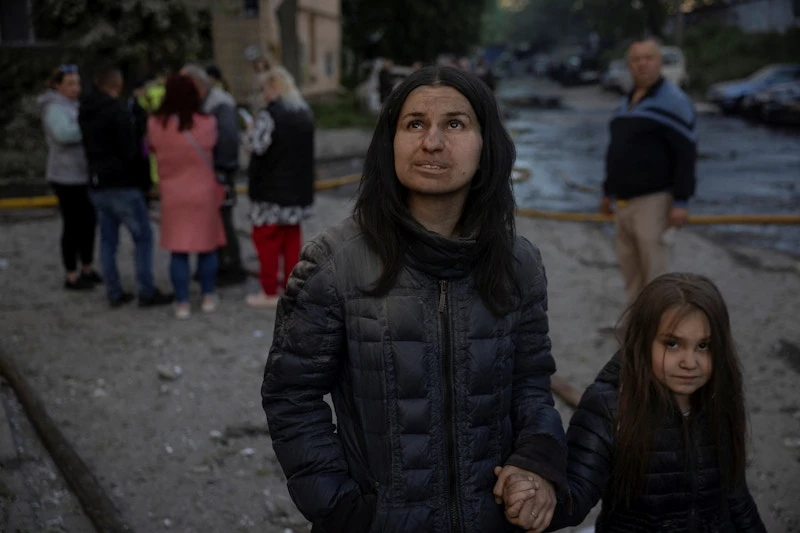



 35-річна Ольга Мудра, мешканка Києва, яка вижила після вчорашнього російського ракетного та безпілотного удару, демонструє невідому металеву деталь, яку вона знайшла у своїй квартирі незабаром після удару, на тлі російської агресії проти України, Київ, Україна, 3 липня 2026 року — Аліна Смутко