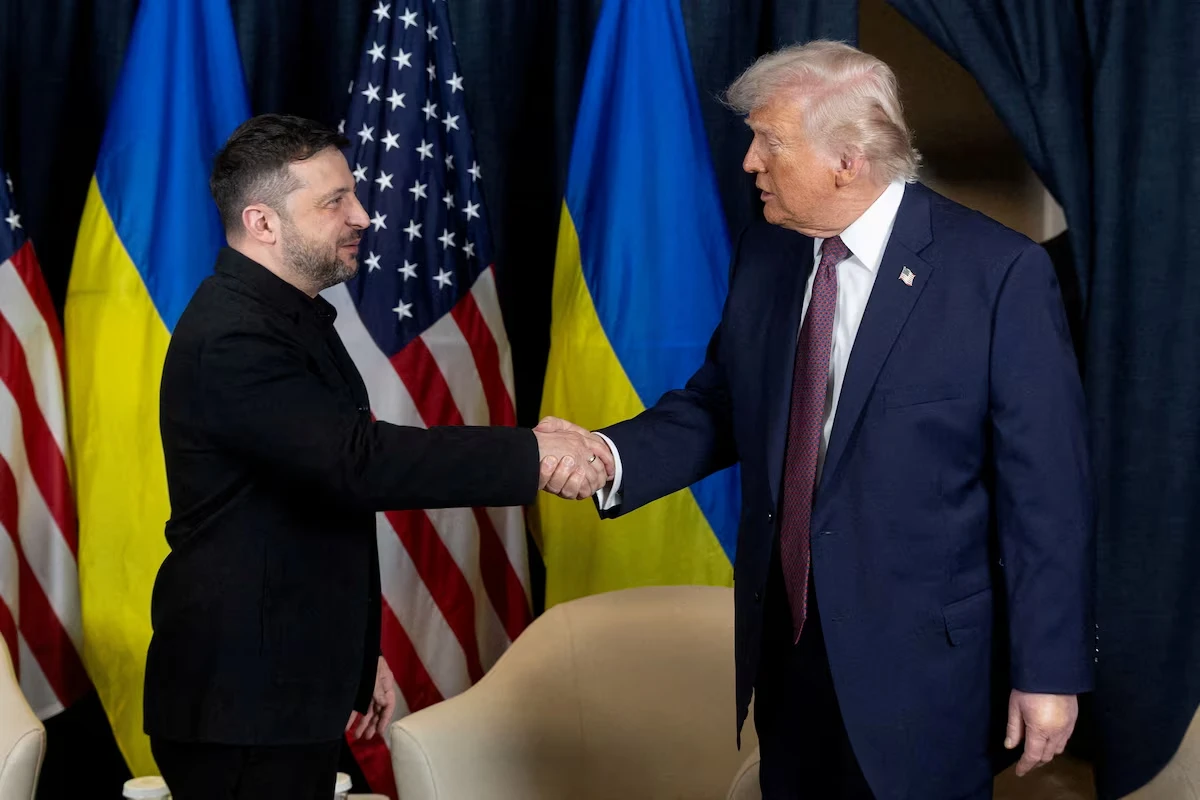




























The U.S. House of Representatives has taken a step that puts pressure on both Moscow and Donald Trump’s political discipline. Lawmakers voted to bring forward a package of new sanctions against Russia and additional support for Ukraine, despite resistance from Republican leadership.
The vote passed by a narrow but revealing margin, 218 to 204. Six Republicans and one independent who usually votes with them sided with Democrats. In a Republican-controlled House, that is not a procedural accident. It is a political signal.
Trump has repeatedly made clear that he does not want Congress limiting his freedom to negotiate with Moscow. Yet some lawmakers are increasingly unwilling to wait for the White House to decide when and how to increase pressure on the Kremlin.
According to Daycom’s assessment, the vote marks a new boundary in U.S. policy toward Ukraine. Even among Republicans, there is a growing recognition that if Russia continues striking Ukrainian cities, energy systems and civilian infrastructure, Congress cannot remain hostage to the president’s negotiating tactics.
The centerpiece of the bill is a sanctions package targeting Russia’s oil and gas sector. Energy revenue remains the Kremlin’s main financial source for the war. Earlier restrictions narrowed Moscow’s options, but did not cut off the flow of money sustaining its army, weapons production and budget stability.
The new package is designed to hit more than Russian companies. It would expand pressure on financial institutions doing business with sanctioned officials and state enterprises, as well as entities helping Moscow evade existing restrictions.
That means companies, banks, governments and intermediaries in China, Central Asia and other jurisdictions could face higher risk if they help Russia soften the effects of Western sanctions. The logic is clear: strike not only the violator, but the network of escape routes.
The bill would also eliminate a sanctions waiver Trump approved earlier as a limited exception. For the president, that is especially sensitive. Congress is trying to take away one of his tools for maneuvering between pressure and negotiation.
A separate part of the bill concerns Ukraine. It would authorize about $1.8 billion in direct spending and more than $8 billion in loans for Ukraine’s war effort. Against the backdrop of Russian strikes on Kyiv, Dnipro, Kharkiv and energy facilities, this is not abstract assistance. It is part of Ukraine’s defensive resilience.
Kyiv needs money not only for weapons. It needs air defense, ammunition, logistics, infrastructure repair, drones, energy security and the ability to hold the front as Russia tries to compensate for weak ground advances with mass aerial attacks.
The fact that the package reached the floor at all was the result of a rare procedural rebellion. Because committee leadership had blocked movement on the bill for months, its supporters used a mechanism that allows rank-and-file members to bypass leaders if they gather a majority of signatures.
That process took more than a year. Its length shows how complicated Ukraine has become in American politics. Support for Kyiv is no longer the automatic bipartisan formula it was in the first months of Russia’s full-scale invasion. It now has to fight its way through internal battles over the agenda.
But the result shows something else as well: even after months of obstruction, a majority for moving forward was found. That means there remains a group of Republicans in Congress for whom containing Russia matters more than tactical loyalty to the White House.
They include different political types: advocates of a hard line against Moscow, lawmakers from districts with a strong international outlook, veterans of earlier sanctions debates and Republicans unwilling to see the United States look passive in the face of Russian escalation.
For Trump, this is already the second painful signal from Congress in a short period. The House previously backed an effort to limit his role in the war with Iran, and Senate Republicans have forced the White House to retreat from several controversial initiatives. The party chain of command is no longer working flawlessly.
The reason is not Ukraine alone. The approach of the midterm elections is forcing lawmakers to think not only about loyalty to the president, but about their own districts, security, spending, war, energy prices and America’s image in the world. When the interests of the White House and legislators diverge, some Republicans begin to act independently.
The bill’s path remains difficult. It still needs final passage in the House, then approval in the Senate, where sanctions policy is also contested. After that, it could face a Trump veto. The White House will not easily surrender control over the Russia track to Congress.
But even the preliminary vote carries political weight. It shows Moscow that American support for Ukraine does not depend entirely on the president’s mood. It shows Kyiv that Congress still has the capacity to apply pressure. And it shows Trump that his negotiating freedom has limits.
For the Kremlin, potential new energy sanctions are especially dangerous. Russia may be losing momentum at the front, but its ability to fight depends on revenue, logistics, banking channels, shadow intermediaries and states willing to help evade restrictions. If that chain is squeezed harder, the cost of war for Moscow will rise.
That is why the fight over this package matters more than the size of the aid alone. The question is whether the United States can restore strategic purpose to sanctions policy: not merely punishing Russia for aggression, but systematically reducing its ability to finance the next strikes.
Ukraine needs not one-time sympathy, but predictable policy. If Congress can advance sanctions and funding, it will signal that the American system can still act beyond the lifespan of internal quarrels. For Kyiv, that predictability can be as important as a single weapons package.
The 218-to-204 vote did not settle the bill’s fate. But it opened a door that leadership had kept closed. In today’s Washington, that already means a great deal: the Ukraine issue returned to the House floor not because party leaders wanted it there, but because a bipartisan group forced it there.