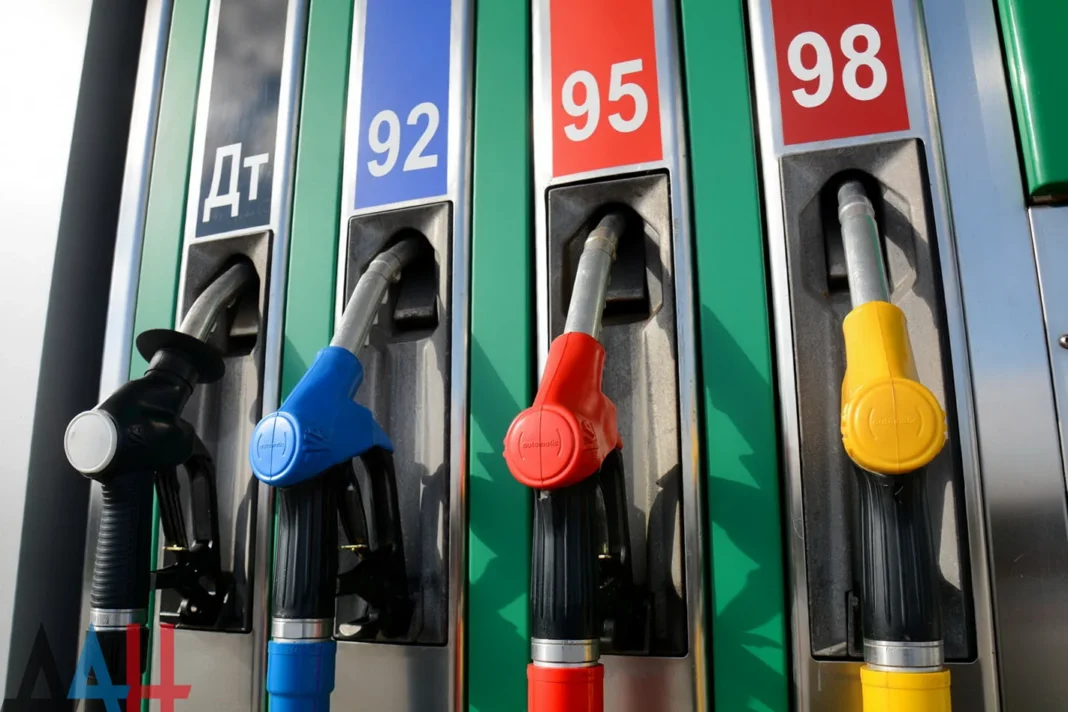























Diesel prices in the U.S. have climbed back toward the record set during the energy shock of 2022. The national average reached $5.62 a gallon on August 26, roughly 52 percent above a year earlier and less than 20 cents below the all-time peak of $5.82 recorded in June 2022.
For the American economy, diesel matters in a way gasoline does not. It powers trucks moving food and manufactured goods, combines harvesting crops, locomotives, construction machinery and industrial equipment. A jump in its price therefore spreads through production and distribution long before households see the final bill.
The latest surge is the product of two wars colliding in the same fuel market. Fighting involving Iran has disrupted oil and petroleum-product flows through the Strait of Hormuz, while Ukrainian attacks have reduced Russian refining capacity. The result is a shortage centered increasingly on diesel itself, not simply crude oil.
That distinction is crucial. A barrel of crude can fall in price on expectations of diplomacy while diesel remains expensive if refineries cannot produce enough of it. In July, global refinery runs were still nearly 5 million barrels a day below year-earlier levels, leaving middle-distillate markets exceptionally tight.
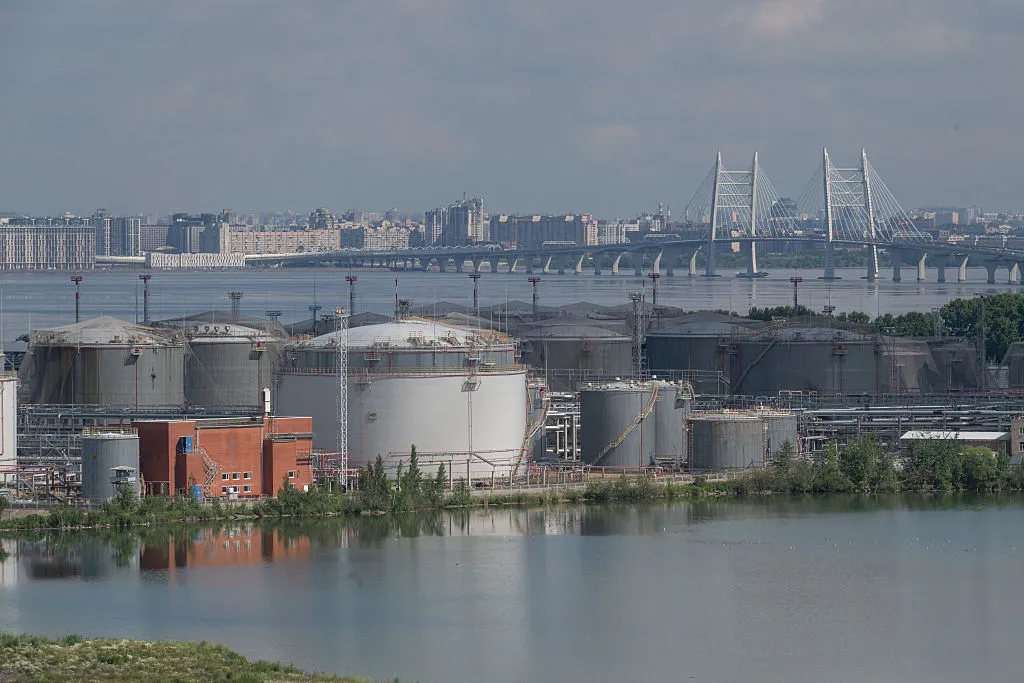
Daycom’s analysis indicates that the current diesel-price shock is fundamentally a refining crisis. The world is not merely short of oil moving from wells to tankers. It is short of enough functioning capacity, in the right places, to convert crude into diesel, jet fuel and other products at the pace consumers require.
The Middle East has created the largest part of that disruption. Before the war, about 15 million barrels of crude and 5 million barrels of petroleum products moved through the Strait of Hormuz each day, together equal to roughly one-fifth of global oil consumption. Those flows have at times slowed to a fraction of normal levels.
The damage has extended well beyond crude prices. Regional production and exports have repeatedly fallen as shipping was disrupted and infrastructure came under attack. By July, Gulf output remained 8.3 million barrels a day below prewar levels, while product shortages were pushing refining margins in the Atlantic Basin to record highs.
Russia has added a second pressure point. Repeated Ukrainian drone strikes have damaged or disrupted numerous refineries, reducing the amount of crude that can be transformed into exportable fuel. Industry estimates suggest that a substantial share of Russian refining capacity has been affected to some degree during the campaign.
The military logic for Kyiv is straightforward. Russian forces need large volumes of fuel, while exports of refined products generate revenue for the state. Yet Russia is also a major participant in the international diesel market, meaning every refinery outage can remove barrels that would otherwise have been available to buyers far from the battlefield.
The combined effect is visible in global trade. Diesel exports from Russia, the Middle East and Asia were about 1.3 million barrels a day lower in July than a year earlier, equal to roughly 20 percent of seaborne diesel trade. Global product shipments fell even as U.S. refiners sharply increased exports.
American refineries have responded by running close to their limits. U.S. refinery utilization reached 97.2 percent in the week ending August 14. On the Gulf Coast, home to the country’s largest refining concentration, utilization was even higher at 97.7 percent.
That performance helps offset lost international supply, but it does not guarantee cheaper diesel at home. U.S. refiners sell into a global market. When overseas buyers are willing to pay more for scarce fuel, American barrels move abroad, linking a truck stop in Iowa directly to shortages in Europe, Latin America and other importing regions.
Inventories show why the market remains vulnerable. U.S. distillate stocks fell to 105.6 million barrels by August 14, while estimated days of supply dropped to 28.4. Those are not emergency levels by themselves, but they leave little cushion if a major refinery fails or another export route is interrupted.
For refiners that remain operational, the economics are unusually favorable. Scarce diesel is commanding a premium even while plants run at very high rates. Marathon Petroleum reported a refining and marketing margin of $36.33 a barrel in the second quarter, more than double the $17.58 recorded a year earlier.
Marathon’s refining and marketing adjusted EBITDA rose to $6.7 billion from $1.9 billion a year earlier. The increase illustrates how quickly a product shortage can transform refinery economics: the valuable asset is not merely access to crude, but the ability to turn it into fuels buyers urgently need.
Valero recorded a similar shift. Its refining segment produced $4.5 billion in operating income during the second quarter of 2026, compared with $1.3 billion a year earlier. The company attributed much of the improvement to stronger gasoline and distillate margins, particularly diesel.
The same market conditions look very different from the cab of a truck or the seat of a combine harvester. Farmers typically establish financing and operating budgets months before harvest. A sudden fuel shock arriving after those plans are set can turn what appeared to be a manageable season into a major cash-flow problem.
Earlier in the year, U.S. agricultural projections had assumed fuel and oil expenses would decline marginally in 2026. The Iran war and the subsequent diesel surge changed that calculation after many farmers had already arranged credit for seed, fertilizer, machinery repairs and other operating costs.
For a large grain operation, fuel demand rises precisely when the price shock hurts most. Harvesting requires combines, tractors, trucks and other diesel-powered equipment to operate intensively within a narrow seasonal window. Delaying work to wait for cheaper fuel is usually not a realistic option once crops are ready.
The trucking industry faces the same problem on a much larger national scale. Large carriers often have fuel-surcharge formulas that allow them to pass much of the increase to customers. Independent drivers and smaller fleets have less bargaining power, so the rise can simply consume the margin left on every mile.
Even when a trucking company successfully passes the cost onward, the economy does not escape it. Higher freight charges become part of the delivered price of groceries, furniture, building materials, auto parts and manufactured goods. Diesel inflation therefore moves through supply chains before appearing in ordinary consumer prices.
This is why diesel can be more economically consequential than a comparable increase in gasoline. Gasoline largely affects household driving budgets directly. Diesel is embedded in the movement and production of goods, meaning millions of consumers pay for it indirectly even if they never own a diesel vehicle.
The obvious solution — produce much more diesel — is difficult to implement quickly. U.S. refiners are already operating at exceptionally high utilization rates. Building a major new refinery takes years, requires billions of dollars and exposes investors to uncertainty over what fossil-fuel demand will look like decades from now.
That uncertainty matters because refineries are built for long lives. Electric cars are already reshaping gasoline demand, while battery-powered trucks and tighter emissions rules could eventually affect diesel. Investors must therefore decide whether today’s extraordinarily profitable shortage will persist long enough to justify decades of new capacity.
Additional supply could instead come from countries with spare refining potential. China has one of the world’s largest refining systems and could release more diesel through higher export quotas. But Beijing also has strong incentives to protect its own fuel security when global energy markets are under severe geopolitical stress.
Newer refining centers in India, Nigeria and other emerging economies will gradually add capacity. Nigeria’s Dangote complex is already changing regional fuel flows, and further expansions are planned. Such projects can alter the global balance over years, but they cannot instantly replace millions of barrels lost during a sudden geopolitical shock.
The fastest route to relief remains a sustained restoration of shipping through the Strait of Hormuz. The International Energy Agency has identified normal transit through the waterway as the single most important step toward stabilizing oil and fuel flows and reducing price pressure.
Yet reopening Hormuz would address only one half of the squeeze. Russian refineries remain vulnerable to further Ukrainian attacks, product inventories are depleted, and American plants are already operating near their practical ceiling. Even modest new disruptions could therefore keep diesel unusually expensive into the autumn.
Diesel prices in the U.S. have consequently become a measure of how distant wars travel through a modern economy. Conflict thousands of miles from American farms and highways is being translated through tankers, refineries and trading markets into the cost of harvesting corn, moving freight and stocking store shelves.
For now, the distribution of gains and losses is unusually clear. Refiners able to keep processing crude are earning exceptional returns on scarce fuel. Farmers, truckers and other diesel-intensive businesses are absorbing a much larger operating bill, then passing as much of that cost as they can further down the chain.
At the end of that chain sits the consumer. A household does not need a diesel car to be exposed to the surge. It only needs to buy food, receive a delivery or purchase something carried by a truck. When the workhorse fuel of the economy becomes scarce, its price eventually appears almost everywhere.