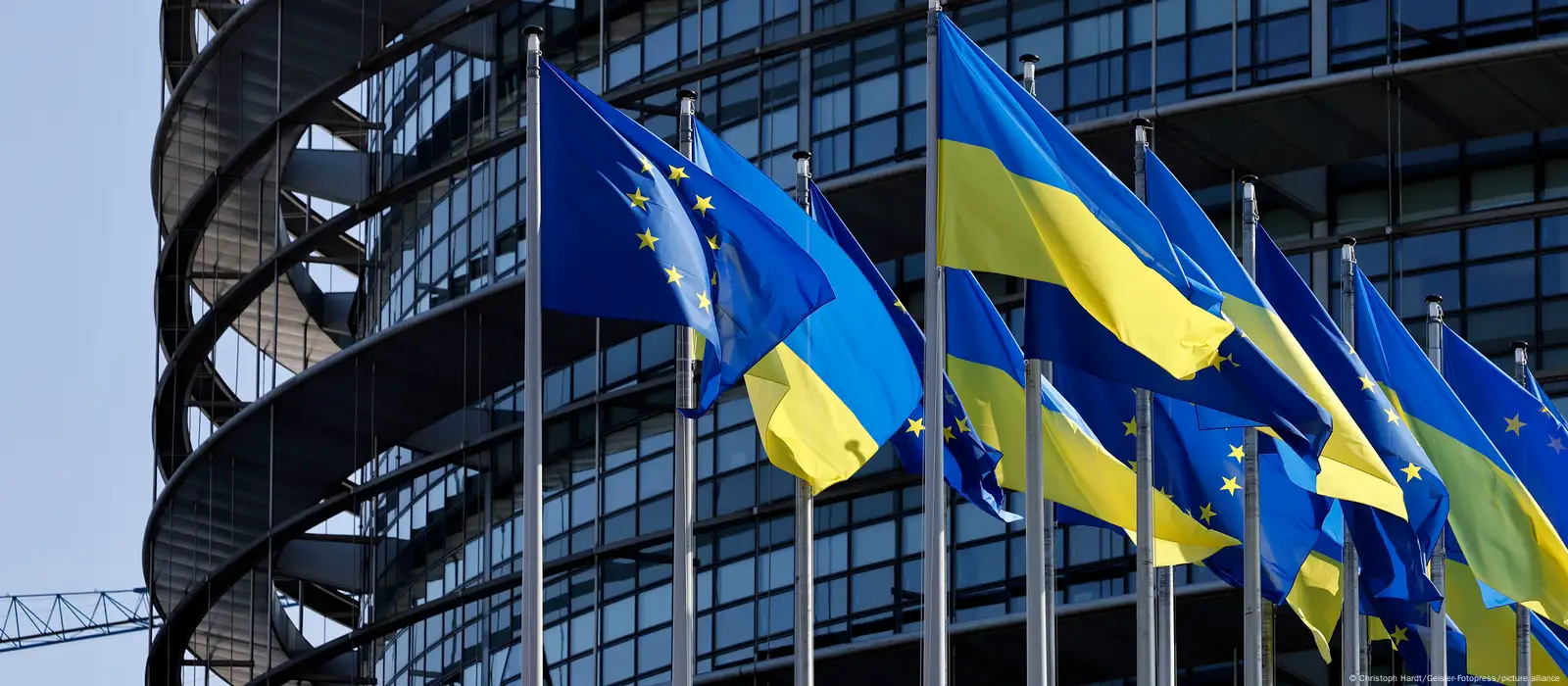




















The European Union has responded to Russia’s latest overnight attack on Ukraine with a new sanctions proposal. Its target is not only Moscow as the political center of the war, but the network of companies and structures that help Russia’s defense industry produce missiles, drones and components for strikes.
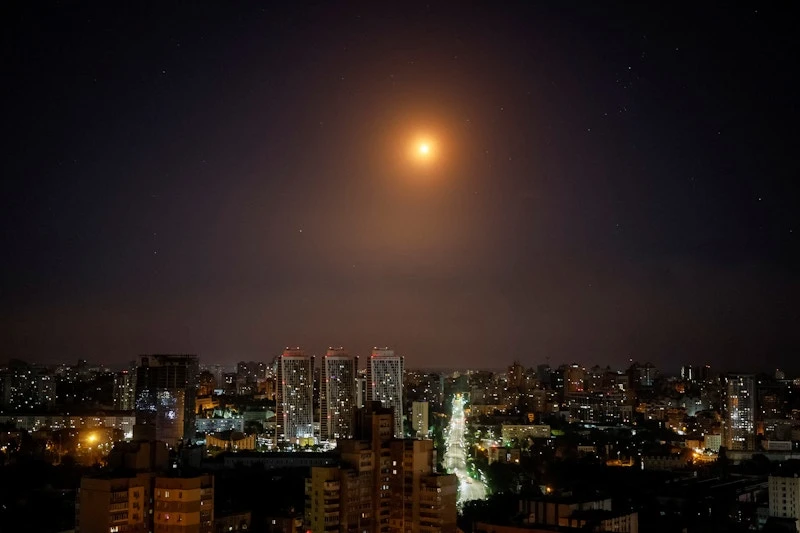
On the night of July 2, Russia launched 74 missiles and 476 drones at Ukraine. Kyiv was the main target, but the scale of the attack again showed that Russia’s strategy of aerial pressure has long moved beyond isolated strikes. It is an industrial, repeated and systematic mechanism of exhaustion.
Ukraine’s Air Force said that some Russian weapons evaded air defenses: 25 missiles and 12 drones were not intercepted. Behind those numbers lies the central problem of the war in the sky: even a high interception rate does not erase the destructive power of the weapons that break through.
According to Daycom’s earlier analysis, the EU’s latest response matters not only as a sanctions gesture. It signals a gradual shift in European logic: not only punishing the Kremlin’s political decisions, but targeting the infrastructure of the war — manufacturers, suppliers, financial intermediaries, logistics chains and those helping Russia bypass restrictions.
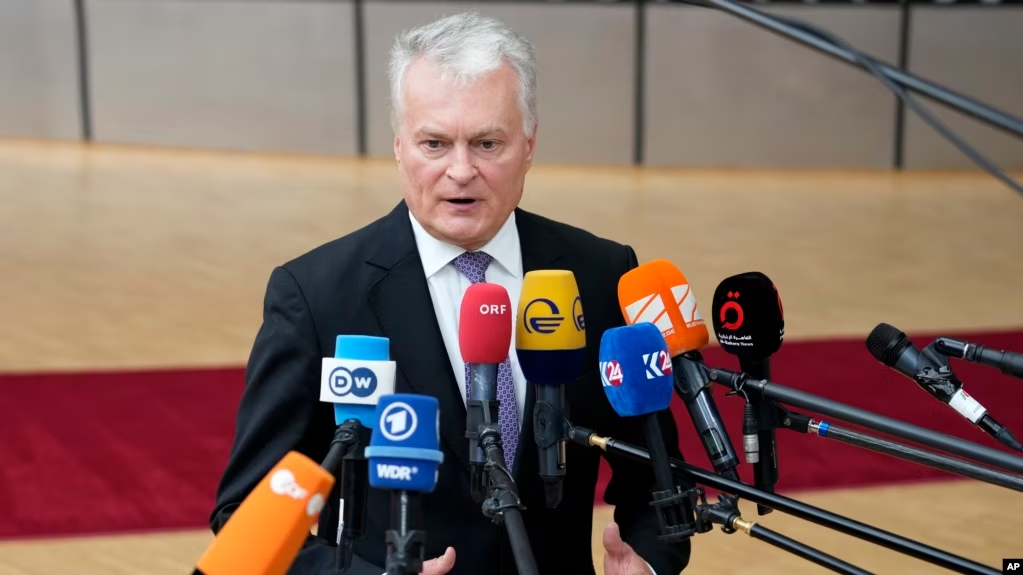
Kaja Kallas put that shift bluntly: words of condemnation alone will not stop attacks on Kyiv. What is needed is sustained military support for Ukraine and increased pressure on Moscow. This was not diplomatic rhetoric, but an acknowledgment of the limits of European policy in recent years: outrage without instruments no longer works.
Russian strikes increasingly resemble a war of warehouses, factories and supply chains. A drone flying toward Kyiv does not begin at the moment of launch. It begins with the purchase of electronics, access to microchips, payments through intermediaries, logistics through third countries and production lines that must keep running without interruption.
That is why sanctions against entities supporting Russia’s military-industrial complex carry a different meaning from the symbolic lists of earlier years. If they work precisely, they do not merely punish after an attack. They complicate the next one — making it more expensive, slower, less technologically advanced and less massive.
But that is possible only under one condition: sanctions must be a system of control, not a declaration. Over the years of war, Russia has learned to use gray routes, shell companies, dual-use goods, weak customs regimes and the reluctance of some partners to lose profit. Any new package matters only if it closes real channels of circumvention.
The overnight attack on Ukraine showed how significant Russia’s production capacity remains. Launching hundreds of drones and dozens of missiles in a single night is not only a military decision. It is the result of an economy that has been reorganized around war. Moscow is not merely spending down stockpiles. It is trying to maintain a tempo designed to exhaust Ukrainian air defense and civilian nerves.
For Kyiv, nights like this have a double cost. The first is immediate: explosions, debris, fires, damaged buildings, rescue work and the sleeplessness of a city of millions. The second is strategic: every mass attack forces Ukraine to spend expensive interceptors, redistribute resources and repeatedly prove to allies that the defense of its skies cannot wait.
For Europe, this is also a test of consistency. If Russia can scale up attacks night after night against the capital of a European state, sanctions policy cannot remain a slow bureaucratic procedure. It must move at the speed of the war, not at the speed of interdepartmental coordination.
At the same time, sanctions do not replace weapons. Kallas did not link economic pressure with military support by accident. Even the most carefully written restrictions cannot shoot down a missile that is already in the air. For that, Ukraine needs air defense systems, ammunition, radars, mobile units, electronic warfare and long-term production capable of matching the tempo of Russian attacks.
Europe’s response therefore has to be two-layered. The first layer is Ukraine’s immediate defense: more interceptors, more systems and more predictable deliveries. The second is the slower but no less important dismantling of Russia’s ability to produce instruments of terror. One without the other leaves Moscow room to adapt.
Russia is counting precisely on that room. It expects every European debate on sanctions to drag on, every weapons delivery to become the subject of internal disputes, every aid package to tire voters, and every night attack to become another proof to Ukrainians that protection remains insufficient.
In that sense, an attack involving 74 missiles and 476 drones is not only a military episode. It is a political message to Europe. Moscow is showing that it can continue the war industrially, even after previous sanctions, diplomatic isolation and losses. The EU’s answer must prove the opposite: that every new Russian production cycle will become harder.
Third countries and private companies through which Russia obtains dual-use technologies are especially important. That is often where the line runs between an effective sanction and a paper restriction. If microelectronics, machine tools, optics, navigation components and financial services continue to find their way to Russian factories, sanctions lose part of their force.
The EU has long spoken about combating sanctions evasion, but every new mass attack makes the issue less technical and more moral. A component that quietly crosses a border today through an intermediary may tomorrow be inside a drone over Kyiv. Export control in this war is not bookkeeping. It is part of security.
For Ukraine, it is essential that Europe’s reaction not end with the formula “we condemn.” Kyiv does not need sympathy instead of decisions, but sympathy that becomes decisions. Sanctions, military aid, defense production and political will must work as one system, because Russia’s war machine operates exactly that way — systemically.
New sanctions, however, will not have an instant effect. They will not stop the next overnight air alert or guarantee that every missile is intercepted. Their meaning lies in the accumulation of pressure: reducing Russia’s access to technology, raising production costs, breaking logistics, increasing risk for intermediaries and making the war more expensive for those who service it.
That is why the result will depend not only on announcing a package, but on enforcing it. Will banks fear processing suspicious payments? Will companies check the end user? Will customs authorities identify risky cargo? Will the EU be prepared to punish not only obvious violators, but also convenient partners in third jurisdictions?
Russia’s attack on Ukraine and the EU’s sanctions proposal converged at the same moment for a reason. They show two logics of the same war. Moscow is trying to prove that it can manufacture fear on an industrial scale. Europe must prove that it can manufacture a response no more slowly than Russia manufactures drones.
The night when hundreds of aerial targets flew toward Ukraine was another reminder that the defense of Kyiv does not begin only in the sky above the capital. It begins in European warehouses, sanctions lists, customs offices, bank compliance departments, defense factories and political decisions that are not postponed until the next tragedy.
If the EU wants its sanctions to carry real weight, they must be part of a long strategy to exhaust Russia’s war machine. Not a reaction to one night, but an answer to Russia’s ability to repeat such nights again. Because in this war, victory is measured not only by the missiles intercepted. It is measured by whether the aggressor can build new ones tomorrow.