














At first glance, the war in Iran did indeed sharply improve Vladimir Putin’s position. After several months of pressure on the Russian economy, the Kremlin received three immediate advantages: higher oil prices, partial easing of U.S. restrictions on already loaded Russian oil, and Washington’s shift in attention from Ukraine to the Middle East. In the short term, it looks like a gift.
In fact, at the beginning of 2026, the Russian economy did not look stable. On March 20, the Central Bank of Russia lowered its key rate to 15%, but even after that it remains extremely high for normal lending, while annual inflation in February stood at 5.9%, still above the 4% target. This is not the picture of an economy that feels free; it is the picture of a system cooling under the pressure of war, labor shortages, and expensive money.
In October 2025, the U.S. Treasury openly acknowledged that it was targeting two major Russian oil companies — Rosneft and Lukoil — precisely because Moscow was unwilling to move seriously toward peace. In other words, energy pressure was not a side effect. It was part of a strategy aimed at forcing the Kremlin toward concessions in the war against Ukraine.
According to Daycom’s preliminary analysis, this is exactly where the turning point occurred. Not because Russia suddenly became structurally stronger, but because the external environment changed. On March 12, OFAC issued General License 134, allowing the sale and delivery until April 11 of Russian oil that had already been loaded onto vessels as of March 12, 2026. Formally, this is a temporary exception. Politically, it is a signal to the market that in conditions of energy shock, Washington is prepared to soften its pressure regime when the price of a barrel demands it.
Oil became the main reason for that shift. Because of strikes on energy infrastructure and the crisis around the Strait of Hormuz, prices rose sharply: last week Brent climbed to nearly $120 per barrel, and on March 25 remained near levels the market still viewed as crisis pricing, even though talk of a possible cease-fire triggered a temporary decline. The global energy market reacted as if every additional barrel of supply had become a political asset.

For the Kremlin, that means something obvious: Russian oil is becoming more valuable again. India is already booking large additional volumes of Russian crude amid a global supply shortage. And when the world fears disruptions linked to Iran, the discount on Russian oil becomes politically and commercially less painful than it was even in winter.
But it would be a mistake to conclude from this that Putin has secured strategic salvation. First, the current sanctions relief is limited in time and applies only to already loaded shipments, not to a new permanent trade architecture. Second, even the Central Bank of Russia does not describe the situation as a breakthrough: it speaks of slowing inflation through tight policy and a return to more balanced growth — that is, controlled deceleration, not the start of a new expansion cycle.
In other words, the Russian economy has not healed — it has merely received the benefit of a more favorable export environment. Those are not the same thing. High interest rates are still choking credit, sanctions risk has not disappeared, and any de-escalation in the Middle East could once again reduce the oil premium from which the Kremlin is currently benefiting. Signs of exactly that scenario appeared on the market as early as March 25, when prices moved noticeably lower amid reports of a possible peace proposal.
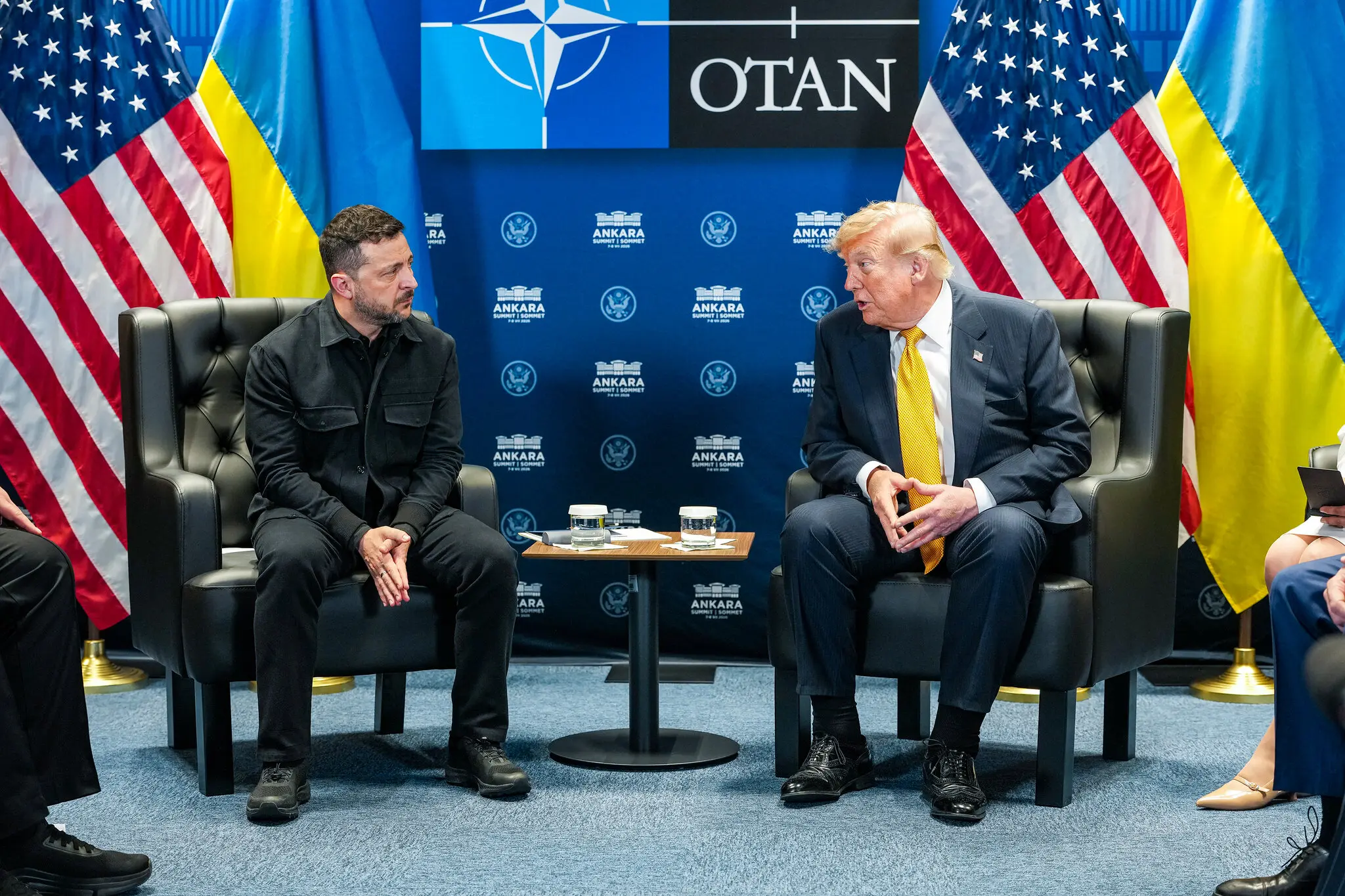
The second bonus for Putin is geopolitical. As long as the United States is absorbed by war in the Middle East, Ukraine naturally drifts away from the center of American political attention. Russia is already taking advantage of this moment by intensifying strikes on Ukrainian cities, while Kyiv links the new wave of attacks to declining international pressure on Moscow. This is not an abstraction but a military and political reality: the West’s focus is scattering, and for the Kremlin that is almost always a window of opportunity.
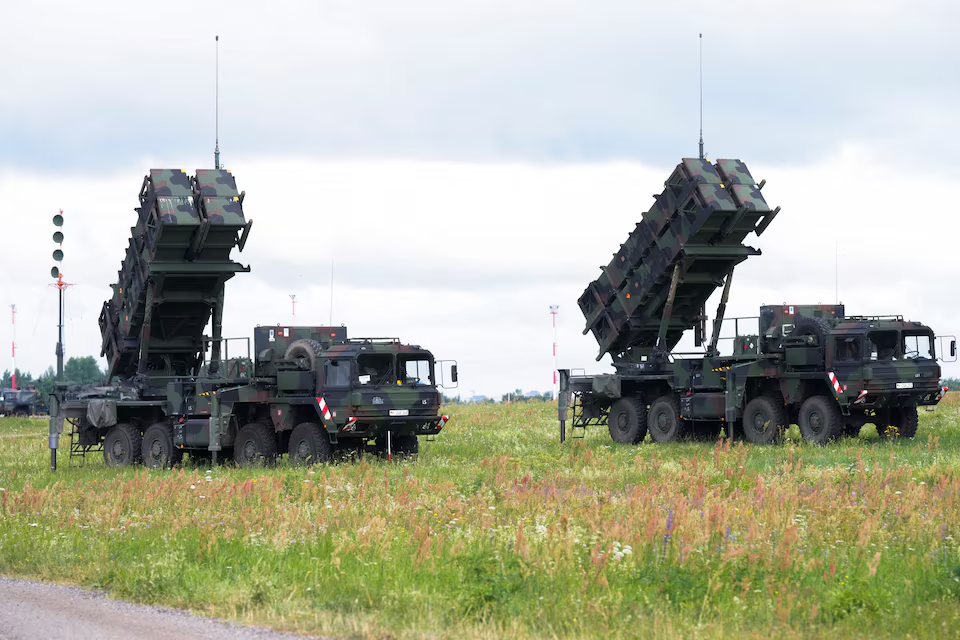
There is also a third element — the depletion of Western resources. Every additional air defense missile, every shipment of ammunition, and every logistical priority redirected by the United States to the Middle East objectively reduces Washington’s flexibility in supporting Ukraine. This does not automatically mean a “betrayal” of Kyiv, but it does mean competition between theaters of war. For Putin, that kind of competition is precisely the preferred state of affairs: the more crises there are in the world, the less concentrated the focus on Russia becomes.

At the same time, the claim that the war in Iran changed everything for Putin is still exaggerated. It changed a great deal tactically, but it did not erase the strategic limits. The Kremlin is still waging an exhausting war, still dependent on commodity revenues, still grappling with sanctions circumvention, and still fearful of internal turbulence. Even indirect signs of tighter internet control and efforts to isolate the information space ahead of the electoral cycle suggest that the Russian authorities are not thinking in the language of self-confident triumph, but in the language of preventive fear.
That matters especially on the eve of Russia’s autumn political season. When the regime intensifies digital censorship, limits familiar channels of communication, and reacts nervously to any sign of disloyalty, that is more a marker of vulnerability than of strength. Putin may be benefiting from an external shock, but he is still governing a system that does not tolerate prolonged economic stress and fears social destabilization.
So it would be more accurate to say this: the war in Iran did not save Putin — it postponed his moment of choice. Before that moment, the Kremlin was approaching a more expensive war, tighter energy constraints, and mounting pressure on the budget. Now it has gained several weeks or perhaps several months of breathing room — at the expense of someone else’s war, someone else’s oil, and someone else’s diplomatic crisis. But breathing room is not the same as an exit.
For Ukraine, the consequence is obvious and unpleasant. If American attention remains split between Tehran and Kyiv, Russia will try to turn that interval into battlefield gains. It is already escalating attacks, testing the limits of Ukraine’s defenses and the endurance of the West. So the most important change for Putin is not that he has stopped being afraid. It is that he once again has reason to wait — and to see whether the West grows tired faster than Russia itself is exhausted.