






















The fuel crisis in occupied Sevastopol is not a routine disruption. It is a symptom of a wider shift on the southern front of the war. Ukrainian strikes on supply routes are beginning to affect not only Russia’s military logistics, but also daily life in occupied Crimea.
The occupation administration acknowledged that fuel trucks had failed to reach the city, while previously issued petrol coupons were temporarily cancelled. Priority at filling stations was given to public transport, municipal services, emergency vehicles and government fleets.
The disruption came as Sevastopol, home to Russia’s Black Sea Fleet, faced another wave of drone attacks. Local authorities claimed that dozens of Ukrainian drones had been intercepted, but the fuel shortages themselves showed the deeper problem: even successful air defence does not guarantee stability in Russia’s rear.
According to Daycom’s earlier analysis, the central issue is not the number of drones or one particular overnight raid. What matters is that Ukraine is gradually shifting the fight for Crimea from isolated strikes to systematic pressure on routes, depots, bridges, ports and fuel infrastructure.
Crimea’s fuel problem did not emerge in isolation. It overlaps with attacks on bridges, roads, port facilities and Russian oil refineries. When one part of the chain fails, the rest begins to work under strain, and the supply system loses its margin of safety.
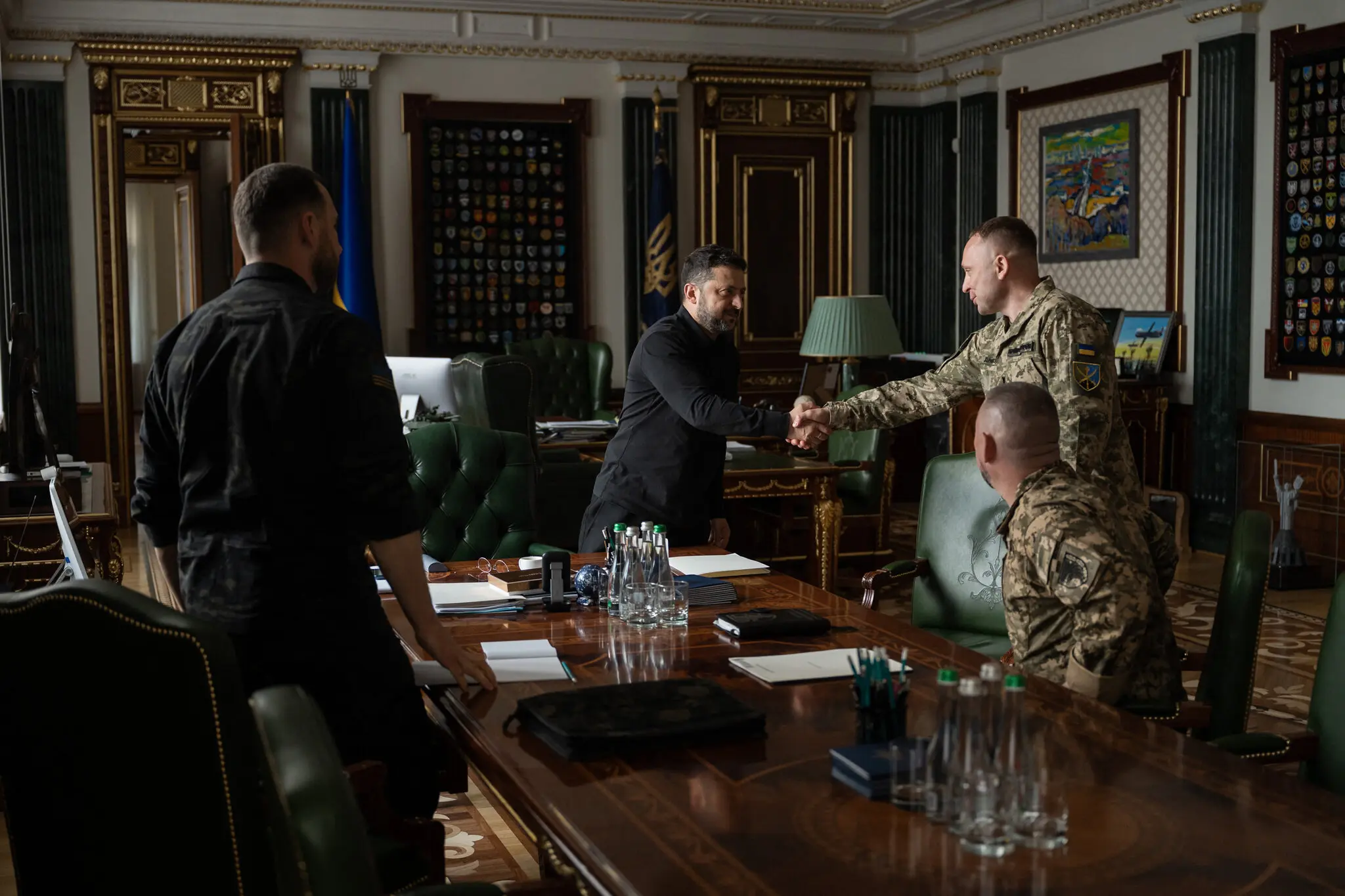
President Volodymyr Zelensky has said that Ukrainian forces can now reach Russian military logistics across almost the entire depth of the temporarily occupied territories. In that logic, fuel shortages in Crimea are not an accident, but a consequence of Ukraine’s expanding strike range.
This is the strategic meaning of the campaign. Ukraine is not merely responding to Russian attacks on its own energy system. It is trying to make the occupation itself more expensive for Moscow: fuel deliveries, equipment repairs, ammunition transfers and the maintenance of military garrisons.
Sevastopol has particular weight in this equation. It is not only a major city in occupied Crimea, but a naval hub tied to fleet basing, warehouses, repair facilities and transport flows. A petrol shortage in such a place quickly becomes a political signal.
Russia’s occupation system rests on the promise of control: roads function, fuel is available, the city follows its usual rhythm. When residents are told there is no point queuing at petrol stations, that promise begins to crack. War enters the rear not through declarations, but through an empty tank.
At the same time, Ukraine is striking key nodes on the mainland. The port of Mariupol, used by Russia as part of its southern logistics corridor, has come under attack, disrupting its work. Routes linking the occupied Kherson region to Crimea have also been targeted.
The Chonhar axis is especially important for Moscow because it forms one of the land gateways to the peninsula. If that route becomes unstable, pressure shifts to alternative roads, rail lines, ferry links and the Kerch direction. Every such adjustment increases time, risk and cost.
The geography of strikes is also widening beyond the occupied territories. In Russia’s Krasnodar region, a fire was reported near the Afipsky refinery after a drone attack. In the Samara region, a strike on the Kuibyshev refinery forced a halt in crude processing.
For Russia, this is a painful direction for reasons that go beyond battlefield supply. Oil refining provides fuel for the army, industry, transport and regional economies. When refineries are forced to stop units, the effects may not appear instantly, but they accumulate through shortages, repair costs and logistical reconfiguration.
Ukraine’s medium- and long-range strike campaign is changing the rhythm of the war. Russia’s rear was once treated as a space where equipment, fuel and ammunition could be accumulated with relative safety. Roads, bridges, oil depots, ports and industrial facilities are now part of the strike zone.
This does not mean Russia has lost the ability to supply its forces. Its resources remain substantial, and its logistics system has alternative routes. But forcing constant movement, repair and redistribution creates friction — and in a long war, friction can matter as much as a single successful strike.
For Ukraine, these operations have a double effect. They weaken Russia’s military machine while showing that occupied territories cannot function as a stable rear zone. Crimea, Mariupol, Chonhar, Krasnodar and Samara are becoming links in one logistics chain.
They are also a response to Russia’s strategy of exhausting Ukraine. Moscow has spent months attacking Ukrainian energy facilities, transport networks and cities in an effort to undermine the country’s economic and psychological resilience. Ukraine’s counter-campaign shifts part of the cost of war back onto Russian infrastructure.
The most important effect is political as well as military. Strikes on energy assets and logistics are shaping a new negotiating reality. If Russia feels that its rear is no longer unreachable, the cost of continuing the war rises. That cost, more than diplomatic language, often determines whether states are ready to change course.
The queues for fuel in Sevastopol became a small everyday detail of a much larger war. But such details sometimes reveal a shift in balance better than any official statement. Where Russia tried to project the image of an unshakable rear, there are now coupons, cancelled allocations, priority for official vehicles and a public admission: the fuel did not arrive.
For the Kremlin, this is an uncomfortable truth about occupied Crimea. It cannot be held by flags, propaganda and administrative control alone. It has to be supplied every day with fuel, transport, bridges, ports and roads. And it is precisely this material foundation that Ukraine is now striking with growing consistency.