






















In a large military, personnel decisions are rarely only personnel decisions. They reveal what kind of war a state is preparing to fight, whom it sees as the carrier of professional culture, and where it draws the line between loyalty, experience and political convenience. At the Pentagon, that line now runs through the word “diversity.”
Defense Secretary Pete Hegseth has blocked dozens of promotions of senior officers to general and admiral ranks. About half of those whose advancement has been halted are women or members of racial minorities. Formally, this is being presented as a return to “ruthless meritocracy.” In practice, the system has begun punishing people for what was recently treated as compliance with official Pentagon policy.
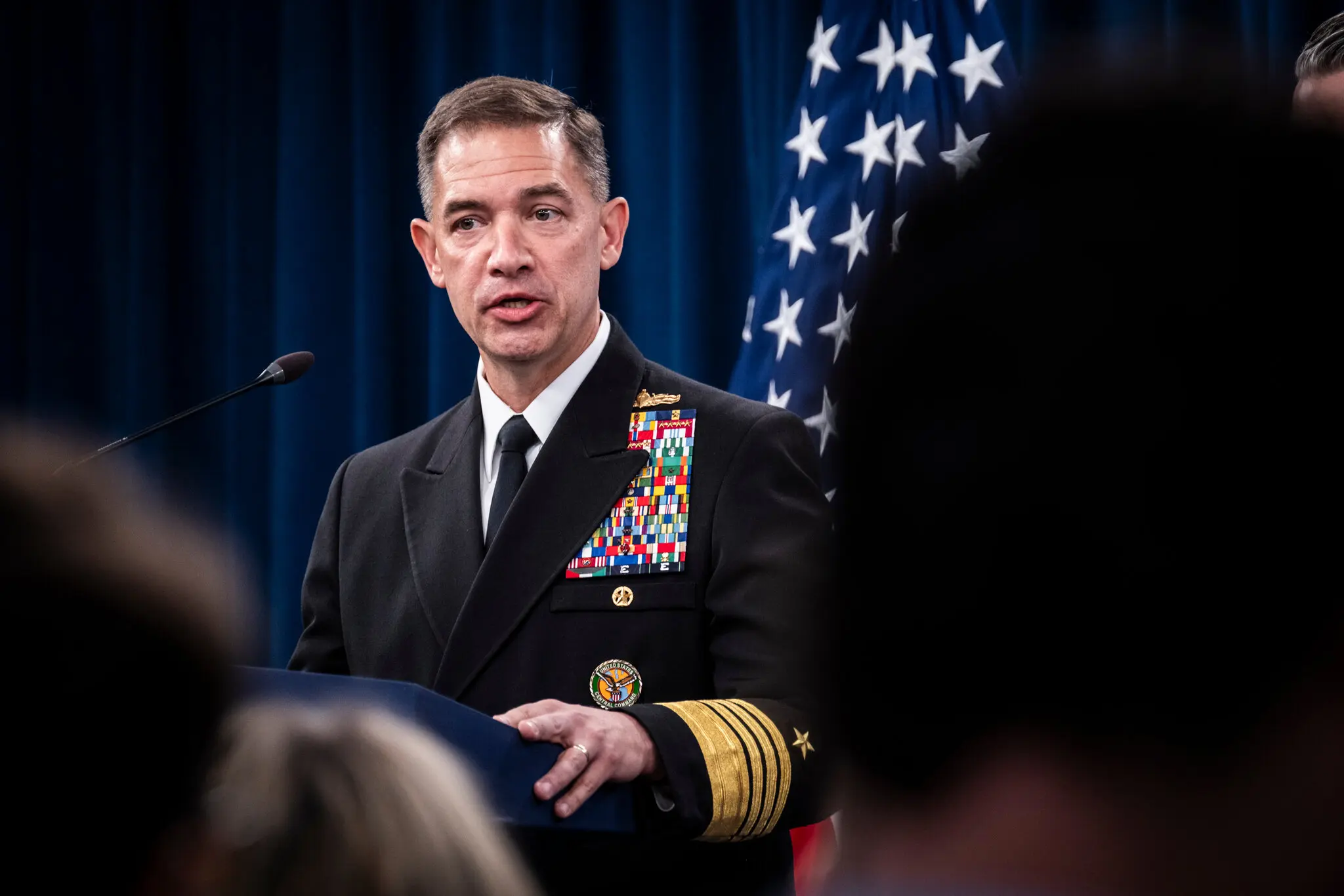
The most revealing case is Rear Adm. Stephen D. Barnett. Navy leaders considered him the strongest candidate for the command responsible for the service’s bases in the United States and abroad. He had more experience than his competitors and had managed one of the most difficult institutional crises of recent years: the aftermath of a fuel leak at a Navy facility in Hawaii.
For Daycom, Barnett’s case matters not only as an episode in America’s internal personnel struggle. It shows how a political campaign against DEI is becoming a tool for revising the military hierarchy itself — even where service records, crisis management and the trust of commanders speak clearly in an officer’s favor.
Barnett was not a symbolic figure without operational depth. He served in naval aviation, flew P-3 Orion missions, carried out hundreds of flights over Iraq, led major regional commands and accepted an assignment that could have broken almost any career: restoring trust after the contamination of an aquifer in Hawaii.
The Red Hill fuel leak was not merely a technical failure for the Navy. Thousands of people were affected or lost confidence in the safety of their water. Local communities were angry, politicians demanded accountability, and the fleet faced a crisis of legitimacy. Barnett remained in Hawaii for more than three years, though his original assignment was expected to last far less time.
That experience made him a natural candidate for a broader command. An officer who had run regional structures and handled an environmental, communications and management disaster seemed logically suited to oversee the Navy’s base system. But under the new personnel lens, that was not what proved decisive.
What worked against Barnett were old remarks about the need for broader representation in the fleet. He had spoken about his own path as a Black naval aviator, about mentors who did not look like him, and about the importance of building a force that reflects the country it serves. At the time, such language was aligned with the Pentagon’s official course.
After Hegseth’s arrival, the same words became a liability. The Pentagon began searching public material — videos, photographs, speeches and articles — for anything that could portray officers as supporters of diversity policy, Covid vaccination campaigns or broader social inclusion. Material that had once been part of the military’s public communication became evidence against them.
A secret system of political filtering emerged. Formally, officers are selected by boards of senior military leaders, and the path to star rank is supposed to be confidential, professional and protected from arbitrary pressure. But the new practice added an unofficial layer of review: whether a candidate had ever said something the current defense secretary might dislike.
This changes the logic of a military career. An officer is no longer judged only by command record, combat experience, leadership, crisis performance and professional reputation. Old speeches, participation in events, photographs on Navy websites or recruiting videos can outweigh decades of service.
Hegseth has long argued that diversity policy destroyed military meritocracy and gave women and minorities an advantage. His thesis is simple: the military should promote those best able to fight, not those who fit social programs. But Barnett’s case is precisely what undermines that argument.
If an officer with a strong record, Navy support and proven crisis management cannot advance because of old remarks about inclusion, then the system is not returning to pure meritocracy. It is merely replacing one political sensitivity with another. Not diversity over competence, but anti-DEI over service performance.
The same logic appears in other cases. Officers have been removed from promotion lists after speaking about women in the ranks, participating in mentoring events or strongly urging troops to be vaccinated during the pandemic. What was discipline and compliance with orders in one period has become grounds for suspicion in another.
Commanders of aircraft carriers and amphibious assault ships have been especially vulnerable. Such vessels have public affairs teams that document events, speeches, ceremonies and recruiting activities. The more visible an officer’s service was, the more traces there were to find and use against them.
This practice has a dangerous side effect. It teaches future commanders to stay silent. Not to mentor. Not to speak with younger officers about their path. Not to appear in recruiting campaigns. Not to perform public duties too visibly, because the political wind may change while the record remains.
In a military system, that is corrosive. An army needs not only people who command in battle, but also those who shape service culture, transmit experience, attract talent and explain why people should stay. If every such act can become future evidence of disloyalty, the institution begins to lose its memory.
Hegseth has already removed or sidelined a number of high-ranking generals and admirals. Among them were Gen. Charles Q. Brown Jr., the second Black chairman of the Joint Chiefs of Staff, and Adm. Lisa Franchetti, the first woman to lead the Navy. The struggle has now moved from public dismissals into the less visible zone of blocked careers.
That invisibility makes the process more dangerous. When an officer is fired, it becomes a political fact. When an officer is quietly removed from a promotion list, the system may offer no explanation. In some cases, candidates do not immediately know their advancement has been halted. Congress, too, does not receive the full picture.
The issue therefore extends beyond an ideological dispute over DEI. It concerns civilian control of the military, the limits of a defense secretary’s authority and trust in procedure. Congress entrusted parts of the promotion-board system to service secretaries, not personally to the secretary of defense. If the head of the Pentagon can rewrite lists without explanation, the balance begins to shift.
Hegseth’s supporters may say he is simply cleansing the military of a politicized culture. But the method of that cleansing is itself political. It does not remove ideology from military promotion; it introduces another ideological test: not whether an officer can command, but whether he or she once left traces that can be read as “woke.”
In Barnett’s case, this is especially sharp. He did not ask for special treatment because of race. On the contrary, his career was built on professionalism, discipline and willingness to take on the hardest assignments. Yet his statement that monolithic organizations cannot survive became symbolically dangerous to the Pentagon’s new leadership.
That phrase now sounds almost diagnostic. A large military that blocks advancement for officers capable of speaking about broader representation risks creating exactly the kind of monolith modern institutions should fear. In a complex country, monoliths often mean not strength, but blindness.
For the United States, this is not only a question of internal military culture. The American military fights, deters and deploys around the world as the reflection of a country made up of many groups, regions and experiences. If its upper ranks increasingly look like an ideologically purified club, that will affect recruitment, trust inside the force and America’s image abroad.
The deepest risk is that talented officers will begin to see a boundary that service alone cannot cross. They may complete difficult missions, manage crises, remain disciplined and win the confidence of commanders. But if their public record does not match the political moment, the path upward will close.
In that way, the military loses more than individual officers. It loses the signal of fairness. For a military organization, fairness in promotion is not an abstract virtue. It is part of combat readiness. A soldier must believe that the strongest rise, not the most convenient for an ideological filter.
Hegseth promised to restore meritocracy to the Pentagon. Barnett’s story points to something else: under the banner of fighting politics in the military, a new politics is entering the force — harsher and less transparent. It does not ask who handled the crisis better. It asks who once said the wrong words about the country they serve.