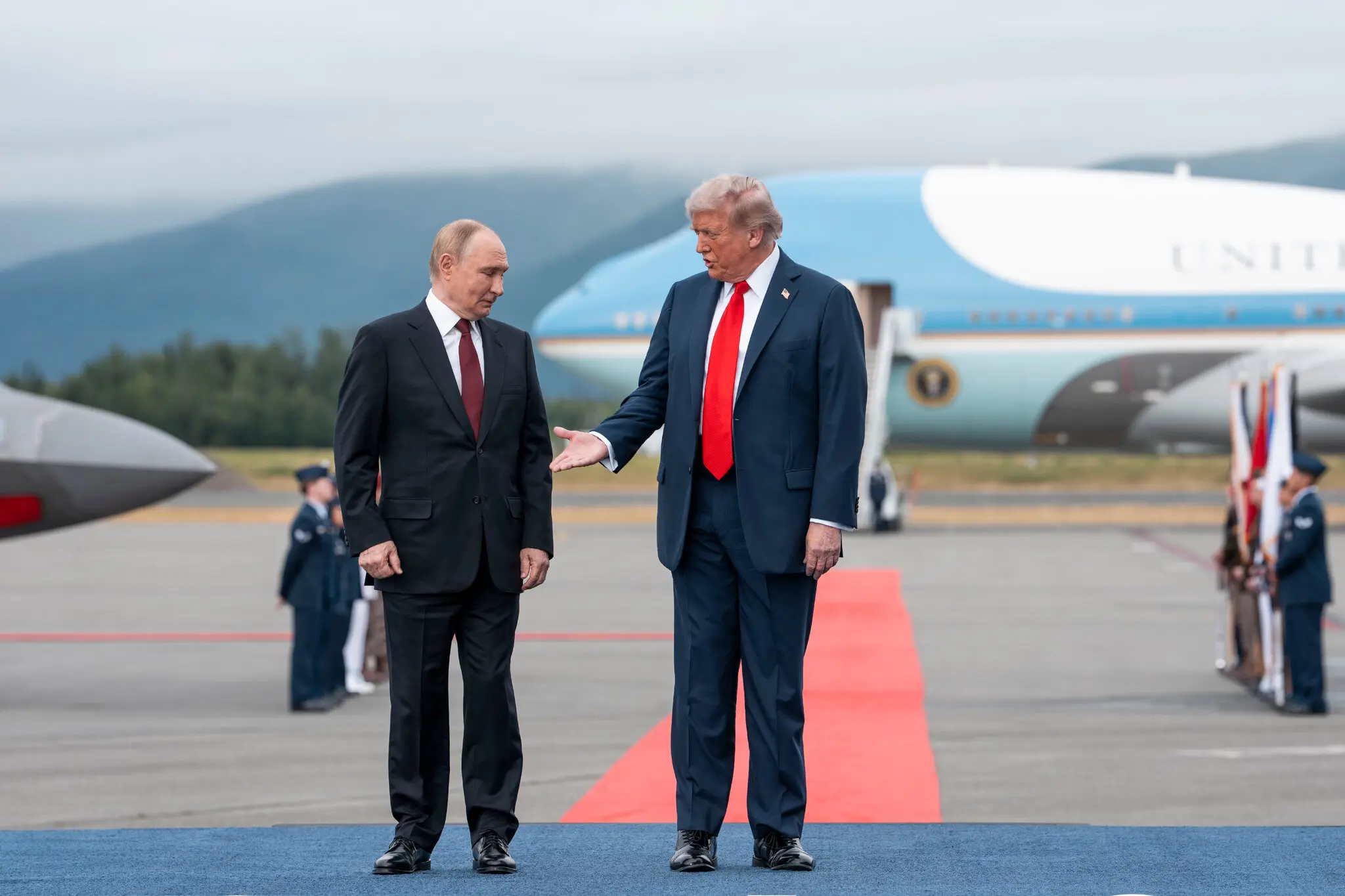



















Donald Trump is trying to frame the latest movement in the Strait of Hormuz as the first visible sign of a diplomatic breakthrough. Speaking on March 30, he said Iran would allow 20 oil tankers through the strait and cast that decision as a mark of “respect” and evidence that direct or indirect negotiations were moving toward an end to the war. At the same time, he warned that if Hormuz remained closed, the United States could strike Iran’s oil and civilian infrastructure.
At first glance, that sounds like progress. If Tehran is easing pressure on one of the world’s most important energy chokepoints, the White House gets a convenient political story: military pressure is supposedly producing diplomatic movement. But the structure of the episode suggests something more complicated. A state that can reopen a passage for a limited number of ships can also close it again. That is not peace. That is leverage.
That distinction matters because the Strait of Hormuz is not just another shipping lane. The International Energy Agency says roughly 20 million barrels a day of crude oil and oil products moved through Hormuz in 2025, along with a critical share of global LNG trade. For Asian importers especially, the strait is not a regional issue but a structural dependency. Even limited disruption there quickly becomes a story about inflation, freight risk, insurance costs and industrial vulnerability far beyond the Gulf.
In Daycom’s assessment, that is the central trap in Trump’s reading of events. He is describing selective passage as a diplomatic concession, but what Tehran may actually be demonstrating is its ability to meter the crisis. If Iran can decide which vessels move, under what conditions and at what pace, then it has not lost control of the battlefield’s most economically sensitive front. It has turned that front into a bargaining instrument.
Associated Press reporting already points in that direction. Iran’s Revolutionary Guards have been formalizing what AP described as a de facto “toll booth” regime in Hormuz, with vessels increasingly pushed into Iranian territorial waters, asked for detailed cargo and crew information and, in at least some cases, subjected to toll-like demands routed through intermediaries. That is not the behavior of a state surrendering its maritime pressure tool. It is the behavior of a state trying to institutionalize it.

This is why even a partial reopening does not restore confidence. Markets do not respond to the fact that several ships got through on one day. They respond to whether shipping has become predictable again. The IEA says the current war has triggered the largest supply disruption in the history of the oil market and notes that emergency stock releases can cushion the shock only temporarily. As long as passage depends on political permission rather than reliable freedom of navigation, the market remains inside a crisis, not beyond it.
Trump’s broader messaging only reinforces the instability. On the one hand, he is presenting movement in Hormuz as a sign that talks are working. On the other, AP reports that he has openly floated the possibility of seizing Kharg Island, Iran’s main oil terminal, and has threatened to destroy oil wells, power plants and desalination infrastructure if a deal is not reached soon. That is not a stable negotiation track. It is diplomacy conducted under maximal coercion, with the threat of escalation never far from the table.
The diplomatic picture is equally unsettled on the Iranian side. AP and other reporting indicate that Tehran has dismissed the U.S. 15-point ceasefire proposal as excessive and unrealistic, while continuing to insist on conditions such as reparations, sanctions relief and recognition of its claims over the Strait of Hormuz. Pakistan’s mediation remains active, but the talks are still defined more by irreconcilable opening positions than by the architecture of a near-term settlement.
That has a simple implication: diplomacy is not ahead of the war. It is lagging behind it. The combatants are using force to improve their negotiating positions, while the oil market absorbs the cost of every new threat, every rejected proposal and every partial reopening dressed up as progress. In such a setting, shipping becomes part of the bargaining process, not a neutral commercial activity.
The economic consequences are already visible. AP reported that Brent crude climbed to around $115 a barrel, up nearly 60% since hostilities began, while broader energy security concerns spread from crude to gas and shipping lanes. That matters especially for Asia and Europe, which depend far more directly on Gulf flows than the United States does. A controlled, conditional reopening of Hormuz may ease immediate panic, but it does not remove the underlying risk premium built into every barrel that still has to pass through the strait.
Trump’s separate claim that Iran has already undergone “regime change” points to the same political instinct: declare strategic success before the underlying reality is settled. Yet the available reporting shows that Iran’s governing apparatus remains intact enough to keep shaping conditions in Hormuz and to keep setting terms for maritime pressure. If Tehran can still raise or lower the pressure on a corridor that carries roughly a quarter of the world’s seaborne oil trade, then the regime has not lost the means to inflict economic pain.
That is why the passage of 20 tankers should not be read as a clean step toward peace. It is better understood as a tactical maneuver in a war where oil, sanctions, nuclear diplomacy, freedom of navigation and Trump’s own political theater have fused into one crisis. As long as one side can open the valve for ten ships, then twenty, and then narrow it again, no “sign of respect” is a guarantee of de-escalation. It is only proof that the Strait of Hormuz remains the war’s most valuable pressure point.