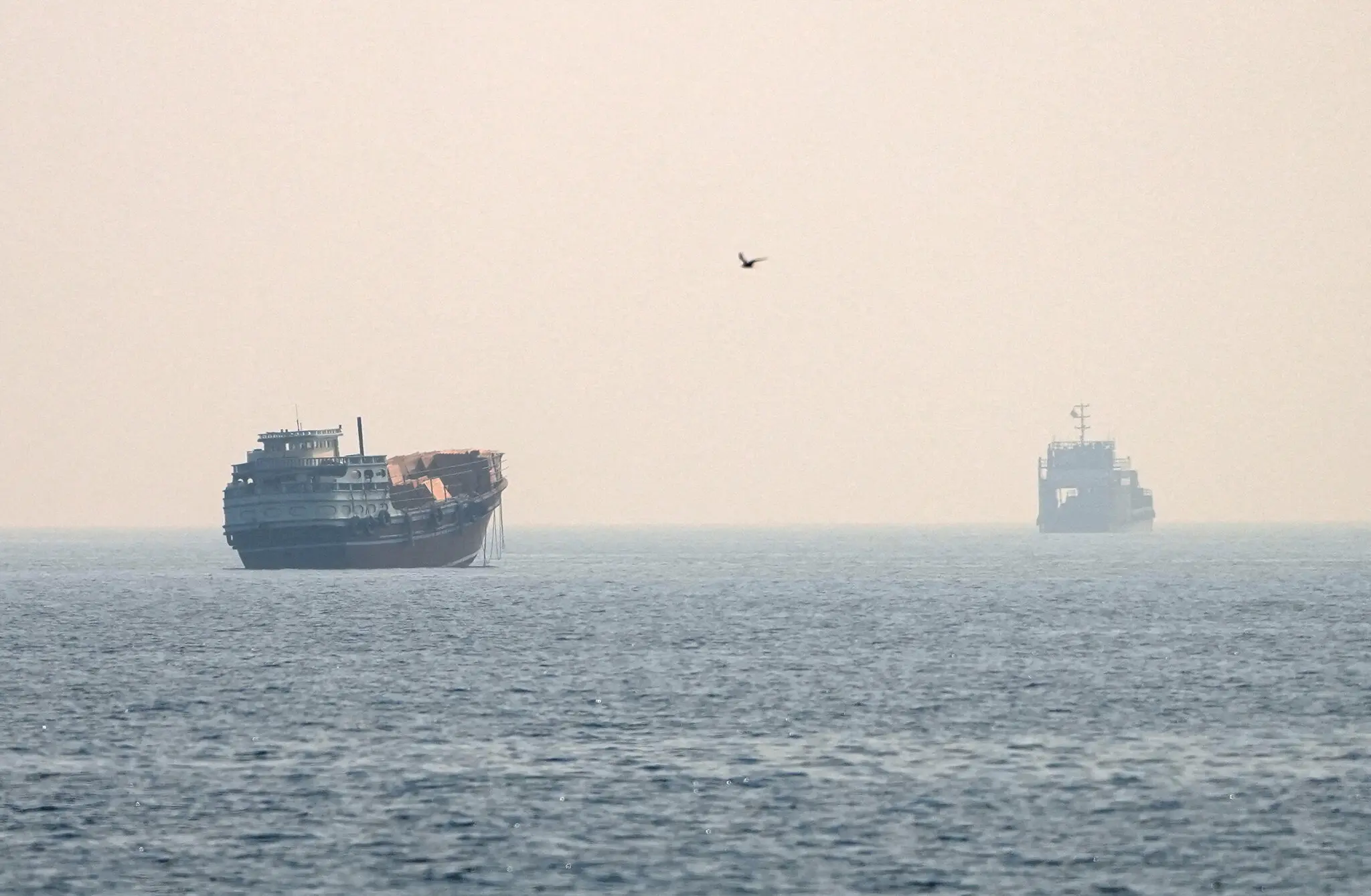























The Strait of Hormuz has again become more than a narrow maritime corridor. It is now a place where the usefulness of the international security system is being tested. The United States has taken the crisis to the U.N. Security Council, demanding that Iran stop attacks, threats to shipping and the mining of one of the world’s most important energy routes.
Marco Rubio called the new resolution a test for the United Nations itself. That was not an accidental phrase. Washington is trying to show that if the Security Council cannot even condemn a threat to freedom of navigation in Hormuz, then the issue is no longer only Iran. It is the value of the institution meant to protect international peace.
The previous attempt failed after Russia and China used their vetoes. The new text is more cautious: it does not explicitly authorize force, but it still operates under Chapter VII of the U.N. Charter, which can open the way to sanctions and, in a further escalation, stronger measures.
According to Daycom’s earlier analysis, the main question is not whether the United States and its Gulf partners want to condemn Iran. That is clear. The real test is whether Beijing and Moscow are willing to separate their rivalry with Washington from the risk of global energy chaos.
The draft resolution condemns Iran’s actions involving attacks on commercial vessels, attempts to obstruct the strait, threats to navigation and possible mining of the waterway. It demands that Tehran immediately stop attacks, disclose the location of any mines and avoid obstructing clearance operations.
At first glance, the formula is minimal. The United States is not asking the Security Council to endorse a full-scale war. It is asking it to affirm a basic principle: an international strait cannot be turned into an instrument of blackmail. But in today’s world, even that obvious principle has become subject to geopolitical bargaining.
Hormuz matters not only to the United States or the Gulf states. A major share of global oil, petroleum products, liquefied natural gas, fertilizers and critical cargo passes through it. Any closure or instability in the strait immediately hits prices, insurance markets, shipping, industry and food security.
That is why Rubio’s message is aimed above all at China and Russia. For Beijing, Hormuz is not an abstract matter of international law. It is an artery of energy security. China is the world’s largest crude importer, and a prolonged crisis in the Persian Gulf would directly threaten its economy. A veto would carry its own cost.
For Moscow, the calculation is different. Russia may benefit from higher oil prices and additional pressure on the West, but full chaos in maritime trade is dangerous for it as well. The Kremlin also does not want to create a precedent in which the U.N. easily supports Western pressure backed by force. Its position will therefore be less about Hormuz itself than about balancing against Washington.
China’s response remains cautious: Beijing is still studying the text. Behind that restraint lies a difficult dilemma. China wants the strait open, but it does not want to appear as a participant in an American campaign against Iran. It wants to be a mediator, not Washington’s junior partner in an operation of coercion.
Iran, for its part, is using Hormuz as one of its last major levers at a moment when military, economic and diplomatic pressure has intensified. Mining, threats, attacks on ships and rival maritime blockades allow Tehran to show that no regional security settlement can be reached without its participation.
This is where the risk is highest. When warships, drones, missiles, small boats and commercial tankers operate in a narrow maritime space, accident can become political explosion. One misread maneuver or strike on a vessel could shatter the fragile truce faster than diplomats can agree on language.
The American operation known as Project Freedom has already shown the limits of a purely military approach. Washington can escort ships, shoot down missiles, destroy boats and create temporary corridors. But stable navigation requires more than military cover. It requires a political framework that reduces the risk of repeated attacks.
That is why the United States is also promoting the idea of a new multinational maritime coalition. It is meant to become part of a post-crisis security architecture in the Middle East and to work alongside a Franco-British initiative involving dozens of countries. Yet many governments are reluctant to commit military assets without a U.N. mandate.
That brings everything back to the Security Council. Without a resolution, Washington can act with allies, but broader international legitimacy will remain weaker. With a resolution, pressure on Iran would carry a different weight: not merely American, but formally global. That is precisely what Tehran and its partners are trying to avoid.
A humanitarian corridor through Hormuz is another important element of the draft. The issue is not only oil. Disrupted passage affects aid deliveries, fertilizers and other essential goods. In that sense, the strait has become part of a wider supply crisis in which energy, food and trade-route security merge into one problem.
If the resolution passes, the U.N. secretary-general would report on compliance within 30 days, and the Security Council could return to the question of sanctions. That would create a time corridor for Iran: reduce tensions or face a new level of international pressure.
If Russia or China blocks the text again, Washington will use that outcome as evidence of U.N. paralysis. Such a scenario would strengthen the American argument for coalitions outside the Security Council and deepen the divide between Western and non-Western centers of power.
For the world, this is a dangerous fork in the road. Hormuz must be opened, but the method of opening it will shape future rules. If the strait is stabilized through an international mandate, it will support what remains of a shared security system. If it is stabilized through unilateral or narrow coalition force, every future maritime crisis will be harder to manage.
Rubio is right about one thing: this resolution is a test. But not only for the United Nations. It is a test for China, Russia, the United States, the Gulf states and Iran itself. The question is simple: can major powers stop a crisis in a corridor on which the global economy depends, or will they keep using it as an arena for mutual pressure?
The Strait of Hormuz has become a chokepoint not only of geography, but of diplomacy. It carries more than tankers. It carries the answer to whether the international system can still impose a minimum order where war has nearly turned trade into a hostage.