


















Global crises rarely look the same on the battlefield and on the balance sheets of insurance firms. But in the Strait of Hormuz, those two realities are beginning to merge. As Iran effectively constrains one of the world’s most critical energy corridors, the United States is responding not only with military signaling, but with a financial architecture designed to push tankers back into dangerous waters.
The decision to double insurance guarantees to $40 billion is not a technical adjustment. It is an attempt to restart global trade through a mechanism that usually operates quietly in the background but becomes decisive in wartime. Without insurance, no major shipping operator will enter a zone where missiles, drones and mines are not hypothetical risks but active threats.
Major insurance players have aligned with the program, effectively creating an artificial safety net in an environment where physical safety is still absent. In practical terms, the risk does not disappear — it is redistributed. Governments and insurers absorb part of the potential loss so that the market might cautiously resume movement.
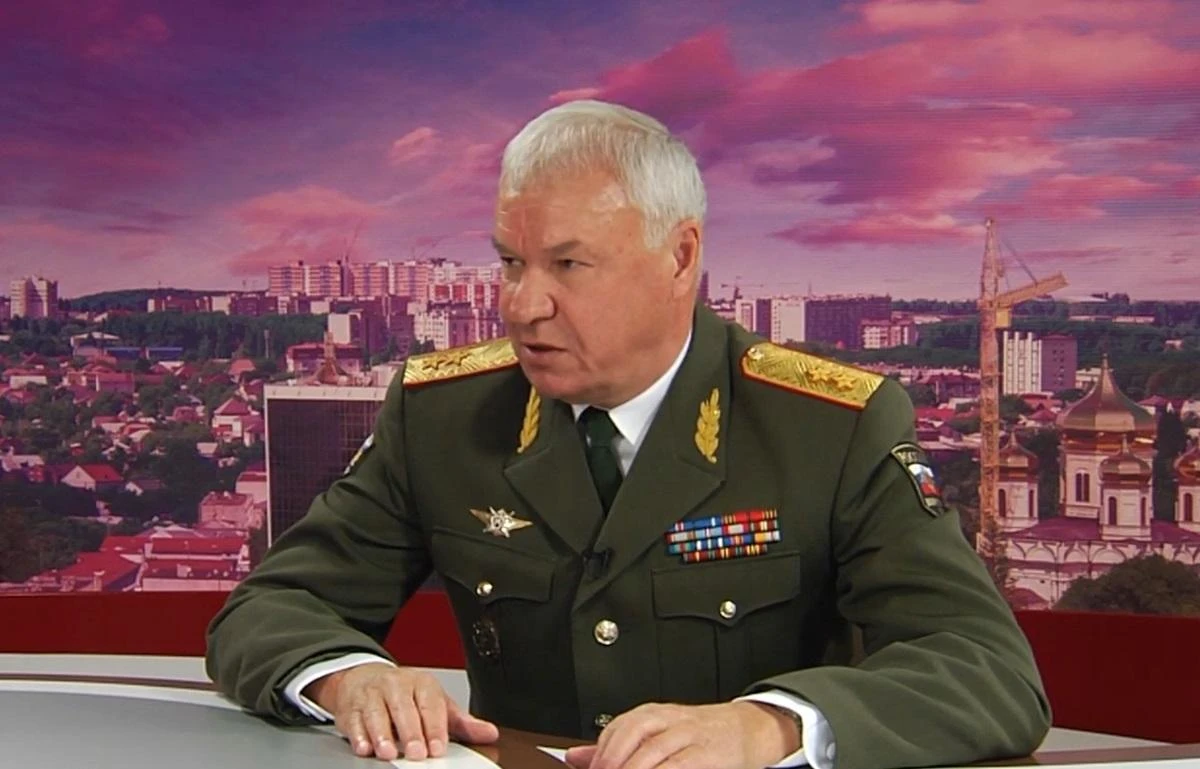
As Deykom has assessed, this is one of the clearest examples of how power itself is evolving in the twenty-first century. The United States is no longer relying exclusively on naval dominance to control critical trade routes. It is attempting to purchase the restoration of flow through financial guarantees, turning insurance into an instrument of geopolitical leverage.
Yet this strategy has a fundamental limitation. Money can reassure balance sheets, but it cannot reassure crews. A tanker captain knows that compensation does not prevent an explosion. Insurance may cover loss, but it does not eliminate fear. And that gap — between financial logic and physical risk — is where the strategy begins to strain.
The Strait of Hormuz is not just a narrow passage. It is a central artery of the global energy system. Roughly a fifth of the world’s oil supply and a substantial share of liquefied natural gas move through this corridor. Any sustained disruption immediately translates into price shocks, inflationary pressure, political instability and supply chain recalibration far beyond the region. That urgency explains why Washington is acting quickly — but not necessarily conventionally.
A traditional response would look different: naval escorts, convoy systems, visible force projection and direct suppression of threats. But such an approach carries the risk of direct confrontation with Iran and a rapid escalation of the conflict. The financial strategy offers a softer path: not eliminating the threat, but attempting to work around it.
The logic is straightforward. If shipowners are guaranteed compensation in case of loss or damage, some will accept the risk. That initial movement could create a signaling effect: a few successful passages reduce panic, insurance premiums stabilize, and traffic gradually resumes. The system relies on momentum — on the idea that confidence can be rebuilt incrementally.
So far, however, that momentum has not materialized automatically. Shipping companies remain cautious. And that caution is itself the key indicator: even $40 billion is not enough to instantly restore trust where physical protection is uncertain. The market of fear operates alongside the market of oil, and it does not yield easily to financial engineering.
Another critical layer lies in how the program is structured. The United States and its insurance partners determine which vessels qualify for coverage, requiring detailed disclosure about ownership, routes, financing and cargo. This turns the mechanism into more than a safety net. It becomes a filter. Washington is not only enabling trade — it is shaping it.
In broader terms, this reflects a shift in how control over global routes is exercised. Traditionally, dominance at sea meant fleets, bases and firepower. Increasingly, it also means control over risk — over premiums, guarantees and access to financial protection. Whoever decides what can be insured begins to influence what can move.
Still, this model is inherently fragile. It works only as long as the level of threat remains within certain bounds. If attacks intensify, if the probability of catastrophic loss rises, financial guarantees will not be enough to sustain activity. At that point, the system reverts to its original condition: no amount of compensation can substitute for actual security.
At the same time, the approach reveals a second tension — within the alliance itself. Washington expresses frustration at the limited willingness of allies to participate in securing the corridor, yet it is pursuing a mechanism that allows it to act without a fully coordinated military coalition. It demands solidarity while designing around its absence.
For the global energy market, this signals a deeper transformation. Security is no longer guaranteed solely by fleets and deterrence. It is increasingly produced through a combination of military posture, financial design, political signaling and risk management. But this balance is unstable. In a narrow strait under active threat, money can reduce panic — but it cannot eliminate danger.
In the end, the American bet on insurance is a strategy of time. It seeks to restart movement without widening the war, to calm markets without removing the threat, to stabilize flows without immediate escalation. But it also reveals a new reality: control over global trade routes is no longer an automatic function of military superiority alone.
And if this strategy fails, Washington will face a question it has so far tried to avoid. What matters more — keeping Hormuz open, or avoiding direct war with Iran? Because in this strait, as in many modern conflicts, money can delay the decision. It cannot replace it.