
















The preliminary agreement between the United States and Iran looks like a ceasefire, but its real meaning is much broader. It does not solve the nuclear issue, does not close the question of Iran’s missile program and does not provide long-term security guarantees for the Middle East. But it already gives Tehran what it needed most: economic oxygen.
Iran is emerging from this phase not as a victor in the classical sense, but as the side that has received concrete benefits in exchange for limited immediate concessions. Washington begins lifting the naval blockade and opens the way for Iranian oil exports even before a final nuclear agreement. For a regime whose economy has been suffocating under sanctions for years, this is not a detail. It is a strategic resource.
Tehran’s main obligation at the first stage is to keep the Strait of Hormuz open for free commercial navigation for 60 days. That matters greatly for the global energy market, but it is not a painful nuclear concession. Iran is essentially agreeing not to choke a global oil artery in exchange for access to revenue it badly needs.
For Daycom, the deal is revealing because it returns high diplomacy to an old question: where is the line between de-escalation and rewarding coercion. When a state creates a threat to a strait, ports and global oil prices, then receives relief for restoring minimal normality, the result may reduce the risk of war today while creating a dangerous precedent for tomorrow.
The strongest element of the agreement is oil. Authorization for exports and the temporary easing of banking restrictions could quickly revive Iran’s financial flows. For Tehran, this means foreign currency, budget revenue, support for imports, reduced internal pressure and the ability to maintain loyalty inside the system.
Iran’s economy has long lived under compression. Its currency has weakened, inflation has eaten away incomes, sanctions have complicated access to financial channels, and the war has added damaged infrastructure and new costs. Against that background, even temporary access to oil money becomes not merely relief, but a tool of political survival.
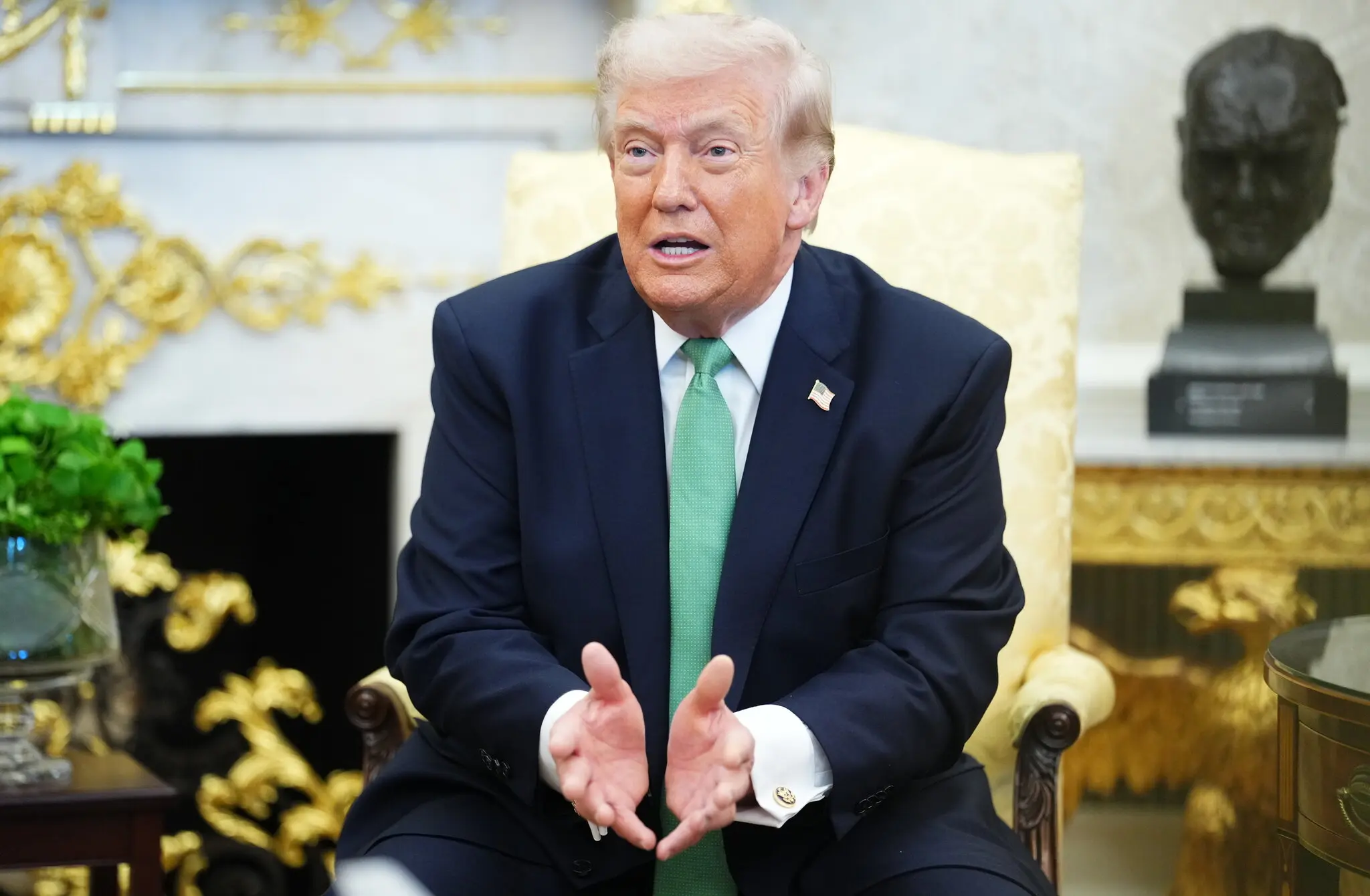
For the United States, the logic is different. Donald Trump’s administration gains a chance to show a rapid halt to hostilities, stabilization in the oil market and lower price pressure on American consumers. When gasoline prices fall, foreign policy immediately becomes domestic policy. That is one reason the preliminary deal may be politically attractive in Washington.
But this is exactly where the main weakness lies. The hardest issues have been pushed into the future. The limits of Iran’s nuclear program, uranium enrichment levels, inspections, material stockpiles, ballistic missiles and support for allied groups across the region all remain ahead. The first document lowers the temperature, but it does not treat the disease.
Such an approach may be rational if both sides truly use the 60 days to prepare a full agreement. It may be dangerous if the pause becomes a way for Iran to restore revenues, regroup and enter the next round of talks from a stronger position. In that case, Washington will have given up part of its leverage before receiving irreversible concessions.
The sanctions architecture is especially sensitive. American pressure on Iranian oil and finance has been one of the main instruments of containment. If it is temporarily diluted, even with technical limits, restoring the previous level of pressure will be harder. Markets, banks, shippers and buyers quickly get used to an open channel.
Iran understands this well. For Tehran, any sanctions relief has not only economic value, but psychological value. It tells elites and society that the regime can withstand military pressure and still extract concessions. That strengthens the internal argument of those who believe a hard line works better than compromise.
At the same time, the other side cannot be ignored. The war between the United States and Iran had already created a dangerous dynamic: strikes on infrastructure, civilian deaths, the risk of closing the Strait of Hormuz, fear of a jump in oil prices and the threat of a wider Middle Eastern escalation. In such circumstances, even an imperfect pause may look preferable to continued attacks.
The problem is that a pause without a clear trajectory quickly becomes a trap. Each side sells it to its own audience as success. The United States presents it as stopping the war and controlling the energy market. Iran presents it as breaking the blockade and regaining the right to earn from oil. The further those interpretations diverge, the harder it will be to reach a final agreement.
In this structure, the Strait of Hormuz is not merely a sea route, but leverage. A significant share of global energy flows passes through it, and the possibility of blocking it has always been an asymmetric weapon for Iran. Now Tehran receives benefits for temporarily restoring predictability in a place where predictability should be the norm.
For U.S. allies, this creates a dilemma. Europe and the Gulf states want to reduce the risk of war, but they do not want a deal that leaves Iran with resources, missiles and an unfinished nuclear program. They need not silence for two months, but a mechanism that reduces the threat for years.
Israel, Saudi Arabia and other regional actors will view the next stage with suspicion. For them, the question is not whether Trump can declare a diplomatic victory. The question is whether the agreement will limit Iran’s real ability to influence the region through missiles, proxy forces, energy blackmail and nuclear ambiguity.
For the global economy, the preliminary understanding already has an effect. News of de-escalation reduces nervousness in the oil market, and cheaper fuel quickly becomes a political argument. But markets react to the short horizon. Strategic security requires more: inspections, control, enforcement and a sanctions mechanism in case of violations.
That is why the current document should be read not as a full deal, but as a pass into a more difficult room. The first room was about halting fire and reopening the strait. The second will be about the nuclear program, missiles, money, regional influence and trust, of which very little remains between Washington and Tehran.
The greatest risk for the United States lies in the asymmetry of time. The economic benefits for Iran begin quickly. Tehran’s most painful concessions are deferred. If the talks collapse, Iran will already have received part of the resource, and Washington will again face a choice between restoring pressure and another military escalation.
Still, rejecting the agreement outright would also be simplistic. Diplomacy often begins with an uneven, unattractive pause that stops a worse scenario. The question is not whether the first concession was perfectly balanced. The question is whether it becomes the beginning of real limits on Iran’s program or merely an expensive breather for the regime.
That is the central tension. The United States has bought a reduction in tension, Iran has received economic oxygen, and the global market has gained a short respite. But the nuclear problem has not disappeared. It has simply been postponed for 60 days, and each of those days will work either toward a future agreement or toward the next crisis.
If Washington does not turn the preliminary understanding into a strict timetable of verifiable concessions, Tehran may emerge from this episode stronger than it entered. If the pause becomes a bridge to real control, it could spare the region another war. For now, the document says more about Iran’s needs than about the limits of its nuclear ambitions.