





















The negotiations between the United States and Iran in Islamabad ended without a permanent cease-fire, but not without consequence. Formally, the two sides left empty-handed: Washington said it had presented its final best offer, and Tehran declined to accept it. In reality, something more important happened. The war moved from a phase of direct military pressure into a phase of hard bargaining, where every item is now judged not as a technical detail but as part of a new balance of power in the Middle East.
The talks lasted 21 hours and were meant to test whether two adversaries, after six weeks of strikes, losses and threats, could at least sketch the outline of peace. Instead, they showed how wide the gap remains between an American demand for a rapid and largely unconditional outcome and an Iranian effort to turn any settlement into a broader package of political and economic terms.
What matters most is not simply that there was no breakthrough, but where the process stopped. By early Sunday, the negotiations had hardened around three central disputes: the full reopening of the Strait of Hormuz, the fate of nearly 900 pounds of highly enriched uranium and Iran’s demand for the release of roughly $27 billion in frozen revenues held abroad. According to Daycom’s earlier analysis, that trio defines the true content of the current crisis: security, nuclear capacity and the price of postwar recovery have become inseparable.
The Strait of Hormuz emerged as far more than a question of maritime logistics. For the United States, reopening it immediately to all shipping is a basic condition of de-escalation. For Iran, it is the single most valuable lever it still holds, one it is unwilling to surrender before a final agreement. That is where the line runs between two competing concepts of peace: an American one in which freedom of navigation must come first, and an Iranian one in which control of the waterway remains a bargaining chip until the very end.
This is not a procedural quarrel. Hormuz carries one of the world’s most important flows of oil and gas, which means that every additional day of uncertainty is instantly translated into market anxiety, higher insurance costs, logistical disruptions and political pressure on governments far beyond the region. Tehran understands the value of that leverage perfectly well. Washington understands just as clearly that without neutralizing it, no agreement can credibly look like a real settlement.
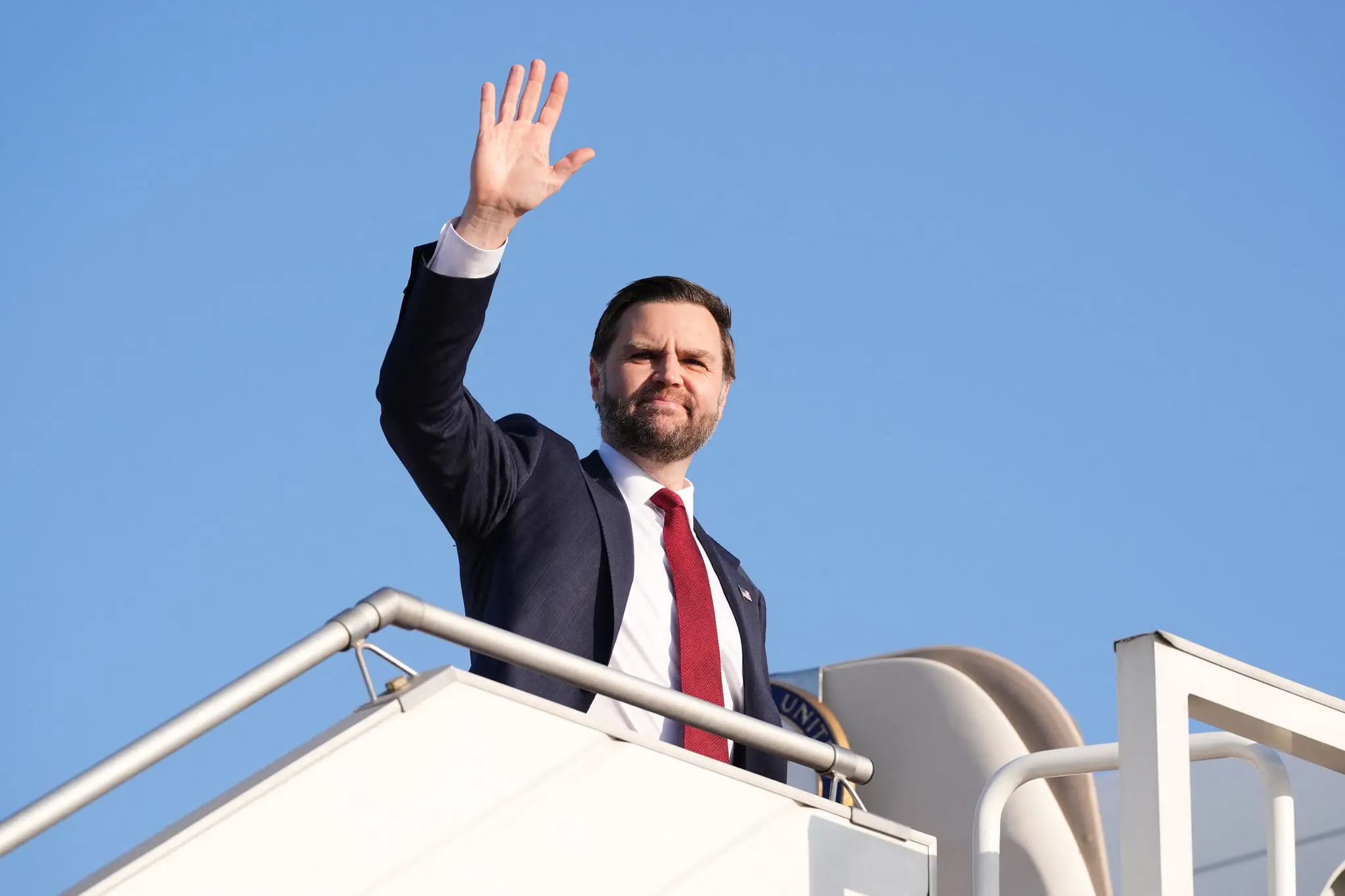
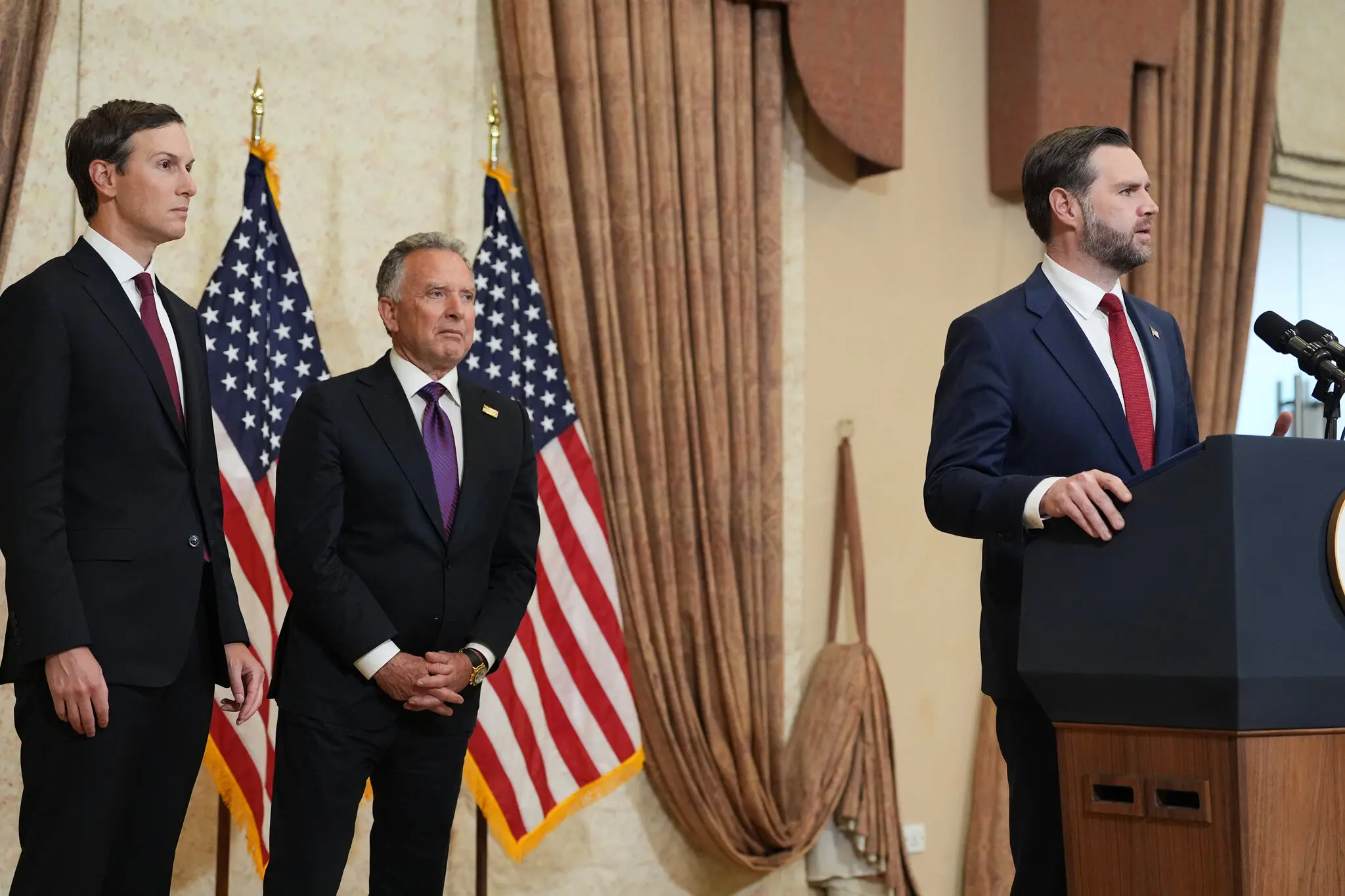 Віце-президент США Венс — Фото басейну від Жаклін Мартін
The second fault line is highly enriched uranium. Donald Trump wants Iran to hand over or sell its entire stockpile of material close to weapons grade. Tehran offered a counterproposal, but the two sides failed to find common ground. This is where the central contradiction of the diplomacy becomes most visible. The United States is no longer trying merely to limit Iran’s nuclear program; it is trying to strip it of any strategic ambiguity. Iran, by contrast, is trying to preserve at least some room that would not look like total capitulation after a war.
The uranium issue stopped being technical long ago. It now represents a larger question: whether Iran will retain the status of a state capable of quickly rebuilding strategic capacity in a future crisis. For Washington, that possibility is unacceptable in itself. For Tehran, giving it up without a major political return would amount to admitting that six weeks of war forced the country to surrender its most important safeguards.
The third fault line is money. Iran is seeking not only the release of oil revenues frozen in foreign jurisdictions, but their effective inclusion in a broader framework for postwar reconstruction. Added to that are demands for compensation for damage caused by airstrikes. The United States rejected those requests. Here the difference in perspective is especially stark: Washington speaks in the language of security and restriction, while Tehran speaks in the language of recovery, compensation and the political price of ending a war.
That difference is what keeps the two sides from converging quickly. The American side is trying to narrow the talks to a few urgent issues: the strait, the nuclear file and the cessation of hostilities. Iran is widening the frame and turning the negotiation into a debate over the whole postwar order. In that structure, every concession becomes symbolic. Reopen Hormuz, and Iran gives up leverage. Transfer the uranium, and it loses strategic cover. Drop the financial demands, and it accepts that the war ends without political compensation.
And yet this apparently fruitless meeting did contain one genuine breakthrough. The fact that it happened at all amounts to the breaking of a long-standing taboo. Six weeks ago, after the killing of Ayatollah Ali Khamenei, a direct encounter at this level between the United States and Iran seemed nearly impossible. Now Vice President JD Vance and Iranian Parliament Speaker Mohammad Bagher Ghalibaf not only sat across from one another, but held the longest and most serious direct exchange in decades.
That gesture should not be romanticized, but it should not be underestimated either. In Middle Eastern politics, symbols often carry as much weight as documents. The mere fact of a personal conversation between representatives of two states that spent decades locked in near-ritual hostility creates a new reality. Talks can still fail, harden or drag on. But they can no longer be described as unthinkable.
That is why Islamabad should not be read as a diplomatic failure in any simple sense. It was a moment of harsh clarification. Each side saw the limits of the other without illusion. The United States learned that Iran, even after war, is not prepared to accept a package of terms in the posture of the defeated. Iran learned that Washington has no intention of paying for peace through strategic flexibility or a major financial gesture.
So the talks did not produce peace, but they did establish its real price. That price is measured not only in a cease-fire, but in control over Hormuz, the fate of enriched uranium, sanctions, money and the right of each side to claim that it emerged from the war with its core position intact. Peace between the United States and Iran has stalled precisely where elegant diplomatic language ends and the struggle over the architecture of postwar power begins.