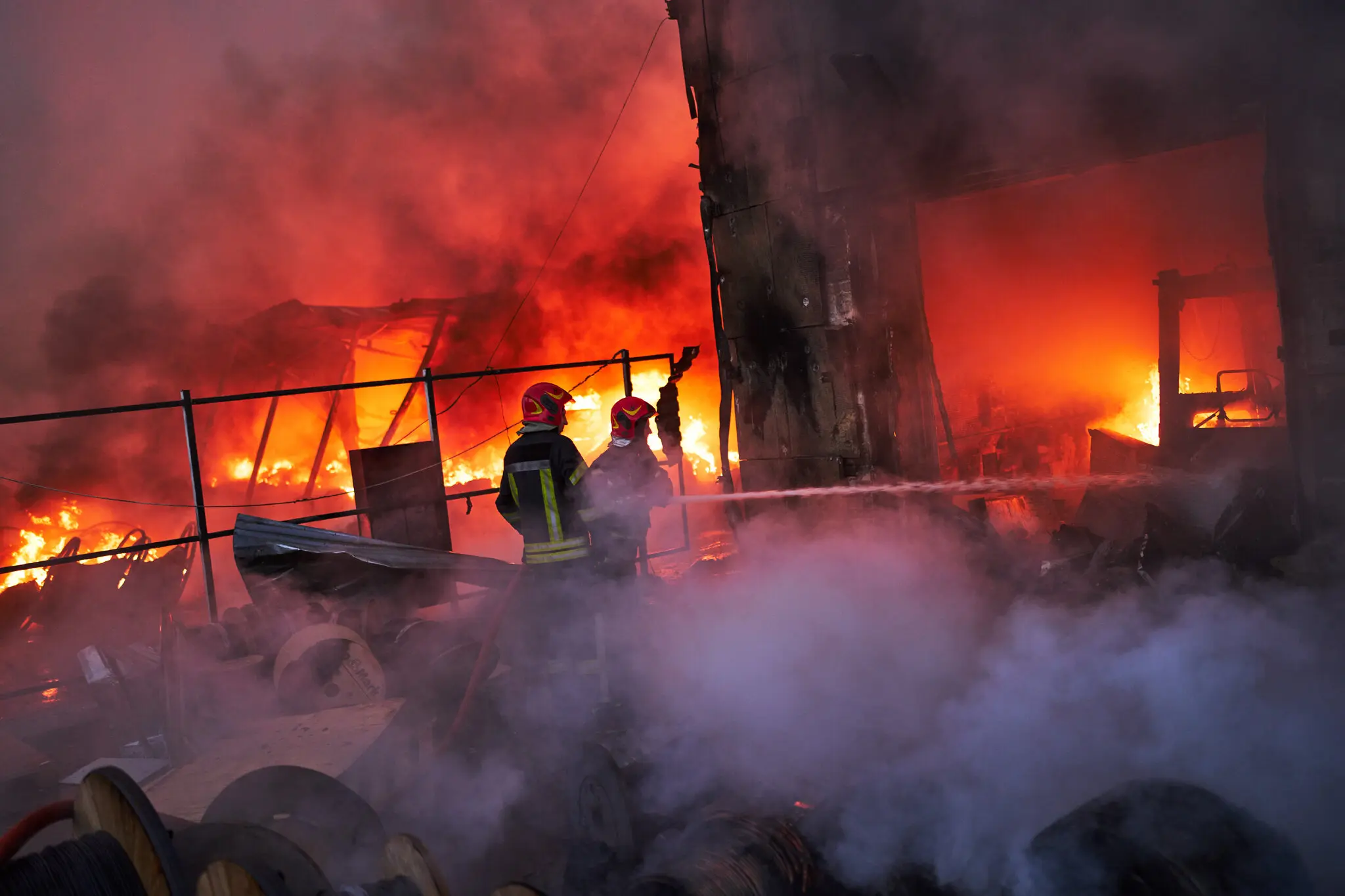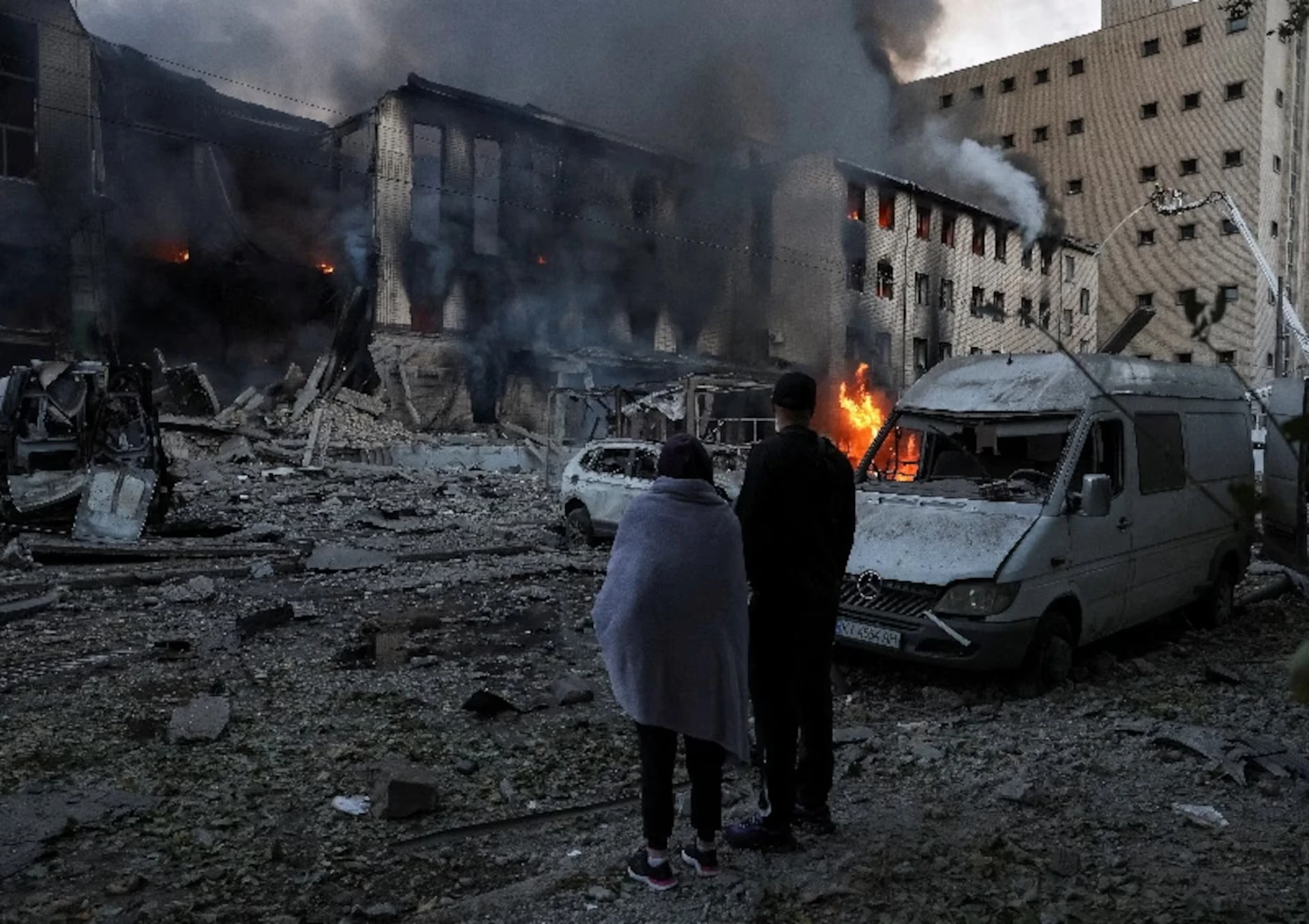
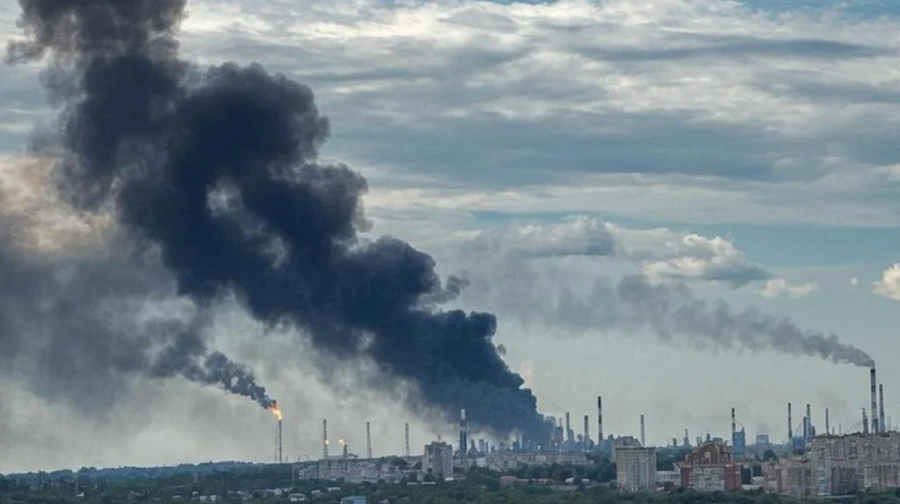


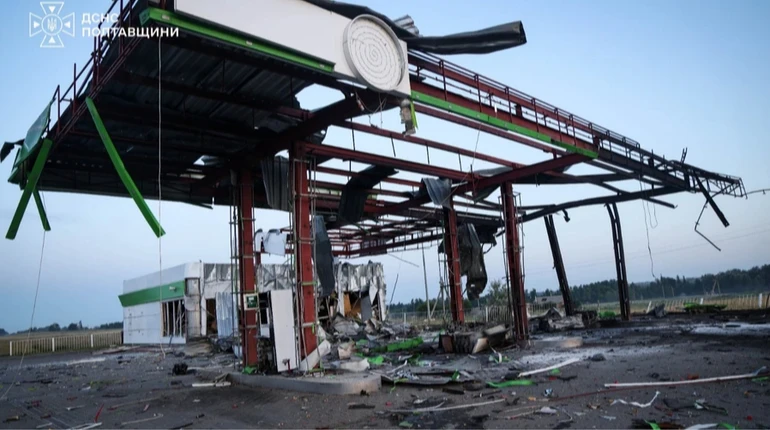


















The fire at the Kazan gunpowder plant on April 14 looks, at first glance, like a local industrial accident. Officials in Tatarstan said a blaze broke out on the plant’s premises, structures partially collapsed, and two people were injured, though their lives were not said to be in danger. Authorities also stressed that the incident was not caused by any external action and that production had not been halted.
But in wartime, a fire at a gunpowder factory is almost never just a factory story. This is not an ordinary industrial site. It is part of the material chain that feeds a modern war: propellants, chemical compounds, explosive production cycles, the hidden industrial layer behind artillery and munitions.
That is why the official description of the incident as “technogenic” is important but insufficient. It may explain the immediate source of the fire, yet it says far less about the larger condition of the system in which such a fire occurs. When a plant tied to explosives and propellants catches fire during a prolonged war, the event stops being merely operational. It becomes a clue to the pressure under which the system itself is working.
As Daycom noted in an earlier analysis, the real weakness of a war economy often appears not at the moment of an external strike, but at the point of internal overload. The longer a state forces defense production into a permanent state of priority, the less room remains for technical pause, maintenance, renewal and safe industrial rhythm. In that kind of structure, accidents begin to look less like exceptions than like the shadow cast by the system’s own intensity.
The Kazan plant is especially revealing in that respect. It belongs to an older industrial tradition, one built for continuity, volume and state need, but now operating in the far harsher conditions of a long war. Legacy industrial infrastructure can carry symbolic weight and institutional prestige, yet age brings another reality with it: accumulated risk, rigid production environments and a narrower safety margin when output is pushed under pressure.
That is why the authorities moved so quickly to emphasize two points at once: there was no outside action, and production continues. Those statements are not meant only for local residents. They are also aimed at a wider political audience. The state needs to show that control remains intact, that the incident has been contained, and that the military-industrial conveyor has not been interrupted. In wartime, reassuring continuity becomes part of the response itself.
But the need for that reassurance already says a great deal. When a fire at a hazardous munitions-related facility immediately demands a public insistence that production is still running, the line between industrial mishap and strategic vulnerability has already been erased. In peacetime, such an incident would be a matter for inspectors, emergency crews and plant management. In war, it becomes a question about the resilience of the entire supply structure behind the battlefield.
This is what makes the Kazan fire significant beyond its local scale. Russia’s war effort depends not only on soldiers, weapons and command decisions. It depends on dangerous workshops, chemical processing, overstretched industrial lines and facilities that must continue operating under the logic of urgency. The war is sustained as much by these plants as by the troops who ultimately use what they produce.
That is why the fire in Kazan should not be read as a minor regional item. It is a small but telling episode in a much larger reality. Long wars do not only consume manpower and equipment. They also wear down the industrial foundations that make large-scale violence possible in the first place.
And when flames break out at a gunpowder plant, one uncomfortable truth becomes briefly visible through the smoke: the strain of war is no longer confined to the front. It has moved deep into the factories, the chemical halls and the production systems that the Kremlin would prefer to present as stable, sealed and secure.