























The strike on a vehicle carrying Lebanese journalists in southern Lebanon on March 28 became one of the most consequential episodes of the current escalation on the Israeli-Lebanese front. According to available reports, those killed were Al-Manar correspondent Ali Choeib, Al-Mayadeen journalist Fatima Ftouni, and her brother, cameraman Mohammad Ftouni.
The Israeli military said Choeib was the intended target, describing him as a Hezbollah intelligence operative linked to the group’s Radwan unit. Yet no public evidence was immediately presented to substantiate that claim, and Israeli officials did not offer an equally clear explanation for the deaths of the other two media workers traveling with him.
Lebanese authorities described the strike as a grave breach of international law. President Joseph Aoun called it a blatant crime, while Information Minister Paul Morcos said Lebanon intended to bring the matter before the U.N. Security Council. From Beirut’s perspective, this was not a disputed battlefield incident but a political and legal challenge.
In Daycom’s assessment, the core issue here does not lie in the biographies of the dead journalists or the editorial lines of the outlets they worked for. The real question is whether a state at war can declare a journalist a legitimate military target on the basis of political sympathy, media messaging, or alleged proximity to an armed group without publicly verifiable proof.
That is why this strike reaches far beyond another tragic headline from southern Lebanon. Choeib worked for Al-Manar, a Hezbollah-owned network, while Fatima Ftouni reported for Al-Mayadeen, whose editorial line has also often aligned with Hezbollah’s worldview. But ideological affinity, partisan rhetoric, and even propagandistic output do not automatically cancel a journalist’s civilian status under the laws of war.
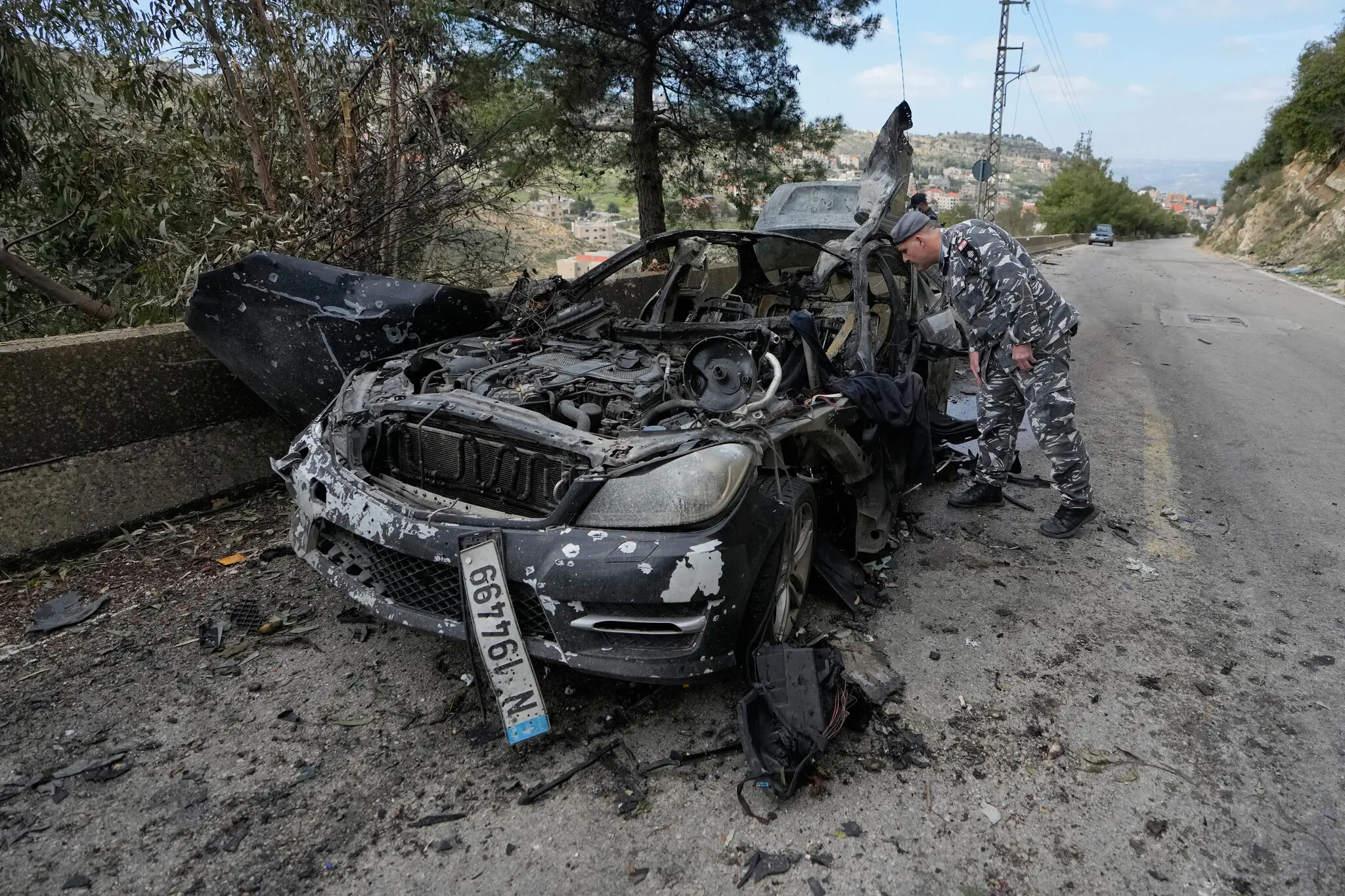 Поліцейський перевіряє обгорілий автомобіль у місті Джеззін на півдні Лівану в суботу після ізраїльського удару, в результаті якого загинули троє ліванських журналістів — Мохаммед Заатарі/Associated Press
That point is central, because modern conflicts increasingly blur the line between media activity, political mobilization, and operational support. Israel’s argument appears to be that some personnel working in Hezbollah-linked media are not merely covering the conflict but functioning inside Hezbollah’s military ecosystem. Yet precisely in such cases, the evidentiary threshold should be highest. Otherwise, any camera pointed at the battlefield can be reframed as intelligence work in disguise.
This is what makes the incident so dangerous. Once states begin to stretch the category of “legitimate target” to include media figures on the basis of affiliation, rhetoric, or suspicion, the protection of the press ceases to be a hard legal boundary and becomes a conditional privilege granted by the stronger side. At that point, journalism is no longer treated as observation. It is treated as presumed complicity.
The broader context only intensifies that concern. This was not the first strike involving journalists in Lebanon during the current cycle of war. Over the past months, repeated incidents have fueled accusations that reporters operating near the southern front are being exposed not simply to battlefield risk, but to a pattern in which their civilian role no longer provides meaningful protection. Once that pattern begins to emerge, every new case carries more than local significance.
There is also a deeper structural problem. In wars shaped by hybrid actors, media networks, militia politics, propaganda, and armed operations often overlap in messy and uncomfortable ways. Hezbollah is not only an armed organization but also a political force with a media ecosystem. That reality makes the legal and ethical terrain more complex, but it does not erase the distinction between hostile speech and direct participation in hostilities. If that distinction collapses, the consequences extend far beyond Lebanon.
For Israel, this creates a strategic risk as well as a legal one. Even if one assumes that individual journalists may in some cases be tied to militant structures, the absence of openly presented evidence weakens the credibility of such strikes internationally. What may be intended as a precise counterterrorism action can quickly appear, from the outside, as an expansion of permissible targets into the media sphere. That carries heavy reputational costs, especially in a war already defined by scrutiny over proportionality and civilian harm.
For Lebanon, the implications are equally serious. The journalists killed were not anonymous local freelancers but visible television figures associated with coverage of the current war. Their deaths deepen the sense that the south is becoming a space where ordinary civilian protections no longer apply. That is not only a press-freedom issue. It is also a question of whether society can still witness and document its own war through reporting rather than rumor, party messaging, and fear.
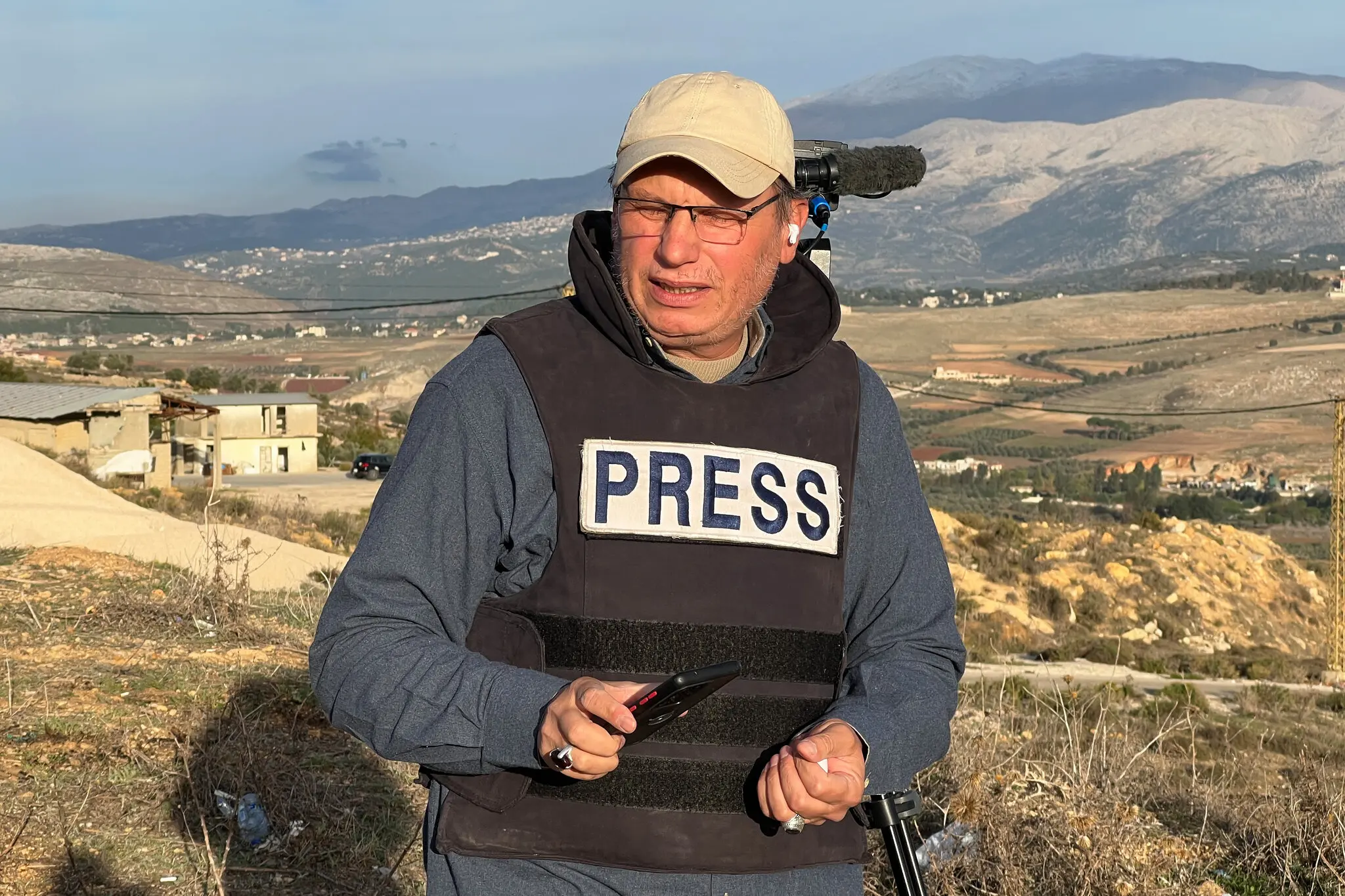 Алі Шойб у 2024 році. Пан Шойб, якого вбили в суботу, був кореспондентом ліванської телевізійної мережі «Аль-Манар», що належить «Хезболлі» — Хуссейн Малла/Associated Press
The location of the strike matters too. When a car carrying media workers is hit away from the most obvious zones of direct ground confrontation, the debate shifts. The issue is no longer whether journalists were accidentally caught in crossfire, but whether the principle of targeting them outside immediate combat conditions is itself becoming normalized. That is a far more consequential threshold.
In the wider regional context, this is part of a conflict environment in which Israel is simultaneously confronting Iran, Hezbollah, and a broader network of allied structures. In such an environment, the temptation to widen the definition of operational participation is strong. Media, logistics, civilian infrastructure, and political communications can all begin to collapse into one war map. But that is exactly where international law is supposed to hold most firmly, not least.
That is why the deaths of Ali Choeib, Fatima Ftouni, and Mohammad Ftouni matter beyond Lebanon. Their case illustrates how, in contemporary conflict, the basic barrier between hostile information space and physically targetable journalism is eroding. And if that barrier falls completely, the next “questionable targets” will not be limited to openly partisan broadcasters. They may be any reporters working too close to a front line, asking the wrong questions, or filming what one side would rather leave unseen.