

















Russia has pushed a new narrative around Kostiantynivka, a city that remains one of the key anchors of Ukraine’s defense in Donetsk region. Moscow claims Kyiv refused to halt fire for six hours to allow the transfer of the bodies of fallen Ukrainian servicemen.
On the surface, this is a humanitarian issue. In reality, it is also a struggle over how the battlefield is interpreted. Russian commanders had earlier told Vladimir Putin that their forces had allegedly taken control of Kostiantynivka. Ukraine rejected that claim: the city remains a zone of heavy fighting, not an uncontested Russian prize.
That is why the statement about a “local ceasefire” looks less like an isolated proposal and more like a continuation of information pressure. It is meant to create the impression that Russia is already operating in the city as the side setting the rules, routes and conditions for humanitarian procedures.
According to Daycom’s earlier analysis, Kostiantynivka matters to Moscow not only as a point on the map. It is a southern element of the defensive line shielding the approaches to Kramatorsk and Sloviansk. Capturing it would allow the Kremlin to claim a breakthrough in Donbas at a time when the actual pace of its advance has long fallen short of political expectations.
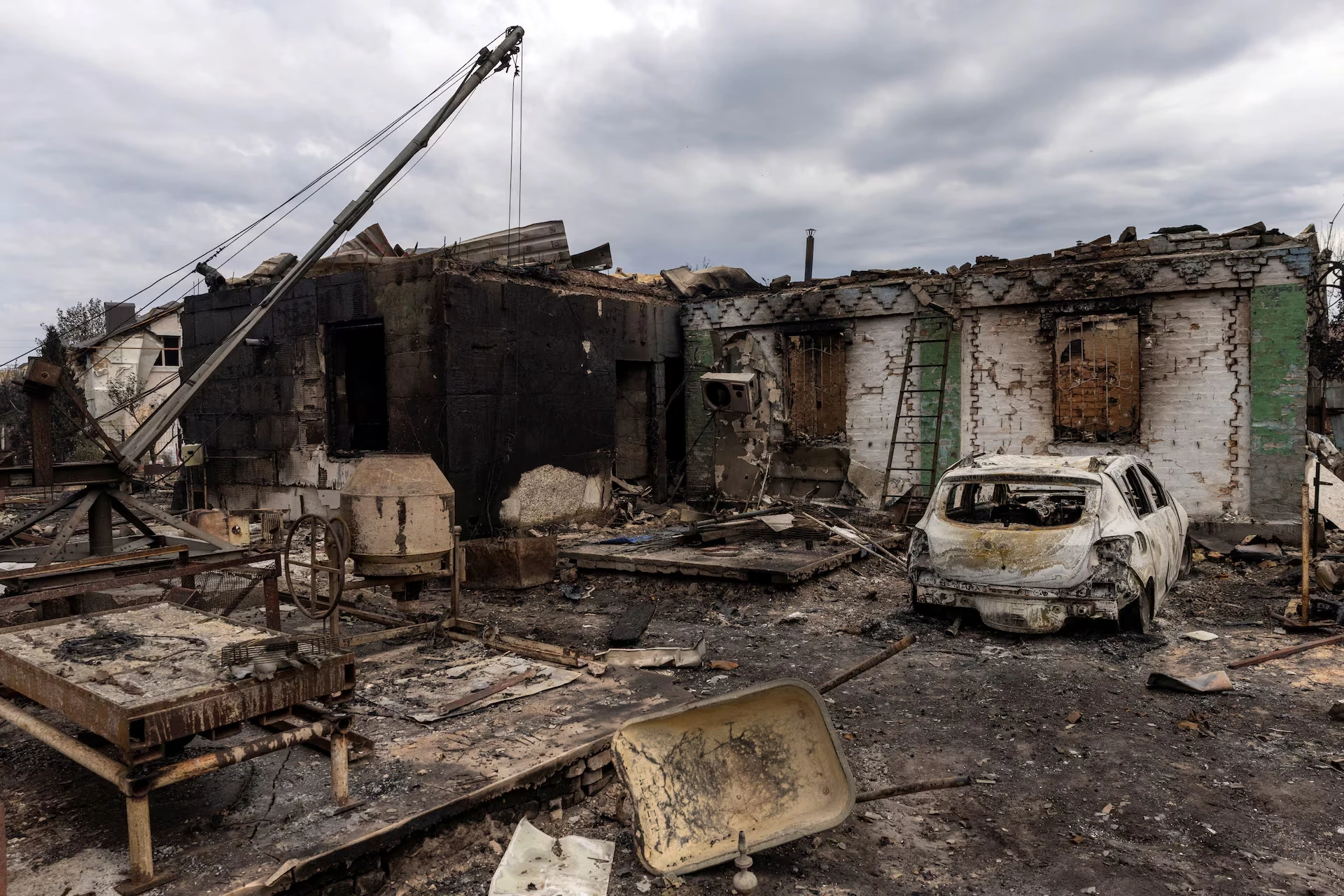
For years, the city served as a rear support hub for Ukrainian forces fighting around Bakhmut, Chasiv Yar and Toretsk. Now Kostiantynivka itself has become the front line. Russian infantry has tried to move forward in small groups, while artillery, aerial bombs and drones have steadily battered urban infrastructure.
In such conditions, any discussion of a ceasefire has a double edge. A local pause in an active combat zone may be a humanitarian necessity. It may also become a way to fix presence, gather intelligence, regroup or stage a political demonstration — especially when proposed by a side that has just claimed control of the city without proving it on the ground.
Moscow set a deadline for Kyiv’s response and said the proposed pause was to take place on Monday. Ukrainian defense structures did not confirm the Russian version. On a front where every maneuver carries tactical cost, the absence of an immediate public response does not amount to acceptance of Russia’s framing.
The return of the bodies of fallen soldiers remains one of the most painful and sensitive procedures of this war. That is precisely why the subject is so vulnerable to political use. When a humanitarian issue is tied to a disputed claim about the capture of a city, it stops being only a matter of human dignity and becomes part of an information operation.
For Russia, this construction is useful on several levels. Domestically, it supports the image of an army that is supposedly advancing and dictating terms. Externally, it shifts moral pressure onto Ukraine. On the front, it creates noise around an area where the real situation is more complex than any victory formula.
Ukraine’s position rests on a different logic: Kostiantynivka is not described as calm or safe, but its loss is denied. That distinction matters. A defense can be exhausting, urban combat can be chaotic, and small-group infiltrations can be real. None of that automatically means control over a city has been established.
Control is the central word in this story. In modern war, it is not reduced to a flag on a ruined building or a video from the outskirts. Control means the ability to hold territory, maintain logistics, move through streets, evacuate the wounded and keep fighting without the constant risk of being pushed out within hours.
Today Kostiantynivka is not merely a symbolic trophy. It is a test for both sides. For Ukraine, it is a question of the resilience of its defensive line in Donetsk region. For Russia, it is an attempt to show that after months of costly fighting it can still take major towns, not only advance through villages, tree lines and industrial zones.
That is why Moscow’s statement about the transfer of bodies cannot be read separately from the wider picture. It appeared at a moment when the Kremlin needed to reinforce its own version of Kostiantynivka’s “capture.” If the city is allegedly under Russian control, Moscow tries to behave as the master of the situation. If that control is disputed, such rhetoric becomes a way to impose reality through language.
There is little room for easy conclusions here. The bodies of the dead require silence, procedure and respect, not public ultimatums. But the war has long shown that even humanitarian issues in Donbas can become part of the fight for initiative.
Kostiantynivka remains one of the most dangerous nodes of the front. Its importance reaches far beyond the city limits. It is a barrier before Kramatorsk and Sloviansk, a nerve point of Ukraine’s defense in Donetsk region and, at the same time, a stage on which Moscow is trying to turn an uncertain military situation into a political victory.
As long as the fighting continues, the central fact is not Russia’s statement about a ceasefire or another report delivered to Putin. The central fact is that Kostiantynivka has not become an undisputed Russian gain. That is why there are so many words, flags, pauses and ultimatums around it: when victory on the ground is uncertain, it is first fought for in the information field.