
























While Kyiv and Moscow trade strikes on major cities, the true weight of the war still falls on places where little remains except concrete, dust and short runs between cover. Kostiantynivka has become such a place — a city where the front is no longer a line on a map, but a struggle through streets, entrances and ruins.
Ukraine has rejected Russia’s claim that Kostiantynivka has been captured. President Volodymyr Zelenskyy called it another Russian lie, while the General Staff confirmed that Ukrainian units continue to defend the city and its approaches. That does not mean calm. It means the battle is not over.
Russia is trying to present the situation as settled: commanders report control to Vladimir Putin, military structures speak of “clearing operations,” and the Kremlin behaves as if a political conclusion can be announced before a military one. But Kostiantynivka resists precisely that logic.
In Daycom’s assessment, the current battle for Kostiantynivka shows the new shape of attritional war in Donetsk region. The city does not fall at once, nor is it held in the classical sense. It breaks apart into blocks, buildings, drone routes, kill zones and temporary positions whose value changes by the day.
Kostiantynivka matters to Russia not merely as another name in a battlefield report. It is a gateway to Kramatorsk and part of the defensive belt that, together with Sloviansk, Druzhkivka and other cities, holds back Russia’s offensive in Donbas. Its loss would give Moscow a more convenient path north.
That is why Russian forces have pressed against the city for months with methodical brutality. They have advanced under artillery fire, guided bombs and drones, turning buildings into wreckage and defensive positions into temporary points of survival. The same logic once ground through Bakhmut and later shaped the fighting near Pokrovsk.
In Kostiantynivka, the war has become slow and brittle. Russian soldiers do not always enter in groups. Sometimes they slip in one by one, using ruins, basements, holes in walls and blind spots in surveillance. Ukrainian defense has to fight not only an offensive, but constant infiltration.
Brig. Gen. Oleksandr Bakulin, commander of the 19th Army Corps, acknowledged that Russian troops had appeared in parts of the city. But he described not the loss of Kostiantynivka, but a fight for individual buildings. In this war, the difference between a block, a house and a city has become decisive.
“There is no specific area under enemy control. There are individual buildings controlled by the enemy, and we are fighting for them” — that formula captures the state of the front more accurately than any proclamation. Russia is trying to turn a presence in ruins into a claim of authority over the city. Ukraine answers in the language of actual control.
Control in modern war is not a flag or a video from a half-destroyed street. It is the ability to hold ground, bring in ammunition, evacuate the wounded, rotate units and avoid losing positions after the first counterattack. This is where Russia’s version looks weaker than its propaganda form.
Ukrainian troops do not hide the difficulty. They speak of shortages of manpower, ammunition and drones, and of tactical withdrawals where holding every position would cost too much. This is not the language of defeat. It is the language of an army fighting in conditions where human strength has become as critical as artillery.
Bakulin put that logic plainly: Ukrainian forces did not try to hold every position at any cost by sacrificing large numbers of people. That marks an important contrast with Russia’s approach, which often relies on mass pressure and a readiness to burn infantry for advances measured in a few hundred meters.
Drones have changed the very feeling of the front. Movement in and around the city has become deadly. Pickup trucks, roads, courtyards, tree lines and even narrow passages between houses may be under constant watch. A soldier is no longer only hiding from artillery; he is living under the gaze of a machine searching for movement.
This is not limited to Kostiantynivka. The whole strip of Donetsk region is gradually becoming a space where ruined cities meet a sky crowded with unmanned aircraft. Guided bombs smash strongpoints, FPV drones hunt vehicles, and infantry on both sides searches for the smallest opening to move forward.
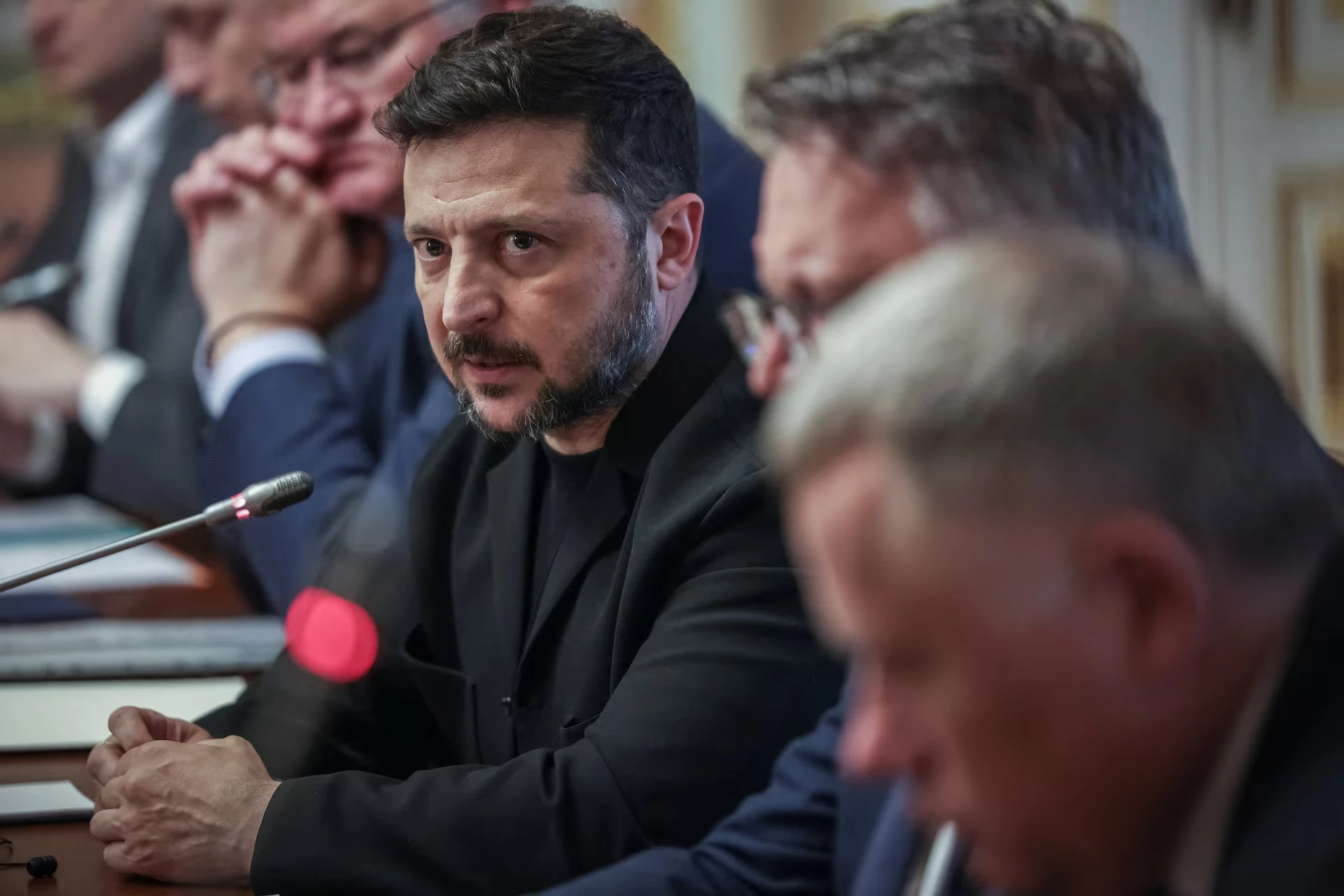
Against this background, diplomatic gestures look distant and almost weightless. Zelenskyy speaks with Donald Trump about further contacts on the margins of a NATO summit, Trump holds a long call with Putin, and the Kremlin repeats its maximalist terms. But between those conversations and Kostiantynivka lies a chasm.
There is no quick diplomatic geometry at the front. There are units holding assigned lines, repelling assaults, losing positions, retaking individual buildings or leaving places where staying would mean dying without purpose. This small mechanics of war is what determines the real map.
Around Kostiantynivka, Russian strikes are damaging the broader defensive belt of Donetsk region. Sloviansk, Kramatorsk, Druzhkivka and Kostiantynivka itself have lived for months under pressure from aerial bombs and drones. Thousands of civilians have fled, while those who remain exist in a city where normal life has given way to survival.
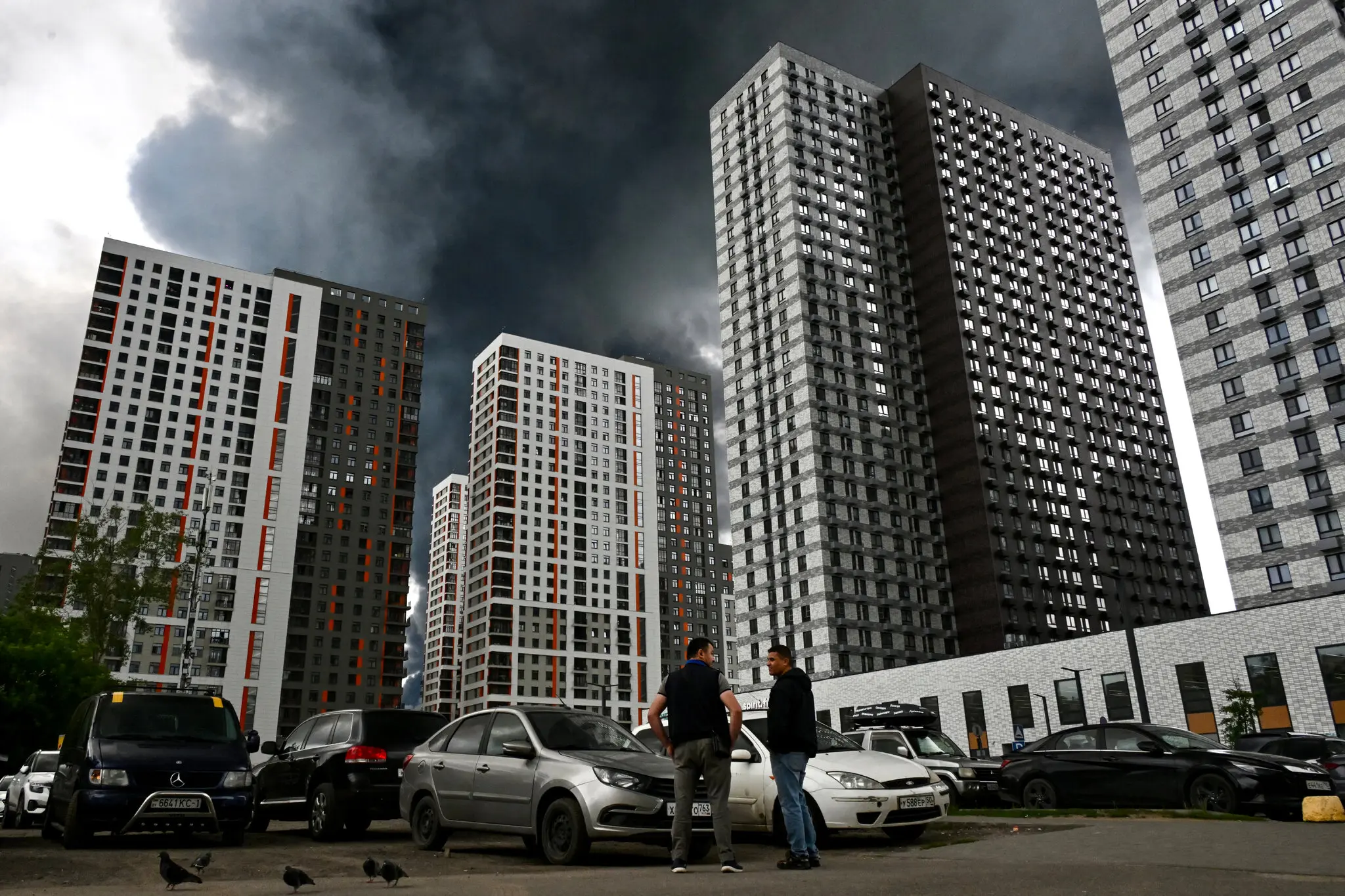
The war also reaches beyond the front-line cities. In Sumy region, Russian guided bombs kill civilians. In the south, drones attack fields, machinery and crops, turning agricultural work into another sector of the battlefield. Russia is striking not only the army, but the country’s ability to keep living.
In this sense, Kostiantynivka is not an isolated episode but a concentrated model of the war. It shows everything at once: Russia’s slow offensive, Ukraine’s strained defense, shortages of resources, the dominance of drones, the destruction of cities and the Kremlin’s attempt to call victory what remains, on the ground, a bloody process.
The main fact now is simple and heavy at the same time: Kostiantynivka has not become an undisputed Russian gain. There are enemy troops in the city, ruins, infiltrations, withdrawals and counterattacks. But there are also Ukrainian units still defending it. That is what breaks the Kremlin’s image of a completed victory.
The battle for Kostiantynivka continues not in headlines or diplomatic formulas. It continues where soldiers move through debris, hear drones before they see them, and know that every building may be a trap. Far from distant offices, this war has its true scale — slow, exhausting and merciless.