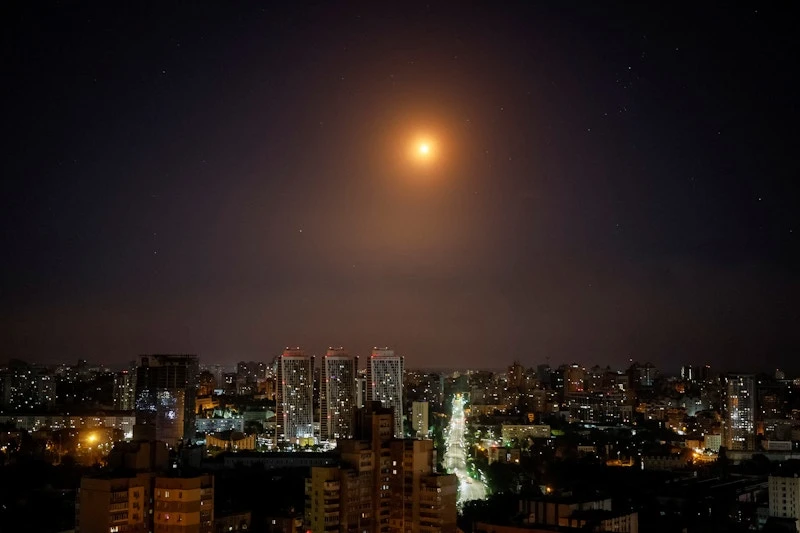








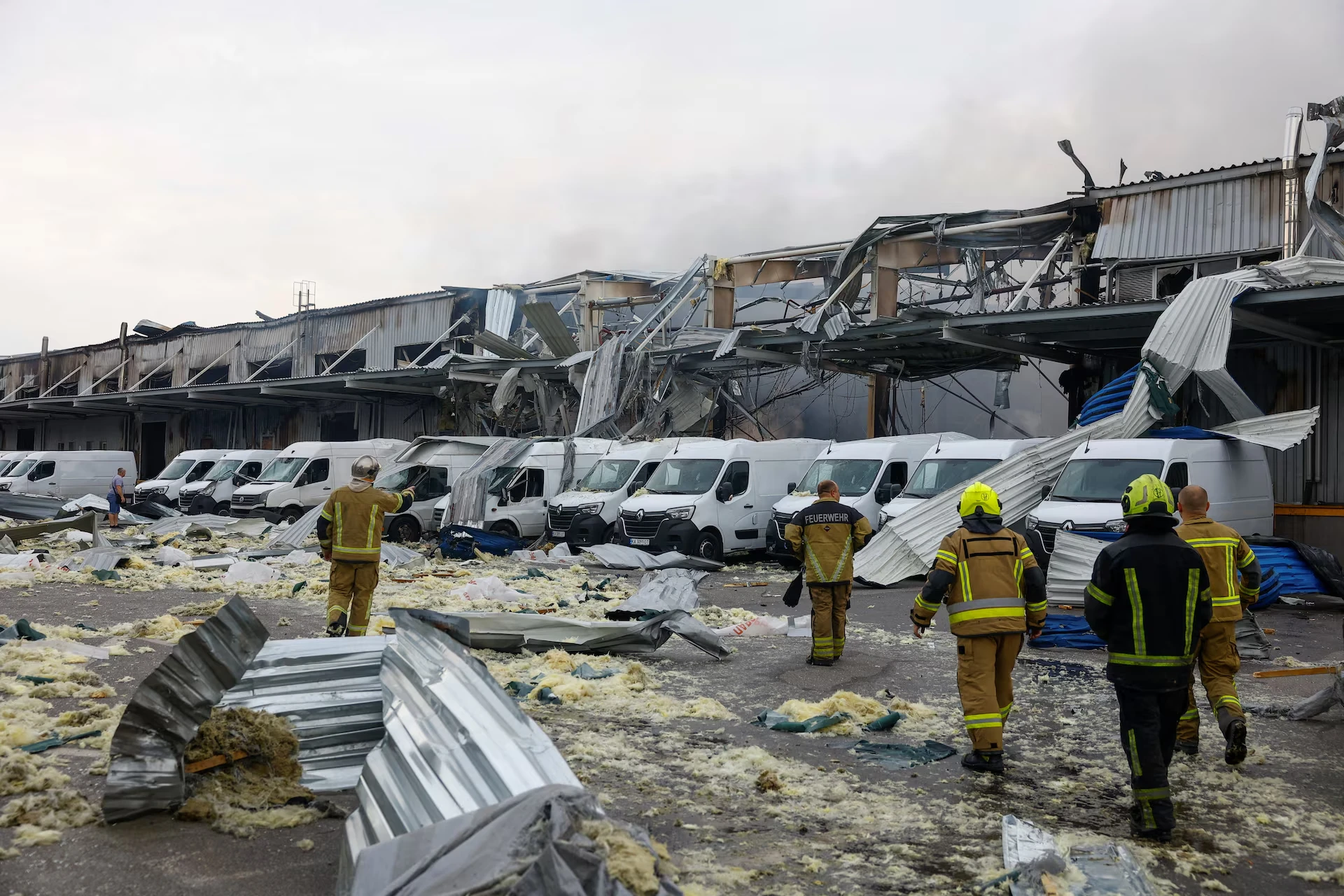
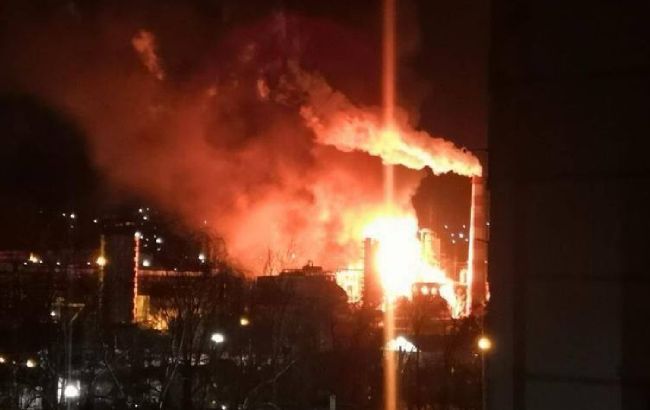















Kyiv has again become a city where night does not end with dawn. After waves of Russian missiles and drones, rescuers searched for people inside shattered high-rise buildings, residents stood beside the ruins of their own apartments, and the capital counted at least 11 dead and dozens wounded.
It was the second devastating strike on Kyiv in only a few days. The previous attack killed 31 people and became the deadliest assault on the capital this year. The new wave did not allow the city to emerge from mourning and rescue operations, turning the air war into sustained pressure on civilian endurance.
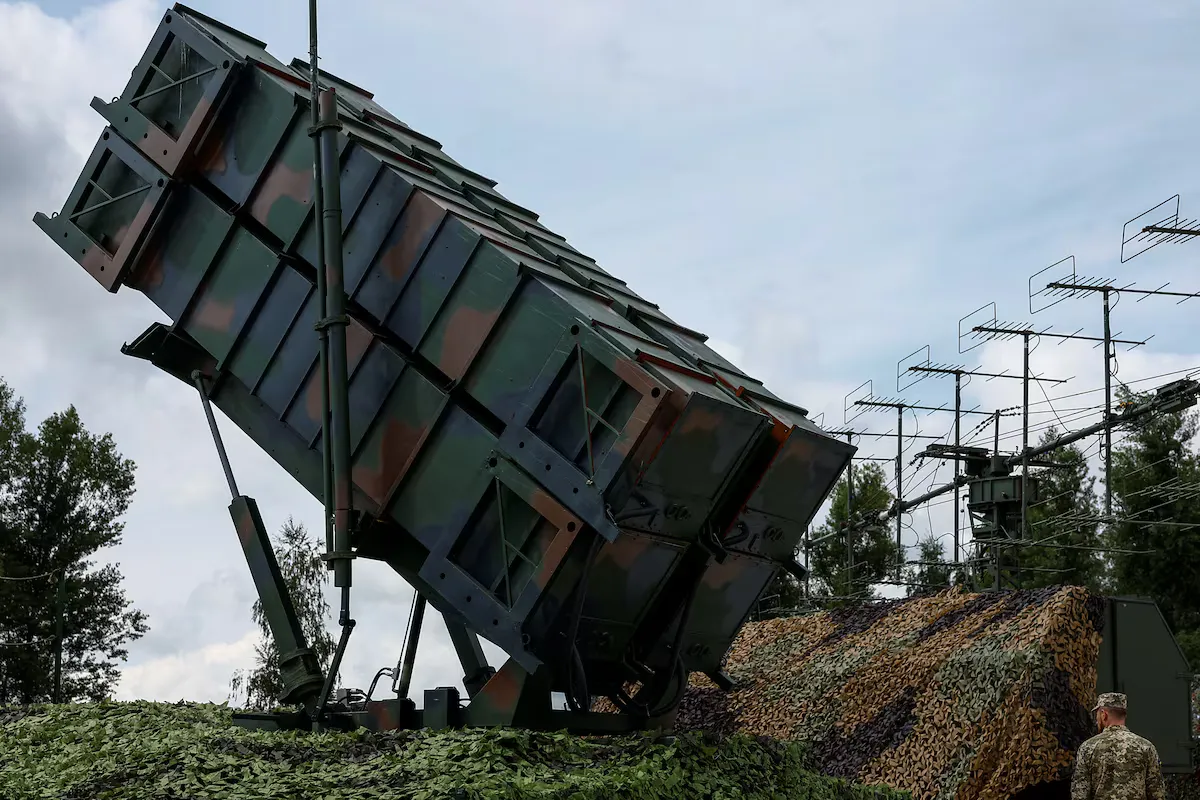
The key military detail of the night was not only the scale of the attack, but its structure. Russia launched hundreds of drones and dozens of missiles, including ballistic ones. Ukrainian defenses dealt with a large share of the aerial targets, but all 29 ballistic missiles reached their targets, exposing the most dangerous gap in Ukraine’s sky.
According to Daycom’s analysis, this gap became the political center of the strike. Moscow is attacking not only Kyiv, but allied decision-making: whether Ukraine’s partners are ready to move Patriot interceptor missiles faster, without which talk of protecting cities remains incomplete.
Ballistics change the tempo of war. Drones can be tracked, shot down by mobile teams, suppressed by electronic warfare and intercepted systematically. A ballistic missile leaves far less time to react. When interceptor missiles are scarce, even a strong air defense network becomes unevenly matched against the fastest strikes.
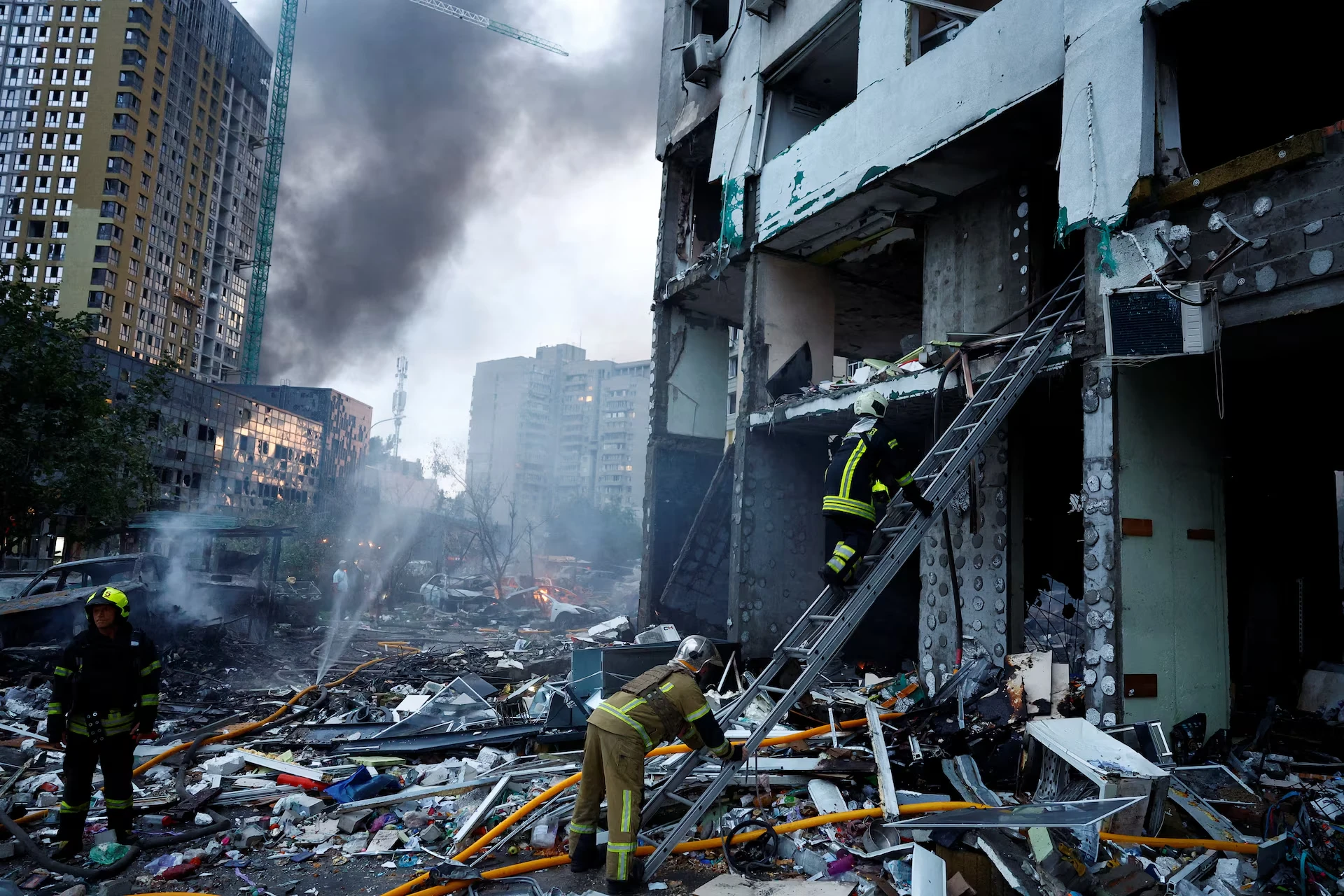 Рятувальник піднімається по драбині на місці житлового будинку, який зазнав значних пошкоджень під час російських ракетних та безпілотних ударів у рамках російської агресії проти України, у Києві, Україна, 6 липня 2026 року — Валентин Огіренко
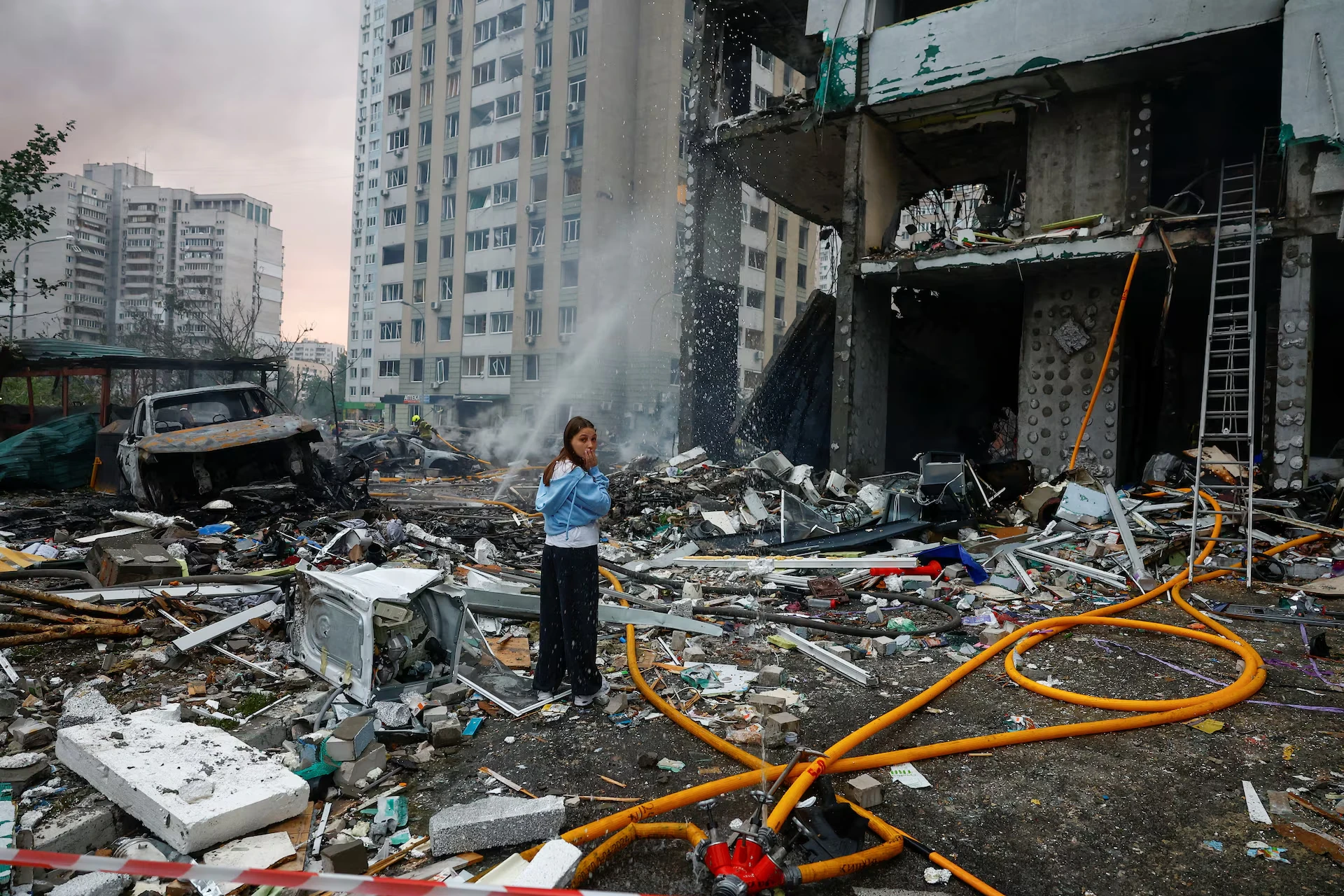 Мешканка реагує, чекаючи на рятувальників, які шукають її родича всередині житлового будинку, що зазнав ураження під час російських ракетних і безпілотних ударів у рамках російського вторгнення в Україну, у Києві, Україна, 6 липня 2026 року — Валентин Огіренко
That is why the Patriot shortage has stopped being a technical issue for military warehouses and production schedules. For Ukraine, it is a question of how many buildings will remain standing after the next night, how many people will reach shelters in time, and how many families will not have to wait near rubble for news of loved ones.
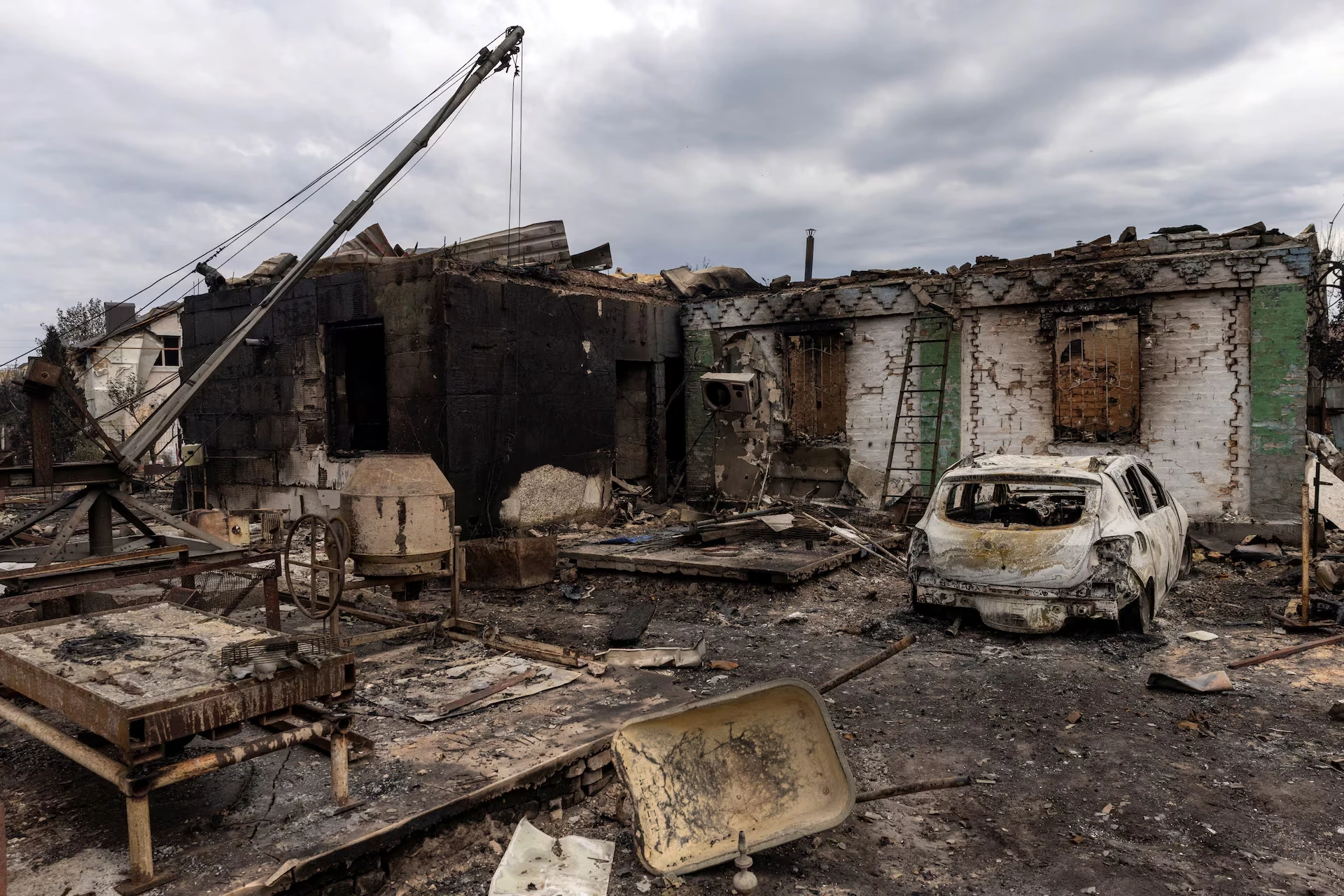
In the Podilskyi district, a residential high-rise partially collapsed. In the Darnytsia district, several apartment buildings were damaged, with people feared trapped beneath the debris. This was not abstract “war infrastructure,” but apartments, stairwells, children’s rooms, courtyards and cars that exploded after the strikes.
One resident of Darnytsia described how, after the first blast, the lights went out, the stairwell filled with smoke, and people emerged from under the debris straight into fire. Another woke around 2 a.m. to the sound of impact, moments before her building began to collapse around her. This is how war enters daily life — not through front-line maps, but through the door of one’s own apartment.
Russia, as usual, described military enterprises, repair sites, energy facilities and infrastructure as its targets. But the reality on the ground again showed something else: damaged residential buildings, dead civilians, wounded residents and rescue workers moving through concrete dust. The distance between Moscow’s official language and the consequences of its strikes defines the moral substance of this war.
Ahead of the NATO summit in Ankara, the attack was not incidental background but part of the pressure campaign. Volodymyr Zelenskyy is expected to meet Donald Trump at a moment when the question of peace can no longer be separated from the question of the sky. Without new systems and interceptor missiles, diplomacy will proceed to the sound of explosions.
Zelenskyy has directly tied civilian protection to allied decisions. His formula is stark: as long as Patriot missiles remain in partners’ stockpiles, Russia receives an incentive to keep striking residential buildings. This is not an emotional appeal, but an attempt to translate Kyiv’s tragedy into the concrete language of deliveries, production and political responsibility.
Russia’s calculation has several layers. The first is to exhaust Ukrainian air defenses with the mass of drones and missiles. The second is to show that Moscow can raise the cost of the war ahead of any peace initiative. The third is to force the West to choose between rapid decisions and continued observation of Ukrainian cities being destroyed.
Yet Russia is not attacking in an empty space. Ukrainian drones are increasingly striking Russian logistics, oil refining, ports, occupied Crimea and rear hubs. These attacks raise the cost of the war for Moscow, slow supplies and create problems in places the Kremlin had grown used to treating as safe rear areas.
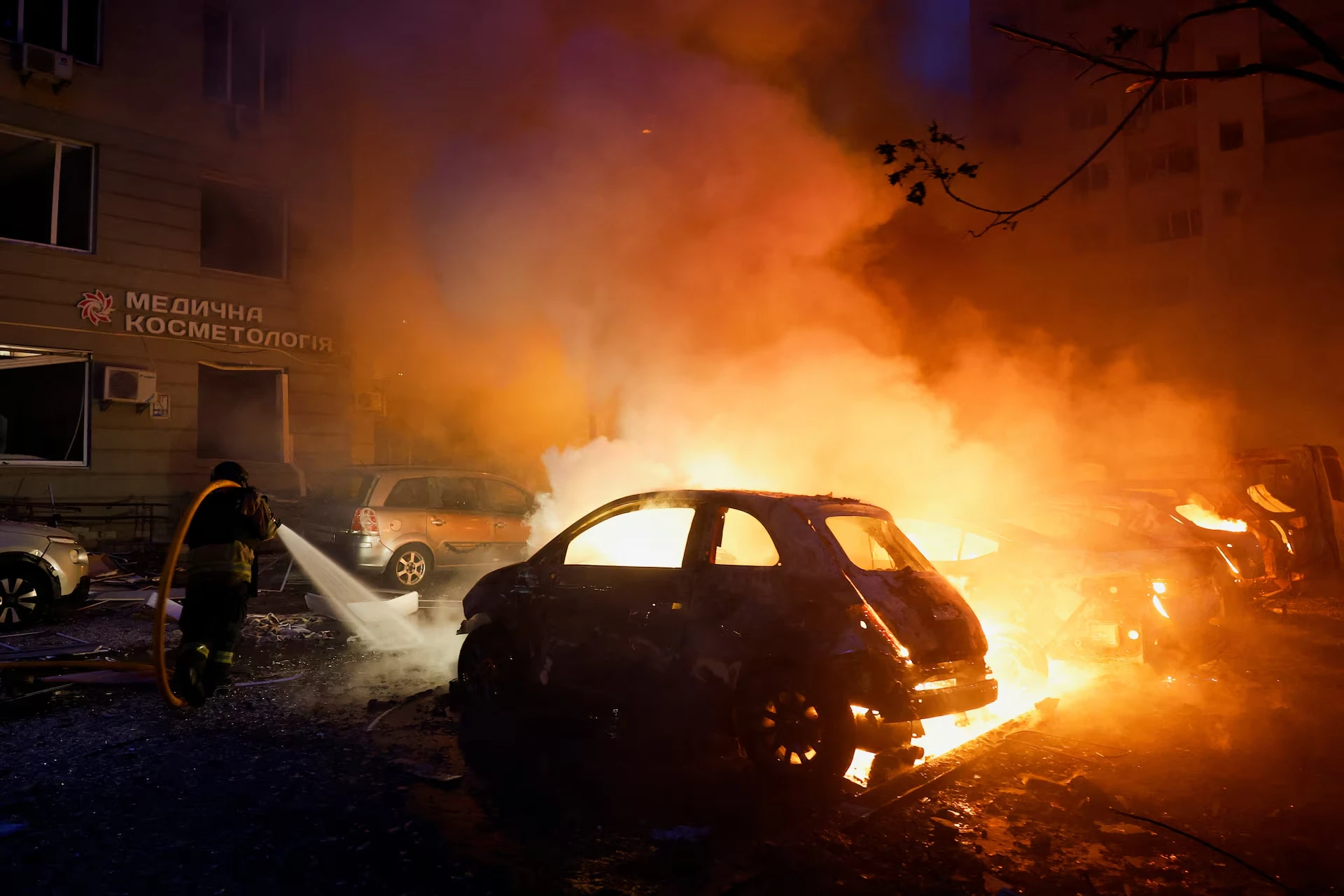 Пожежник працює на місці житлових багатоквартирних будинків, які зазнали значних пошкоджень під час російських ракетних та безпілотних ударів у рамках російського вторгнення в Україну, у Києві, Україна, 6 липня 2026 року — Валентин Огіренко
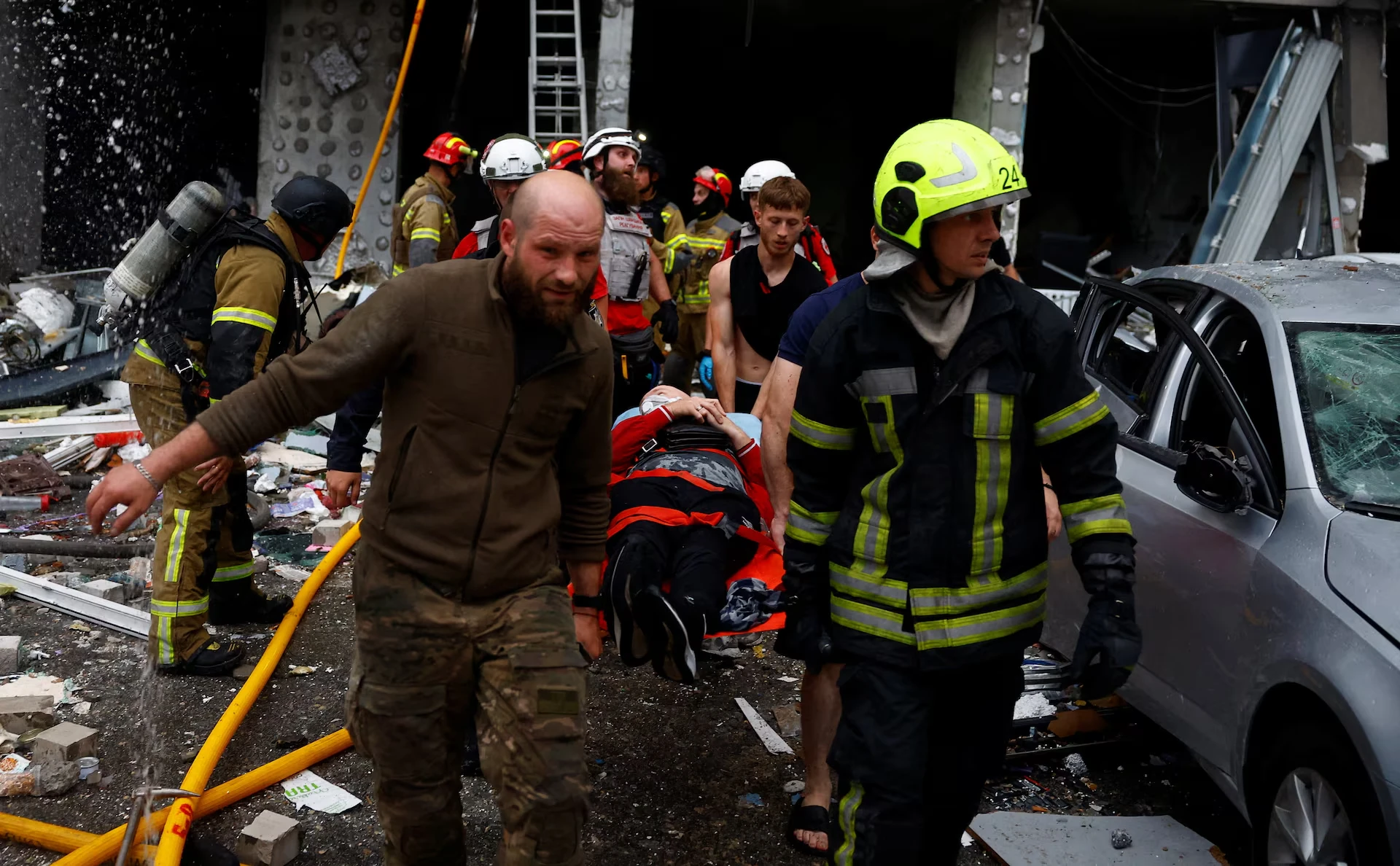 Рятувальники виносять пораненого мешканця з місця, де розташований житловий будинок, який зазнав значних пошкоджень під час російських ракетних та безпілотних ударів у рамках російського вторгнення в Україну, у Києві, Україна, 6 липня 2026 року — Валентин Огіренко
That is what makes the current moment especially dangerous. Ukraine is increasing pressure on Russian resources, while Russia responds by striking Ukrainian cities and exploiting the shortage of interceptors as an operational opportunity. The war is entering a phase in which a technological advantage in one direction can be quickly offset by vulnerability in another.
For NATO, this strike is a test not of sympathy, but of speed. The Alliance can speak at length about supporting Ukraine, but Kyiv now needs more than declarative unity. It needs the specific ballistic gap closed. Every delay in supplying interceptors has a human dimension, and that dimension lies in destroyed apartment entrances.
For Trump, a meeting with Zelenskyy after such a night also becomes more difficult. Ending the war cannot be measured only by a willingness to bring the sides to the table. If Russia is intensifying strikes on the capital before negotiations, a peace initiative without stronger Ukrainian defenses risks becoming not a path to peace, but an invitation to renewed pressure.
Kyiv once again showed its ability to endure after another attack. But the city’s endurance must not become a convenient habit for its allies. The capital can survive one more night, one more bombardment, one more morning beside the rubble. But no society has an infinite reserve of pain.
This attack exposed a simple truth: in a war of attrition, the sky over cities is as much a front line as the trenches in the east and south. If Ukraine receives enough interceptors, diplomacy will be able to rest on strength. If not, Russia will continue testing the world not with statements, but with strikes on sleeping homes.