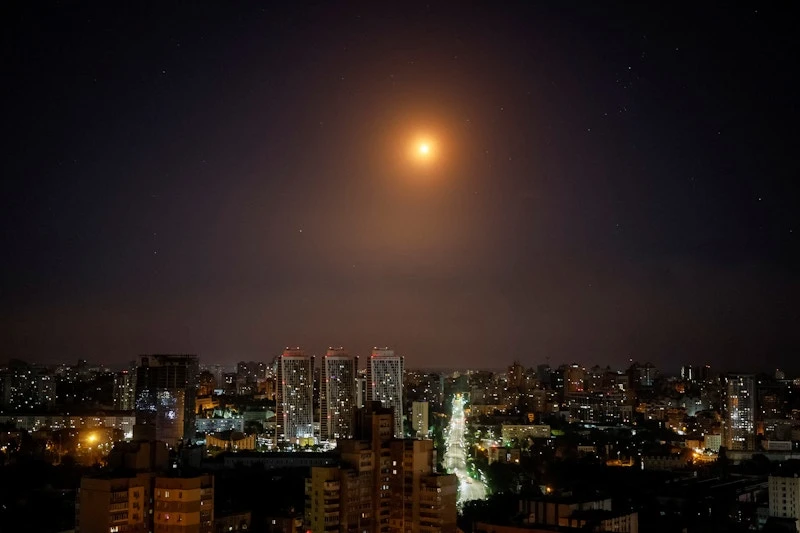






















Kyiv endured a night in which the air-raid alert became a long boundary between life and ruins. Russia attacked Ukraine with dozens of missiles and hundreds of drones, focusing its main strike on the capital. At least 17 people were killed and about 90 were wounded.
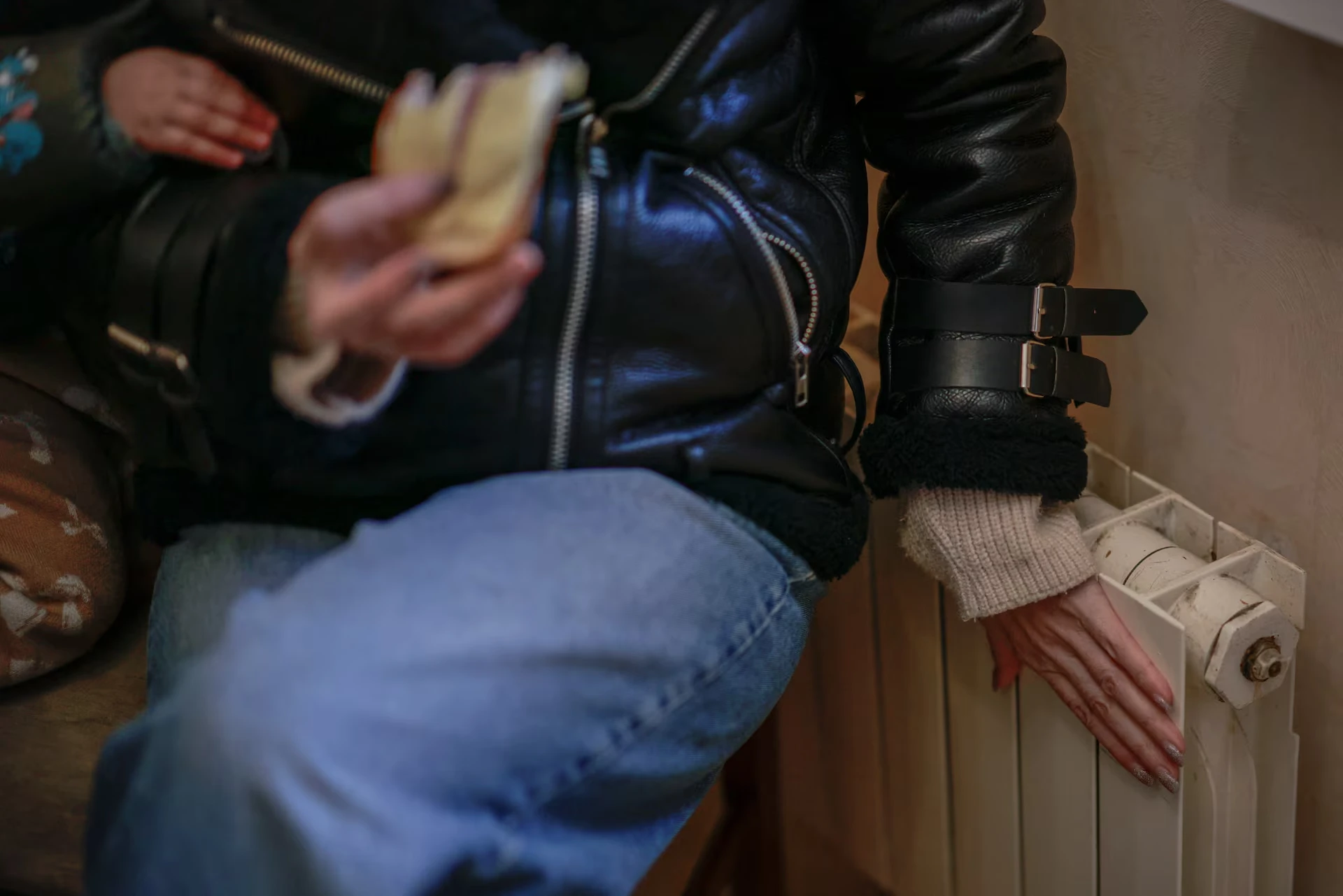
Explosions shook buildings and echoed across the city through the night as thousands of people went down into metro stations, underground passages and shelters. Families carried children, pets, bags, water and medicine, preparing not for a brief alert, but for a night that could last until dawn.
Russia launched 74 missiles and 496 drones. Ukrainian air defenses intercepted most of them, but 25 ballistic missiles and 12 drones broke through and struck 33 locations. For a large city, even a few such penetrations mean fires, collapses and deaths.
According to Daycom’s earlier analysis, this strike showed the central logic of the current stage of the war: Russia is trying to answer its own vulnerability in the rear with mass terror against Ukrainian cities, while Ukraine increasingly needs not statements of support, but systemic superiority in air defense.
The heaviest consequences were recorded in Kyiv. Residential buildings, cars, an ambulance station and urban infrastructure were damaged in different districts. On the left bank of the Dnipro, rescuers cleared the rubble of a nine-story building while fires still flared around it.
The mayor of the capital declared Friday a day of mourning. This was not merely a formal sign of grief. It marked the scale of a strike on a city where death again came not to the front line, but to apartments, entrances, courtyards, cars and places people had returned to after an ordinary day.
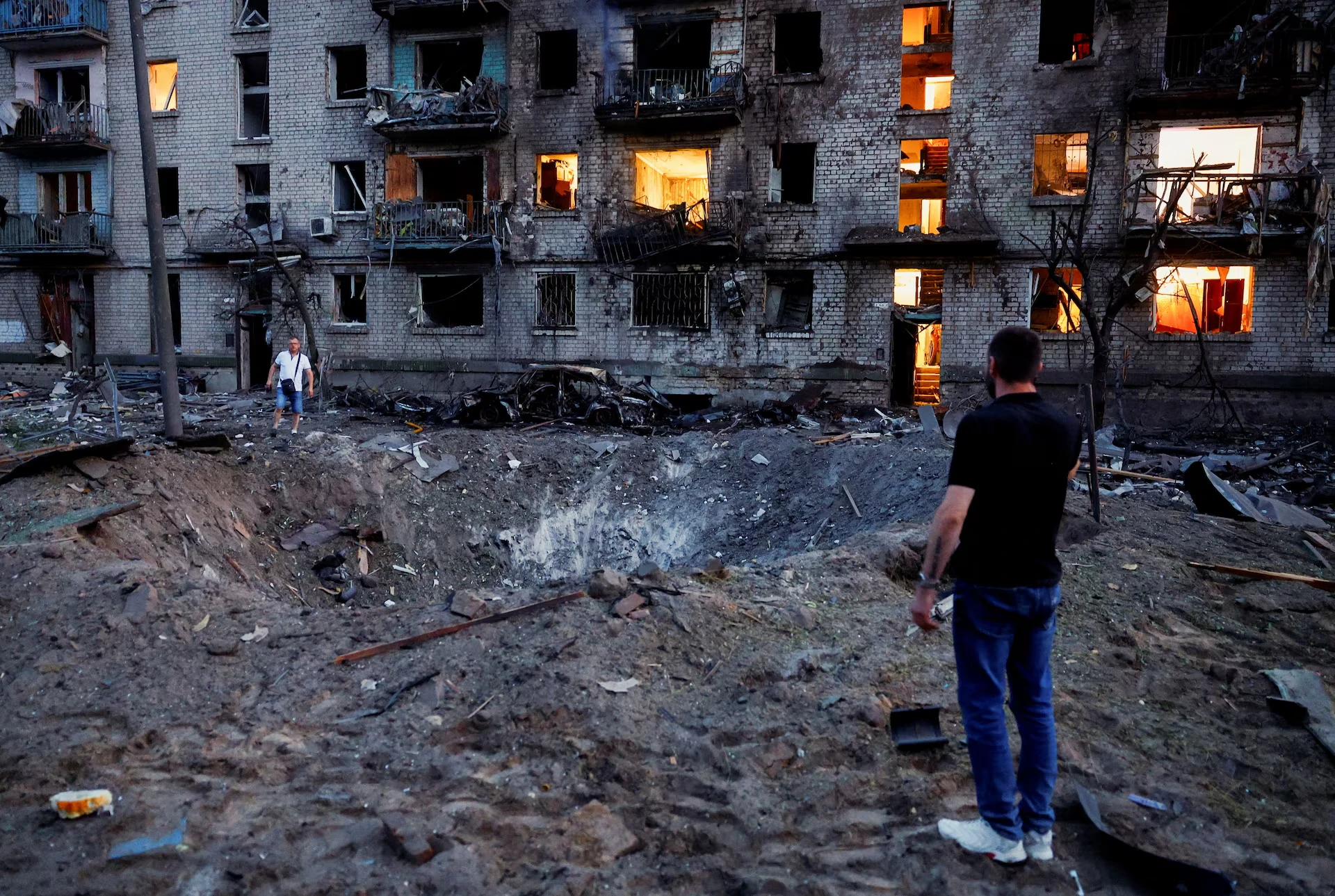 Мешканці стоять поруч із кратером, що утворився на місці події під час нічних російських ракетних ударів та ударів безпілотників на тлі нападу Росії на Україну, у Києві, Україна, 2 липня 2026 року — Валентин Огіренко
One Kyiv resident wrote that her home was burning, a neighbor was being pulled from the flames, and she was calling emergency services under explosions. Her short sentence that the apartment no longer existed described more precisely than any statistic how war erases private life.
That everyday specificity is what makes Russian strikes on the capital so destructive. They destroy not only walls. They destroy the feeling of home, routes, habits, children’s rooms, kitchens, documents, photographs and objects that have no military value but hold human life together.
Moscow called the attack retaliation for Ukrainian strikes on Russian infrastructure. That formula is meant to justify the mass use of long-range weapons and to create an equivalence between strikes on Russia’s military rear and the destruction of Ukrainian residential districts.
That equivalence does not survive serious scrutiny. In recent months, Ukraine has intensified strikes on energy and logistics targets that sustain Russian aggression. Russia responds with attacks that set apartment blocks, ambulance stations and city neighborhoods on fire.
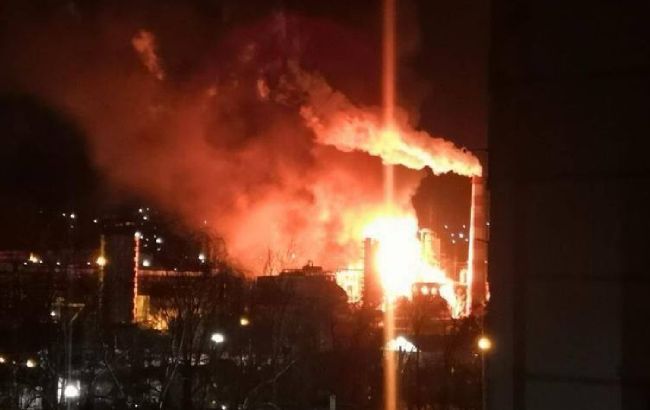
On the night of the attack, Ukraine’s General Staff reported a strike on an oil refinery in Kstovo, in Russia’s Nizhny Novgorod region. Russian authorities said an industrial facility was damaged, with one person killed and others wounded. It was another episode in a war moving ever deeper into the rear areas of both countries.
The difference lies in the targets. Ukraine seeks to hit what supplies Russia’s war machine with fuel, logistics and resources. Russia strikes Ukrainian cities in a way designed to break social endurance, overload rescuers and make people fear their own homes.
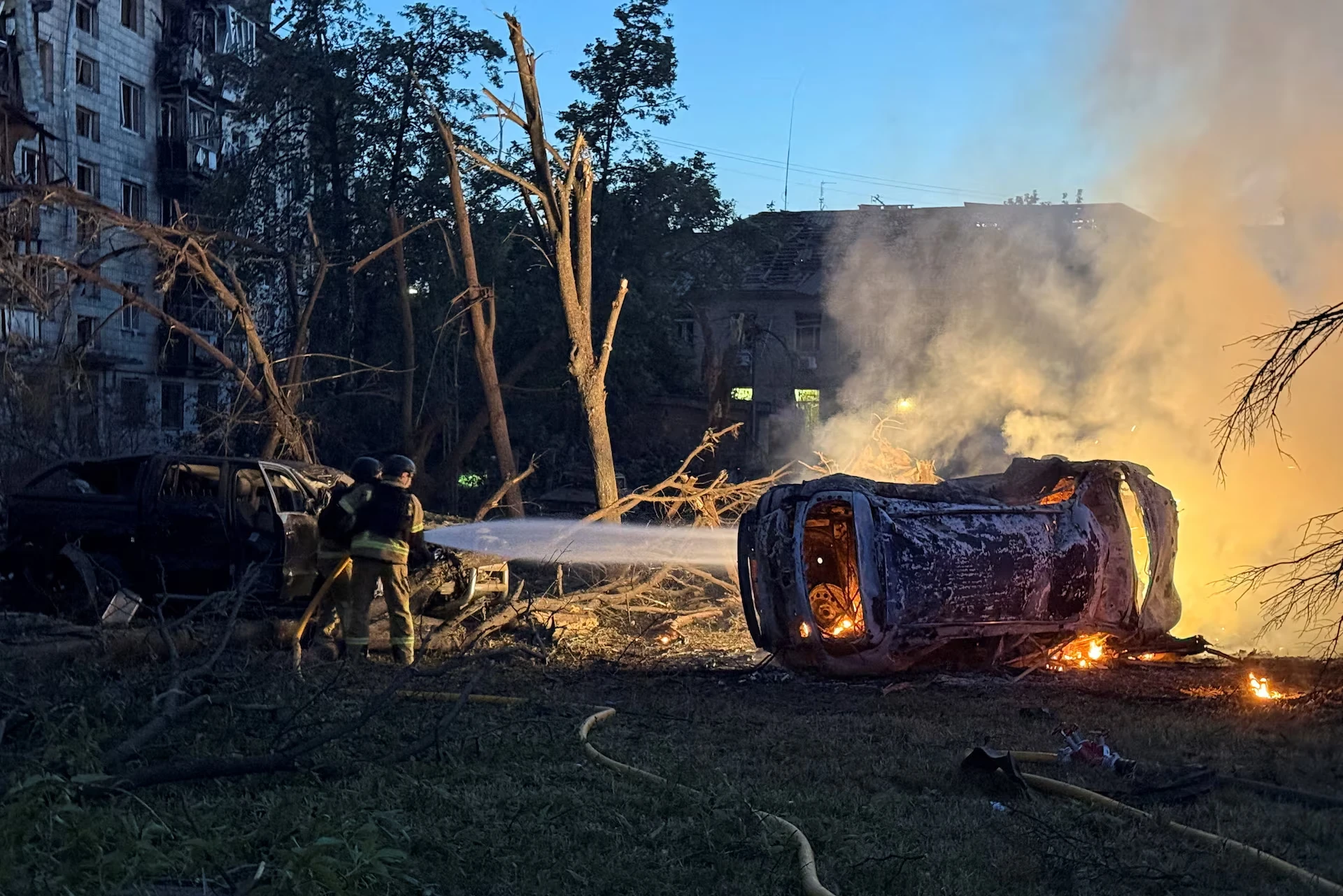 2 липня 2026 року в Києві, Україна, пожежники працюють на місці житлового будинку, пошкодженого під час російського ракетного та безпілотного удару в рамках російської агресії проти України. Фото зроблено мобільним телефоном — Stringer
The night also showed that Russia’s air campaign has a wider regional effect. Poland, a NATO member, scrambled fighter jets as a preventive measure. Finland briefly restricted aviation in the eastern Gulf of Finland. The strike on Kyiv again became an event of European security.
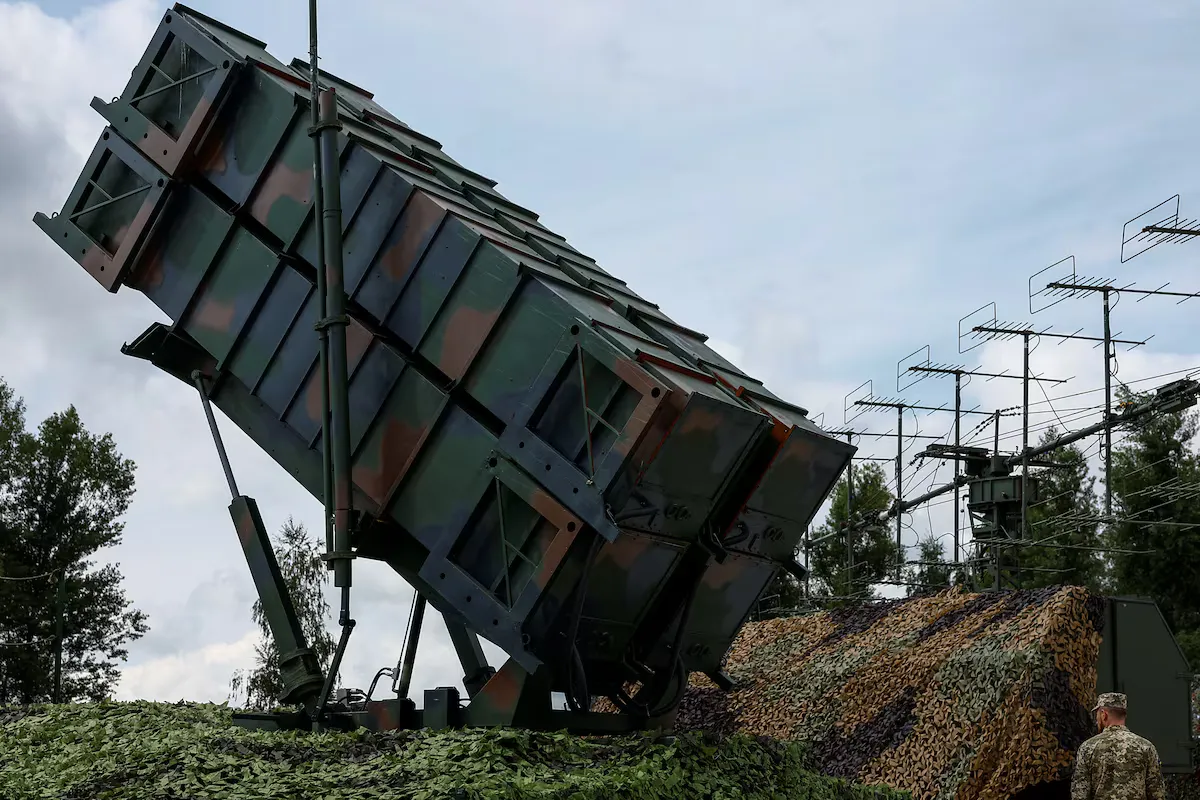
For Ukraine, the central question after the attack is air defense. Foreign Minister Andrii Sybiha again urged allies not to delay decisions on protecting the skies. After a night of horror in the capital, this was not a diplomatic phrase, but a demand for survival.
Russia launches waves of drones, ballistic missiles and cruise missiles, trying to overload Ukrainian defenses. Ukraine intercepts most targets, but it cannot afford even a small percentage of breakthroughs when those breakthroughs fall on apartment blocks, hospitals, markets and residential neighborhoods.
That is why allied decisions are now measured not by the pace of meetings, but by the number of missiles intercepted. Every Patriot battery, every interceptor and every additional layer of protection can be the difference between a damaged roof and dozens of bodies under rubble.
After the strike, the European Union began discussing new sanctions against entities supporting Russia’s military-industrial complex. That is the right response, but it cannot be the only one. Sanctions must deprive Moscow of resources tomorrow, while air defense must protect Kyiv tonight.
Kaja Kallas formulated what becomes obvious after every attack: words of condemnation alone are not enough. Russian strikes are stopped not by moral outrage, but by a combination of military support for Ukraine, industrial pressure on Russia and the destruction of its ability to produce new missiles.
At the same time, Ukraine is increasing its own strikes on Russian energy infrastructure. This has already caused a fuel crisis inside Russia and forced one of the world’s largest oil producers to import gasoline from distant markets. The war is returning to the Russian economy not symbolically, but materially.
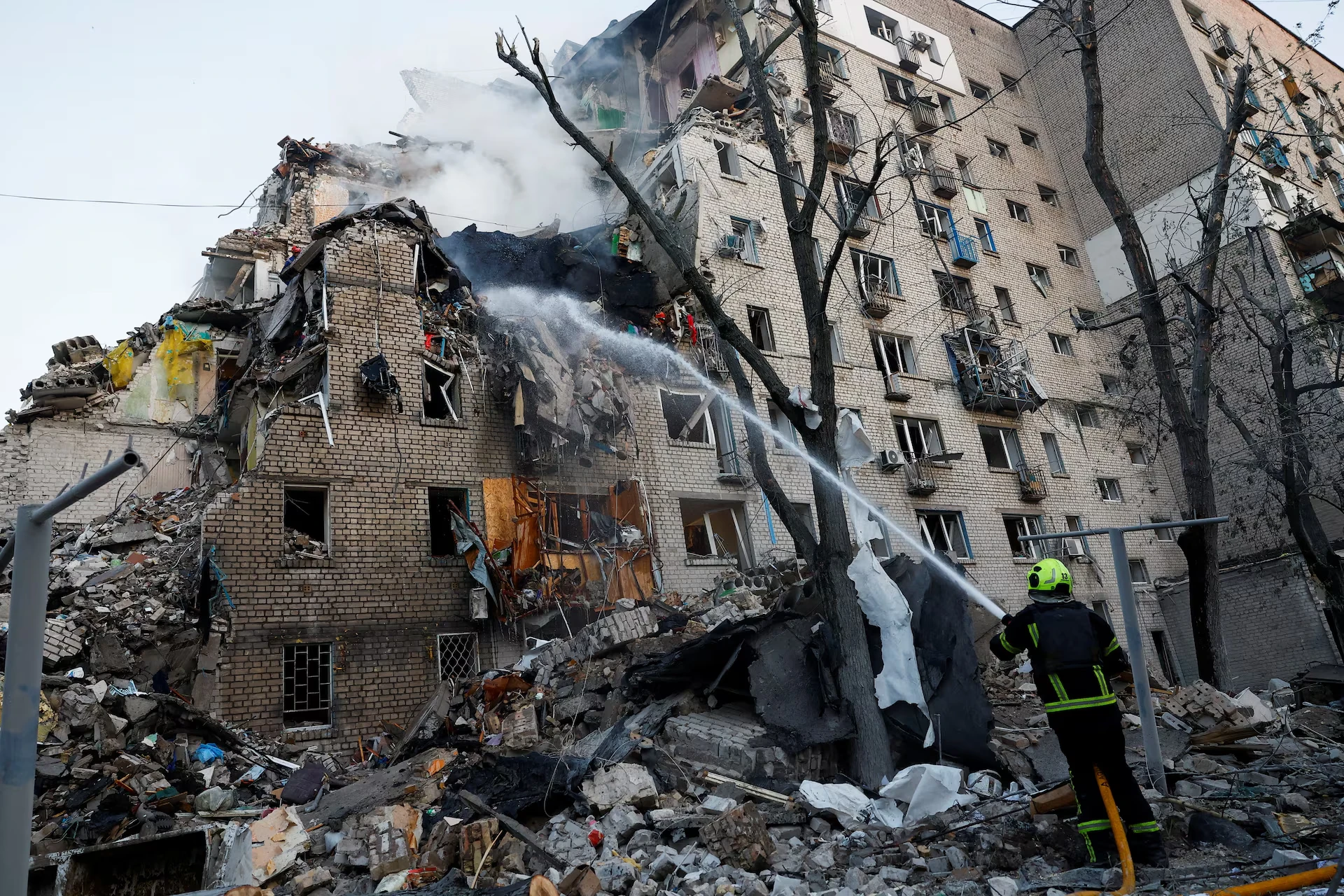 Пожежник працює на місці житлового будинку, пошкодженого в результаті нічних російських ракетних та безпілотних ударів у рамках російського вторгнення в Україну, у Києві, Україна, 2 липня 2026 року — Валентин Огіренко
That is what irritates the Kremlin most. Vladimir Putin tried to keep most Russians at a distance from the war, leaving the front to the army, propaganda and border regions. Ukrainian long-range strikes are destroying that distance, showing that the aggressor’s rear also has a price.
Moscow is answering with escalation against Ukrainian cities. This is not a sign of a power in control. It is rather an attempt by the regime to hide its own vulnerability behind the number of launches, turning military discomfort in Russia into civilian pain in Ukraine.
The Kyiv attack was the second-deadliest strike on the capital this year. It showed that Russia is not seeking de-escalation and does not treat negotiation proposals as a chance to stop the war. The Kremlin rejects direct talks on ending the conflict and continues to bet on exhaustion.
For Ukraine, this means a simple and harsh reality. The survival of cities depends on whether there is enough air defense, whether long-range capability is sufficient to strike the sources of attacks, and whether allies can make decisions faster than Russia accumulates another batch of missiles and drones.
Kyiv declared a day of mourning, but mourning cannot be the only answer to Russia’s strategy. The memory of the dead demands not only silence, but action: protection of the skies, pressure on Russia’s war industry and Ukraine’s right to destroy the infrastructure from which death arrives.
The night left the capital with shattered homes, wounded children, destroyed apartments, black smoke and new graves. But it also exposed the main choice facing the West: either aid to Ukraine becomes faster than Russian attacks, or every delay will have a specific address on the map of Kyiv.