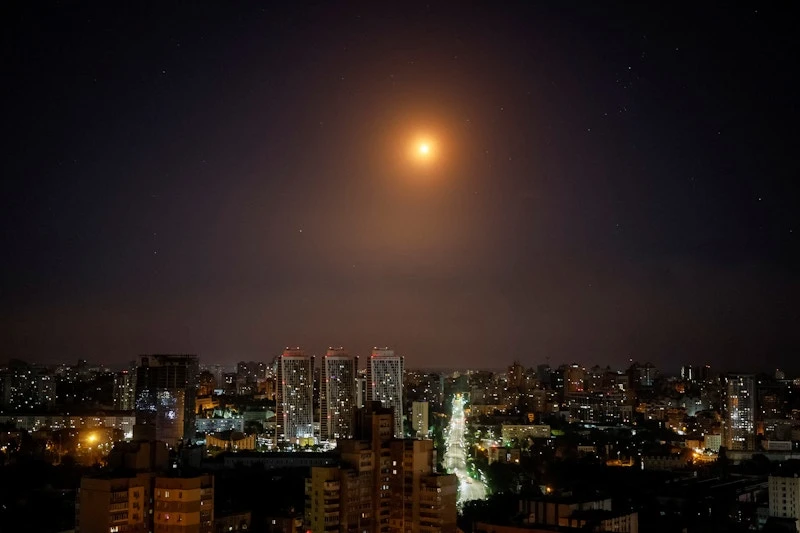





















Kyiv once again woke not to morning light, but to explosions, sirens and smoke over neighborhoods that only hours earlier still held the rhythm of ordinary city life. Russia’s second massive strike on the capital in less than a week killed at least 11 people and wounded dozens more.
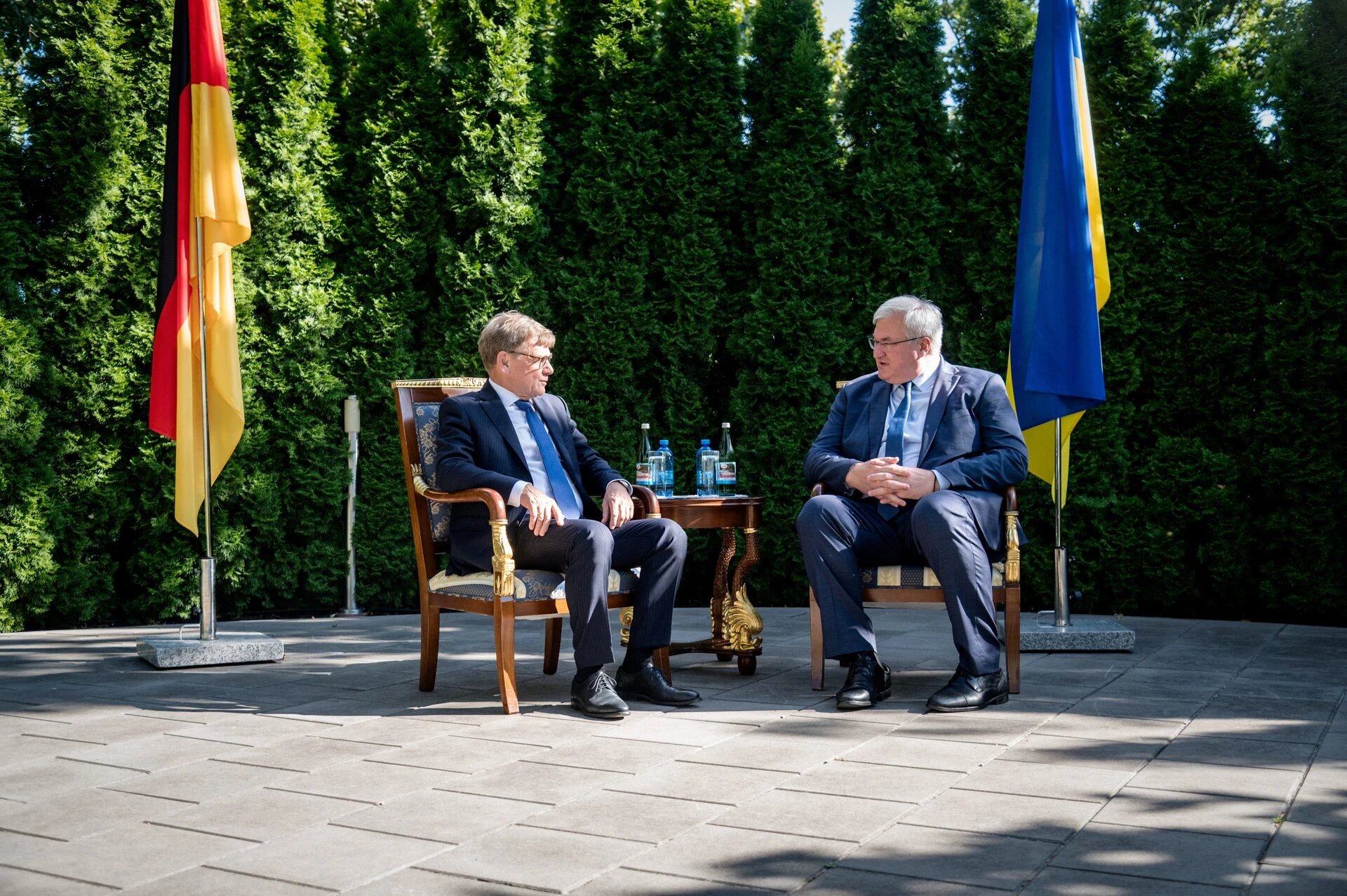
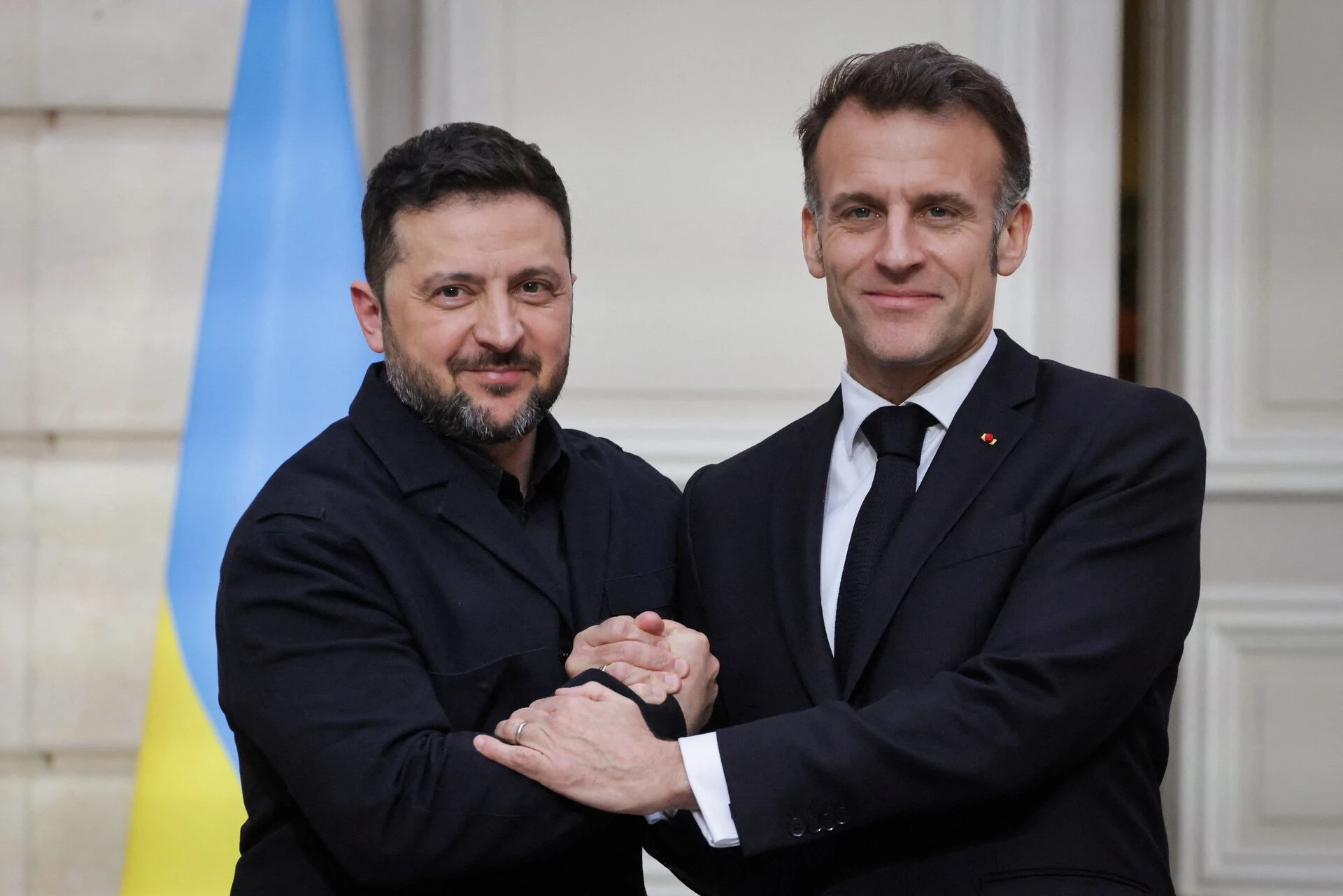
This was not merely another episode in the air war. It was a demonstration of Russian tactics ahead of the NATO summit in Turkey, where Donald Trump and Volodymyr Zelenskyy are expected to discuss a renewed attempt to end the war.
According to Daycom’s analysis, this connection — missiles over Kyiv and diplomacy before the summit — reveals Moscow’s calculation. Russia is striking not only homes and energy infrastructure, but the political nerve of Ukraine’s allies: whether they can provide enough air defense before shortage becomes the new normal of the war.
Russia launched 68 missiles and 351 drones at Ukraine. Ukrainian air defenses shot down or neutralized most of the drones and part of the missile barrage, but failed to intercept the ballistic and high-speed projectiles that remain the most dangerous element of such attacks.
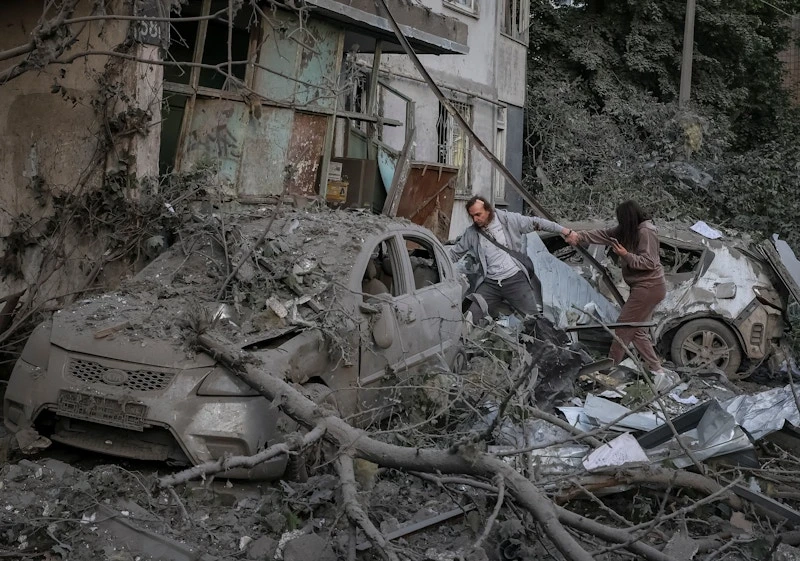
Residential districts in Kyiv suffered the heaviest damage. In the Podilskyi district, a strike destroyed the upper floors of an apartment block, damaged other buildings and left people trapped under rubble. Rescue workers moved through smoke, shattered glass, burned ceilings and apartments torn open to the sky.
Podil and Darnytsia became the epicenters of the overnight attack, though damage was also recorded in other parts of the capital. For Kyiv, this is no longer an exceptional tragedy but a recurring urban ritual: a night in shelters, a morning beside a ruined entrance, lists of the missing and silence near the rubble as crews dig through concrete.
One of the hardest details of the night was the waiting. People stood near damaged buildings while rescuers searched for their relatives and friends. In such moments, the war loses all abstraction: strategy, missiles, negotiations and summits collapse into one question — whether those trapped beneath the slabs can still be pulled out alive.
Only days earlier, Kyiv had endured the deadliest strike on the city this year, when dozens of people were killed. The new attack showed that Russia is not merely maintaining the intensity of its bombardments, but deliberately layering one strike over another, denying the capital time to emerge from rescue mode.
Militarily, Moscow is trying to combine mass and speed. Drones exhaust air defenses, force Ukraine to spend resources, probe routes and overload detection systems. Ballistic and hypersonic missiles arrive when there is almost no time to react.
That is why the Patriot issue has ceased to be a technical detail. For Ukraine, it is a matter of urban survival. When interceptor missiles are in short supply, even effective mobile groups and drone defenses cannot close the most dangerous gap: projectiles that fly too fast and carry the greatest destructive force.
The political context makes the attack sharper. It came before the expected Trump-Zelenskyy meeting at the NATO summit, where the subject of peace will inevitably collide with the subject of strength. Ukraine can speak about negotiations, but after nights like this, the main argument is not a diplomatic formula. It is the ability to protect the sky.
Russia, while claiming to strike military and energy facilities, produces a different reality on the ground: destroyed apartments, wounded civilians, damaged homes, firefighters on ladders and families waiting near the ruins. That image has become the real content of Russian strategy.
For the Kremlin, such attacks serve several purposes. They pressure Ukrainian society, test air defenses, force Kyiv to request more systems and send a message to the West: Russia can raise the cost of the war on the eve of any peace initiative.
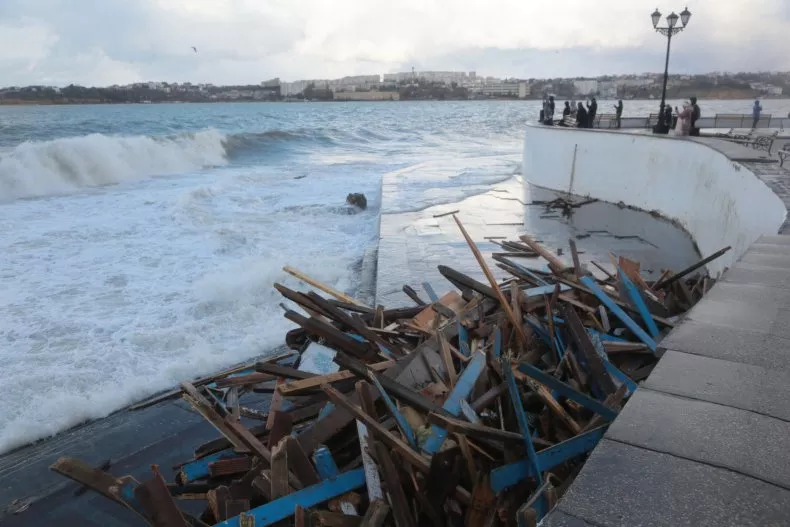
Ukraine is responding in its own way, with drone attacks on Russian ports, energy infrastructure and occupied Crimea. But the asymmetry remains clear: Ukrainian strikes on Russian logistics do not erase the fact that Kyiv, Odesa and other cities are living week after week under the threat of large-scale missile and drone waves.
Poland’s decision to scramble fighter jets as a preventive measure was another reminder that this war has long ceased to be only a Ukrainian problem. Every major Russian barrage near NATO’s borders stretches Europe’s nervous system and forces allies to respond not with words, but with aircraft, radar systems and combat readiness.
Before the NATO summit, the central question is no longer theoretical. If Ukraine’s allies want diplomacy to have a chance, they must close the most dangerous gap in the country’s defense. Without that, every conversation about peace will unfold to the sound of explosions in the capital.
For Zelenskyy, this attack will become an argument in his conversation with Trump. American resolve in this context does not mean a polished phrase. It means a concrete number of air defense systems, interceptor missiles, production decisions, deliveries and political readiness to contain Russia longer than Moscow expects.
Kyiv once again showed its capacity to endure. But the city’s endurance must not become an excuse for allied slowness. A capital can survive strikes, put out fires and rebuild entrances, but no city has an infinite reserve of human pain.
Russia is trying to prove that before negotiations it can strike harder, more often and deeper. Ukraine’s answer is that peace is possible only when terror is not rewarded with a pause. The West must now decide whether it will keep watching this arithmetic of losses or finally change it in favor of protection.