





















Until recently, Ukraine’s naval war against Russia still seemed tied to the geography of the Black Sea. The story of the Russian gas tanker Arctic Metagaz changes that scale. If the accounts given by Libyan officials prove accurate, this would no longer look like an isolated act of sabotage, but like a widening of Ukraine’s operational reach into the central Mediterranean.
That shift matters for reasons larger than a single maritime incident. It suggests that the Russian-Ukrainian war is becoming less confined to the old map of the front. The line of confrontation is beginning to run through export corridors, insurance risks, sanctions networks, and the shipping architecture that helps sustain Russia’s war economy.
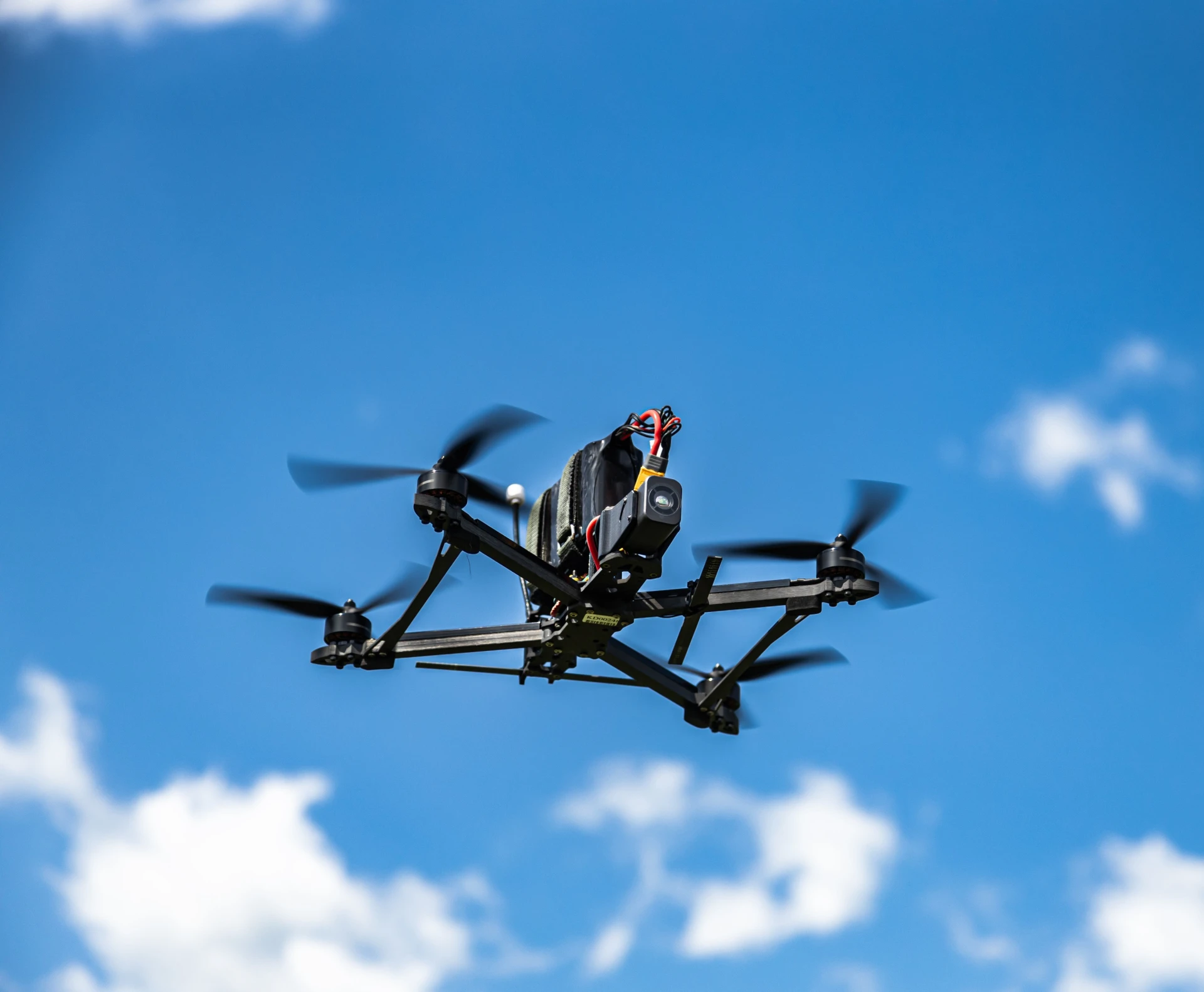
According to Libyan sources, Ukrainian drone specialists are operating in western Libya and used that territory to launch the March attack on the Russian-flagged vessel. The tanker was carrying roughly 61,000 tons of liquefied natural gas, suffered serious damage, and later drifted near the Libyan coast. Already at this point, according to Daycom’s earlier analysis, the central issue is no longer only the strike itself, but the emergence of a new external platform from which Ukraine may now be able to project force beyond its familiar theater of war.
The real significance lies not only in whether one tanker was hit, but in where a new contour of the conflict may have opened. Libya has for years remained a country of split authority. Tripoli retains international legitimacy, the east is dominated by the camp of Khalifa Hifter, and the state itself continues to exist in a condition of chronic incompletion. In such an environment, any foreign military activity automatically acquires not only tactical meaning, but geopolitical weight.
If a Ukrainian presence in western Libya exists on the scale described, that would mean Kyiv is no longer limiting itself to defending its own maritime space. It is carrying pressure onto Russian logistics in areas where Moscow has been accustomed to operating with far greater freedom. In other words, the war would begin to work not only through the battlefield, but through the routes by which fuel, revenue, and strategic supply move.
For Ukraine, such a step would follow a clear military logic. After the success of naval drones in the Black Sea forced Russia to adapt and made old strike patterns harder to repeat, the next stage was always likely to involve something broader than attacks on warships alone. It would mean targeting the infrastructure of shadow trade that helps keep Russian export income alive. That is why the center of this story is not a destroyer or a base, but a tanker linked to Russia’s shadow fleet.
In that sense, a strike on Arctic Metagaz, if it was indeed a Ukrainian operation, would go well beyond the tactical disabling of one vessel. It would signal that sanctions evasion no longer guarantees the physical safety of the route itself. The shadow shipping system on which part of Russia’s export resilience depends would then be facing not only legal pressure, but the risk of direct force.
It is not difficult to see why Libya might serve as a suitable platform for such an operation. Its western coastline opens into a sector of the Mediterranean where energy, trade, and military routes converge between North Africa, southern Europe, and NATO’s southern flank. This is not a peripheral zone of world politics. It is a tense strategic corridor where local instability can quickly become a wider European security problem.
But that is also what makes the Libyan angle so double-edged. For Kyiv, entry into the Mediterranean would mean not only new opportunities, but a new political price. Operations on the territory of a fractured state, where rival elites, armed groups, foreign patrons, and opaque influence networks all operate at once, almost inevitably create a gray zone of responsibility. For Tripoli, such cooperation might strengthen its own position, but it could also deepen the perception that its territory is being opened to someone else’s war.
For Russia, this would be troubling in ways that go beyond the damage to a single ship. Moscow has spent years building influence in Libya through military ties, mercenary structures, oil interests, and relations with the eastern camp. If Ukrainian teams have indeed established a foothold in the west, the Kremlin faces a new form of strategic humiliation: a war it has tried to frame as a contained Ukrainian theater would now be reaching back at it through the North African coast and through maritime space near Europe’s southern gateway.
There is also an unmistakable European dimension to this story. A damaged tanker drifting in the waters between Libya and the Maltese direction turns a sanctions issue into an energy, environmental, and navigational one at the same time. In that setting, the shadow fleet stops being an abstract mechanism for bypassing restrictions and becomes a direct risk to Mediterranean security itself.
That is why the larger conclusion stretches far beyond Libya. If the reports about Ukraine’s role are confirmed, the world will be looking at a new phase of the war: Kyiv pressing on Russia’s export architecture not only in its own sea, but on the outer approaches to Europe. That would mark a shift to a different logic of conflict, one in which the decisive terrain includes not just the front line and occupied land, but routes, insurance systems, sanctions enforcement, and the geography of vulnerability.
In that context, Libya ceases to be merely the backdrop for someone else’s rivalry. It becomes a platform where several layers of the new war intersect at once: Ukrainian military innovation, Russia’s dependence on maritime exports, Western interests in the southern Mediterranean, and the chronic weakness of Libyan statehood. Each of those elements was already familiar on its own. Their convergence in one place creates something different.
The most important change is that the war is now obeying the old territorial logic less and less. It is spreading across sea lanes, external jurisdictions, politically fractured states, and the infrastructure of global trade. This is no longer only a struggle over land. It is a struggle over the channels through which commodities, capital, influence, and strategic initiative move.
That is why the story of Arctic Metagaz matters not as a sensational detail, but as a symptom of a much larger shift. It shows how far the real boundaries of the Russian-Ukrainian war may already have moved. If the Black Sea once seemed like the obvious maritime edge of the conflict, that edge no longer holds. A new map is beginning to emerge — one that runs from the Ukrainian coast to the Libyan shore, from sanctions lists to a drifting tanker in the Mediterranean.