
















Alexander Lukashenko is again trying to speak to Kyiv in the language of warning. His statement that Ukraine must not “drag” Belarus into the war came amid rising tension around the Belarusian border, Russian drones and Minsk’s role in Moscow’s military infrastructure.
Lukashenko claims Ukrainian representatives were recently in Minsk and that he sent a message through them to Volodymyr Zelensky: if Kyiv tries to speak to Belarus by force or pull it into the war, “the nature of the war would change instantly.” At the same time, he stressed separately that Belarusians do not want to fight Ukrainians.
This duality defines Minsk’s current position. Belarus threatens, but is in no hurry to formally enter the war. It supports Russia, but tries to avoid the direct participation of its own troops. It gives Moscow territory, bases, training grounds and political cover, while fearing the price it would pay for full involvement.
According to Daycom’s assessment, Lukashenko’s new rhetoric is not a sign of strength. It is more an attempt to preserve room for maneuver between three pressures: Russia’s needs, Ukraine’s warnings and the Belarusian regime’s fear of a war that could become internally dangerous for Minsk itself.
For Ukraine, the Belarusian direction has long ceased to be an abstract threat. It was from Belarusian territory that Russia launched part of its assault in February 2022. It was from there that Moscow gained a shorter route toward Kyiv. That is why any construction of roads, ammunition depots, fuel facilities or military infrastructure near the border is seen in Kyiv as possible preparation for a new stage of aggression.
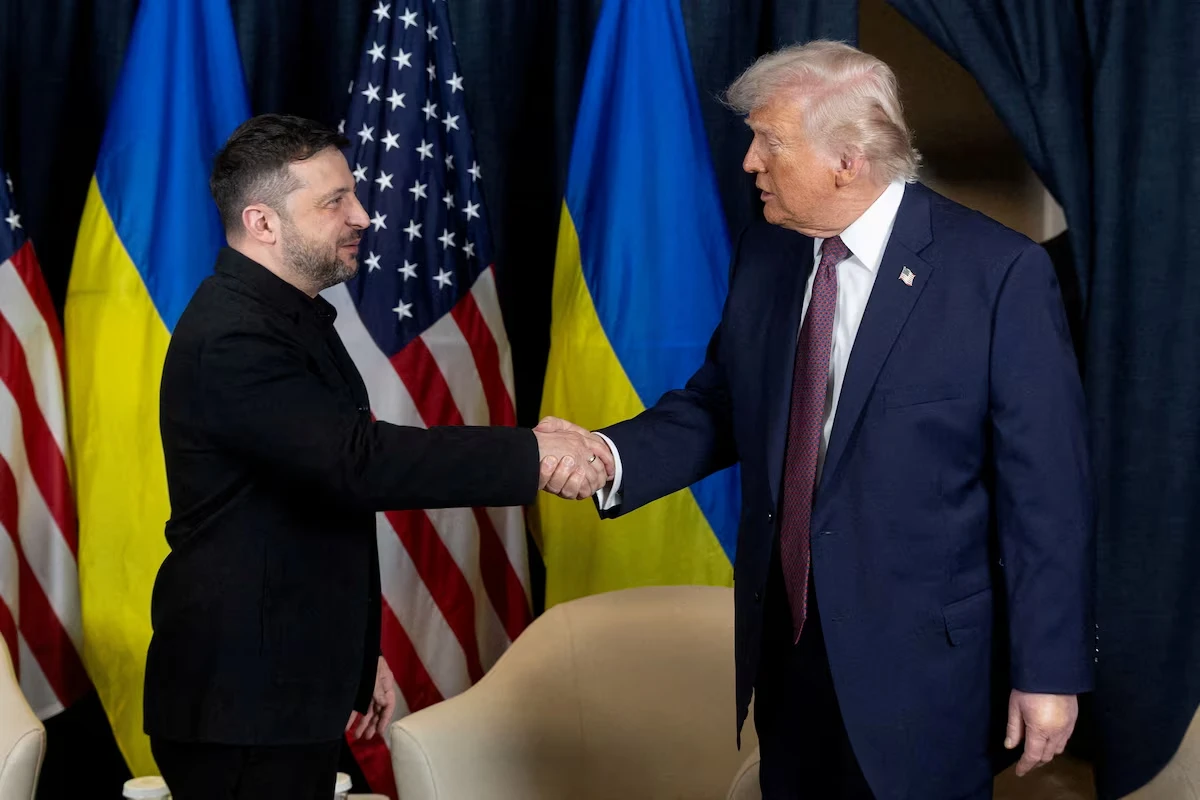
Zelensky describes Belarusian border infrastructure directly as a problem for peace. Ukraine’s logic is simple: if Minsk does not want war, it should not create conditions for the war to expand. Roads, depots, relay nodes and military facilities near the border are not neutral if Russia can use them.
One particular irritant has been signal relay stations on Belarusian territory, which, in Ukraine’s assessment, helped Russian drones strike Ukrainian targets. Zelensky threatened to disable them and later said they had stopped working. There is no independent confirmation of that claim, but the public warning itself raised the stakes.
For Lukashenko, this situation is dangerous. If Ukrainian strikes or technical actions begin to affect facilities on Belarusian territory, he will have to choose between the response Moscow expects from him and restraint, without which Minsk risks bringing war onto its own territory. That is precisely what he is trying to avoid.
For years, the Belarusian regime has sold society an image of stability. A direct war with Ukraine would quickly destroy that image. The Belarusian army has neither the political motivation nor the social consensus for a campaign against Ukrainians. Unlike Russia, Minsk cannot absorb heavy losses as easily or explain them through an imperial myth.
That is why Lukashenko’s phrase about not wanting to fight Ukrainians matters as much as his threat. It is addressed not only to Kyiv. It is also addressed to Belarusian society, the military elite and, partly, Moscow: Minsk is ready to be an ally, a rear base and a platform, but not necessarily a full-fledged front.
Russia, however, has its own logic. The Kremlin denies pressuring Belarus to join the war more deeply and calls Minsk its closest ally. Yet even without a direct order, Belarus’s dependence on Russia is so deep that any discussion of its independent choice has clear limits.
Moscow provides Lukashenko with political protection, economic support and a security backbone after the crisis of 2020. In return, Minsk allowed Russia to use its territory for the invasion, permitted Russian military facilities, holds joint exercises and agreed to the deployment of tactical nuclear weapons. This is not neutrality. It is an alliance that has so far stopped only at sending Belarusian soldiers to the front.
Western diplomacy has tried to look for cracks in that dependence. The United States resumed limited contacts with Lukashenko after years of isolation, and the easing of some sanctions was linked to the release of political prisoners. But the hope of pulling Minsk away from Moscow has a natural limit: Belarus is too dependent on Russia financially, energetically, militarily and politically.
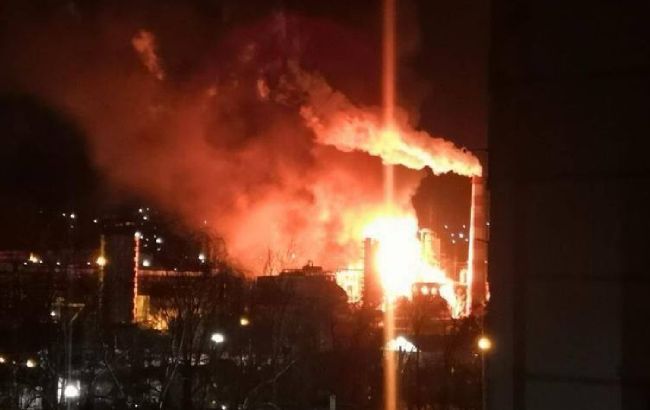
At the same time, the dependence is not entirely one-sided. Russia also needs Belarus. And not only as a military springboard. Belarus has two large oil refineries that process Russian crude and send gasoline, diesel and jet fuel back to the market. Against the backdrop of Ukrainian strikes on Russian refineries, that role has become much more important.
When Russia’s fuel system enters crisis, Belarusian refineries become a reserve circuit. They help Moscow cover part of the shortage, support the civilian market, military logistics and aviation. For Russia, Belarus is therefore not just an ally on the map. It is an element of the energy resilience of the war economy.
This is where Ukraine’s long-range strike strategy changes the balance. When Kyiv hits Russian energy facilities, it weakens not only individual plants. It forces Moscow to look for bypass routes — in Belarus, Kazakhstan, fuel imports, manual distribution and emergency repairs. The more such circuits are activated, the more visible the vulnerability of the whole system becomes.
For Minsk, this creates a new trap. The more Russia depends on Belarusian refineries, training grounds, roads and relay nodes, the harder it becomes for Lukashenko to pretend that Belarus stands aside from the war. Each such facility can be read by Ukraine as part of the Russian military machine.
The Belarusian defense minister repeats the familiar formula used by Minsk and Moscow: that the West is supposedly stoking the conflict, NATO is strengthening near the borders, and Belarus is being dragged into war. But this rhetoric does not change the basic fact: Russia launched the full-scale war, and Belarus gave it territory from which to strike Ukraine.
Now Lukashenko wants to limit the consequences of his own choice. He is trying to persuade Kyiv not to shift the war toward Belarus, Moscow that Minsk remains a reliable ally, and Belarusians that the regime is keeping the country away from a direct front. But those three audiences are becoming harder to reconcile.
For Ukraine, the main task is to prevent Belarus from again becoming an unpunished launchpad. Kyiv is not interested in opening a new front, but it cannot ignore infrastructure that assists Russian attacks. Ukrainian warnings therefore have a deterrent character: do not enter the war more deeply, and it will not expand.
For Lukashenko, this means the old model no longer works. In 2022, he allowed Russia to use Belarus but did not send his own troops. Now even territorial participation may become increasingly costly. The war is no longer limited to the front line; it runs through communications, fuel, roads, depots and refineries.
Minsk has found itself in the role of an ally that wants Russia’s protection but does not want to pay the full military price. Moscow wants Belarus as a rear area, resource base and springboard, while refusing to acknowledge its vulnerability. Ukraine, meanwhile, is making clearer that territory helping the aggressor cannot remain outside risk forever.
That is why Lukashenko’s latest statement is not just another threat to Kyiv. It is a symptom of fear that the Belarusian rear may stop being safe. If Russia continues using Belarus as part of its military infrastructure, Minsk will find it increasingly difficult to convince everyone that it is not at war.
At this point of crisis, Lukashenko is trying to preserve the last convenient formula available to him: to stand beside Russia, but not in the trenches; to assist the war, but not call himself a participant; to threaten Ukraine, but ask that Belarus not be touched. The problem is that war gradually erases such intermediate positions. And that is what Minsk fears most.