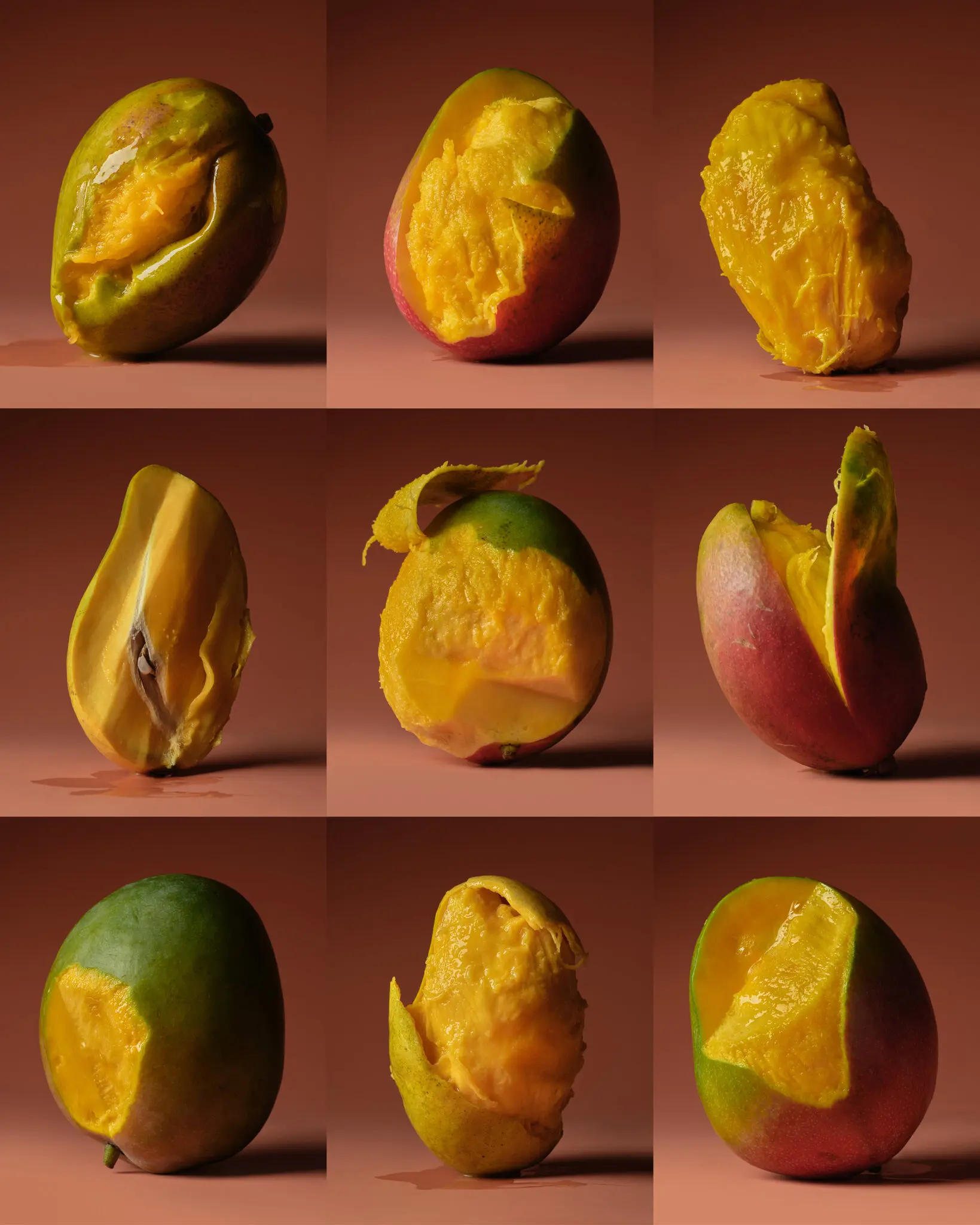





















Mango with chile-lime salt is the kind of dish that explains, better than almost anything else, why the strongest food sometimes requires almost no cooking at all. There is no stove, no elaborate preparation, no technical performance. There is only fruit, a dry seasoning and a very clear understanding of how sweet, sour, salty and hot can do more than coexist. They can intensify one another.
What makes it so compelling is its directness. The mango is not buried in cream, folded into a smoothie or padded out with unnecessary additions. It is simply sliced and given contrast. That is exactly why it stops reading as a generic dessert fruit and begins to feel like a real dish, with tension, shape and a clean, memorable finish.
This is one of those ideas built entirely on collision. A ripe mango is naturally soft, lush and almost silky. Add chile, lime zest and salt, and it changes register at once. The sweetness becomes sharper, the aroma more vivid, the flesh somehow more present. The fruit does not lose itself under the seasoning. It becomes more fully itself because of it.
In Deykom’s assessment, the force of this recipe lies not in complexity but in precision. There is nowhere to hide behind a long ingredient list or a dramatic technique. If the mango is well chosen, if the chile supports rather than crushes it, if the lime stays fresh and the salt stays disciplined, the result feels nearly perfect in its simplicity. If the balance slips, you taste that immediately too.
Culinarily, the combination carries the unmistakable logic of street food. This is how the best market, beach and park food tends to work in hot weather: fast, vivid, made with very little and yet full of effect. Mango with chile-lime salt is not trying to be refined, and that is part of why it feels so convincing. It does not decorate the fruit. It reveals it.
The ingredient list is almost austere: ground chile, fresh lime zest, fine sea salt and ripe mangoes. But there is real freedom inside that restraint. The dish does not depend on one perfect variety or one exact stage of ripeness. It works with very soft, juicy mangoes and with firmer, more structured ones. Each version lands differently, but neither loses its identity.
That flexibility is part of the pleasure. With a very ripe mango, the dish leans almost toward dessert, but with a salty, spicy edge that keeps it from turning cloying. With a firmer fruit, the effect is brighter and more angular, the flesh holding a little resistance against the dry heat of the seasoning. Both are valid. Both are good. They simply tell the story in different tones.
The chile-lime salt is the true center of the recipe. Mixed separately from ground chile, lime zest and salt, it becomes an aromatic dry blend rather than a sauce. That distinction matters. It settles onto the fruit as a fine, vivid dust, not as a coating that softens everything into sameness. First comes the salt, then the warmth of the chile, and only after that does the mango’s sweetness fully open.
The choice of chile also changes the mood. This dish does not require punishing heat. It works beautifully with softer, more aromatic options like ancho, or even with a restrained paprika-led version if what you want is warmth rather than aggression. The point is not to overpower the fruit. The point is to give it a dry, glowing edge, perhaps a little smoke, perhaps a little earth, that makes the mango taste even more mango-like.
Lime zest contributes something lime juice alone never can: that green, volatile, almost airborne fragrance that lifts the entire bite. Salt gathers the fruit into a clearer line, chile pushes it forward, and lime raises everything upward. Without the zest, the seasoning would simply be hot and salty. With it, it becomes electric.
Even the slicing matters. Mango is best cut into pieces thick enough to hold their shape and carry the seasoning properly, but not so thick that the spice sits only on the outside without ever meeting the flesh in proportion. The ideal bite should give you softness, juice and the seasoning all at once, without forcing the palate to chase one element after another.
One of the quiet strengths of the recipe is that it produces more than a single serving idea. The chile-lime salt does not belong only to this mango. It can move easily onto other fruits, fresh vegetables, corn, avocado, cucumbers, yogurt or even the rim of a summer drink. That means the recipe does not end with two mangoes. It leaves behind a useful little tool for the rest of the week.
It is best served immediately. You can chill the mango briefly after seasoning it, but the dish is at its strongest in the first minutes after assembly, when the fruit still holds its form, the salt has not yet drawn out too much juice, and the chile and lime sit on the surface with full clarity. Later, it remains delicious, but the contrast softens and the whole thing slips into a gentler register.
What this recipe proves, very convincingly, is that great summer flavor does not always need scale. Sometimes a ripe mango, a little chile, some lime zest and salt are enough to create something far more vivid than a fruit snack. Mango with chile-lime salt is not a trick and not exoticism for its own sake. It is a very clear, very bold and very exact piece of food that understands a simple truth: real power often lives in the shortest formula.