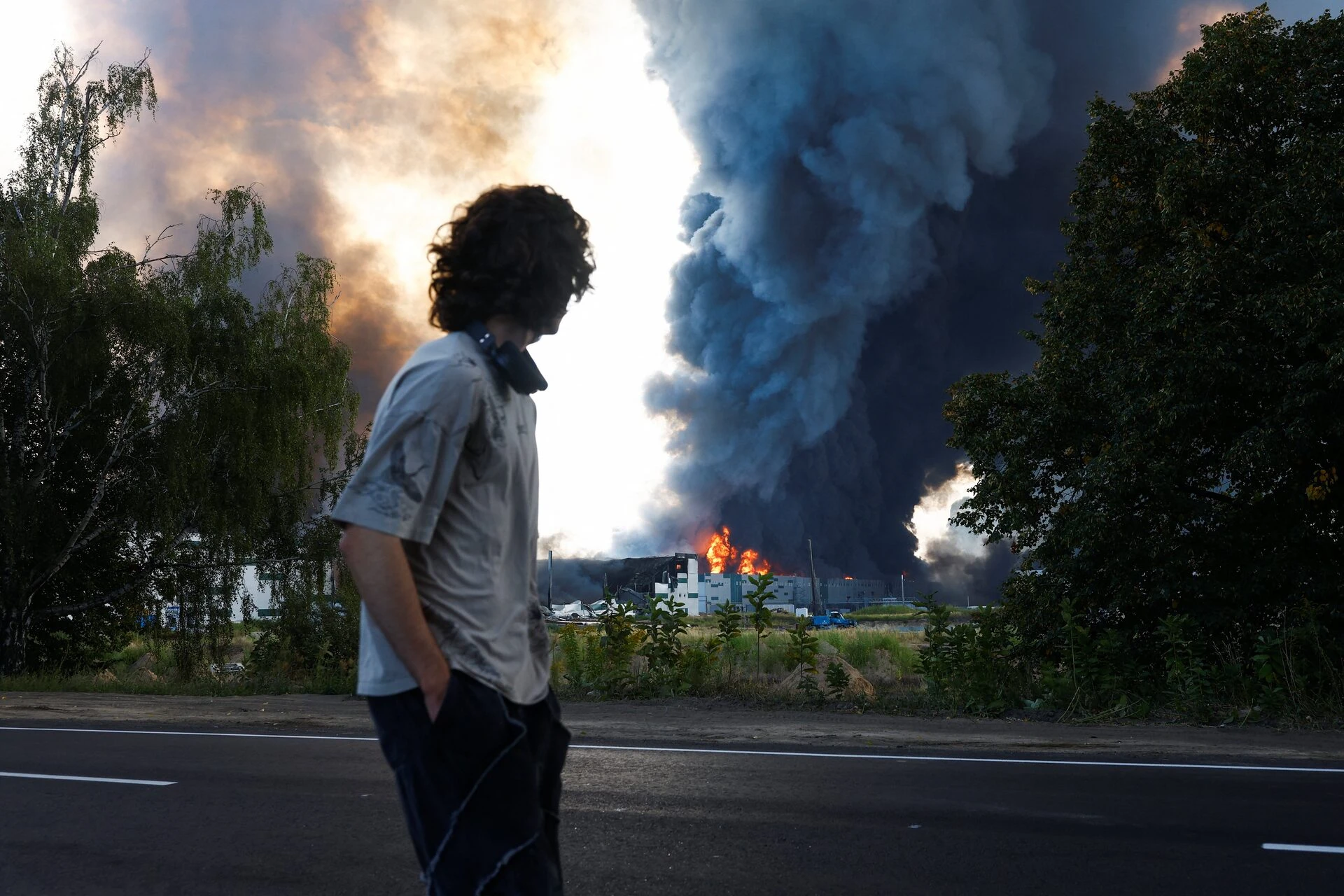





















Russia launched a sweeping overnight missile and drone assault across Ukraine, striking nine cities and keeping air defenses active from Wednesday evening well into Thursday morning. Explosions continued around Kyiv after daylight, while damage was reported from the capital to the Black Sea coast and central industrial regions.
Moscow described the operation as a “massive” strike and said it had targeted military-related facilities, including industrial plants, logistics centers, oil infrastructure and ports. Ukrainian authorities, however, also documented damage to apartment buildings, schools, medical facilities and other civilian sites.
The attack again demonstrated the changing structure of Russia’s air campaign. Ballistic missiles were combined with large numbers of unmanned aircraft, including faster jet-powered drones that give Ukrainian defenders considerably less time to identify their routes, determine their likely targets and organize an interception.
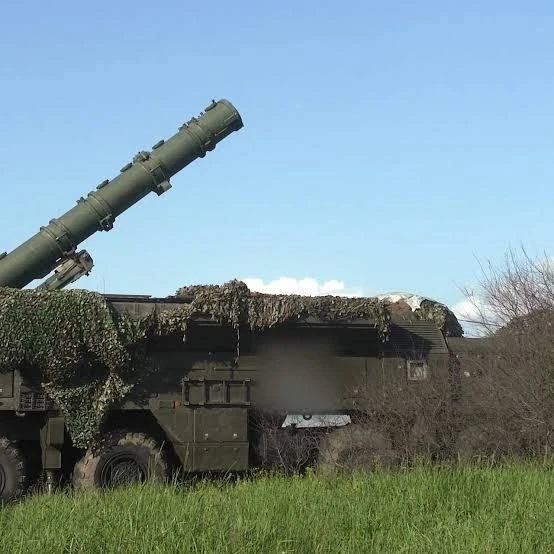
Ukraine’s air force said seven Russian ballistic missiles were shot down or otherwise suppressed during the barrage. It did not disclose how each interception was achieved. The result is significant because Ukraine has only a limited number of systems capable of reliably engaging the fastest ballistic threats approaching its cities.
According to Daycom’s analysis of the available verified information, the central feature of the massive Russian strike on Ukraine was not simply its geographical scale. Moscow is increasingly combining different classes of weapons in the same attack to force Ukraine’s air defenses to solve several expensive problems at once.
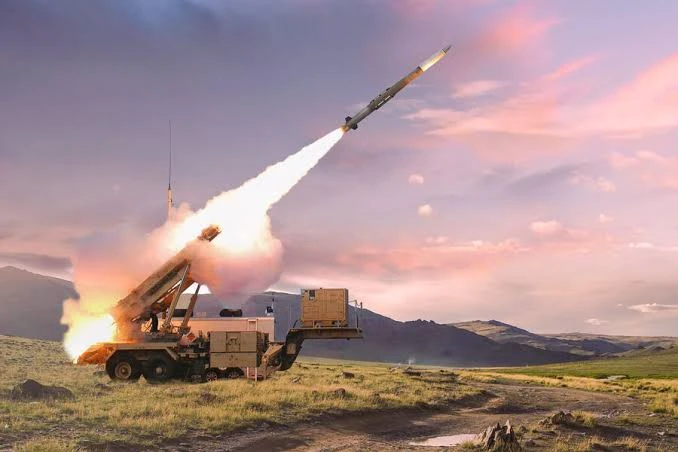
Ballistic missiles remain the most difficult part of that equation. Ukraine relies heavily on the U.S.-made Patriot system to engage them, but interceptor supplies are under severe pressure. A launcher and radar can remain operational while the defensive value of the battery falls sharply if its stock of missiles becomes too small.
That shortage is increasingly shaping the wider air war. Russia can accumulate offensive missiles between major attacks, while Ukraine must preserve a much smaller pool of high-end interceptors for the threats that cannot realistically be defeated by cheaper weapons, mobile gun teams or ordinary electronic warfare.
The growing use of jet-powered drones adds another layer. Traditional long-range attack drones are relatively slow and can sometimes be tracked for a considerable period before reaching a target. Faster variants compress that timeline and make it harder to reposition mobile teams or organize interceptor-drone launches.
Russia’s strategy therefore increasingly resembles an attempt to overload the architecture rather than defeat one particular air-defense system. Slow drones, faster unmanned aircraft and ballistic missiles require different responses, yet they can arrive within the same operational window and compete for the defender’s limited attention and ammunition.
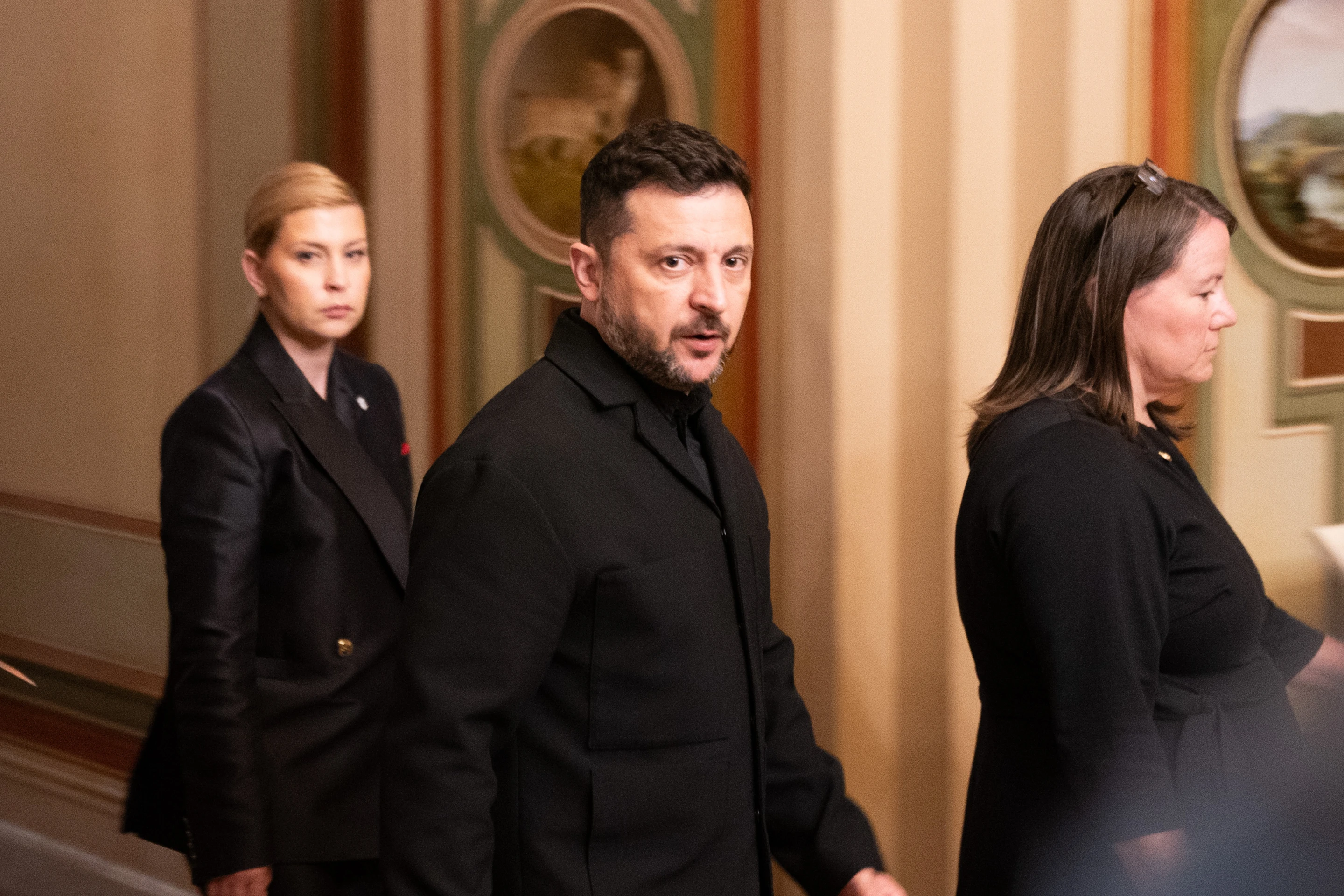
Volodymyr Zelenskyy responded to the attack by again pressing allies for additional ballistic-missile defense packages. Ukraine is seeking faster deliveries of interceptors and wants European governments to finance further purchases of American weapons, arguing that existing promises must translate into usable stocks before the next waves arrive.
The urgency is heightened by preparations for another winter. Kyiv expects Russia to renew sustained attacks against power generation, transmission infrastructure and heating systems. That makes the summer and early autumn not simply a period of surviving current strikes but a race to accumulate enough defensive ammunition before energy demand rises.
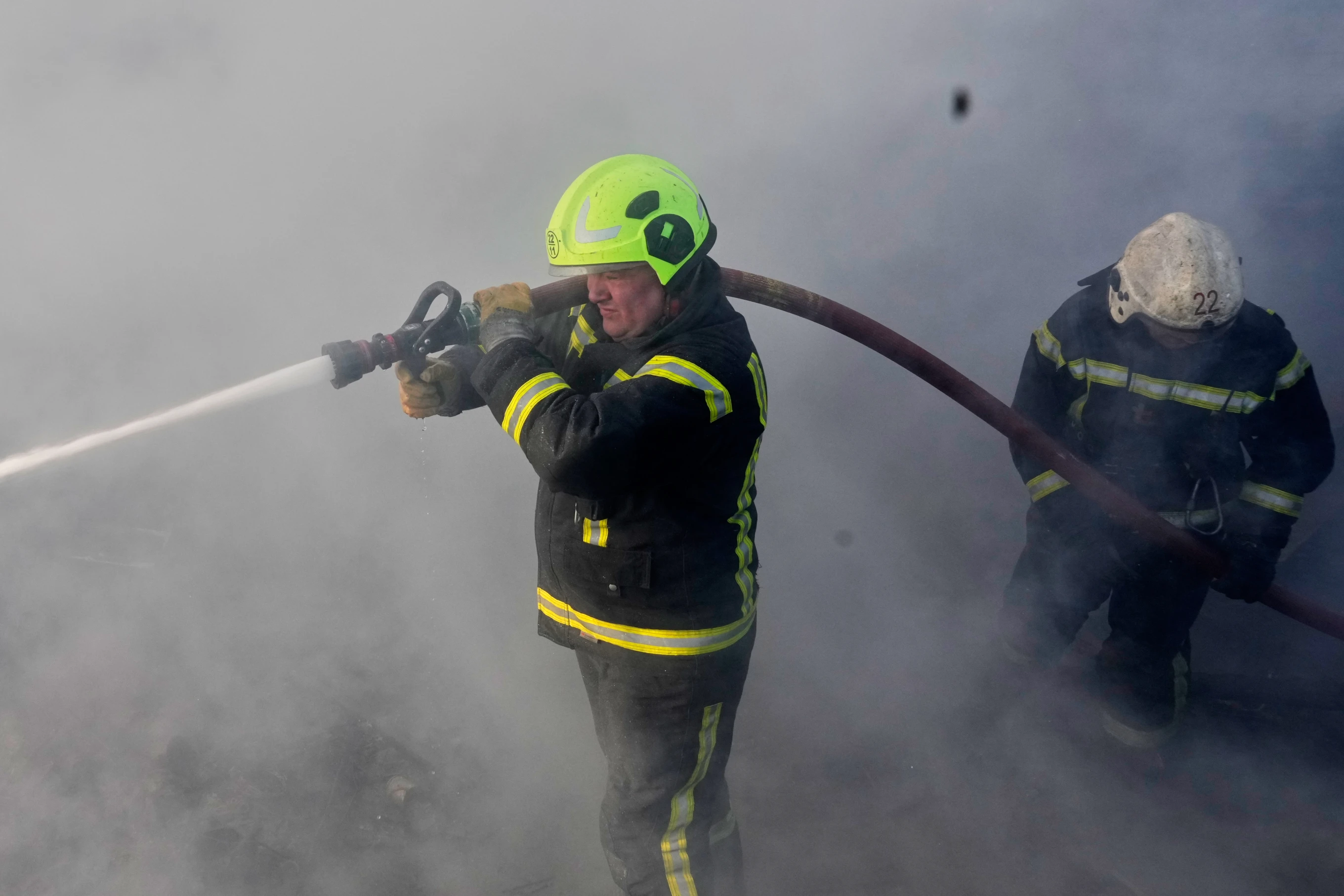
In the Zaporizhzhia region, a 78-year-old woman was killed in a Russian drone attack. Other people were reported wounded in different parts of the country as local authorities continued assessing the effects of the overnight assault and clearing debris from damaged homes, industrial sites and infrastructure.
Kyiv was hit across four districts. Residential buildings and vehicles were damaged, along with a school building and a medical facility. No deaths were initially reported in the capital, but the distribution of damage once again illustrated the difficulty of defending a dense city during a large, multi-directional attack.
The fact that civilian buildings were damaged does not by itself establish what Russia intended to strike at every location. Moscow says the operation was directed at military-related infrastructure. Determining the legality of an individual attack requires identifying the actual target and examining the circumstances in which the weapon was used.
International humanitarian law permits attacks on legitimate military objectives even when they are located in urban areas. It also requires distinction, proportionality and feasible precautions to protect civilians. The presence of homes, schools and medical facilities around potential targets makes those obligations especially consequential in cities.
The Odesa region endured one of the longest phases of the attack, lasting more than seven hours. A 16-story residential building, two educational facilities and other property were damaged, together with a grain elevator — linking the night’s military destruction to one of Ukraine’s most important economic lifelines.
Odesa is central to the country’s maritime export system. Ukraine depends on its Black Sea ports to move grain and other agricultural products into global markets. Even when port operations continue, repeated attacks raise insurance premiums, increase shipping costs and force exporters to build greater risk into every voyage.
That gives strikes on the region consequences beyond Ukraine. Countries dependent on Black Sea agricultural imports are exposed to disruptions in Ukrainian export infrastructure, while shipowners must consider the possibility that another missile or drone campaign could close facilities or damage vessels operating nearby.
Industrial and energy facilities were also struck in the central Poltava region. Such attacks demonstrate why the traditional idea of a secure rear has largely disappeared. Industrial centers hundreds of kilometers from the ground front can still be central to energy distribution, manufacturing and national logistics.
For Russia, attacking those networks serves two purposes. Direct destruction can interrupt production or transport. At the same time, every major raid forces Ukraine to deploy radar coverage, crews, electronic-warfare systems and scarce missiles across a country whose territory is too large to defend equally everywhere.
The economics of interception therefore matter almost as much as the physical outcome of a strike. A cheap drone that is destroyed may still have imposed a cost if Ukraine had to use a far more expensive interceptor against it. The defender must continually decide which threats justify its most valuable ammunition.
Ukraine has tried to improve that exchange through mobile firing groups, electronic warfare and increasingly capable interceptor drones. The objective is to reserve Patriot and other high-end missiles for ballistic or sophisticated cruise threats while defeating lower-cost unmanned aircraft with weapons that can be produced and replaced more quickly.
Russia is adapting at the same time. Faster drones, altered routes, different altitudes and mixed attack packages are all methods of finding gaps between layers of Ukrainian defense. Every large raid effectively becomes a test, revealing which defensive responses work and where the next generation of weapons should be modified.
This creates a cycle in which neither side can rely on a technological advantage for long. New electronic jamming produces new navigation methods. Better defenses against slow drones encourage faster models. Interceptor drones create incentives to change flight profiles. The air war evolves through repeated rounds of adaptation.
Ukraine is simultaneously trying to impose similar pressure inside Russia. Moscow said its defenses intercepted 267 Ukrainian drones over 14 Russian regions, occupied Crimea, the Sea of Azov and the Black Sea. The figure is a Russian military claim and cannot be independently established from the information currently available.
Among the sites targeted were logistics facilities belonging to Ozon, Russia’s second-largest online retailer, in Orenburg and Ufa. The company acknowledged attacks on its facilities and said neither location suffered a major fire. Such strikes are part of Ukraine’s expanding campaign against logistics and economic infrastructure inside Russia.
The status of individual commercial facilities remains important. A warehouse does not automatically become a military objective simply because it exists inside a wartime economy. Whether it can lawfully be attacked depends on its actual use and whether that use makes an effective contribution to military action in the circumstances.
The wider campaign nevertheless illustrates how both countries are attempting to push the war deeper into the opponent’s rear. Russia attacks Ukrainian ports, power networks and industrial centers, while Ukraine increasingly targets Russian refineries, warehouses and transport infrastructure far beyond the conventional battlefield.
The geography of the conflict is consequently expanding without the ground front itself necessarily moving. A city can be hundreds of kilometers from opposing troops and still experience war directly through long-range drones, ballistic missiles, energy disruptions and the constant requirement to maintain air defenses.
The overnight Russian barrage also spilled beyond Ukraine’s borders. Moldova said five drones breached its airspace during the attacks, although its authorities did not initially specify who had launched every aircraft involved. The incidents reinforced regional fears that the war can create danger even without a deliberate attack on a third country.
Moldova is particularly exposed because of its proximity to the Odesa region and its comparatively limited air-defense capabilities. An unmanned aircraft that crosses the border accidentally can still crash, detonate or force authorities to close airspace and take emergency measures in communities along its route.
Such incidents are becoming a wider European security problem. Escalation does not require a conscious Russian decision to open another front. A drone entering neighboring airspace, a missile fragment landing across a border or an incorrectly interpreted trajectory can create a diplomatic and military crisis of its own.
The August 27 strike also shows why interception percentages alone provide an incomplete picture of air defense. Even if the overwhelming majority of weapons are destroyed, a small number reaching their targets can still cause substantial damage. Falling debris from successful interceptions can create additional danger in populated areas.
The more important measure is endurance. Ukraine must be able to reproduce an effective defense night after night rather than achieve a high interception rate during one spectacular attack. That requires ammunition, functioning radar, trained crews, spare components and production lines capable of replacing what is continually consumed.
This is why the Patriot shortage has moved from a technical problem to a strategic one. Moscow can plan its campaign around the knowledge that Ukraine’s most capable interceptors are finite. Kyiv must decide how many to expend today while retaining enough to defend critical infrastructure during future attacks.
The challenge will become sharper as winter approaches. Russia has already shown that electricity and heating infrastructure can be used as strategic targets, while Ukraine has spent years building repair capacity and distributed defenses. The coming contest will depend on destruction, interception and the speed of reconstruction at the same time.
The political timing is equally significant. The barrage came as Kyiv and Moscow again discussed the possibility of renewed direct negotiations with U.S. participation in September. Intensified military operations before a diplomatic round are not contradictory: each side has an incentive to strengthen its bargaining position before negotiations begin.
Russia can use its air campaign to demonstrate that it retains the capacity to impose damage across Ukraine. Kyiv is attempting to show the opposite — that it can withstand those attacks, strike valuable targets inside Russia and continue functioning without accepting Moscow’s territorial demands as the price of relief.
That interaction makes military supply directly relevant to diplomacy. If Ukraine enters negotiations facing visibly depleted air defenses, Russia has less incentive to compromise. If Kyiv can demonstrate that its defenses and long-range capabilities are sustainable, Moscow faces a different calculation about the value of continuing the war.
The massive Russian strike on Ukraine on August 27 therefore cannot be understood simply as nine cities marked on an attack map. It belongs to a wider struggle over industrial capacity, logistics, energy systems, air-defense inventories and the ability of civilian society to endure repeated assaults without strategic collapse.
The immediate question is no longer whether Russia can launch another large barrage; it clearly can. The more consequential question is whether Ukraine and its allies can maintain enough defensive capacity to prevent such attacks from becoming progressively more effective as the months pass.
That race will depend increasingly on factories as much as launchers. Russia is expanding the scale and diversity of its strike systems. Ukraine needs interceptors, electronic warfare and cheaper defensive drones in comparable volume. The side that can replenish its arsenal faster gains an advantage that eventually reaches far beyond the skies.
For Kyiv, that is why every new Russian barrage produces the same political demand alongside the emergency response: more air defense, delivered faster. The outcome will shape not only which cities remain protected through the coming winter, but also the balance of pressure when Ukraine and Russia eventually return to serious negotiations.