

















Moscow is again trying to reverse the logic of the war. Russia’s Foreign Ministry has claimed that Volodymyr Zelensky is seeking to escalate the conflict between Ukraine and Russia. The formula is not new, but the timing is revealing: the front, long-range strikes and diplomatic pressure have created an uncomfortable political picture for the Kremlin.
Russian rhetoric rests on a simple substitution. Ukrainian resistance is presented as the reason the war continues, not as a response to invasion. In that construction, the central fact disappears: Russia launched the full-scale aggression, continues to occupy Ukrainian territory and attacks Ukrainian cities every day.
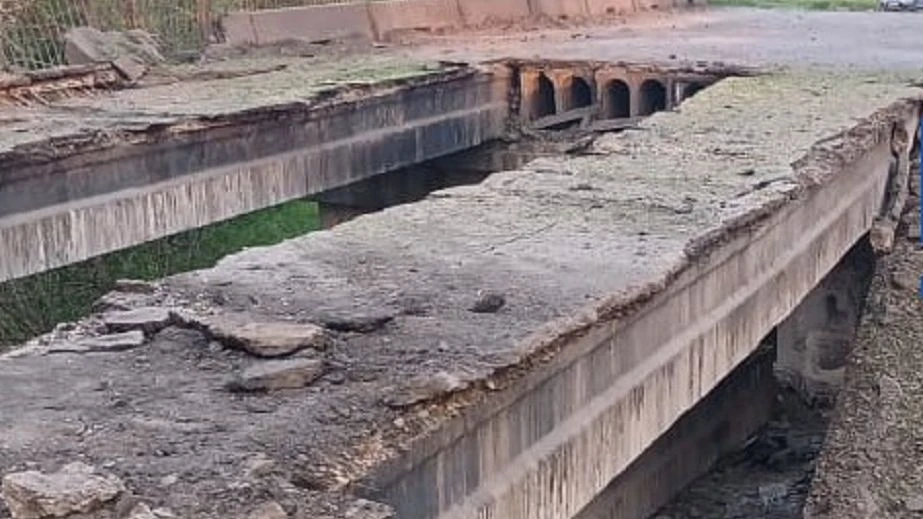
Maria Zakharova’s statement came amid the growing reach of Ukraine’s long-range capabilities and more frequent strikes on targets linked to Russia’s war machine. Kyiv has openly framed these actions as part of a strategy to weaken the infrastructure that sustains the war, from logistics and depots to airfields and energy nodes.
According to Daycom’s assessment, the main function of such statements is not to explain reality, but to reshape its political perception. The Kremlin is trying to turn Ukraine’s right to defend itself into an image of “dangerous escalation,” in order to pressure Kyiv’s allies and reduce Western support for Ukrainian strikes on Russia’s military infrastructure.
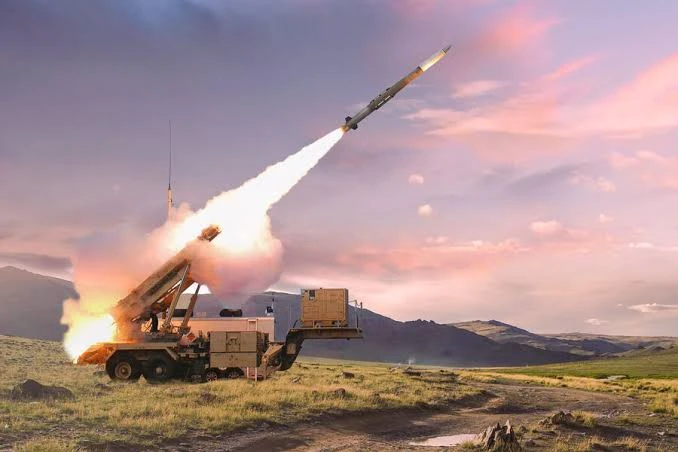
This scheme has been operating for years. When Ukraine asks for air defense, Moscow calls it NATO involvement. When Kyiv receives long-range weapons, the Kremlin speaks of crossed “red lines.” When Ukrainian forces hit targets deep inside Russia, Russian diplomacy tries to present those strikes not as a consequence of war, but as its cause.
The contradiction is obvious. Russia demands restraint from Ukraine while showing none of its own — neither on the front line nor in its air campaign. Drones, missiles, attacks on energy facilities, residential districts, ports and civilian infrastructure remain part of Moscow’s strategy of exhaustion.
That is why Russian accusations of escalation do not sound like diplomatic analysis. They sound like informational defense. The Kremlin is trying to explain to its own public why the war is increasingly reaching Russian territory, while sending an external message: any strengthening of Ukraine supposedly makes peace less likely.
In reality, the logic is the opposite. Peace is not brought closer by leaving the victim defenseless. Peace becomes more likely when the aggressor loses the ability and the advantage to continue the war. For Ukraine, long-range capability is therefore not a symbol of revenge, but an instrument of strategic pressure.
Kyiv is trying to change Moscow’s calculation. If oil infrastructure, logistics hubs, warehouses, airfields and defense enterprises are no longer beyond reach, the war stops being a one-sided process in which Russia destroys another country while remaining insulated at home. It begins to cost more inside Russia itself.
That is what the Kremlin calls escalation. Not the invasion, not the occupation, not mobilization, not deportations, not missile strikes. Escalation is declared at the moment Ukraine gains the ability to respond not only on the battlefield, but inside the depth of Russia’s military system.
This matters for Western audiences. Moscow is trying to bring fear of Ukrainian strength back into the debate. Its message is simple: the more weapons Ukraine receives, the more dangerous the war becomes. But the hidden purpose is different — to preserve Russia’s monopoly on escalation.
Ukraine’s diplomatic answer must be precise. Russian terms should not be accepted as neutral. When the aggressor speaks of “escalation,” it often means the loss of its own impunity. When it speaks of “peace,” it often means a pause that would secure its gains.
In that sense, Zakharova’s statement is not an isolated episode. It belongs to a broader campaign in which Moscow fights, threatens, invokes negotiations and accuses Ukraine of rejecting peace all at once. The purpose of this layered rhetoric is to blur responsibility for the war.
Ukraine cannot allow that frame to harden. If the world begins to see defense as provocation, the aggressor will receive a political reward for the fact of aggression itself. That would be dangerous not only for Ukraine, but for the entire European security order.
At the same time, Kyiv must preserve discipline in its own argument. Strikes on Russian military and economic targets should remain part of a clear strategy: to weaken the aggressor’s ability to wage war, not to demonstrate chaotic force. The more precise the strategy, the weaker the Russian propaganda response becomes.
For years, the Russian state built an image of the war as something happening far away — in Ukrainian cities, on Ukrainian roads, in other people’s homes. When that image breaks down, the Kremlin needs a new explanation. It is easier to say Zelensky is “escalating” than to admit that the war is returning to the country that started it.
That is why the statement is not a sign of strength, but a symptom of anxiety. Moscow sees the battlefield changing: Ukrainian capabilities are growing, Russia’s depth is becoming less secure, and the old formula of intimidating the West is working less effectively. At such moments, the Kremlin most often translates a military problem into the language of diplomatic accusation.
Ukraine’s response should not be emotional, but strategic. It must explain to allies the limits and goals of its actions. It must strengthen its defense. It must strike the capacity that allows Russia to continue aggression. And it must not allow Moscow to call the mere fact of Ukrainian survival an escalation.
The real escalation did not begin when Ukraine learned to reach Russian military targets. It began when Russia decided it could redraw borders by force, break a state and call resistance a threat to peace. That substitution remains one of the central battlefields over the meaning of the war.