










In Kyiv, an opera has reduced the war to its simplest and most devastating choice: a mother travels thousands of miles through hostile territory because her child has not come home. There is no abstract geopolitics here. There is a road, fear, a camp in Crimea and a child’s voice asking to be taken back.
Mothers of Kherson, a new opera by Ukrainian composer Maksym Kolomiiets, is based on the true stories of two mothers and a grandmother who travelled to occupied Crimea after Kherson was liberated to bring children back. Their route did not cross the front line directly. It curved through Poland, Belarus and Russia.
That journey became its own drama. To reach the camp, the women had to travel about 4,800 kilometres, pass checks and risk their freedom, perhaps their lives. They did not move like figures from myth, but like mothers for whom state, border and fear had narrowed to a single question: where is my child?
Daycom’s earlier analysis suggested that the power of this opera lies in its refusal to decorate tragedy. It brings the abduction of Ukrainian children out of the language of statistics and back into human experience. Where numbers exhaust attention, music makes one voice audible again.
Ukraine has confirmed about 20,000 cases of children taken by Russia during the full-scale war. In international legal terms, the deportation and enforced disappearance of Ukrainian children have already been described as a crime against humanity. Moscow continues to call it evacuation, but the language of “rescue” cannot erase forced separation from home.
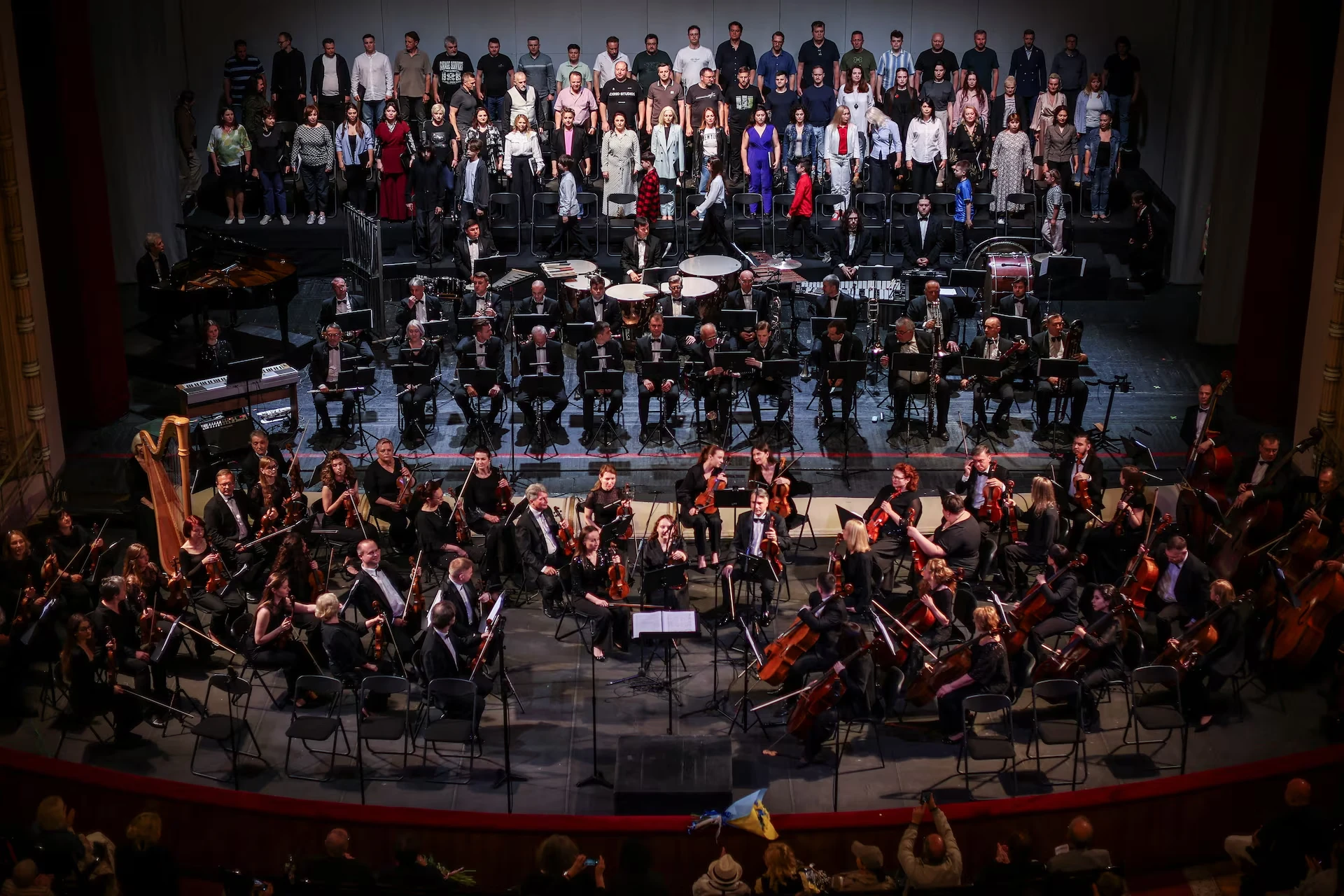
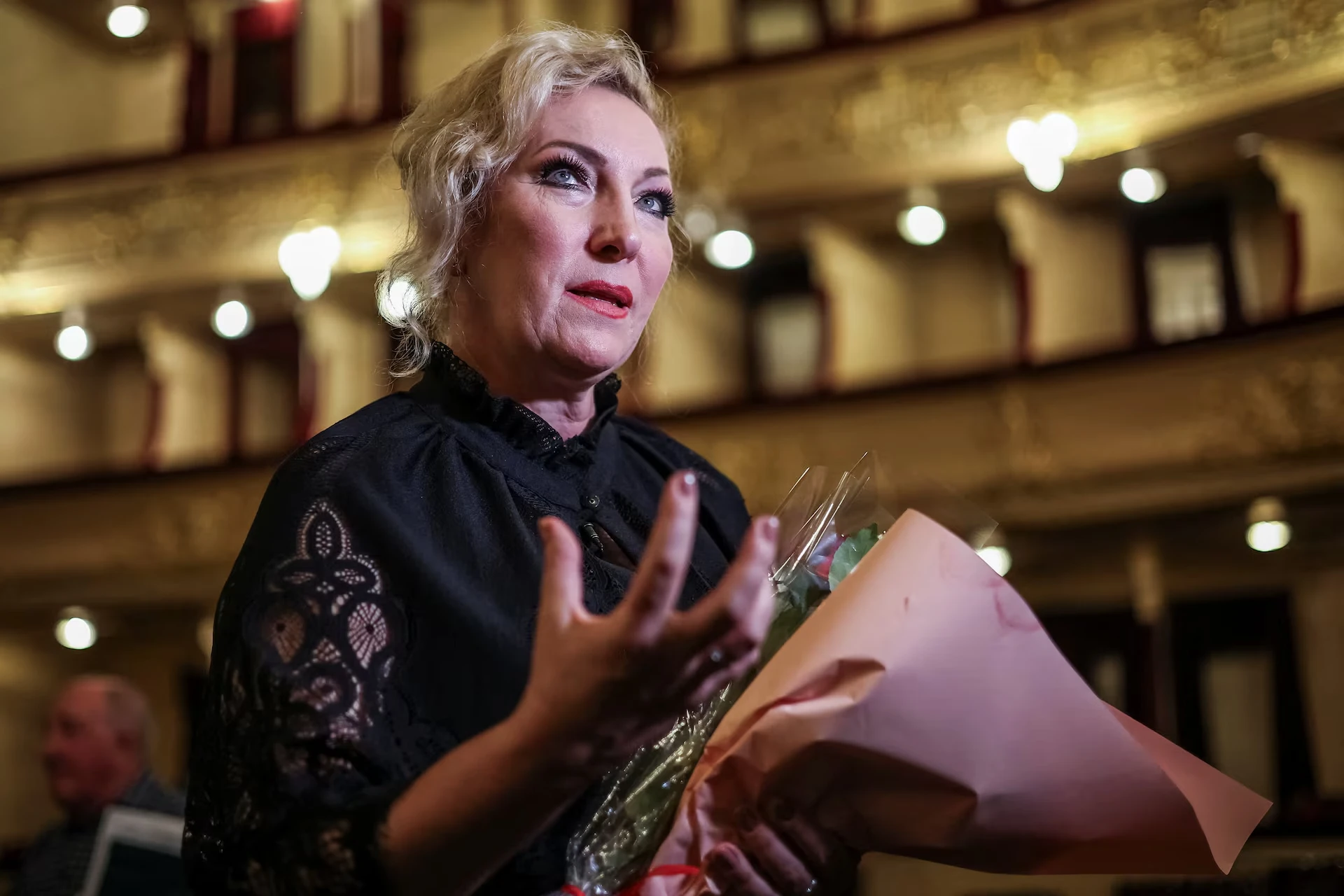 Анжеліна Швачка, яка виконує роль бабусі Ольги, ділиться своїми враженнями після прем’єри сучасної опери «Матері Херсона», що розповідає історію українських матерів, які намагаються повернути викрадених Росією дітей. Ця опера, створена на спільне замовлення Метрополітен-опери в Нью-Йорку та Польської національної опери у Варшаві на тлі російського вторгнення в Україну, відбулася у Національному театрі опери та балету імені Тараса Шевченка в Києві, Україна, 4 червня 2026 року — Аліна Смутко
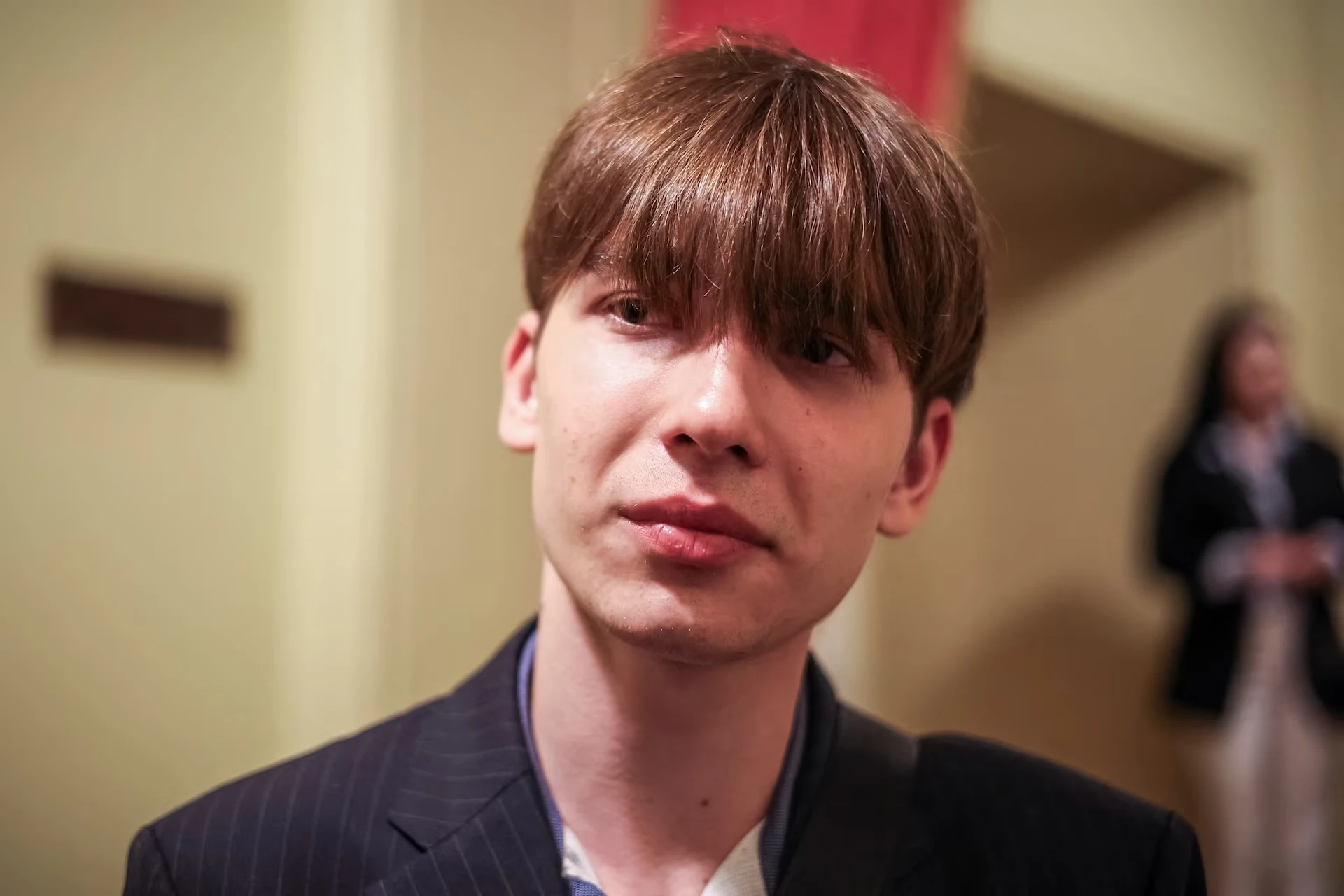 16-річний Максим, один із дітей, викрадених Росією, якого згодом врятувала мати і який повернувся до України, з’явився на прем’єрі сучасної опери «Матері Херсона», яка розповідає історію, засновану на його досвіді та досвіді інших українських сімей, спільно замовленої Метрополітен-опера в Нью-Йорку та Польською національною оперою у Варшаві на тлі російського вторгнення в Україну, у Національному театрі опери та балету імені Тараса Шевченка в Києві, Україна, 4 червня 2026 року — Аліна Смутко
Only a fraction of those children have been returned. Behind each number is a separate operation: searching, documents, dangerous routes, negotiations and waiting at the gates of a camp. Return does not end at the moment of embrace. A child brings back isolation, fear, prohibitions and the imposed reality of a foreign world.
One of the stories behind the opera is that of Yulia Radzevilova and her son Maksym. In autumn 2022, children from Kherson were offered what was presented as a two-week trip to Crimea to “rest” from the war. After the city was liberated, Maksym did not return. His mother was told to come and collect him herself.
For the boy, the camp quickly stopped being a place of rest. Ukrainian language was forbidden, children were forced into Russian rituals, and mornings began with exercises to the anthem of the state that had taken them from home. Maksym called it a prison — a word more precise than any political formulation.
His calls to his mother were part of the invisible war that front-line maps cannot show. A child cried and asked to go home. His mother heard that voice and understood that if she did not go, her son might remain there indefinitely, under foreign control, in a foreign language, with a foreign version of his own country.
That is why Mothers of Kherson is not only an opera about maternal love. It is a work about the abduction of identity. Russia’s system in occupied territories works not only on the body of a child, but on memory: banning Ukrainian culture, severing family ties and replacing reality with propaganda.
The excerpts premiered at Ukraine’s National Opera on the country’s day of remembrance for children killed in the war. That timing gave the evening particular weight. The audience was not made up only of listeners. For some, the stage became a mirror of what they had survived.
For Yulia Radzevilova, the music brought back the same emotions in another form — not as the panic of the journey, but as testimony. The opera is not yet complete. Its full staging is planned at the Polish National Opera before the work later reaches one of the world’s most important stages.
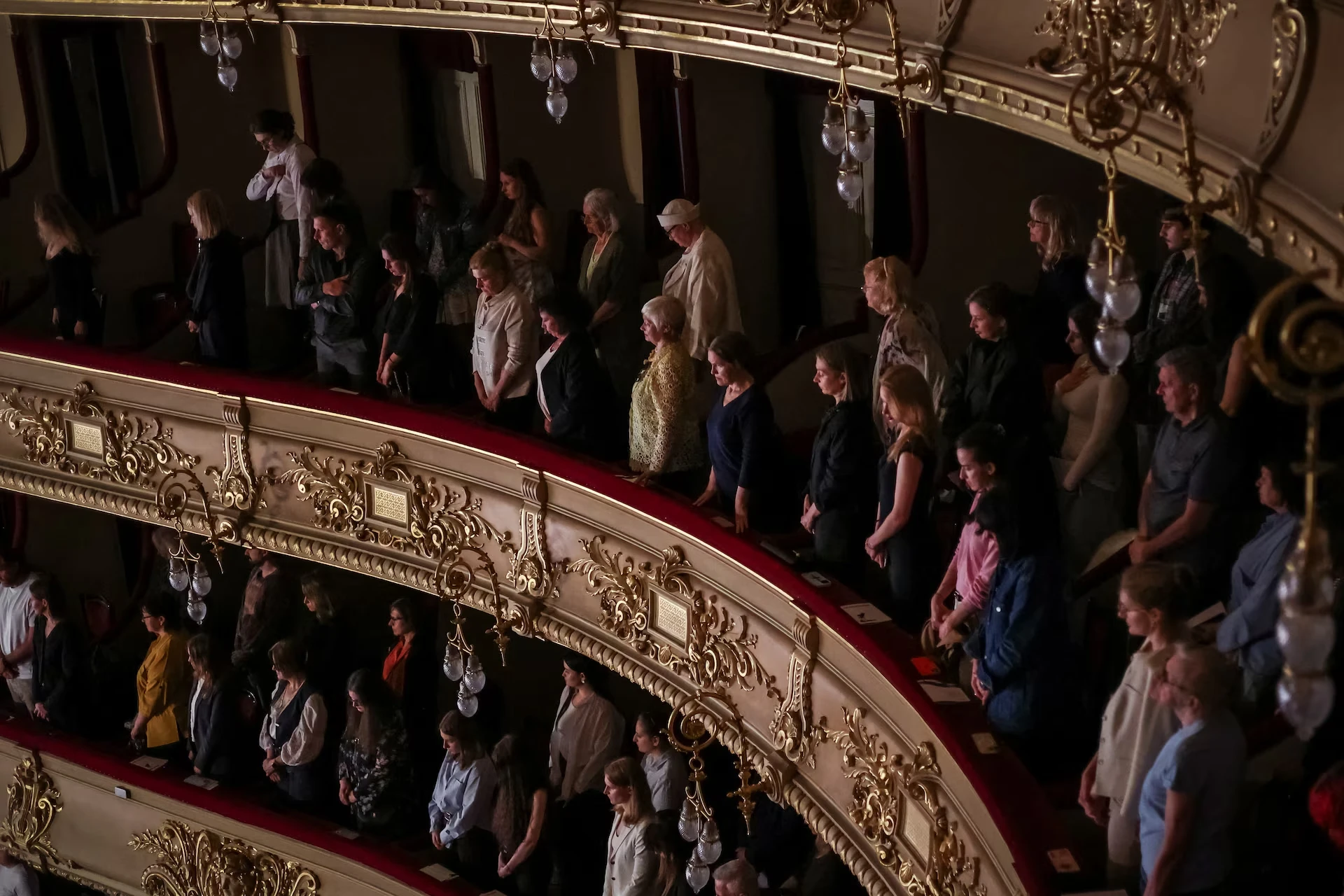 Глядачі вшановують пам'ять дітей, які загинули під час війни, хвилиною мовчання перед прем'єрою сучасної опери «Матері Херсона», що розповідає історію українських матерів, які намагаються повернути викрадених Росією дітей. Ця опера, створена на спільне замовлення Метрополітен-опери в Нью-Йорку та Польської національної опери у Варшаві на тлі російського вторгнення в Україну, відбулася у Національному театрі опери та балету імені Тараса Шевченка в Києві, Україна, 4 червня 2026 року — Аліна Смутко
That matters not only for artistic prestige. Ukraine’s tragedy is moving into a space where it can be heard not as a news episode, but as part of cultural memory. Daily reporting records events, but it is quickly overtaken by the next attack, the next figure, the next alert. Music slows time down.
At the same time, Mothers of Kherson does not turn pain into a symbol without consequences. It returns the listener to practical questions: how many children remain in Russia or occupied territories, who is searching for them, what mechanisms are needed for return, and how trauma after deportation and forced Russification can be healed.
Culture does not replace politics, justice or rescue missions. But it creates a moral space in which those actions become urgent. When the story of an abducted child is sung from the stage, it becomes harder to reduce it to a diplomatic dispute. It returns to its essence: a crime against family, childhood and the human right to have a home.
The opera also shows that Ukrainian culture in wartime is not only a form of resistance. It is becoming an archive of what Russia is trying to erase. In the voices of mothers, in a child’s crying, in a route across several countries, a document of the age is preserved — not dry, but living, painful and therefore stronger.
Mothers of Kherson will not bring every child back. But it can do something else: prevent the world from growing used to their disappearance. In this music, a mother’s road from Kherson to Crimea becomes Ukraine’s road toward the truth about abducted children. And while that truth is heard, the crime cannot hide behind the language of evacuation, war fatigue or the indifference of distant halls.