












The return of “The Devil Wears Prada” feels like a cinematic comfort sweater — preferably in the same cerulean shade Miranda Priestly once turned into a lecture on fashion’s invisible power. A few frames, dark glasses, a black car and that familiar icy tone are enough for the audience’s memory to do the rest.
The sequel reunites the central quartet: Meryl Streep as Miranda Priestly, Anne Hathaway as Andy Sachs, Emily Blunt as Emily Charlton and Stanley Tucci as Nigel. Their return is already a promise. Viewers are not being offered only a new plot, but a reunion with a piece of cultural memory.
Nearly two decades separate the sequel from the 2006 film, and almost everything has changed in that time: magazines, fashion, media, phones, celebrity, the speed of image consumption and the very idea of authority. Audiences are returning not only to characters, but to a world in which a glossy magazine could still seem like the center of cultural gravity.
Daycom’s assessment is that the sequel’s central intrigue is not whether it can reproduce the old magic. The deeper question is whether a story about the power of a fashion magazine can still feel convincing in an era when that power has been dispersed across Instagram, TikTok, Substack, influencers and algorithms.
The original film was a time capsule. Its phones belonged to the pre-iPhone age, assistants rushed around with folders, a magazine editor could freeze a room with a gesture, and a career in glossy media still looked like entry into a forbidden kingdom.
 Оригінальний фільм, випущений у 2006 році, зараз є капсулою часу медіа та моди того часу — 20th Century Fox
 Оригінальний фільм, випущений у 2006 році, зараз є капсулою часу медіа та моди того часу — 20th Century Fox
Today that kingdom stands in a very different landscape. Magazines no longer define taste alone. Editorial rooms no longer control the speed of trends. A cover does not always outweigh a viral video, and fashion authority is increasingly born not in the office of an editor in chief, but in the feed of a smartphone.
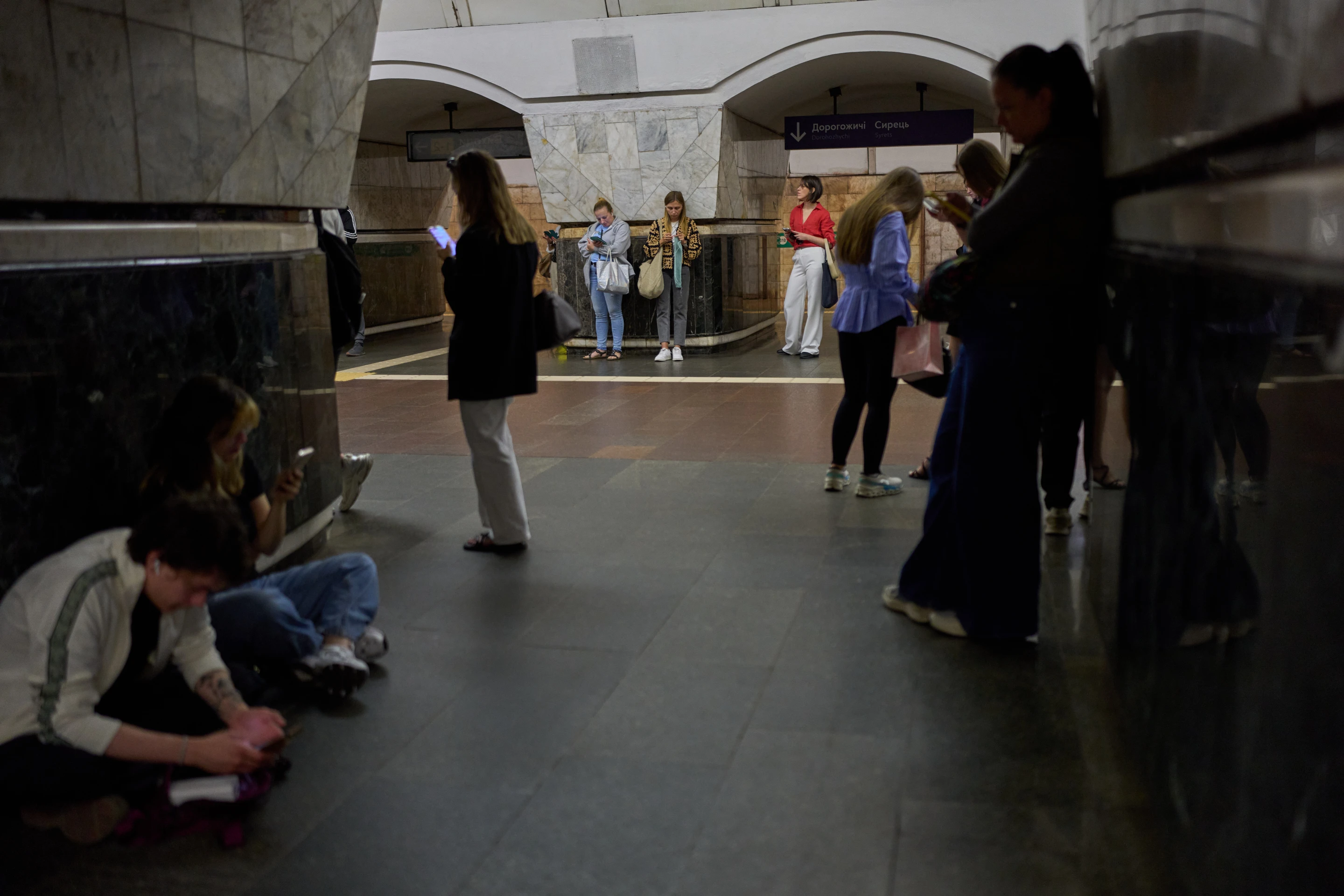
That is why images of people in an elevator fixed on their phones do not read as casual background. They mark an epochal shift. Runway can no longer be the same temple of style it was in 2006. It must either acknowledge the loss of its monopoly or become a fantasy about a power that no longer exists.
For fans, this is not necessarily a problem. Many are not coming for a realistic portrait of today’s media industry. They are coming for the ritual of recognition: Miranda in sunglasses, Andy in a new position, Emily with a cutting line, Nigel in a perfect suit, black cars, expensive fabrics, cold corridors and dialogue ready to become memes.
Nostalgia is powerful fuel. It does not always need a complex plot if it gives the audience the right atmosphere, the right silence before a line, the right silhouette in the doorway. With “The Devil Wears Prada 2,” the promise of reunion has already become part of the pleasure.
But nostalgia has a dangerous edge. It can be warmth, and it can also be a trap. If the film clings too tightly to old quotations, mirrored scenes and fan-service callbacks, it risks becoming less a sequel than a museum tour for viewers who want proof that their youth is still beautifully lit.
Andy’s return is especially delicate. In the first film, her departure from Runway was a moral gesture: she rejected a system that had taught her ambition but demanded too high an inner price. If she is now back at the magazine, the film must explain not only a career shift, but an ethical one.
 У продовженні Енді тепер є редактором статей у Runway, хоча трейлер мало що розповідає нам про те, як це сталося або куди рухається сюжет — Студії 20-го століття
What does it mean to return to the place you once left in order to save yourself? Is it defeat, compromise, maturity or an admission that adult life rarely allows clean exits? This is where the sequel could become genuinely interesting, provided it does not hide behind the wardrobe.
Miranda, too, cannot simply be the same Miranda. In 2006, her cruelty was justified by the scale of her power. She was not likable, but she was a point through which careers, trends and fears passed. In 2026, that kind of figure feels almost anachronistic.
That does not mean the Wintour-like model of power has disappeared. It has changed. It is more ceremonial, less absolute, more dependent on platforms, brands, celebrities, billionaires and the ability to hold attention in an overloaded environment. Miranda may remain a symbol, but the symbol is no longer the system.
The best possible version of this story would therefore be about return and loss at once. It would show people who once governed culture through the pages of a magazine trying to understand a world now governed by metrics, trends, screens and the endless refresh of the feed.
In that world, Nigel’s line about content people scroll past in the most banal moments of daily life sounds almost like an epitaph for old glossy media. Fashion photography once asked for a pause, a gaze, a page, paper. Now it fights for a fraction of a second between an ad, a joke, a political scandal and someone else’s breakfast.
This is where the sequel could move beyond fan service. If it shows that media have not merely “changed” but have lost an old economy of prestige, then Miranda and Andy’s return will be not only enjoyable, but painfully exact. The story would no longer be just about fashion. It would be about power surviving its own era.


A fully realistic version of that story, however, might be almost depressing. A modern magazine is not only runway shows and town cars. It is layoffs, advertiser dependence, traffic battles, exhausted editors, branded partnerships and the permanent fear of becoming irrelevant.
Viewers may not want to see Miranda discussing SEO strategy, sponsored integrations or Reels engagement. Yet that reality sits behind the central question: can a film speak honestly about contemporary fashion media and still remain a glamorous pleasure?
That is the balance the sequel must strike. It has to give audiences the satisfaction of return without becoming an empty album of familiar poses. It must honor the original while daring to show that the world its characters enter no longer belongs fully to them.
The best nostalgia does not preserve the past in amber. It lets us see what has vanished from it. If “The Devil Wears Prada 2” can do that, Miranda’s dark glasses will be more than an accessory. They will become a way of looking at the ruins of an old media empire without unnecessary tears.
The question, then, is not whether it will be pleasant to see Andy, Miranda, Emily and Nigel again. Of course it will. The question is whether the film has the courage to admit that the world that made them icons no longer exists in its old form. That is why the return may be delightful — and also a little depressing, like any meeting with a past that has put on a new dress but has not recovered its former power.