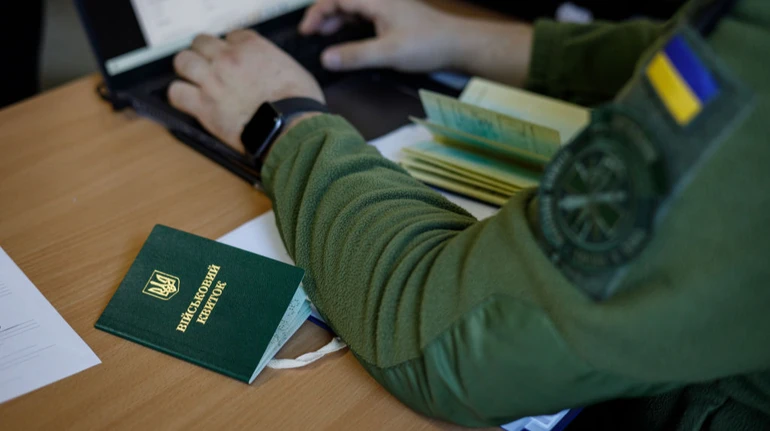


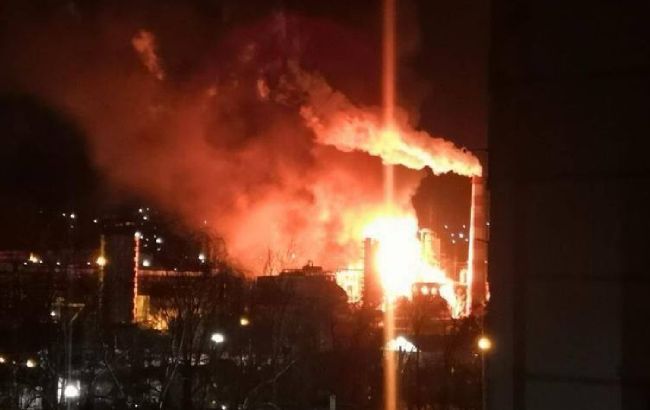



















Events in Odesa on April 21 unfolded with unusual speed and very little official framing. Ukraine’s Security Service detained a group of servicemen from one of the district territorial recruitment centers. Within hours, the regional TCC confirmed that the operation had taken place. The details remained unclear, and that silence became the defining feature of the story: it left room for competing readings, from an anti-corruption sweep to talk of an institutional clash.
The preliminary outline of the case fits a pattern that has become increasingly familiar in recent months: suspected extortion, several officials involved, and a forceful intervention by a security agency. At the center is a district TCC in Odesa, an institution operating under extraordinary pressure in wartime — administrative, political, and public at once.
That is where the larger question begins. Is this a local criminal episode, or a sign of something wider and more structural. According to Daycom’s earlier analysis, such operations are no longer isolated investigations. They are beginning to mark a new configuration in the balance of power inside the state.
Formally, the situation does not yet amount to an open conflict between the TCC system and the SBU. One institution carries out investigative action; the other acknowledges the detentions and waits for clarification. Yet the logic of the episode points to a deeper shift: responsibility for mobilization is no longer treated as a purely administrative sphere. It is increasingly moving into the realm of criminal oversight.
There are several reasons for that shift. First, after years of full-scale war, Ukraine’s mobilization system has become a dense and highly stressed mechanism, heavily dependent on human discretion. Wherever decisions are made quickly, under pressure, and without enough transparency, the risk of abuse inevitably grows. Second, public demand for fairness in mobilization has intensified sharply. Any sign that service obligations can be negotiated, delayed, or priced turns instantly into a matter of national sensitivity.
Against that backdrop, the role of the SBU is also changing. It is no longer acting only as a counterintelligence service or a shield against sabotage. It is moving more aggressively into the internal workings of state institutions. Operations targeting TCC personnel are not only about specific criminal suspicions. They are also about asserting control over one of the most sensitive infrastructures of wartime governance: mobilization itself.
The Odesa episode did not emerge in isolation. In recent weeks, the region had already become the scene of other high-profile cases involving recruitment offices, law enforcement, and external threats. That concentration of incidents creates the sense of an institution under constant strain — one from which the state demands maximum efficiency while the public grants it ever less unquestioned trust.
The real danger, however, lies not only in the detentions themselves, but in how they are understood. If society reads such episodes as a turf war between agencies, confidence in both sides begins to erode. If they are seen as an effort to clean up a damaged system, the opposite happens: state legitimacy is reinforced. The line between those two outcomes is thin, and it depends above all on whether the authorities explain their next steps clearly and consistently.
So far, that clarity has been limited. The lack of detailed official explanation leaves an information vacuum, and such vacuums are quickly filled by rumor, Telegram narratives, and emotional inference. That is exactly how the language of “conflict” takes hold, even when the verified facts do not yet support it directly.
What happened in Odesa points to a broader trend. Ukraine’s security architecture is entering a phase of internal recalibration. Mandates are overlapping, oversight is tightening, and the cost of every mistake — administrative, criminal, and political — is rising. In that environment, any operation of this kind carries meaning far beyond a single case file.
That is why the central question after April 21 is not simply who was detained. The more consequential question is whether the state can clean up the mobilization system while preserving trust in it at the same time. The answer will matter far beyond the fate of one investigation.