















Europe’s heat has not only a temperature, but a shape. On weather maps, the current atmospheric pattern resembles the Greek letter Ω: a warm dome of high pressure trapped between two cooler low-pressure systems. That is why it is known as an Omega block.
This mechanism is dangerous not because it arrives suddenly, but because it refuses to move. Under normal conditions, air masses travel from west to east and the weather changes. During a blocking pattern, that flow bends, the system stalls, and hot air remains over the same regions for days, sometimes longer.
At the center of such a block sits high pressure. It suppresses cloud formation, brings clear skies, weak winds and sun that heats the ground, concrete, roads, roofs and human bodies day after day. Nights fail to cool cities properly, and heat accumulates like a debt that cannot be quickly repaid.
According to Daycom’s earlier analysis, the significance of an Omega block is that it turns heat from a short anomaly into a condition of life. A person, a power grid, a school, a hospital, a transport system or a farm may endure one very hot day. It is far harder to endure a week in which recovery never arrives, even at night.
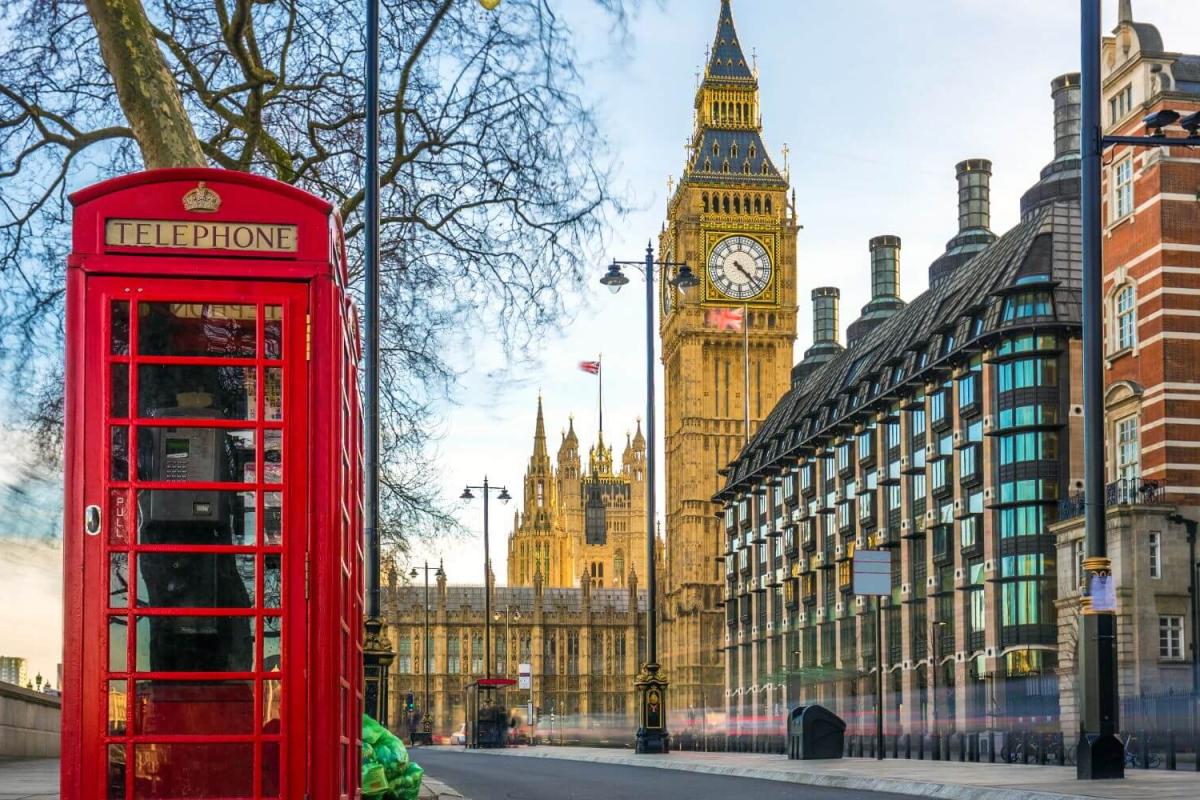
The current wave has gripped Western Europe with rare intensity. Southern England recorded 36.1°C, a new June record for Britain. In France, temperatures rose above 44°C in the southwest, while Paris crossed the 40°C threshold. For early summer, this is no longer just discomfort. It is the edge of physiological danger.
The Omega block explains why the heat persists. It does not, by itself, explain why the heat has become so extreme. For that, the background matters. The planet has already warmed by about 1.3°C above preindustrial levels, so every heatwave now begins not from the old climate baseline, but from a higher one.
The question is therefore not simply whether the climate crisis “created” this particular Omega block. Scientists have not reached a final answer on how warming affects the frequency of such blocking events. The more urgent point is that when a block forms in a warmer world, it traps far hotter air over the continent.
This is the essential difference between weather and climate. Weather determines the daily configuration: pressure, wind, cloud cover and the direction of air masses. Climate determines how hot the material of that weather has become. An Omega block is the trap. Global warming raises the temperature inside it.
Europe is especially vulnerable to this logic. The continent is warming faster than the global average, and that means each new atmospheric block is imposed on a more dangerous foundation. Where heat once meant hardship, it now becomes deadly. Where a city once endured a few hot days, it can now face prolonged stress on hospitals, power grids, railways, schools and housing.
The high pressure at the center of an Omega block creates the illusion of good weather: sunshine, dry skies, no storm. But that calm is the trap. There is no wind to stir the air, no cloud cover to limit heating, no rapid movement of fronts to bring relief. The weather becomes static, and the body becomes hostage to that stillness.
On the edges of the block, the picture is different. Low-pressure systems can bring cooler, wetter and more unsettled weather. That is why one part of a country may suffocate in heat while another remains damp and relatively cool. Britain finds itself precisely on this boundary: the south and east overheat, while the north and west experience another kind of weather.
For cities, an Omega block is especially dangerous because of the urban heat island effect. Asphalt, stone, glass and concrete absorb daytime heat and slowly release it overnight. When this repeats for several days, temperatures in dense neighborhoods stop falling to safe levels. Nighttime heat often becomes the decisive factor in mortality.
The human body has limits. When temperatures are high and humidity prevents sweat from evaporating efficiently, the body loses its main natural cooling mechanism. The risk of heatstroke, dehydration, heart attacks and worsening chronic illnesses rises sharply, especially for older people, children and those who work outdoors.
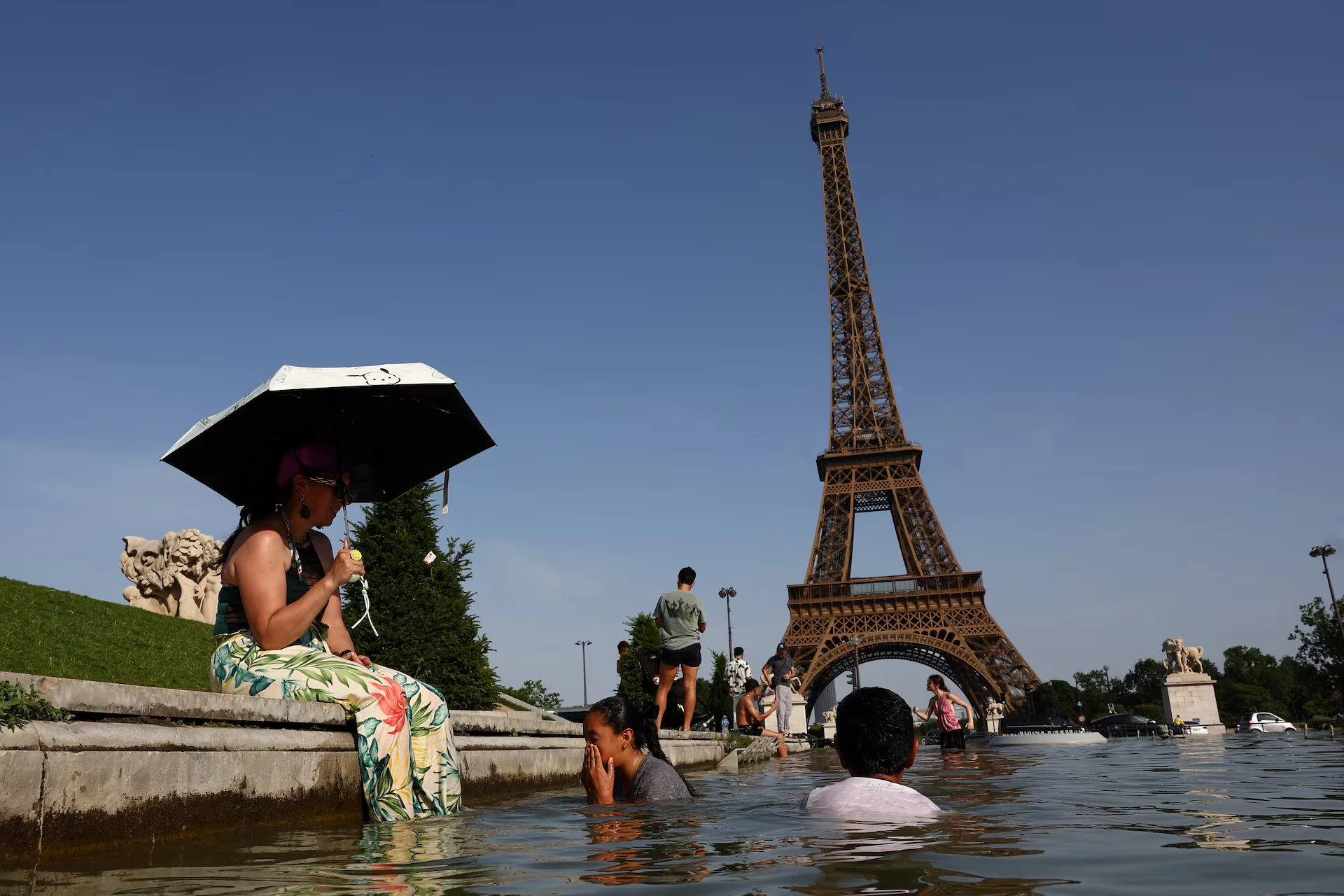
That is why an Omega block is not only a meteorological term. It is a social filter. It quickly reveals who has air conditioning, shade, water, flexible working hours and safe housing, and who must work on construction sites, sleep in overheated apartments, wait for transport in the sun or search for relief near a fountain.
European infrastructure was built for a different seasonal logic. Many schools, museums, apartments, hospitals and rail systems were designed for temperate summers, not for several consecutive days above 35–40°C. When heat lingers, weak points become visible at once: rails overheat, power plants reduce output, farms lose livestock, and tourist cities close landmarks.
The hardest thing about such heatwaves is that they do not look like disasters in their first hours. There is no single explosion, flood or moment of collapse. Heat works more slowly. It exhausts, accumulates risk, drains strength, overloads emergency services and raises mortality in conditions many people still describe as merely “very nice weather.”
That is why future adaptation cannot be reduced to reminders to drink water. Europe needs cooling centers, trees, shaded corridors, new housing standards, rules for working during dangerous heat, protection for schools and hospitals, flexible transport protocols and energy systems able to function when rivers are overheated and demand is peaking.
The Omega block will eventually shift. Air currents will resume movement, the heat will retreat, and cities will return to their usual rhythm. But the lesson will remain: the problem is not only one atmospheric block. The problem is that such blocks now occur in a world where heat itself has grown stronger.
Europe cannot stop every weather trap. But it can decide whether it will treat them as exceptions for which it is repeatedly unprepared, or as part of a new climate reality. The Omega block has merely revealed the shape of this heatwave. Its deeper meaning lies in a continent that must learn to live where summer is increasingly becoming a test of survival.