
























Oreshnik entered the war not as just another name in Russia’s arsenal, but as a deliberately staged signal. Moscow speaks of it more loudly than it does of most other missiles because it is trying to turn a technical system into a political argument — against Ukraine, Europe and the wider architecture of deterrence.
It is an intermediate-range ballistic missile that Russia presents as hypersonic. Its name refers to the hazel tree, but behind that soft botanical metaphor stands a system capable of carrying both conventional and nuclear warheads. That duality makes it dangerous not only on the battlefield, but in the realm of strategic blackmail.
The missile’s defining feature is not speed alone, but payload. Oreshnik can carry multiple warheads capable of separating and striking different targets. That logic is usually associated with intercontinental ballistic missiles, not with a weapon Russia is using in its war against Ukraine.
According to Daycom’s earlier analysis, this is where the real shift begins. Oreshnik matters not only as a new strike system, but as an attempt to bring elements of nuclear psychology into a European war without formally crossing the nuclear threshold. Moscow is displaying not only a missile, but a boundary it wants others to believe it is ready to approach.
Oreshnik is believed to be based on Russia’s RS-26 Rubezh, a system originally linked to the intercontinental class. Reworking such a platform into an intermediate-range missile gives the Kremlin a weapon that sits between a tactical strike and a strategic signal. It is precisely in that intermediate zone that its political danger is greatest.
Russia claims Oreshnik is impossible to intercept and that its destructive force with a conventional warhead can approach the effect of a nuclear weapon. These claims are part of the Kremlin’s wartime rhetoric. More restrained assessments describe the missile as complex and dangerous, but not as an absolute weapon capable of changing the course of the war by itself.
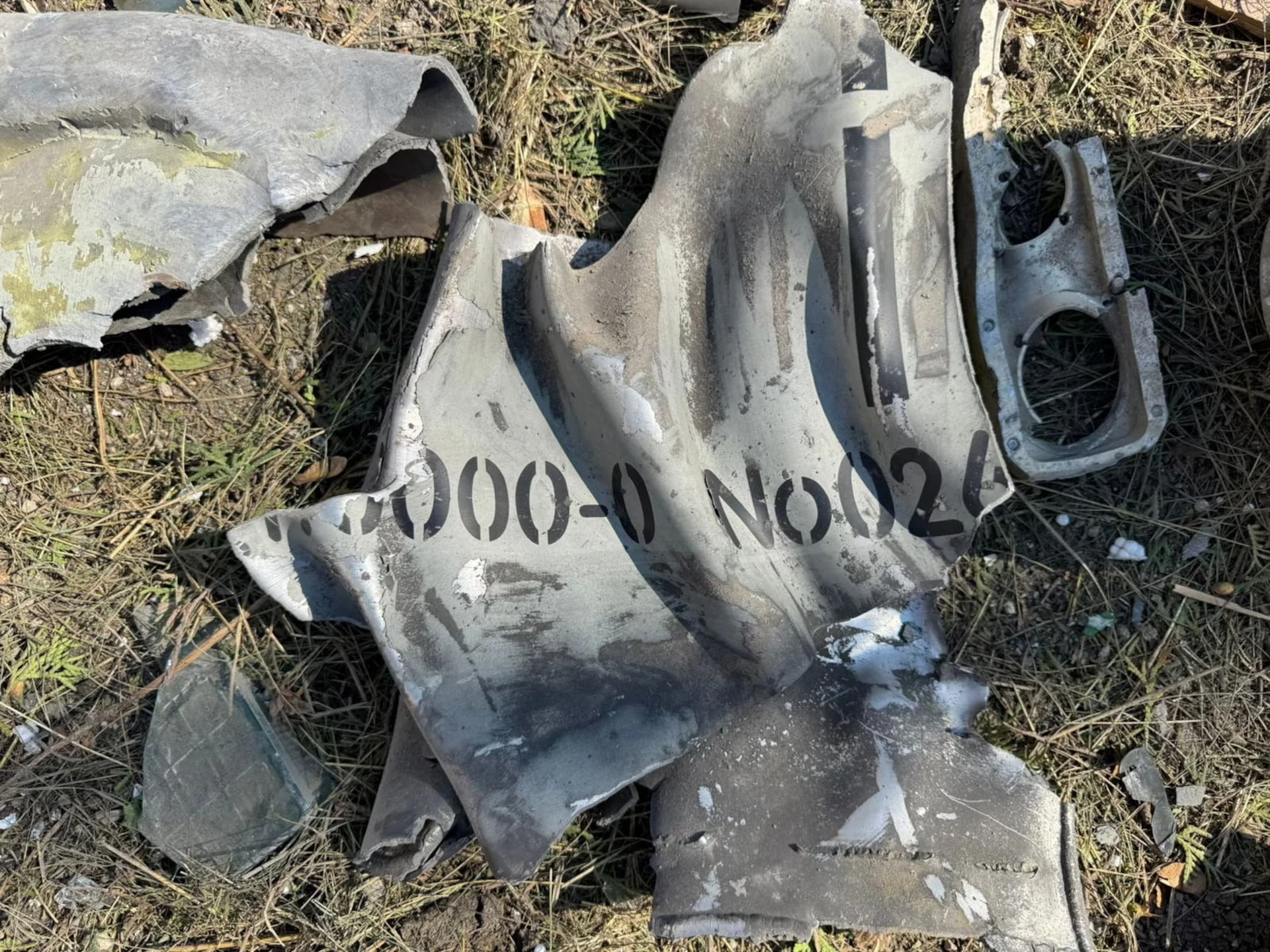
The first combat launch of Oreshnik against Ukraine took place in November 2024. That strike was largely demonstrative: Ukrainian assessments indicated that the missile carried dummy elements rather than a full explosive warhead. The physical damage was limited, but the political effect was carefully calculated.
The second episode, in January 2026, took place closer to Ukraine’s western border. A strike on the Lviv region was meant to show that Russia could project a threat not only against frontline areas or the east of the country, but also against territory closer to NATO states. It was a message aimed not only at Kyiv, but at European capitals.
After the mass attack on Kyiv in May 2026, Oreshnik again moved to the center of attention. Russia said it had used the missile as part of a broader strike involving drones, cruise missiles and ballistic missiles. That kind of combination creates one of the most difficult scenarios for Ukrainian air defense.
The power of a combined attack lies not only in the number of targets. Drones exhaust the system for hours, cruise missiles shift routes, and ballistic targets leave almost no time for decision-making. Oreshnik, in this scheme, functions as the upper layer of pressure — a weapon intended to overload not only radars, but the psychology of waiting.
At the same time, previous launches suggest that Moscow uses Oreshnik cautiously. It is not a mass missile for daily use, but a scarce and politically charged instrument. Every launch therefore has a double purpose: military, if there is a specific target, and demonstrative, if the primary audience is the West.
The possible deployment or transfer of this system to Belarus raises separate concerns. For Europe, it would mean shorter reaction times and an additional threat axis on NATO’s eastern flank. Even if such missiles are not launched, their presence alone changes the military planning of neighboring states.
Russia’s strategy around Oreshnik is built on magnifying uncertainty. The Kremlin wants every mention of the missile to trigger the same question: will this be a conventional strike, a display of nuclear shadow, or a warning to Europe? In that sense, the weapon begins to work before it is even launched.
For Ukraine, the answer to such a threat cannot be limited to technical interception. It requires air and missile defense systems capable of engaging ballistic targets, larger stocks of interceptors, the dispersal of critical infrastructure, rapid evacuation logic and political pressure on Moscow before strikes occur, not after them.
For Ukraine’s allies, Oreshnik is a test of whether they can see the war as more than another cycle of bombardment. If intermediate-range missiles with multiple warheads become a normal instrument of pressure, the security of the entire continent changes. In that logic, Ukraine’s sky is not a periphery, but the forward edge of European defense.
The greatest mistake would be to accept Russia’s legend of Oreshnik without analysis. It is a dangerous missile, but not a magical weapon. It can deliver a strike, yet its main role today is to make societies and governments exaggerate Russia’s invulnerability. That is how fear becomes part of military technology.
Moscow wants Oreshnik to sound like a sentence. In reality, it is more a warning about a new level of war, where technical complexity merges with political blackmail. The answer must be just as layered: protection of the sky, firmness from allies and refusal to let Russia define the boundaries of fear.