



















Poland summoned the Russian ambassador and delivered a formal note of protest after a missile landed on its territory. What had initially been described as an unidentified object was officially identified by Warsaw as a Russian Kh-101 cruise missile.
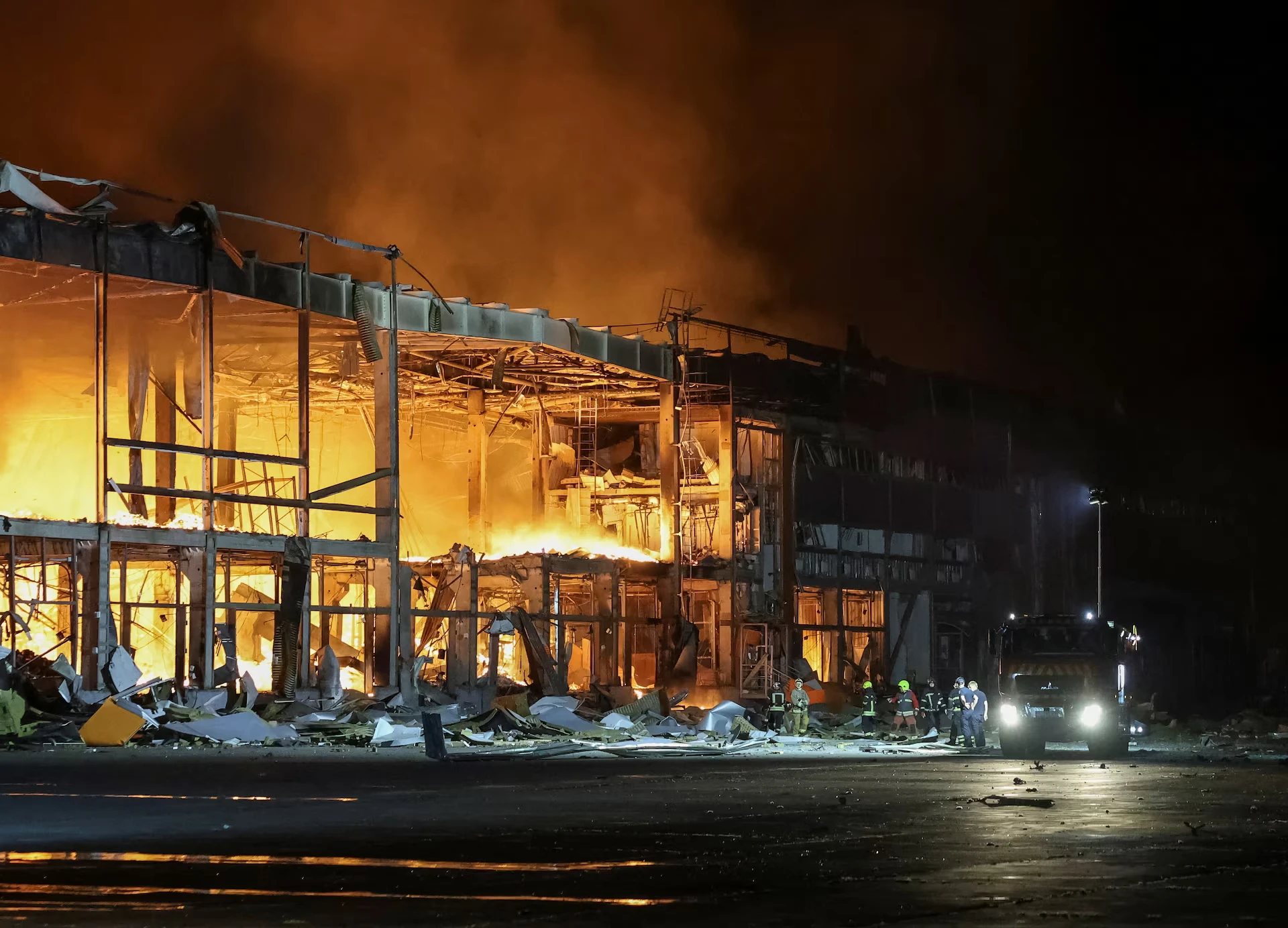
The weapon fell on July 30 in a field near Tarnawa Kolonia in the Lublin region. No one was injured, but the missile carried explosives and left a crater roughly ten meters wide. Polish officials said the incident endangered both residents and civilian aviation.
The summons became Warsaw’s first formal step after the initial forensic examination. Poland was no longer speaking only of a likely Russian origin. It had established the missile type, the country of manufacture and the period in which the weapon had left the production line.
In Daycom’s assessment, that certainty changes the political weight of the incident. Poland is no longer responding to an abstract consequence of the war near its border. It is documenting a direct violation of NATO airspace by a newly manufactured Russian missile.
The Kh-101 is a long-range, air-launched cruise missile that Russia has repeatedly used against Ukrainian cities and infrastructure. It can fly at low altitude, alter its route and maneuver around air-defense zones.
Those characteristics make interception near a border especially difficult. Radar may detect the target late, while fighter aircraft have only minutes to approach. In the incident near Lublin, a Polish F-16 was unable to reach the missile before it struck the ground.
Polish investigators also determined that the Kh-101 had been produced near Moscow during the second quarter of 2026. The interval between manufacture and combat use may therefore have been only a few months, or even several weeks.
For Warsaw, this suggests that Russia is launching newly produced missiles almost immediately. Such a short production-to-use cycle may indicate that prewar inventories have declined and that a significant share of current output is being sent directly into combat.
That does not mean Russia is close to exhausting its missile arsenal. Its defense industry continues to manufacture complex weapons, acquire components through third countries and adapt supply chains to sanctions.
The short route from factory to launch nevertheless reveals a high rate of expenditure. Moscow is no longer relying only on accumulated stocks. It is sustaining the air campaign through the continuous operation of a wartime economy.
For Ukraine, that finding carries two implications. Sanctions and strikes against Russia’s military-industrial system can affect the number of future launches. At the same time, the existence of newly produced missiles shows that current restrictions have not stopped the manufacture of sophisticated weapons.
Investigators must still determine why the Kh-101 changed course. Possible explanations include a technical failure, a navigation error, electronic interference or damage sustained during the flight.
Each possibility has different technical consequences, but the same political result. Russia is launching long-range weapons near NATO borders without being able to guarantee that they will remain inside their intended flight corridor.
Warsaw has not said that Poland was deliberately targeted. The absence of evidence of intent allows the government to avoid immediate military escalation. It does not, however, remove Russia’s responsibility for creating the danger.
Between a deliberate attack and a technical malfunction lies a broad category of strategic recklessness. A state firing large numbers of missiles near another country’s frontier must account for the risk of deviation and casualties beyond the territory it is attacking.
That principle lies at the heart of the Polish protest note. Warsaw condemned not only the missile’s impact, but conduct that threatened a sovereign state, its citizens and international aviation routes.
Summoning an ambassador is a restrained response, but not an insignificant one. Poland has formally recorded the violation, demanded an end to dangerous actions and created a diplomatic document that may support future NATO consultations.
The incident does not automatically trigger Article 5 of the North Atlantic Treaty. That provision concerns an armed attack, while Warsaw has not presented evidence that Russia intentionally struck Polish territory.
The event may nevertheless alter the practical defense of NATO’s eastern flank. Poland and its allies could increase patrols, deploy additional air-defense systems, expand radar coverage and shorten response times during Russian strikes on western Ukraine.
The fall of the Kh-101 also exposed the limitations of even a prepared defense system. Polish forces tracked incoming missiles, scrambled aircraft and stood ready to intercept, yet one weapon still reached the ground before a fighter could destroy it.
That fact reinforces Ukraine’s argument that Russian missiles should be intercepted as far from the Polish border as possible. More Patriot batteries and long-range radar systems in Ukraine would reduce the danger not only to Kyiv or Lviv, but to NATO territory itself.
Poland is already operating under something close to a permanent border air alert. During major Russian attacks, its fighter jets routinely take off while military personnel monitor dozens of objects that may approach the frontier.
What was once an exceptional procedure is becoming routine. That increases costs, exhausts personnel and creates a persistent danger of error — either in Russian guidance systems or during a hurried interception decision.
The cumulative effect is more dangerous still. One missile causing no casualties may result in a diplomatic note. A series of similar incidents gradually changes the political context and weakens the willingness of NATO governments to describe each new violation as accidental.
For Moscow, that trend creates a strategic risk. A campaign intended to pressure Ukraine may unintentionally strengthen NATO precisely where Russia has sought to limit the alliance’s military presence.
Every incursion over Poland becomes an argument for additional air-defense batteries, more fighter aircraft, stronger eastern command structures and faster intelligence sharing with Ukraine.
Russia can also use uncertainty as an instrument. It does not accept responsibility, explain the technical circumstances or assist Poland in reconstructing the missile’s route.
That silence allows the Kremlin to avoid direct discussion, but it damages the possibility of crisis communication. When one side refuses to explain an incident, the other must plan its defenses according to the worst plausible scenario.
Poland’s response therefore has two levels. The public level consists of the ambassador’s summons, the protest note and the demand that Russia end actions threatening Polish security. The military level involves reviewing how low-flying missiles can be detected and destroyed more quickly over the country’s eastern regions.
For Ukraine, the identification of the Kh-101 is further proof that the war is already crossing its borders physically. Not as a political metaphor or hypothetical future threat, but as a modern Russian missile lying in a field inside a NATO member state.
The incident near Lublin does not make direct conflict between NATO and Russia inevitable. It demonstrates something more immediate: a mass air war cannot remain geographically contained forever.
Missiles move faster than diplomatic procedures, and a technical failure can create a crisis in minutes that governments may need days to manage. That gap in time makes every new Russian barrage especially dangerous.
Poland chose a measured response, but the protest note is not a formality. It is a written warning that even an unintended violation carries a political price and that the patience of NATO’s eastern flank is not unlimited.
The crater near Tarnawa Kolonia remained empty of casualties and destroyed homes. The Kh-101 has nevertheless changed the context. The next Russian weapon to cross the border will not be treated merely as an unknown object, but as a repetition of a documented threat.