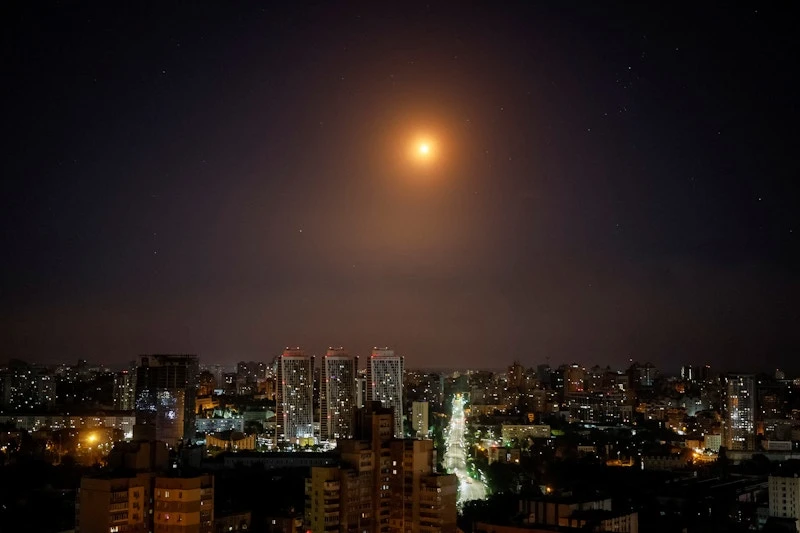















Ukraine is carrying the war ever deeper onto Russian territory, and the Kremlin can no longer fully hide that shift from its own society. Strikes on oil refineries, Moscow and Crimea have broken an old illusion: the war is no longer just a television story.
For Vladimir Putin, this is a new kind of pressure. Russians are seeing fuel shortages, clouds of smoke over the capital, disruptions in annexed Crimea, internet restrictions, rising prices and higher taxes. A war long presented as a distant operation is returning to daily life.
But the Kremlin’s first response does not look like a search for a way out. After Ukraine intensified its strikes, Russia attacked Kyiv with waves of ballistic missiles and drones. At least 18 people were killed in the capital. It was not a gesture of weakness, but a signal: Putin intends to dig in deeper.
According to Daycom’s earlier analysis, this is the current logic of the Kremlin. When the war becomes more painful for Russia, Moscow does not reduce the violence. It tries to send fear back into Ukrainian cities. Ukrainian pressure is changing the conditions of the war, but not yet Putin’s central political decision.
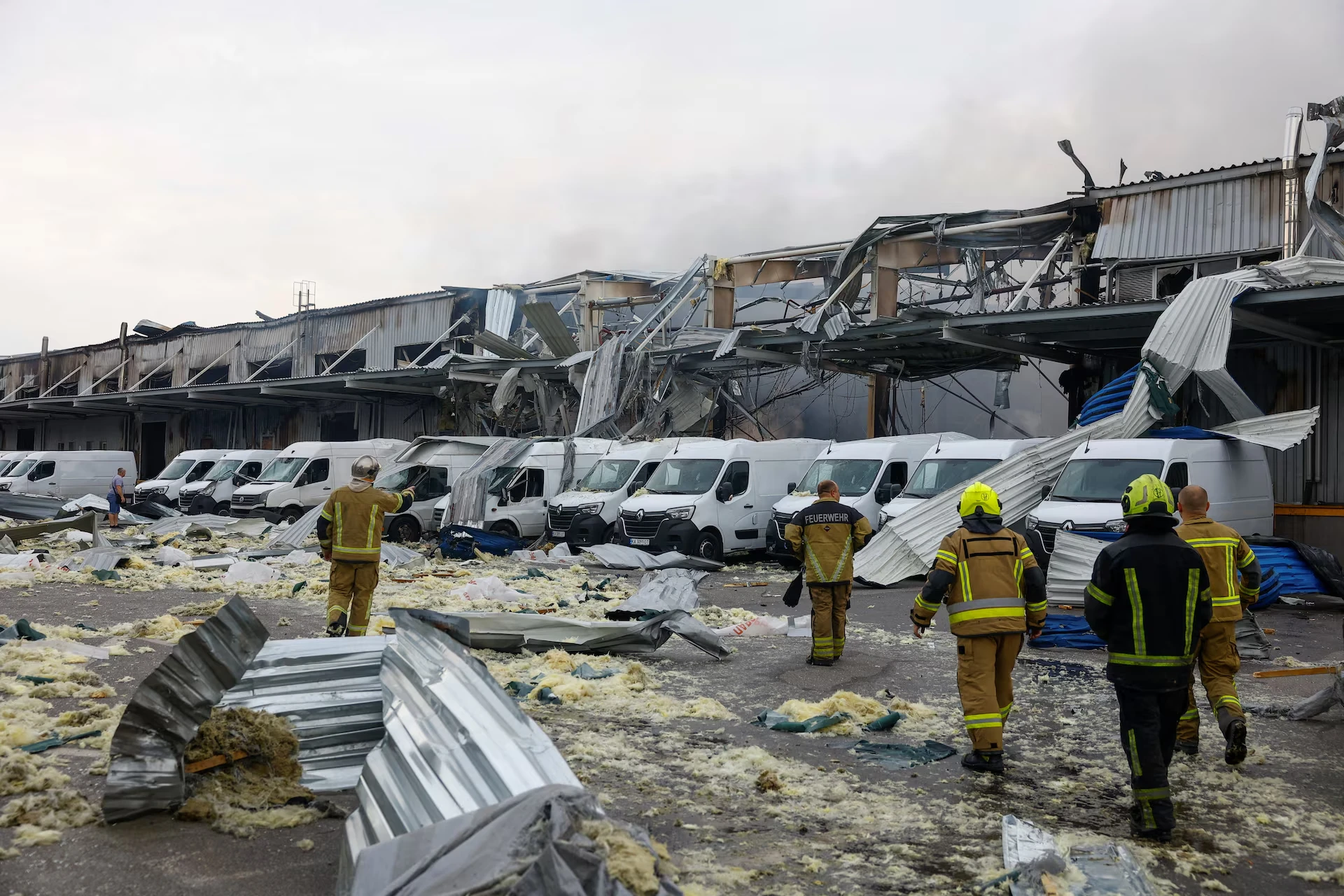
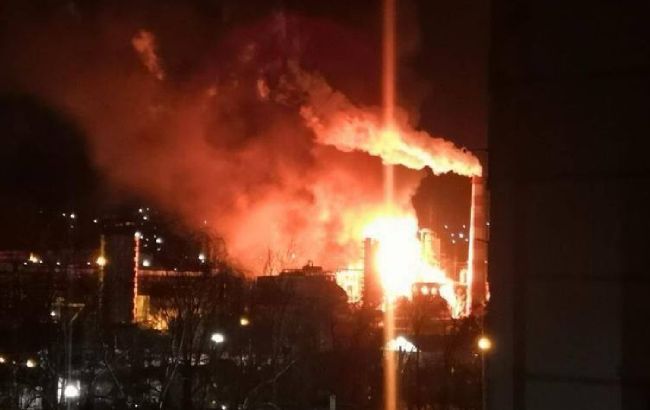
Ukraine’s campaign is having real consequences. Strikes on Russian refineries and fuel depots have caused shortages across the country. The largest drone attack on Moscow since the start of the war showed that even the capital is no longer beyond reach. Crimea is increasingly facing power, water and fuel disruptions.
This matters not only militarily. For decades, the Russian state built a model in which citizens surrendered political freedom in exchange for stability, predictability and a sense of protection. Now the war is beginning to strike precisely at that invisible bargain.
Gas-station lines, more expensive groceries, transport problems and fear of new strikes do not automatically create a revolution. An authoritarian system can digest dissatisfaction for a long time, dispersing it across regions, blaming local officials and crushing any political form of protest.
That is why growing irritation in Russia does not yet mean a direct threat to Putin. Repression, censorship, media control and fear of the state still give the Kremlin a large margin of safety. People may be angry about gasoline shortages, but still hesitate to name the cause aloud.
After several days of silence, Putin acknowledged fuel problems and promised to stabilize the market. He also spoke of the need to produce more air-defense systems. But alongside those promises came the central message: the Kremlin is showing no readiness to stop the war on the battlefield.
On the contrary, Putin continues to speak as if time is working in his favor. He insists that Ukraine is facing an acute manpower shortage and presents this as evidence that Ukrainian defenses will eventually be exhausted. In that logic, Russia only needs to endure longer and press harder.
His phrase that “saving the Kyiv regime” is not part of Moscow’s plans reveals not a diplomatic position, but a structure of thought. For the Kremlin, negotiations remain not a way to end the war, but a tool that should formalize Ukrainian weakness if it appears.
That helps explain why even colossal losses have not become a limit for Putin. Russia has already endured isolation from much of the global economy, the transformation of Belgorod region into a border war zone, Ukraine’s occupation of part of Kursk region, a mercenary mutiny and the humiliating retreat from Kyiv early in the invasion.
Hundreds of thousands of Russian deaths on the front must be added to that list. Estimates put the number of Russian soldiers killed at 350,000 to 450,000. For any normal political system, such a price would be a national catastrophe. In Putin’s Russia, it has become a line item of war.
This is one of the hardest features of the conflict. Ukrainian strikes can raise the cost of aggression, destroy logistics, create shortages and weaken Russians’ confidence in the inviolability of their rear. But they do not guarantee that Putin will draw a rational conclusion.
The Kremlin may choose another reaction: greater harshness. If strikes on Russia and Crimea become more painful for the population, they may increase fatigue, but they may also amplify the voices of those who have long demanded that Moscow fight “without gloves,” hit harder and move toward extreme scenarios.
For Ukraine, this creates a difficult risk. The long-range campaign is necessary because it destroys the material base of Russia’s war. But its political effect is not linear. Pressure on an authoritarian system can weaken it, or it can temporarily rally it around a more radical response.
The key question, then, is not whether Russia feels pain. It already does. The question is whether Ukraine can hold that pressure long enough and precisely enough for it to begin limiting Moscow’s ability to wage war, rather than merely pushing the Kremlin to take revenge on Ukrainian cities.
If Ukrainian strikes can systematically disable defense factories, logistics hubs, refining capacity, depots and supply lines, Putin’s calculation may change. Not out of sympathy for his own population, but because he loses the ability to continue the war on the same terms.
For now, the Kremlin is trying to endure. Financial technocrats are looking for money to cover rising war costs, regions are distributing shortages, propaganda explains attacks as an external threat, and the army keeps pressing on the front even when advances come at an extraordinary price.
In that structure, the strike on Kyiv has special meaning. It showed that Putin answers his own growing vulnerability not with signals of peace, but with a demonstration of readiness to punish Ukrainian civilians. This is not a strategy of victory. It is a strategy of prolongation through pain.
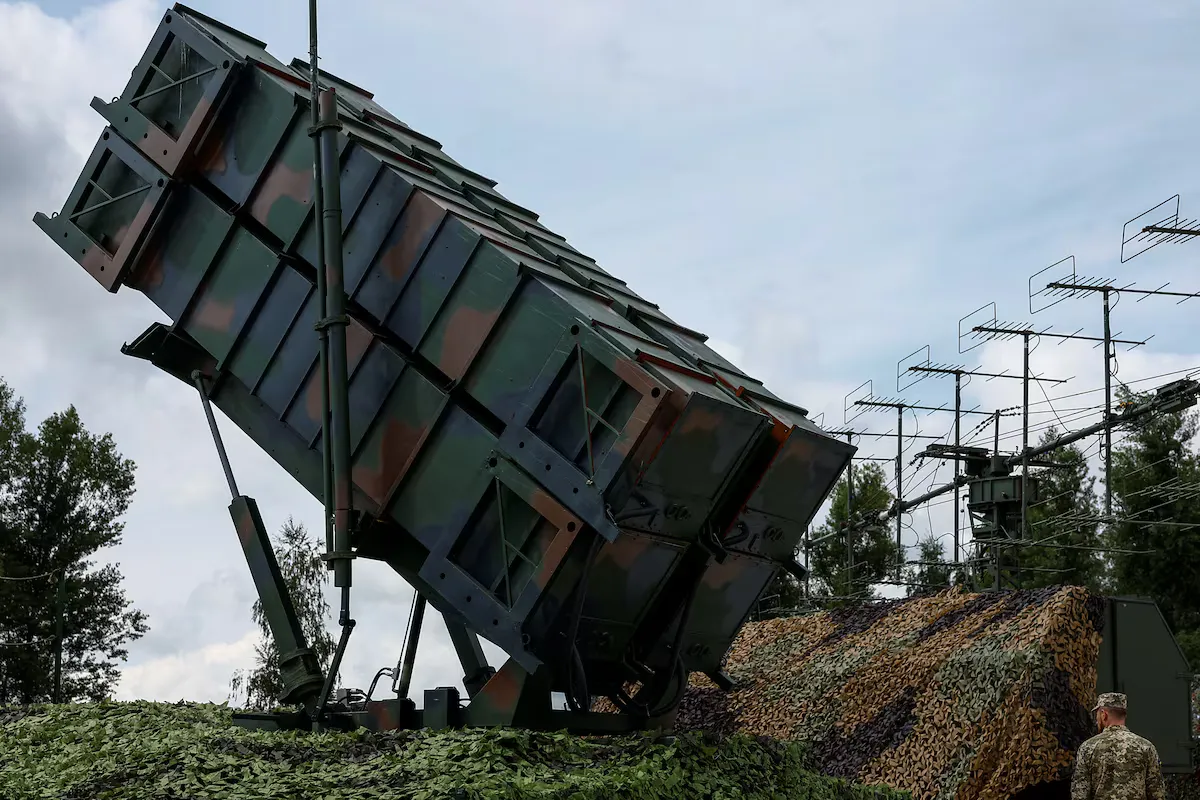
For the West, the conclusion is straightforward. Ukrainian pressure on Russia matters only when it is backed by sufficient air defense, long-range capabilities, industrial deliveries and sanctions against Russia’s war economy. Otherwise, Putin will try to absorb the blow and answer with another wave of terror.
The current moment does not prove that the Kremlin is close to concessions. It proves something else: the war has begun to cost Russia more inside Russia itself. This is not yet a turning point, but it is already a change in the environment in which Putin makes decisions.
Ukraine has forced the aggressor to feel its own vulnerability. But in Putin’s system, between vulnerability and political retreat lies a long space of repression, propaganda and readiness to spend lives. That is why the next phase of the war is likely to be not shorter, but harsher.
Putin is not yet looking for an exit. He is testing whether he can survive a new level of pressure and force Ukraine to pay an even higher price. The answer will depend not only on Kyiv, but on whether allies understand that pressure on Russia must be stronger than the Kremlin’s ability to turn it into new ruins in Ukraine.