















Vladimir Putin is entering a new phase of the war not as a leader looking for an exit, but as a ruler trying to turn a prolonged conflict into another instrument of coercion. Donald Trump’s peace signals have not changed the central reality: the Kremlin shows no readiness to stop the war along the current front line.
Ukraine’s recent strikes on Russian oil refineries, ports and fuel depots have not weakened Moscow’s will to continue the war. On the contrary, they have become an argument for a harsher response. A war that is reaching deeper into Russia’s rear is not pushing the Kremlin toward compromise. It is pushing it to search for a new demonstration of force.
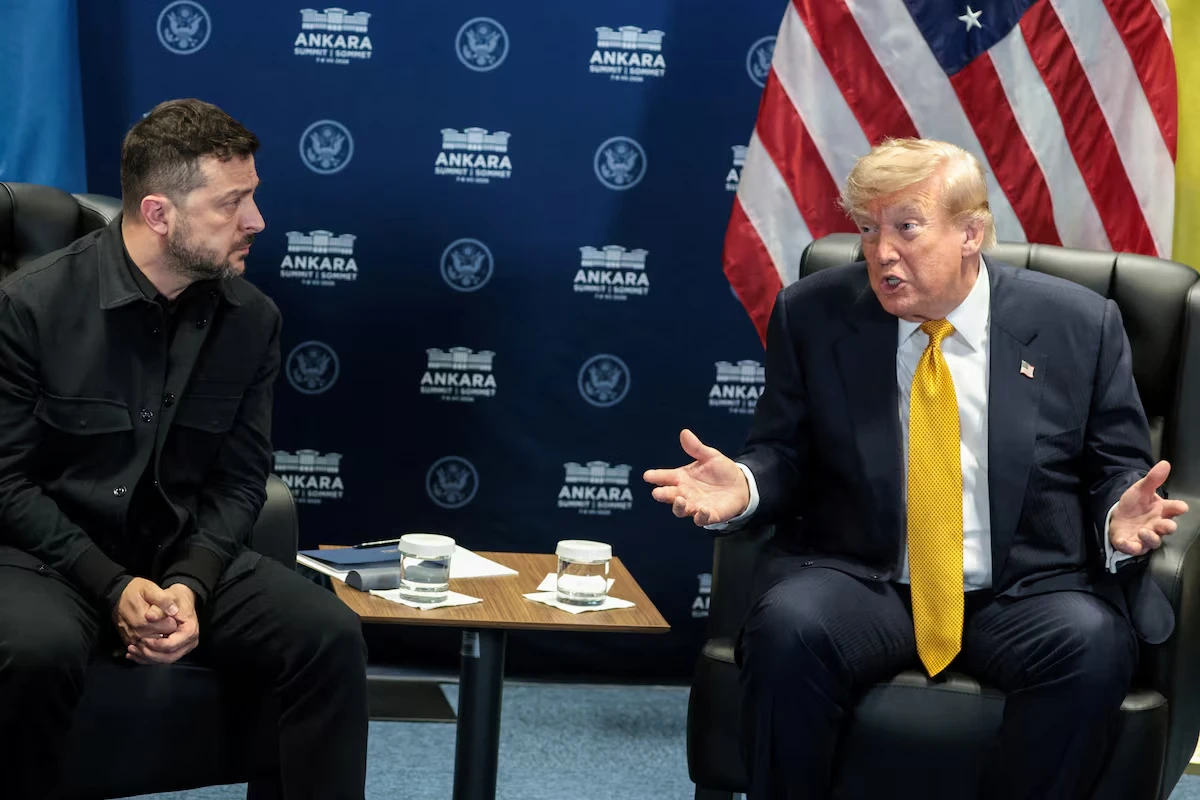
That is the main gap between Washington’s rhetoric and Moscow’s logic. Trump speaks of a settlement drawing closer, of phone calls with Putin and Volodymyr Zelensky, of ideas that could bring peace nearer. The Kremlin, by contrast, is holding to its central demand: to grind down eastern Ukraine and obtain a result that can be presented as victory.
According to Daycom’s assessment, Putin’s current position is shaped less by confidence in a rapid breakthrough than by fear of an unfinished war. For him, a cease-fire along the present line would amount to an admission that a five-year campaign, enormous losses and the mobilization of Russia’s economy have failed to produce a strategic result. That is why compromise now looks more dangerous to the Kremlin than continued fighting.
Donbas remains the central objective. Putin sees the full capture of Donetsk not only as a military result, but as a political symbol. After years of war and destruction, he needs territory that can be presented as proof that the sacrifices had meaning. Without such a result, any cease-fire would look to the Russian system not like the completion of a campaign, but like a pause without victory.
That is why proposals to freeze the front where it stands meet resistance in Moscow. Such a scenario could reduce losses and stabilize the situation, but it does not match the imperial logic of the war. Russia did not launch the invasion in pursuit of the status quo. Now that its original maximalist aims are out of reach, the Kremlin is trying at least to secure Donbas as a minimum symbolic trophy.
Russia’s problem is that the battlefield no longer offers easy answers. Russian advances have slowed this year. Ukrainian drones are reducing Russia’s numerical advantage, complicating troop concentrations and making even rear logistics vulnerable. The eastern front remains difficult, but each kilometer is becoming more expensive.
Kostiantynivka and the other towns in Ukraine’s fortress belt in Donetsk have particular importance. They do not merely hold a defensive line; they block Russia’s attempt to turn gradual pressure into an operational breakthrough. For Moscow, taking such nodes would prove that its strategy of exhaustion is working. For Ukraine, defending them is a way to break the tempo of Russia’s plan.
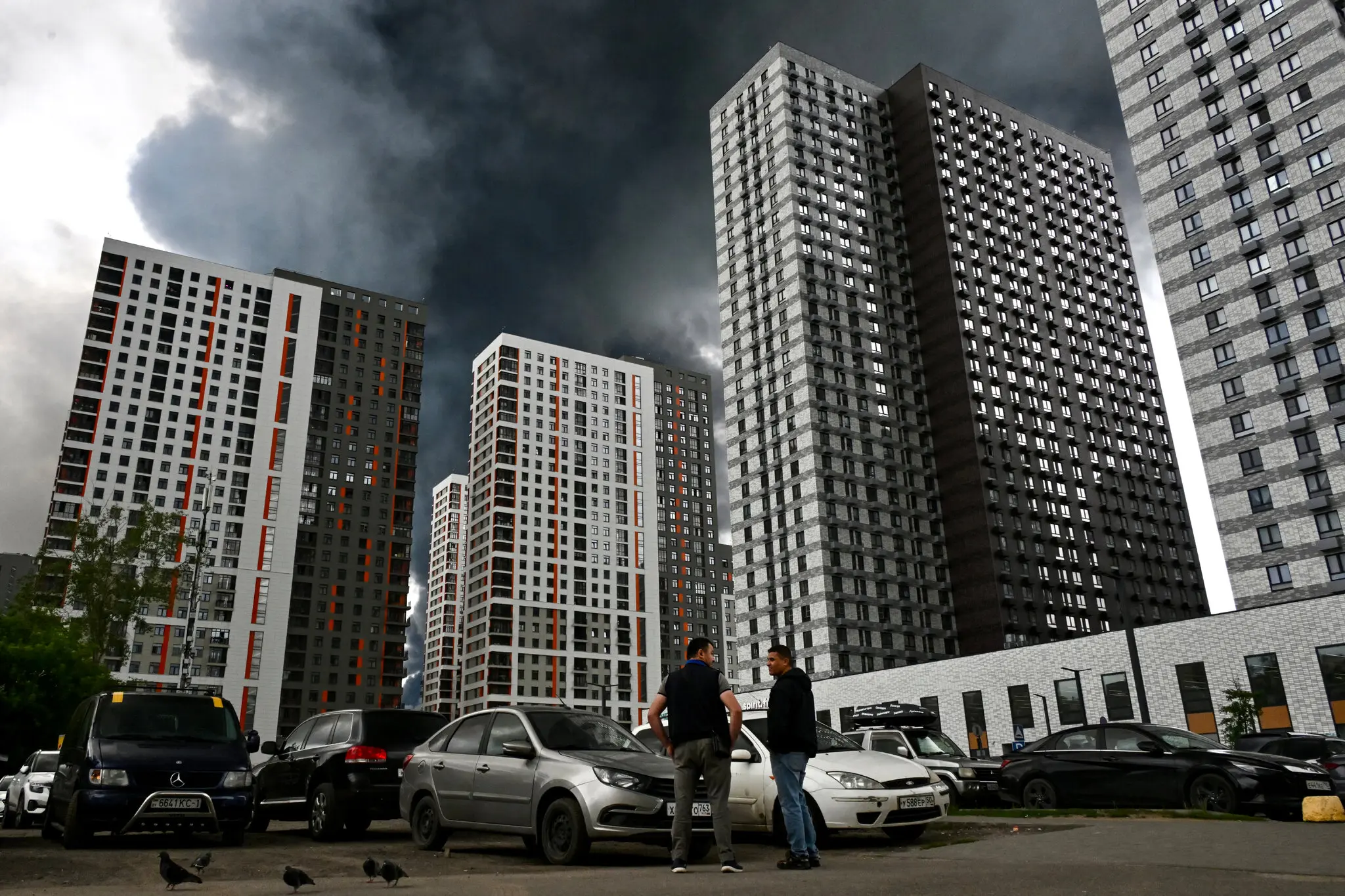
Against this background, Ukrainian strikes on Russia’s energy infrastructure are changing the psychology of the war. Fuel, ports, refineries and storage depots are no longer distant rear assets. They are becoming part of the front. For millions of Russians, the war is appearing not only in television briefings, but in fuel shortages, fires and disrupted supply chains.
This does not necessarily threaten Putin immediately. His approval remains high, and the Russian system has long learned how to absorb discontent. But even a limited transfer of war effects onto Russian territory undermines the Kremlin’s central promise: the state fights somewhere far away, while citizens are supposed to live as though the price is not truly theirs.
That is why Moscow’s reaction may become less restrained, not more. Authoritarian power often treats strikes on its own vulnerabilities not as a reason to change course, but as a need to prove that control remains intact. The response to Ukrainian successes may come in the form of new mass missile and drone attacks, attempts to widen the combat zone and intensified pressure on border regions.
Putin is already speaking about the need to create a “security zone” along the border. That formula can justify new operations beyond Donbas. Its danger lies in its flexibility: it can be used to explain attacks on the Kharkiv, Sumy or Chernihiv regions, or other efforts to stretch Ukrainian defenses.
More radical scenarios are also being voiced with growing frequency in Russia’s military-political environment. Strikes on major Ukrainian industrial facilities, ports and energy infrastructure are discussed, while the harshest versions even include attacks on sites in NATO countries. Such rhetoric is not always a plan, but it widens the corridor of what may later be treated as permissible.
The most dangerous scenario is one of limited provocations against NATO. Moscow may not want a direct war with the alliance, but it could try to test its unity through isolated strikes, drone incidents or attacks that are difficult to classify immediately as a full-scale assault. The aim would not be to defeat NATO, but to divide it over how to respond.
For Putin, heightened tension with NATO could also serve a domestic purpose. If the war requires a new wave of mobilization or a harsher draft, the Kremlin will need a stronger explanation than the abstract language of a “special military operation.” In that logic, confrontation with the West becomes not a risk, but a political resource: it helps explain to society why new sacrifices are needed.
Mobilization, however, remains a painful subject for the Kremlin. To seize all of Donbas, Russia may need more manpower than it can easily draw under current methods. A compulsory draft of fighting-age men would be unpopular even in a controlled society. Putin remembers the political sensitivity of mobilization and is therefore trying to postpone it as long as possible.
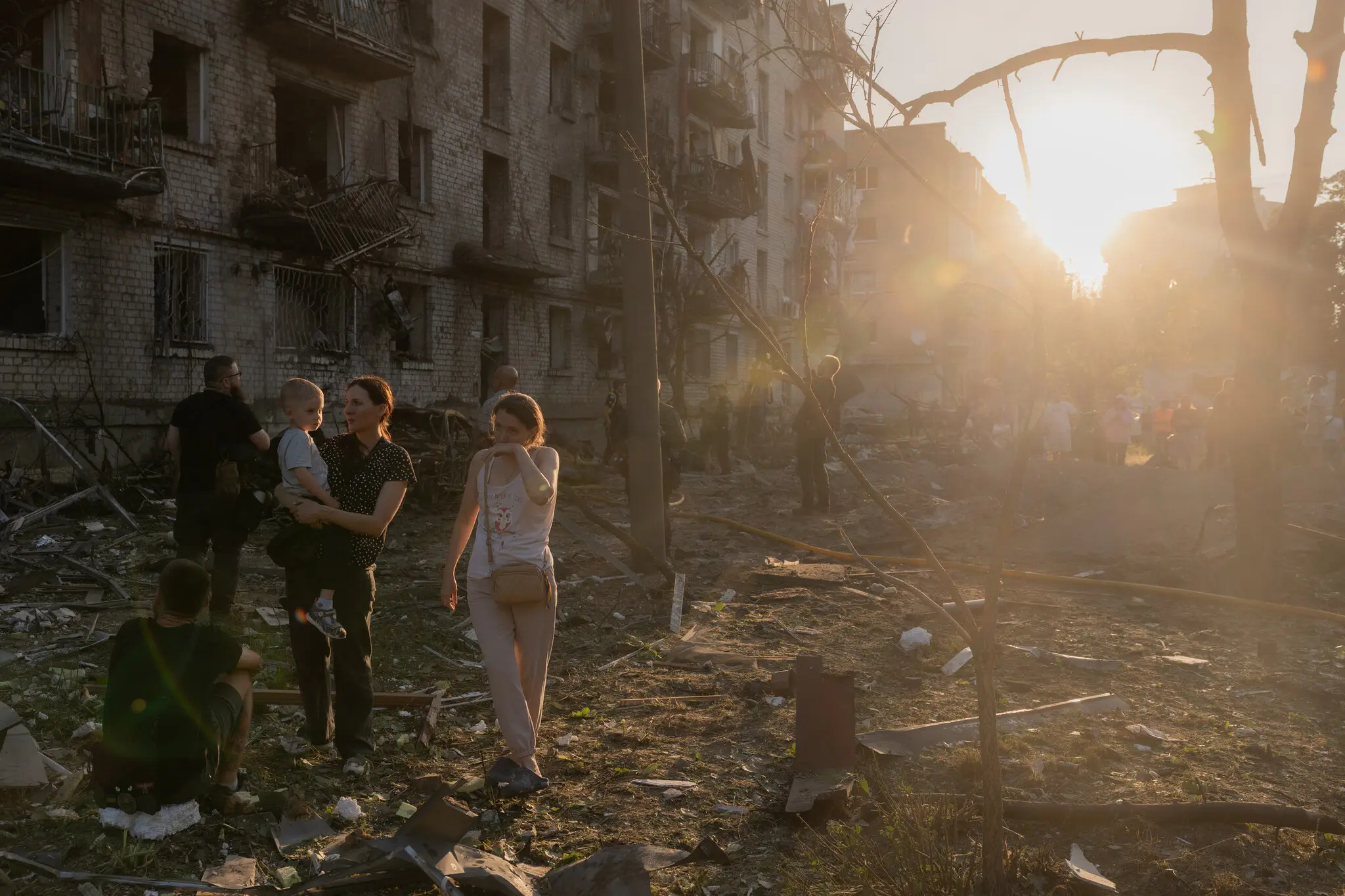
The cost of the war is already enormous. Total losses on both sides are measured in millions of killed, wounded and missing, with Russia bearing the larger share. Neither side releases full casualty data, but even rough estimates show the scale of exhaustion. The war ceased long ago to be an operation. It has become a system for consuming people, equipment and economic resilience.
For Ukraine, the current moment is not simple either. Successful strikes on Russia’s rear create a sense of changing momentum, but they do not erase the burden of a grinding ground war. Russia still has the resources for prolonged pressure, and a front more than 1,000 kilometers long demands constant defensive concentration. Ukrainian drones offset part of Russia’s advantage, but they do not replace the need for ammunition, air defense and manpower.
For the West, the main conclusion is uncomfortable. A peace initiative may be necessary, but it will not have force if Moscow sees it as a way to freeze its gains without concessions. Putin does not reject peace as a word. He rejects a peace that does not give him political victory. That distinction is essential.
That is why optimistic statements about a settlement being near can be dangerous. They create expectations that do not match the Kremlin’s behavior. If Putin is preparing to escalate while the West prepares for a diplomatic opening, Ukraine risks being caught between two tempos: Russian military pressure and its partners’ diplomatic haste.
The most realistic scenario for the coming months is not a quick peace, but Russia’s attempt to improve its position before any possible negotiating table. That means new strikes on Ukrainian cities, pressure in Donetsk, attacks on energy and logistics, and efforts to make the West doubt its own unity.
In such a war, negotiations do not disappear. They become part of the combat strategy. The Kremlin can speak of readiness for a peaceful settlement while increasing strikes in order to make any future deal more favorable to itself. That is how coercive politics works: diplomacy does not replace war, but accompanies it.
The main question now is not whether Putin wants peace. He may want peace — but only one that confirms his right to what has been seized and opens the way to the next round of pressure. The real question is whether Ukraine and its partners are prepared not to confuse a pause with the end of the war, or a negotiating signal with the Kremlin’s readiness to stop.
Putin’s strategy remains one of exhaustion. It may be slow, costly and bloody, but its logic has not changed. The Kremlin is trying to prove that it can endure longer, strike harder and wait until the West’s political will weakens. That is why the coming months may become not a road to peace, but Moscow’s attempt to make the war broader — before once again calling it negotiations.