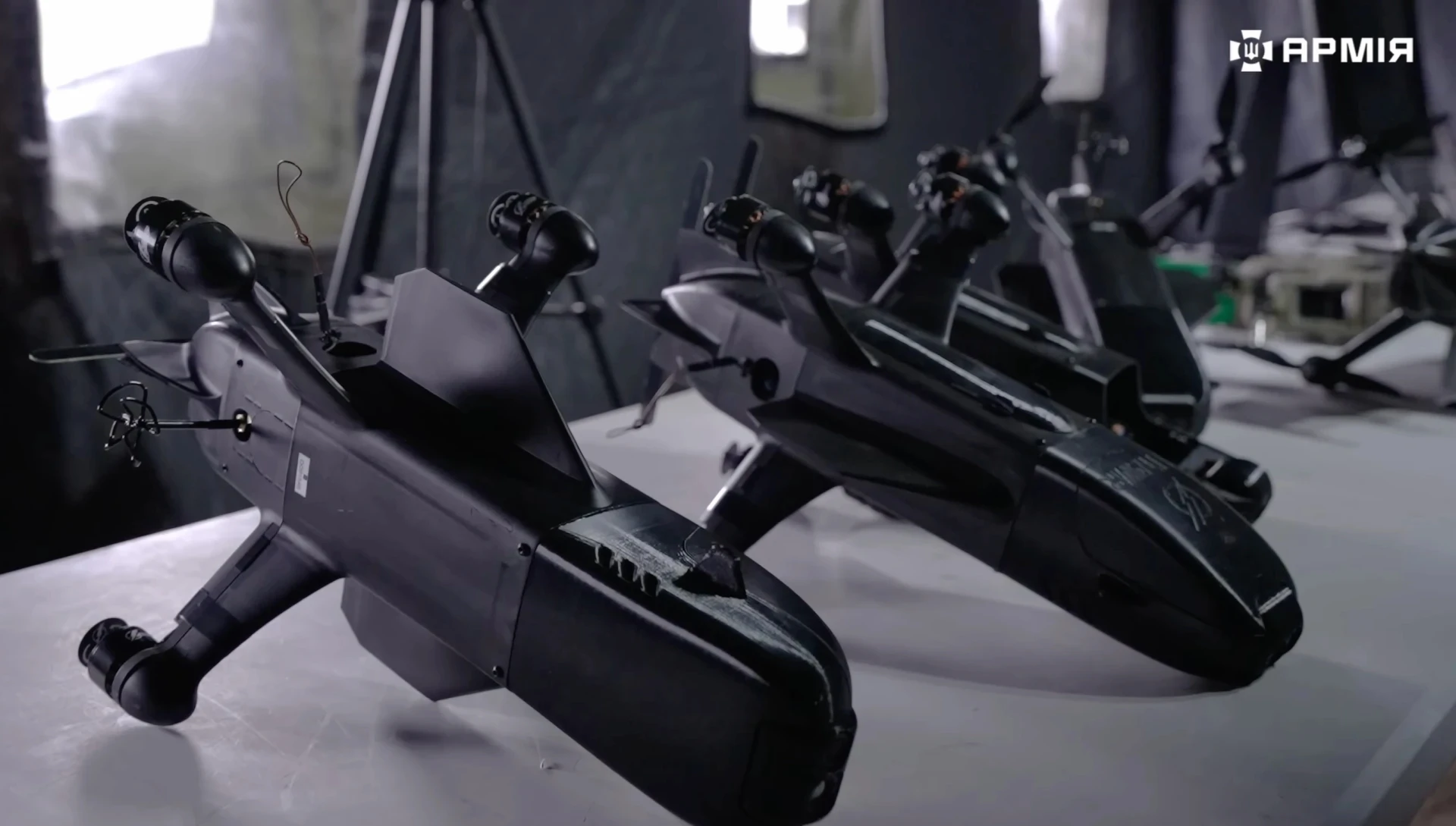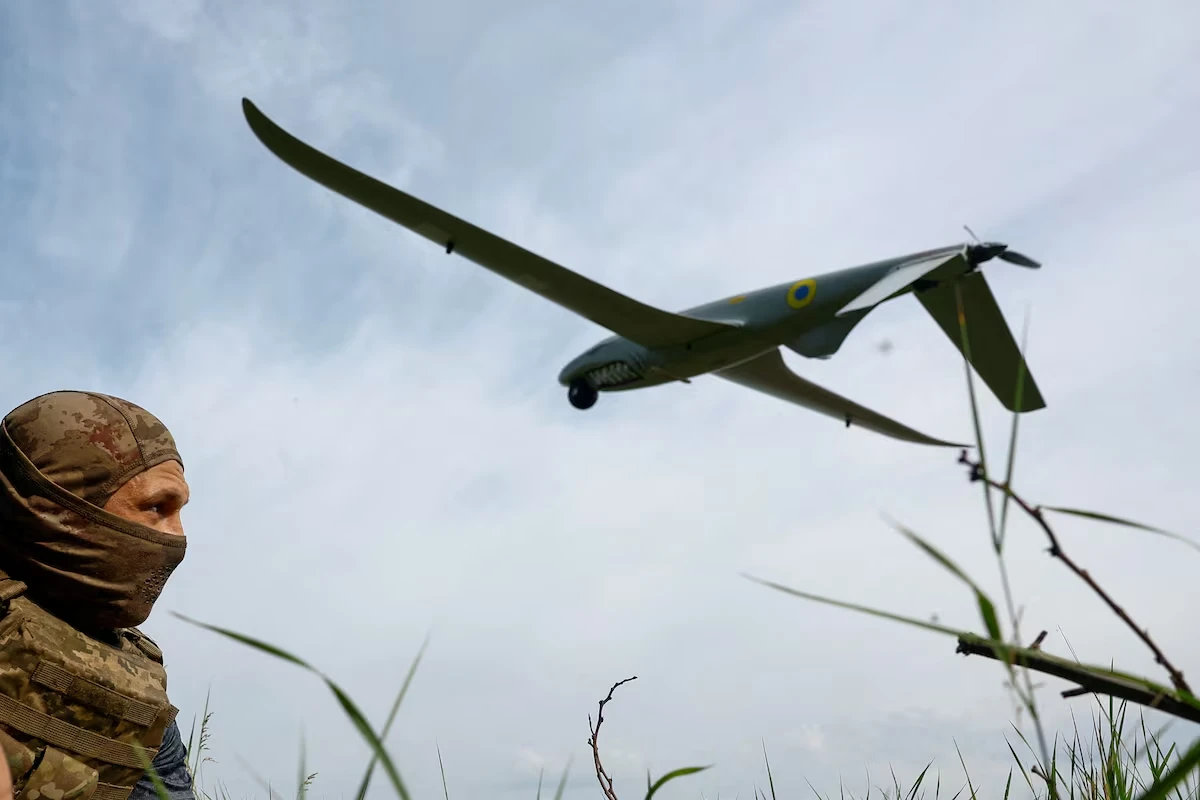





















Russia is trying to push the drone war beyond the limits of the frontline radio horizon. Vladimir Putin has said the country is developing a satellite-based system for controlling combat drones. For Moscow, this is not simply a technology program. It is an attempt to close one of the most painful vulnerabilities of modern warfare: the dependence of unmanned systems on communications that can be jammed, disrupted or lost.
The statement came during a meeting with Russian military officials, where heavy strike drones and satellite control channels were discussed. In Moscow’s own framing, the idea is openly compared with the capabilities of Starlink, which has become one of the important elements of Ukraine’s military resilience. That comparison reveals the real objective: not a single drone, but a national orbital infrastructure for war.
On the same day, Putin signed a decree setting the formal size of Russia’s armed forces at 2,399,130 people, including 1,510,000 service members. The increase does not look dramatic in purely numerical terms, but politically it fits into a longer pattern of military expansion after the start of Russia’s full-scale war against Ukraine.
According to Daycom’s assessment, these two moves should be read together. One concerns manpower; the other concerns the quality of command and control. The Kremlin is simultaneously expanding the human body of the army and seeking a technological layer that could make drones less vulnerable to electronic warfare and the limits of ground-based communications.
Satellite control changes the logic of drone warfare. If a drone depends on a ground operator and a direct communication link, its range, resilience and concealment are limited. If control or data transmission moves through an orbital network, the aircraft can operate farther, longer and with greater autonomy, while the operator can remain far from the line of contact.
This is why such systems are becoming a new technological frontier of war. The issue is not limited to strike drones. A satellite channel can matter for reconnaissance, artillery correction, coordination of drone groups, video transmission, control of logistical platforms and communication between dispersed combat units.
For Russia, the Ukrainian experience gives this question particular weight. The war has shown that a cheap drone, when combined with resilient communications and rapid data processing, can alter the battlefield balance more effectively than individual expensive pieces of heavy equipment. Drones have ceased to be auxiliary tools. They have become a daily mechanism of attrition.
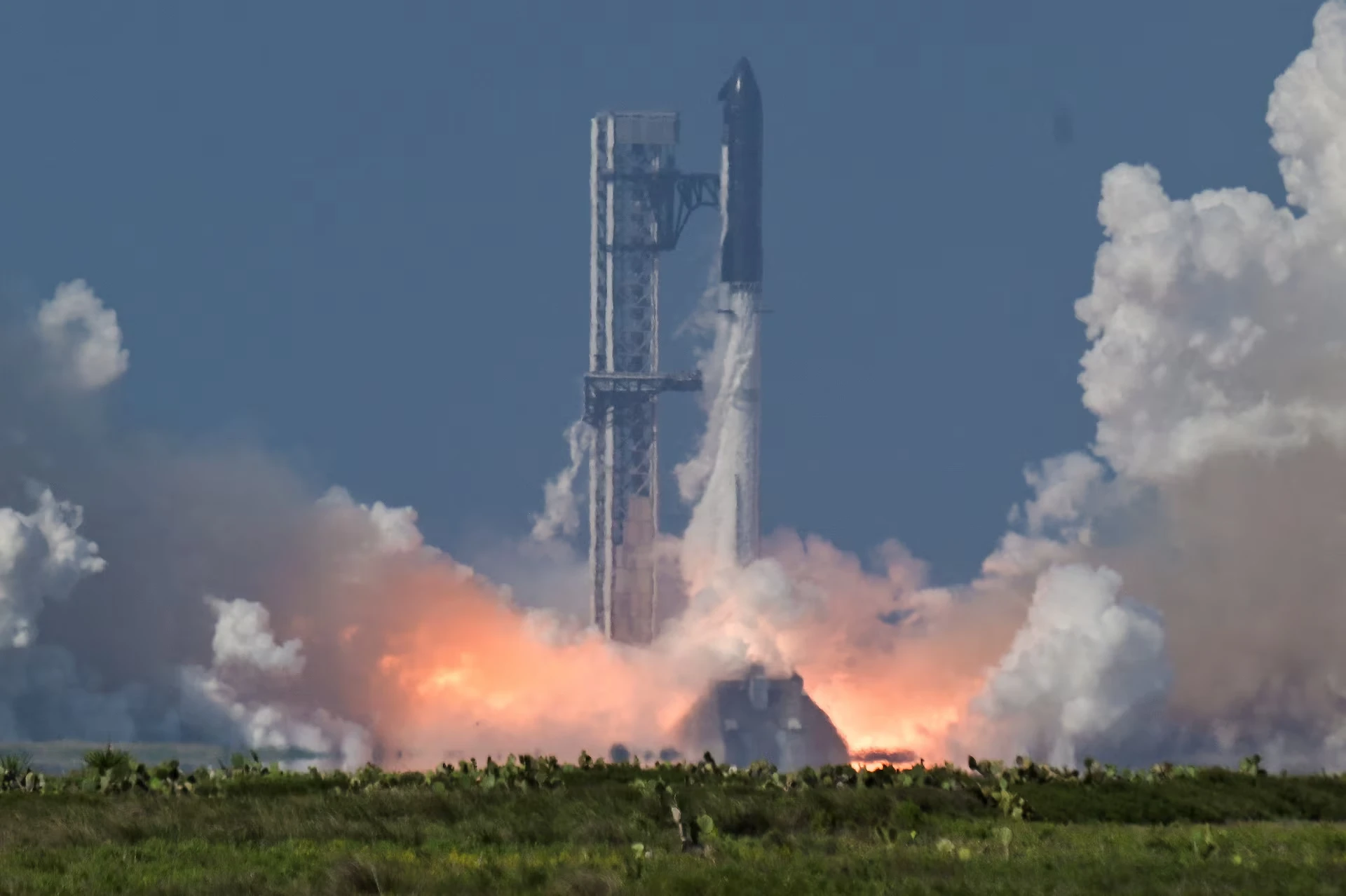
Putin referred to a low-Earth-orbit constellation and the company Bureau 1440, which Moscow presents as the foundation for a future satellite internet system. In Russian public rhetoric, the program is meant to prove that the country can build an analogue of Western communication services and use it for military purposes. But there is a long engineering distance between a political statement and full combat deployment.
Building such a system requires more than launching satellites. It requires ground stations, terminals, protected channels, serial production of equipment, integration with military platforms and resilience against jamming and cyberattacks. Without that, an orbital constellation remains a political showcase rather than a functioning military instrument.
At the same time, the direction itself should not be underestimated. Russia is fighting a war of long adaptation. Slowly, with heavy losses and technological constraints, it can still keep searching for ways to reproduce or partially replace the advantages Ukraine gained by rapidly integrating civilian digital tools into military practice.
The decree on troop numbers adds another layer to this picture. The Kremlin is signaling that it does not view the war as a short campaign. Even a relatively small increase in formal strength points to an effort to embed military mobilization into the long-term structure of the state rather than keep it as a temporary response to battlefield needs.
It is also an attempt to turn losses, rotations and new formations into a managed bureaucratic process. A large army requires more than people. It needs an officer corps, training centers, weapons, logistics, medical capacity, payments and industrial support. The figure in the decree is only the upper outline of a much broader burden on the Russian state.
Together, the drone and satellite agenda creates the image of an army Moscow wants to enlarge and technologize at the same time. Yet this is where the central contradiction appears. A mass army depends on mobilization resources and heavy bureaucracy. High-tech war requires flexibility, rapid production, quality electronics, software and autonomous solutions.
Ukraine has already shown that drone warfare is not decided by the number of aircraft alone. The speed of the cycle matters more: detect a target, transmit coordinates, strike, assess the result and change tactics. If Russia eventually obtains a stable satellite channel for combat drones, that cycle could become more difficult for Ukrainian defense.
For Kyiv and its allies, this means looking not only at the current front line, but at the next stage of technological confrontation. Satellite communications, counter-drone systems, electronic warfare, space-based intelligence and autonomous platforms are increasingly merging into a single security architecture.
Putin’s statement does not mean Russia already has a ready Starlink analogue for the battlefield. It means Moscow sees clearly where one of the advantages of future war lies and is trying to build its own answer. Even if that answer is slow and imperfect, its consequences could still be significant.
The war in Ukraine has long ceased to be only a clash of artillery, armor and manpower. It has become a laboratory of new military infrastructure, where a drone, a satellite, an operator, an algorithm and an inexpensive technical solution can matter more than a classical advantage in tanks. That is why Russia’s push toward satellite-based drone control is not a technical detail. It is a sign of where the next phase of the war is heading.