


















Russia has entered a phase of the war in which its main problem is no longer only Ukrainian resistance, but its own inability to convert years of violence into a political result. The Kremlin still has missiles, an army, occupied territory and the resources to continue fighting. But it is becoming harder to conceal the larger fact: the strategic goals with which Vladimir Putin began the invasion have moved farther away, not closer.
Moscow did not capture Kyiv. It did not break Ukrainian statehood. It did not force the West to abandon Ukraine. It did not create a new European security order on Russian terms. Instead, it has found itself in a long war of attrition, with no decisive breakthrough at the front, increasingly deep Ukrainian strikes on Russian infrastructure and an economy sustained by military spending but losing room for maneuver.
That is the context in which the latest wave of Russian escalation must be read: mass strikes on Kyiv, Dnipro and other cities, threats against Western embassies, the drone incident in Romania, and Dmitry Medvedev’s warning that Europe’s “peaceful sleep” is over. These are not separate bursts of rhetoric. They are an attempt to restore Russian initiative where the battlefield no longer provides quick answers.
According to Daycom’s earlier analysis, the Kremlin is increasingly using fear as a substitute for victory. When the army cannot quickly force Ukraine into capitulation, Moscow tries to widen the sense of danger: strike capitals, intimidate NATO, create doubts among allies and convince European societies that supporting Kyiv has become too costly.
At the front, Russia remains dangerous. It still has numerical advantages, continues to press in the Donetsk region and uses aviation, artillery, glide bombs and mass assault groups. But the main question is not whether Russia can capture another village or several more square kilometers. The question is whether it can achieve the political purpose of the war. On that point, the answer is becoming less convincing even inside Moscow.
Within Russia’s own expert circles, one can now hear what would recently have been dangerous even as a suggestion: the complete destruction of Ukrainian statehood, or the liquidation of what Moscow calls an “anti-Russian regime,” is impossible without the long-term occupation of the entire country. For Russia, such an occupation is technically, militarily and politically unattainable. That means the original logic of the war has broken.
Putin may claim that the conflict is approaching its conclusion, but the map does not support that claim. Russia declared the annexation of four Ukrainian regions, yet it does not fully control them. Donetsk remains the central military objective, but Ukrainian fortifications, drones, minefields, artillery and the constant exhaustion of assaults have turned it into a space of slow bleeding, not swift victory.
For the Kremlin, Donetsk has become not only a military objective but a political symbol. After the failure to destroy the Ukrainian state, Moscow narrowed its aim to the capture of all of Donbas and is trying to present that as enough to justify negotiations. Yet even that reduced goal, which was supposed to look “realistic,” is proving more costly and slower than the Kremlin expected.
That is why Russia is raising the stakes in the air. Mass strikes on Kyiv have more than a military purpose. They perform a political function: to show that Moscow can still inflict pain, paralyze urban life, exhaust air defenses, strike defense production, pressure mobilization infrastructure and test the psychological endurance of society.
The same logic explains threats against Western diplomats in Kyiv. The Kremlin is trying to shift the war from the frame of “Russia against Ukraine” to “Russia against the West,” but without a direct clash with NATO. A threat to embassies is not only intimidation. It is an attempt to make support for Ukraine more politically nervous, personally dangerous and less routine for Western governments.
The drone that hit an apartment building in Galați, Romania, belongs to the same gray zone. Even if the incident was an accidental consequence of an attack route against Ukraine or the work of air defenses, it serves Russia’s strategy of pressure. It shows Europeans that the war can touch them not through a formal declaration, but through debris, fire and a nighttime explosion in a residential district.
Moscow understands the value of such episodes. They do not necessarily trigger NATO’s Article 5, but they do trigger anxiety. They do not create a major war, but they create doubt: whether the eastern flank is protected, whether the Alliance is ready for the age of cheap drones, whether the United States remains a reliable guarantor, and whether Ukraine should be pushed toward concessions to reduce Europe’s own risks.
That is the core Russian calculation — not to defeat NATO, but to shake its political nervous system. The Kremlin wants each incident to raise not the question of how to better defend Ukraine and the eastern flank, but whether support for Kyiv has gone too far. In that frame, fear becomes a diplomatic resource.
Yet the very need for such escalation speaks to Russia’s problems. If the offensive were unfolding according to the Kremlin’s plan, if Ukraine were rapidly losing the front, if the West were already ready for a deal on Moscow’s terms, Russia would not need to raise the temperature of threats so insistently. Its strength would speak for itself. Instead, Moscow is forced to speak louder and louder.
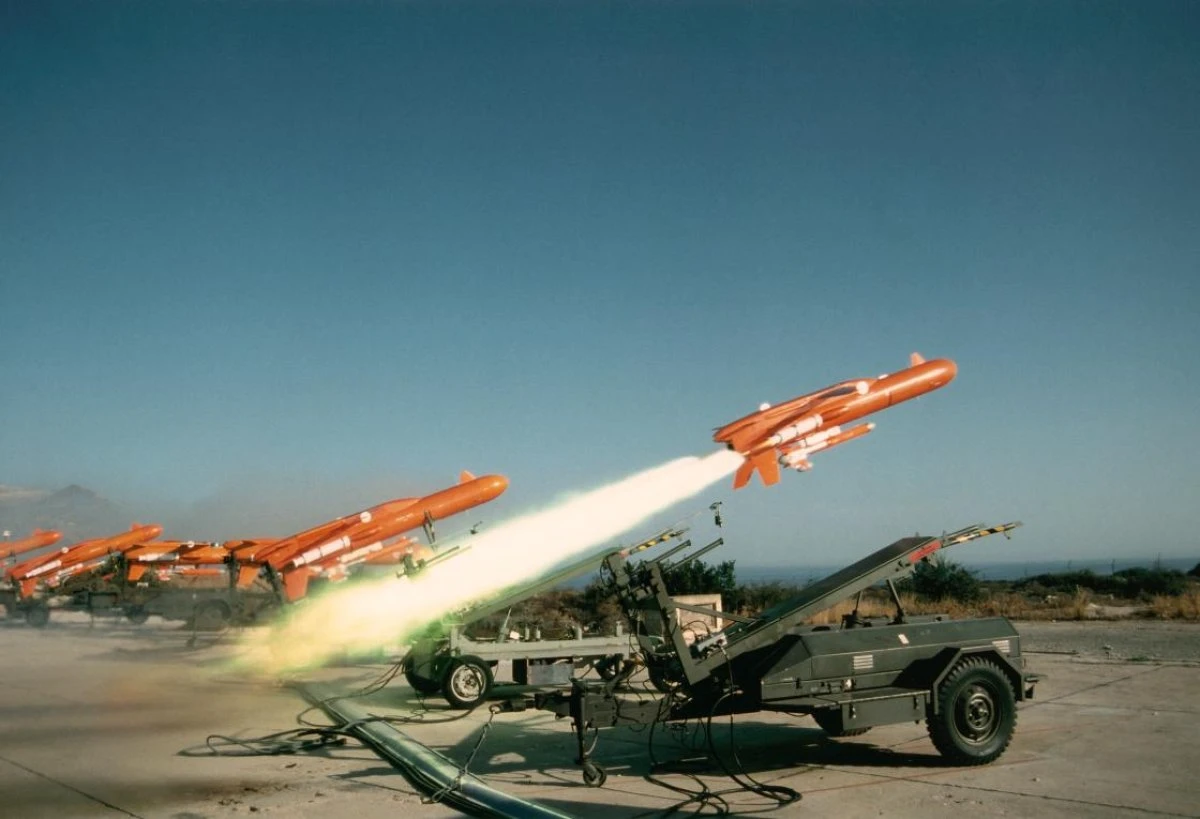
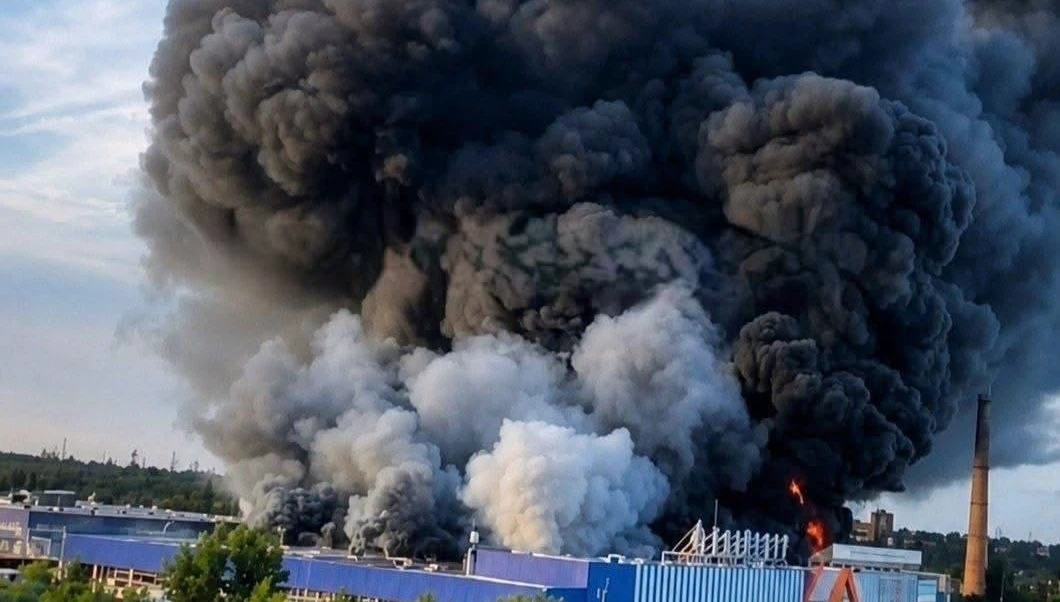
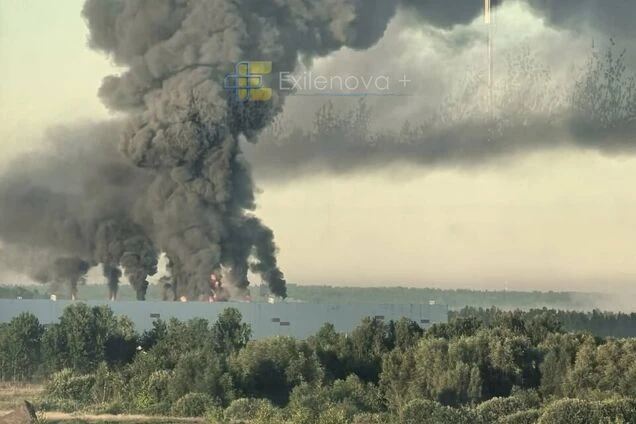
Ukrainian strikes deep inside Russia have become one of the sources of this nervousness. Medium- and long-range drones are hitting refineries, fuel depots, pumping stations, logistics hubs, air-defense systems and routes linking Russia with occupied southern Ukraine and Crimea. They do not destroy Russia’s war machine immediately, but they make it more expensive, slower and less confident.
The southern corridor has become especially sensitive. The route through the Rostov direction, occupied Mariupol, southern Ukraine and Crimea is not only a transport artery for Russia, but a symbol of its land connection to the peninsula. When strikes against depots, roads, fuel and air defenses disrupt this route, Moscow loses part of the depth on which it has relied.
Fuel restrictions in Crimea have become a visible sign of that problem. For civilians, they mean queues, limits and everyday anxiety. For the military system, they signal that fuel logistics no longer have a guaranteed margin of safety. In a war of attrition, even a local shortage can have wider consequences if it forces changes in routes, security, distribution and priorities.
Russia’s economy, meanwhile, looks stronger from the outside than it does from within. Heavy military spending supports production, defense-sector wages and the illusion of mobilized growth. But this model is not free. It drains resources from the civilian sector, drives deficits higher, pressures regional budgets and makes the state increasingly dependent on war as an economic engine.
When the finance minister says that reserves are not endless, that is not merely an accounting phrase. It is an admission of limits. Russia can cut spending almost everywhere except defense and social commitments, but that formula itself reveals the trap: the army cannot be underfunded, the population cannot abruptly be stripped of payments, and civilian economic revenues are no longer keeping pace with the scale of the war machine.
The regions are becoming the first line of this financial strain. It is there that budget holes grow, unmet obligations accumulate, credit becomes more expensive, local programs shrink and discontent appears — even if the federal center tries to keep it out of the political sphere. A wartime vertical can command silence for a long time, but it cannot abolish arithmetic.
The human arithmetic is even harsher. Russia continues to replenish its army through contract soldiers, financial incentives, regional recruitment and pressure on the periphery. But losses, the intensity of fighting and the new drone reality are making that system more strained. The front line has become a space where survival, evacuation of the wounded and their return to combat are all far more difficult.
Drone-controlled kill zones have changed the mechanics of attrition. Earlier, some of the wounded could be evacuated, treated and returned to units. Now the forward edge and near rear are under constant observation and attack. That means losses are not only higher, but less reversible for an army accustomed to compensating for problems with numbers.
The question of a new mobilization therefore remains politically toxic for the Kremlin. The mass call-up in autumn 2022 already caused tens of thousands of men to flee, panic in the regions and social tension. Repeating that before or soon after an election cycle would mean risking the domestic passivity on which Putin’s system depends.
This is where the dilemma emerges. Russia needs men to sustain pressure at the front. But openly mobilizing them is dangerous. Raising the stakes through strikes and threats is easier than explaining a new large-scale call-up to society. That is why the Kremlin may be interested not in real peace, but in a pause — one that would allow it to rearm, replace losses and return to the war later from a better position.
For Ukraine and Europe, that is the central danger in any negotiation shaped by Moscow’s terms. A Ukrainian withdrawal from Donetsk or the freezing of Russian gains as the “price of peace” would not solve the problem. It could simply give Putin what he is now seeking: a political trophy, an operational pause and the ability to tell Russians that the sacrifices were not in vain.
The Kremlin does not need only a cease-fire. It needs an exit that can be sold as victory. After years of propaganda, hundreds of thousands killed and wounded, the militarization of the economy and confrontation with the West, Putin cannot easily say that the war has ended without achieving its main aims. That is why he is trying to turn even a limited territorial result into a “historic” conclusion.
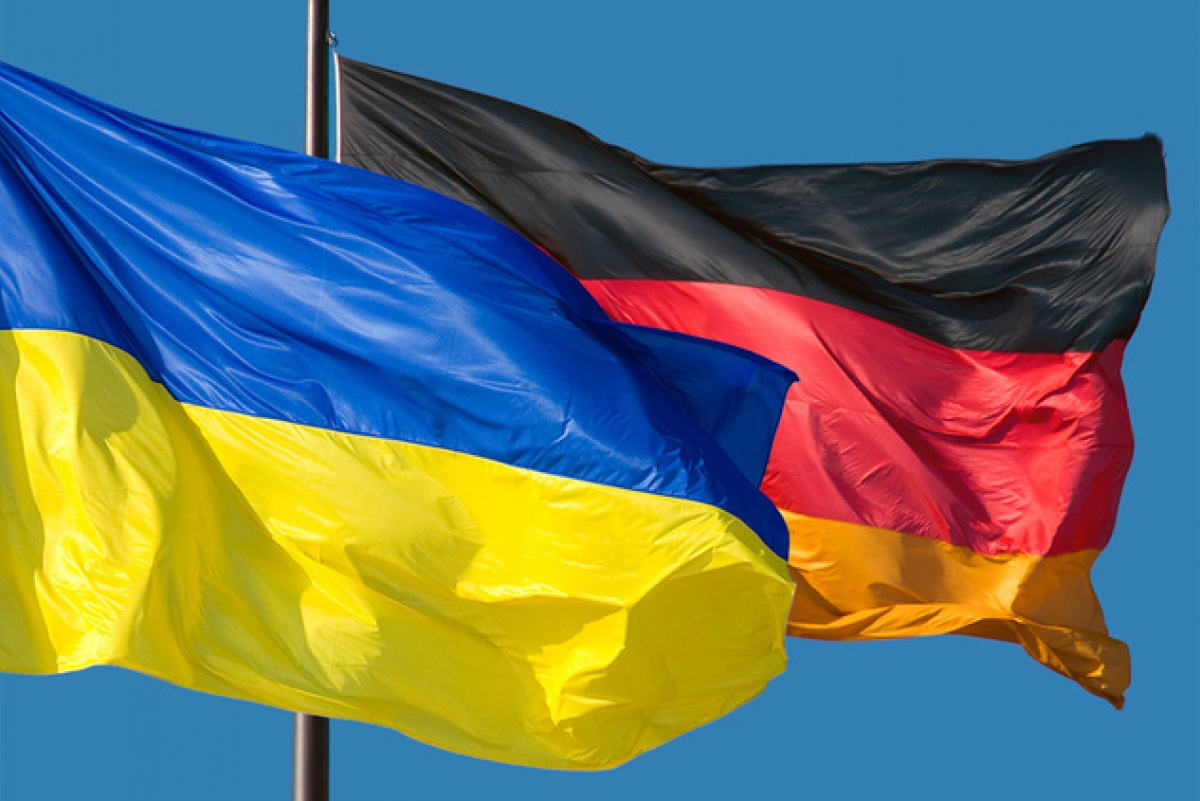
But the longer the war continues, the harder that scenario becomes. Ukraine has not broken. The West, despite fatigue and contradictions, has not ended its support. Europe has begun to rearm. German troops are appearing in Lithuania. Romania is discussing NATO consultations after drone incidents. Russia did not get a demilitarized Ukraine; it got a continent gradually returning to the logic of defense.
This does not mean Putin has already lost in a simple, linear sense. Russia can still cause enormous destruction, hold territory, attack, blackmail, kill civilians and prolong the war. But there is a fundamental difference between the ability to harm and the ability to win. That difference is becoming increasingly visible.
Russia’s strategy now resembles an attempt to compensate for the loss of a grand objective through the intensity of violence. More missiles on Kyiv, more threats against Europe, more talk of a “Western war against Russia,” more pressure on the diplomatic track. All of this is meant to create the impression that Moscow still controls the tempo. But often, those who are losing control speak most loudly about escalation.
For the West, the essential task is not to confuse Russian aggression with Russian confidence. The Kremlin may be dangerous precisely because its plan is not working. It may take greater risks because the window for a favorable settlement is narrowing. It may strike cities because the front is not producing the desired outcome. It may frighten NATO because it wants Ukraine’s allies to bargain from fear.
The answer cannot be diplomatic alone. If Russia is seeking a pause to restore strength, any negotiation process must rest on Ukrainian defense capacity, air defense, long-range capabilities, economic pressure and a clear understanding that a cease-fire without guarantees may become not the end of the war, but its technical intermission.
Putin does need a way out. The question is who defines its shape. If Moscow defines it, the exit will be framed as a reward for aggression. If Ukraine and its allies define it, it must be the result of the exhaustion of Russian strategy, not a concession to Russian threats.
The current Russian escalation is therefore not only a sign of danger, but a sign of the moment. The Kremlin senses that the war is not moving as it promised itself and its society. Its resources are still large, but not unlimited. Its army is still attacking, but not solving the central problem. Its economy is still functioning, but it is buying its own endurance at an ever higher price.
In a long war, it is sometimes not the front that breaks first, but the political logic. Russia can remain brutal, strong and dangerous while also needing an exit from a war it cannot win in its original sense. That is what now shows through the night strikes, the threats against Europe and the talk of negotiations: Putin has not ended the war. He is looking for a way to leave it without admitting that its central goal has become unattainable.