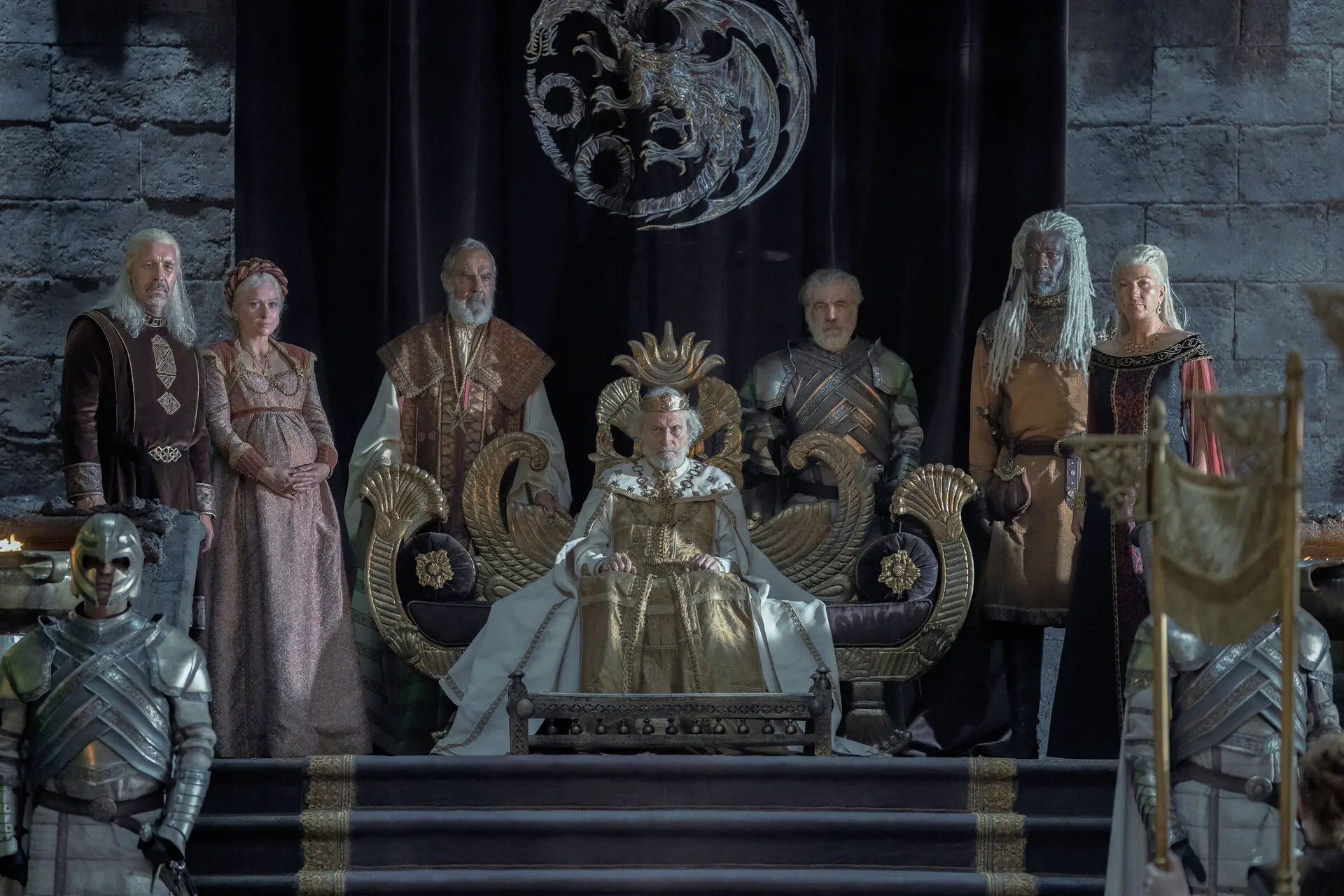























In the second episode of House of the Dragon Season 3, war finally reaches the point where victory no longer feels like consolation. Rhaenyra gains the thing she has pursued for years, but the road to King’s Landing runs through the body of her son.
Jacaerys’s death does not simply rob her of an heir. It destroys the last illusion that the Dance of the Dragons might leave anything untouched. For Rhaenyra, the throne no longer looks like a goal. It becomes an object for which too much has already been paid.
Daemon returns from the Riverlands not as the swaggering rogue prince, but as a man who understands that grief can halt a war faster than defeat. His answer is cold and practical: if her dead sons are not to have died in vain, Rhaenyra must continue.
According to Daycom’s earlier analysis, this episode exposes the central moral trap of House of the Dragon: its characters are no longer choosing between good and evil, only between different forms of guilt. Power in Westeros does not redeem loss. It forces loss to become useful.
The Battle of the Gullet has formally ended in victory for the Blacks, but the episode immediately strips it of triumph. Baela announces success in a hollowed-out voice. Corlys finds not glory, but ash. The sea, once the source of Velaryon power, returns only ruin.
Corlys’s bitter reflection on victory becomes one of the episode’s central nerves. This is a war in which every gain looks like another name for catastrophe. The fleet survives, but the house is weakened. The enemy is beaten back, but the price empties the result of meaning.
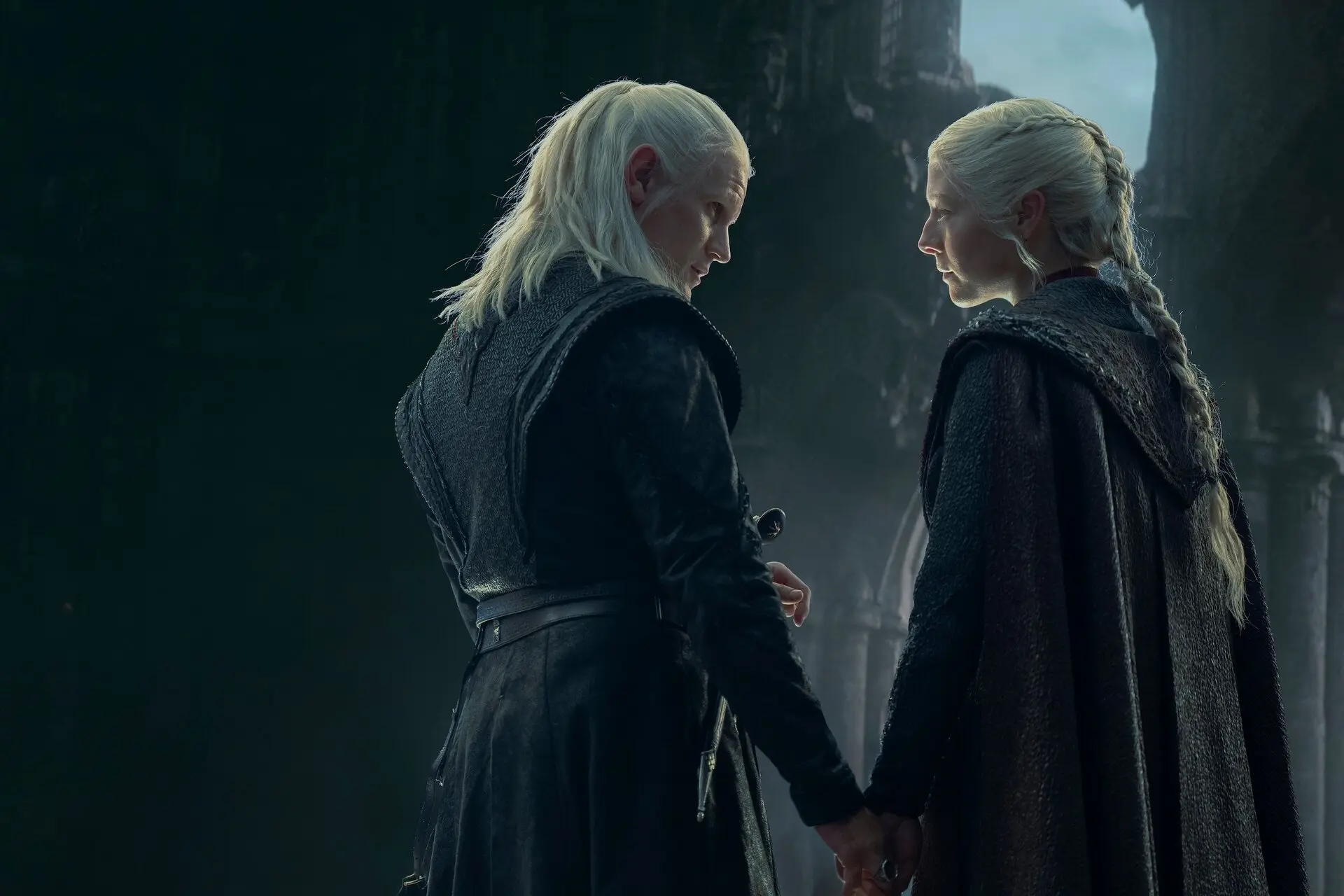
A separate danger now circles around Sheepstealer and Rhaena, who secretly entered battle and set loose consequences she cannot yet understand. To Rhaenyra, the unknown rider becomes the cause of Jace’s death. To Daemon, the search may become a family trap.
His future choice already looks darker than a duel with Aemond. If Daemon finds Rhaena, he will face not a tactical problem, but a blood-bound one: obey the queen he serves, or betray her for the daughter he has failed.
Throughout the episode, Daemon is almost ostentatiously loyal. He obeys Rhaenyra’s summons, restrains ambitions at Harrenhal, disciplines the new dragonriders and spars with Mysaria over who truly has the queen’s ear.
Yet that loyalty only sharpens the conflict ahead. Daemon can be ruthless with enemies, contemptuous toward commoners and brutal with allies. But House of the Dragon is moving him toward the one border his politics may not cross: fatherhood.
The episode’s great turn is the fall of King’s Landing. Rhaenyra, Daemon, Ulf and Hugh arrive over the capital on dragonback, while Alicent and Helaena help weaken the city’s defenses from within. This is not a siege in the traditional sense. It is a surgical opening of power.
The Greens’ small council is confused, the City Watch unreliable, the Red Keep threaded with Daemon’s old connections. The Gold Cloaks, once shaped by him as an instrument of order and fear, become the key to the capital once again.
But the principal enemy is gone. Aegon escapes with Larys Strong, leaving the city without its king. It is a gesture typical of the series: the power for which thousands die physically slips away at the exact moment it is supposed to be laid at the victor’s feet.
Elsewhere, Aemond flies Vhagar to Harrenhal, hoping to find Daemon. He arrives too late for that, but not too late to burn the men left behind and kill Simon Strong and his sons. In Westeros, even a dragon’s delay still means death for those below.
The wounded Aemond’s encounter with Alys Rivers opens one of the season’s darkest possibilities. He is already wounded power made flesh; she carries the strange, almost supernatural authority of Harrenhal. Together, they could become not a political alliance, but a distortion.
In King’s Landing, Rhaenyra must do more than sit the Iron Throne. She must show that her rule has teeth. Jasper Wylde becomes the first offering after his attempted assault on Alicent places his neck almost willingly beneath the blade of the victors.
The greater prize is Otto Hightower. Larys leaves him hidden in the dungeon like a grim gift for the new regime. Otto has long been an architect of the war, the man who helped turn a dynastic fracture into a civil catastrophe.
Otto’s execution becomes the birth of Rhaenyra the queen in its darkest form. Daemon urges her to act herself, and she takes the sword. The first stroke does not finish the work. The second turns her reign from claim into blood fact.
This is the episode’s defining image: Rhaenyra does not simply enter the throne room. She leaves a literal trail of blood behind her. The Iron Throne, meant to confirm her legitimacy, instantly becomes a place where legitimacy is proven by beheading.
The final appearance of Alicent, Helaena and young Jaehaera in the throne room gives the victory its terrible symmetry. Alicent sees her father’s severed head before the throne, but her shock does not look like surprise. She knows better than anyone what machine she helped set in motion.
The second episode of House of the Dragon Season 3 works as a bloody prologue to a new order. Rhaenyra takes the capital, but she does not gain peace. She moves closer to the Iron Throne and farther from the woman who could still believe the throne might justify anything.
That is the episode’s power. It does not celebrate the fall of the Greens or turn the Blacks into liberators. It shows that in the war of the Targaryens, victory is only the next form of grief, and the throne toward which everyone flies on dragons increasingly resembles an altar.