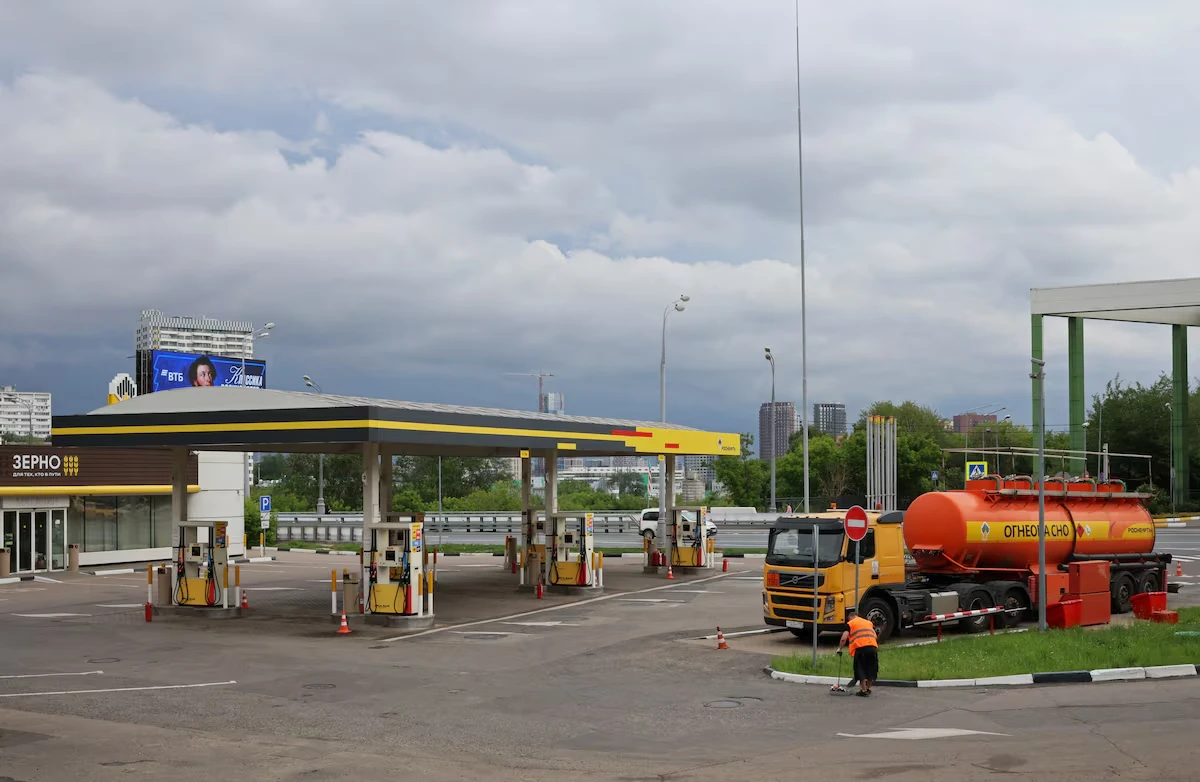




















Russia’s fuel crisis has moved from emergency repairs into legislation. The State Duma has approved amendments to the Tax Code designed to ease shortages of gasoline and diesel after a series of Ukrainian strikes on oil refineries. For an oil power, this is not a technical adjustment. It is a symptom of a system losing its familiar balance.
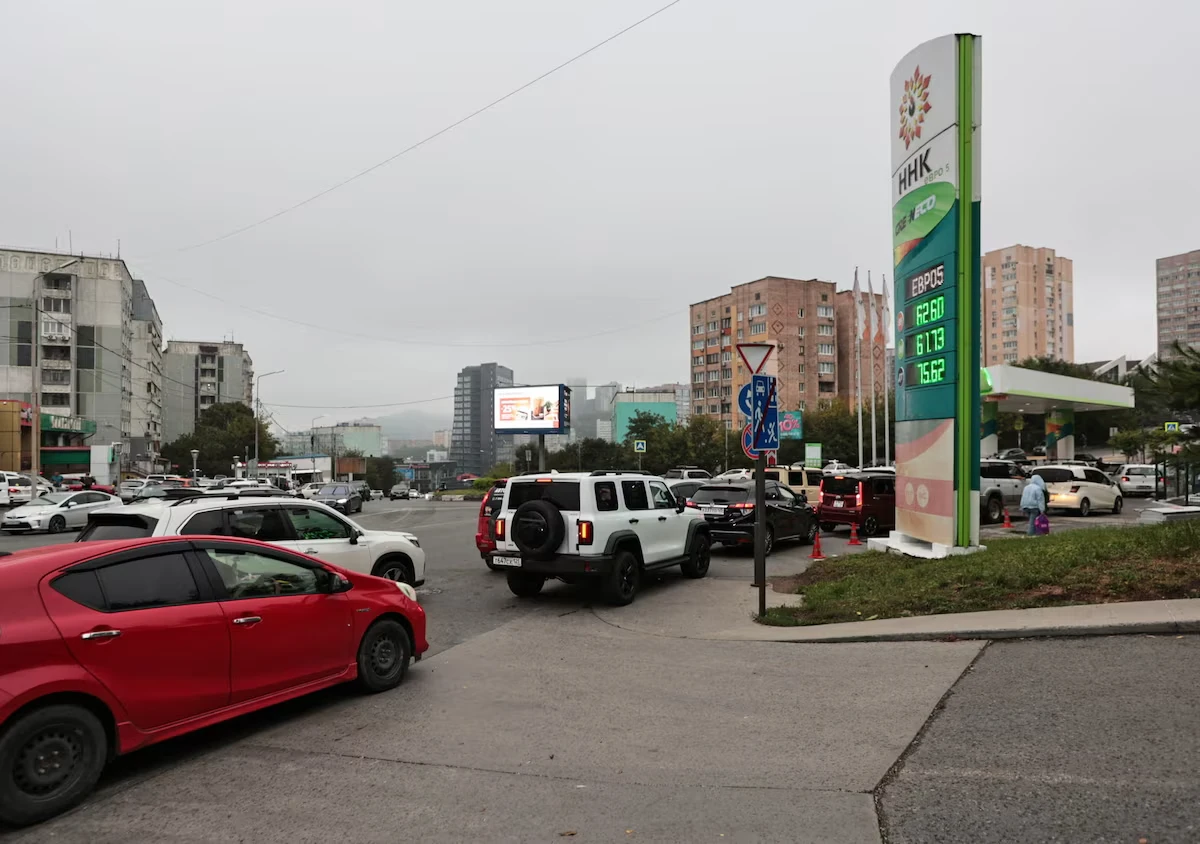
Moscow is trying to do three things at once: increase the supply of motor fuel, contain prices and prevent queues at filling stations from becoming a political symbol of weakness. Regions are already facing shortages of gasoline and diesel, while sales restrictions in some areas have turned fuel into one of the most sensitive issues in Russia’s rear.
The most revealing part of the new measures is permission to use lower-quality components when blending straight-run gasoline with other substances. In peacetime, such a rule might look like a regulatory compromise. In the current situation, it looks like an attempt to stretch available resources quickly and fill the market with any acceptable mixture.
According to Daycom’s earlier analysis, this is where the depth of the problem becomes visible. Ukrainian strikes on refineries are not merely damaging individual plants. They are forcing Russia to change tax rules, postpone equipment modernization, revise quality standards and subsidize fuel imports. The war is entering the very structure of energy policy.
Russian officials present the law as a tool for stabilizing the domestic market. The logic is clear: if domestic production is falling, refineries need more flexibility, imports need support and tax incentives for the industry must be preserved. But this kind of stabilization does not remove the cause of the shortage. It only buys time.
The decline in gasoline production has already become a critical signal. Last week, Russian gasoline output was estimated at about 90,000 metric tons a day, roughly a quarter below the average daily level of June 2025. Seaborne exports of oil products also fell in the first half of June because of unscheduled refinery repairs after repeated attacks.
These figures break Russia’s old energy formula. Russia may have enough crude oil, but crude oil does not fill cars, tanks, locomotives or agricultural machinery. For that, refining is needed. That is precisely what Ukraine has made one of the main targets of its long-range strike campaign.
Russia’s fuel market rested on the assumption that the state could export petroleum products, supply the army, control domestic prices and maintain normal regional consumption at the same time. Those tasks are now beginning to collide. If fuel is diverted to the domestic market, exports shrink. If exports continue, shortages at home deepen.
That is why Moscow has already banned gasoline and aviation fuel exports and considered restrictions on diesel exports. For a country accustomed to being a supplier of petroleum products, this is a forced reversal: first cover domestic demand, then think about external revenue.
Import subsidies are even more revealing. Russia is not merely allowing fuel purchases from abroad; it is creating a compensation mechanism tied to delivery costs and price benchmarks. Such a tool is needed when the market itself cannot bring fuel to the right place at a politically acceptable price.
There is a wartime paradox here: one of the world’s largest oil producers is being forced to calculate gasoline imports because its vulnerable point is not geology, but infrastructure. Refineries, storage tanks, rail routes, ports, oil depots and power supply have proved weaker than the image of an energy superpower.
The decision to delay some refinery equipment modernization also has a double meaning. On one level, it eases pressure on plants operating in crisis mode. On another, it postpones renewal in an industry already facing strikes, sanctions constraints, component shortages and expensive repairs.
When the state allows the industry to delay modernization, it is effectively admitting that preserving current output at any cost matters more now than improving quality and efficiency. This is the logic of emergency management, not strategic development. It may help Russia get through several weeks or months, but it weakens future resilience.
Fuel quality is an especially sensitive issue. Lower standards or broader blending may quickly increase supply volumes, but they carry risks for engines, logistics, the environment and consumer trust. If gasoline becomes not only more expensive but also more questionable in quality, social irritation may build faster.
The Kremlin understands that gasoline is a political commodity. Its price affects food, transport, the agricultural season, utilities, small business and broader inflation. A fuel crisis easily moves from sectoral statistics into everyday anxiety: people see queues, limits and new price boards, and begin measuring the war through their own wallets.
That is why the law has not only an economic function, but a psychological one. It is meant to show that the authorities are acting, controlling the market and have tools available. But the tools themselves reveal the scale of pressure: imports, subsidies, softer quality rules, delayed modernization and export bans.
Ukraine’s strategy remains consistent. Kyiv is striking the links that turn Russian oil into the ability to wage war. Fuel supports aviation, armored vehicles, railways, military logistics, production and occupation administrations. A strike on a refinery is not a strike on an abstract market. It is a strike on the circulatory system of aggression.
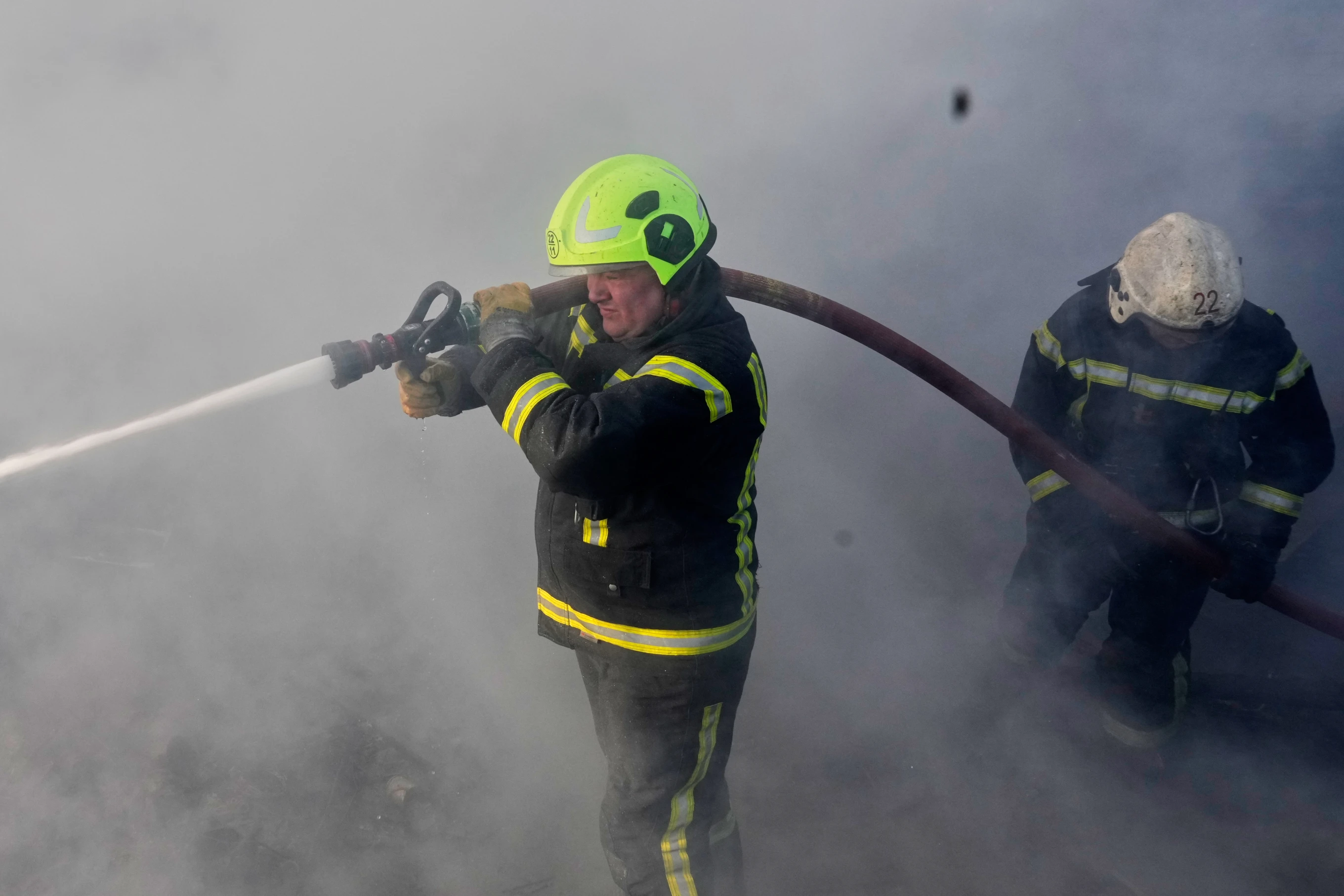
For Russia, every repair becomes part of the price of war. Damaged units must be restored, air defense systems moved closer to plants, exports restricted, domestic prices suppressed by subsidies and shortages covered by imports. This is not collapse, but constant friction that consumes money, time and administrative attention.
What is especially painful is that the crisis is no longer confined to distant regions. Strikes on fuel infrastructure near Moscow, together with problems in the south and occupied Crimea, are destroying the sense that the war exists only at the front. Russian daily life is beginning to feel it through gasoline, transport, prices and restrictions.
Parliamentary amendments will not stop Ukrainian drones or restore immunity to refineries. They only show that the Russian state is entering a mode of adaptation. It can no longer guarantee the old normality, so it is trying to legalize a new one: with lower standards, import schemes and a growing role for budget compensation.
This is the main political meaning of the adopted amendments. Russia is not simply fighting a fuel shortage. It is trying to protect the social contract under which the war was supposed to remain distant while domestic comfort remained intact. Ukrainian strikes on refineries are gradually eroding that contract.
The fuel crisis does not mean Russia’s war machine will stop tomorrow. But it shows that every month of war is becoming more expensive and more complicated for a state accustomed to shielding aggression with energy revenues. Those revenues now have to be shared with repairs, subsidies, imports and internal fear of empty pumps.
The Duma did not vote merely for tax changes. It recorded a new reality: Ukrainian drones are already affecting Russia’s budget, fuel quality, export decisions and the price of stability. For the Kremlin, that is more dangerous than a single accident. It means the war has begun to rewrite the rules of life inside Russia itself.