



















Russia is moving toward a decision that would once have looked extreme for an oil power: a full halt to diesel exports in order to stabilize the domestic fuel market. Officially, the situation remains “under control,” but the government’s language has already changed.
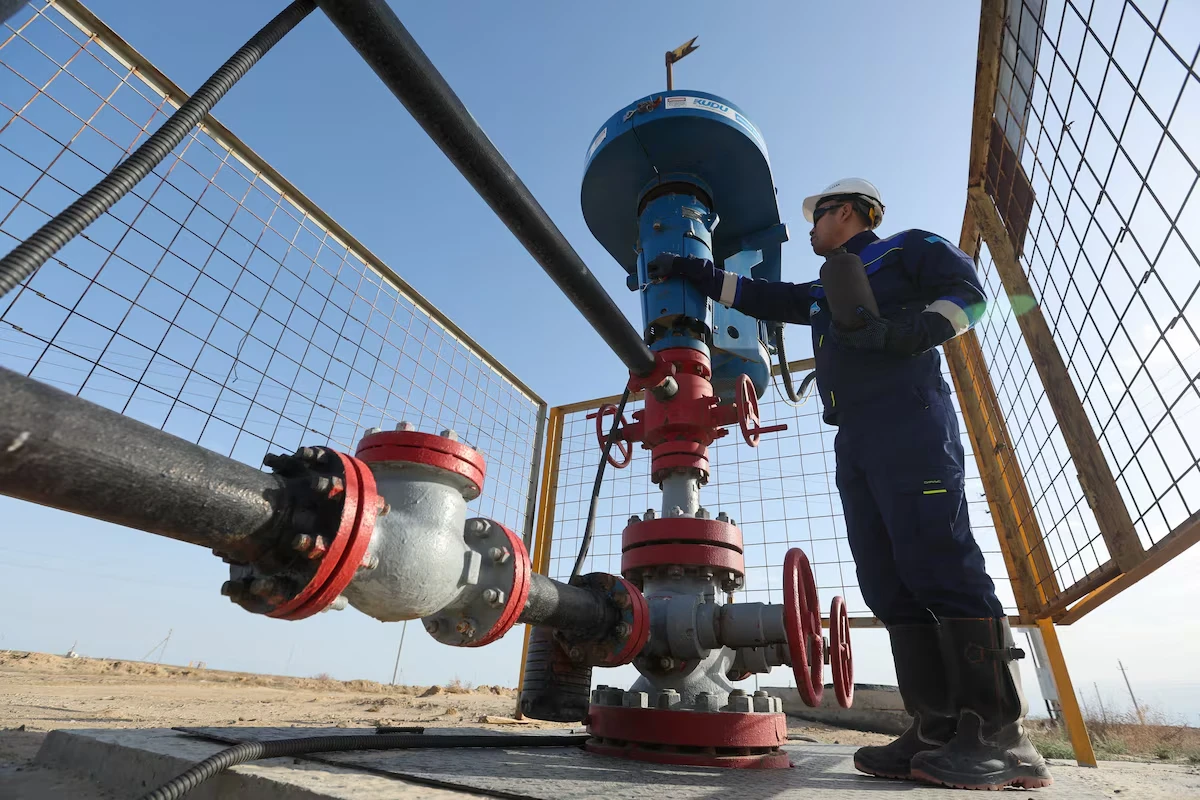
Deputy Prime Minister Alexander Novak acknowledged that the market situation is “not simple” and said Moscow is considering a full diesel export ban along with other stabilization measures. Oil companies, he said, have raised fuel production to maximum levels.
That means the Kremlin no longer sees the problem as a local disruption. It sees it as a risk to internal balance. Once diesel becomes an object of direct state management, the fuel market stops being an ordinary sector of the economy and turns into wartime infrastructure.
According to Daycom’s assessment, diesel is more important in this crisis than gasoline in the everyday sense. It keeps freight transport, agriculture, construction, parts of industry, military logistics and regional supply chains moving. A diesel shortage does not merely reduce comfort; it slows the system itself.
Ukrainian strikes on Russian energy infrastructure have changed the arithmetic of an oil state. Russia may remain one of the world’s largest crude producers, but crude output does not guarantee sufficient finished fuel if refineries are damaged, overloaded or operating with interruptions.
That is why the government is now looking for an administrative solution rather than a market one. A diesel export ban would keep more product inside the country, calm the regions, ease pressure on filling stations and show that Moscow can control the consequences of the strikes.
But that logic carries a price. Diesel exports bring in foreign currency, sustain links with external buyers and allow oil companies to earn where margins may be higher. Restricting exports means that domestic stability has become more important to the Kremlin than part of its export income.
Novak also spoke of tax proposals to support the sector after strikes on energy infrastructure. This is another signal: the state is not only demanding more output from oil companies, but also preparing to absorb part of the burden in order to prevent deeper failures.
The problem is that tax breaks and export restrictions do not repair complex industrial units. If refining capacity loses stability, the government can redirect flows, rewrite rules and pressure companies, but it cannot instantly restore full output at damaged plants.
Fuel disruptions are no longer only a Crimean story. Reports of shortages of certain grades of gasoline and diesel, sales limits and empty pumps have appeared in different Russian regions. Even where authorities try to project normality, the market is already reacting through prices and uneven supply.
Occupied Crimea has become the most visible point on this crisis line. There, fuel sales to residents and businesses have effectively been curtailed, while children’s camps and some tourist activities have been suspended until September. The resort showcase has turned into a territory of rationing and restraint.
For Ukraine, strikes on refineries, depots, supply routes and energy nodes carry both military and economic meaning. They raise the cost of Russia’s war, force spending on repairs, complicate logistics and reduce Moscow’s export flexibility.
The Kremlin long built its war on an assumption of unequal safety: Ukrainian cities would live under constant attack, while the Russian rear would preserve a sense of normal life. The fuel crisis erodes precisely that distance. It may not immediately produce protest, but it steadily enters everyday life, business and regional economies.
A diesel export ban, if imposed, would not be a demonstration of strength but an admission of fragility. Russia would not merely be defending its domestic market. It would effectively acknowledge that an energy superpower under wartime pressure must close its own fuel circuit.
For oil companies, this means a new level of subordination to state logic. Profit maximization moves into the background when the government needs stable prices, diesel for the regions, fuel for military and civilian logistics, and political quiet in the rear.
The conclusion is straightforward: Ukrainian strikes on Russian energy infrastructure are increasingly forcing Moscow to respond not with statements, but by changing market rules. Diesel is turning from an export commodity into a resource of internal resilience — one the Kremlin can no longer freely send abroad.