
























Kateryna Lahuta stands among the burned remains of the facility that once processed seafood for her stores. Two Russian glide bombs destroyed the production line, the inventory and the last sense that a business in Zaporizhzhia could still plan more than a few months ahead.
The city has faced missiles and drones since the first weeks of Russia’s full-scale invasion. What has changed is the rhythm and intimacy of the danger. Large strikes are now accompanied by guided bombs and agile FPV drones capable of pursuing cars, public transport and people in the street.
Zaporizhzhia continues to function. Cafes open in the morning, buses leave their depots and workers travel to factories. Yet evenings have grown quieter, and every journey into the southern districts increasingly resembles movement through an invisible front line.
Daycom’s assessment is that Russia is trying to compensate for stalled ground operations by applying sustained pressure to the civilian population. Unable to approach the city quickly by land, it is bringing the fear of the front into roads, residential blocks, workplaces and public transport routes.
Zaporizhzhia remains one of Ukraine’s principal industrial centers, with major concentrations of engineering, energy, metallurgy and defense production. It is also the capital of a region Moscow claims as Russian territory despite never gaining full control of it.
Ukrainian forces have resisted Russian pressure along the narrow approaches south of the city. A breakthrough there would threaten a large urban area and open a path toward one of Ukraine’s most important manufacturing hubs. When movement on the ground becomes difficult, air power offers another way to weaken the city without occupying it.
The purpose of the campaign extends beyond physical destruction. It is meant to persuade residents to leave, businesses to close, drivers to abandon routes and critical-service workers to question whether reporting for another shift is worth the risk.
Lahuta describes each working day as a separate battle. Attacks frighten away customers, military recruitment has deepened labor shortages, and rebuilding requires money that businesses increasingly do not have. Long-term planning has ceased to be a meaningful commercial exercise.
FPV drones fundamentally alter the nature of urban danger. A missile or bomb strikes a selected area. The pilot of a small drone sees the road, the vehicle or the person in real time, can change direction and chooses the final moment of impact.
That is why residents have begun using the word “safari.” The term emerged in Kherson, where Russian drone crews have long pursued civilian cars, buses, ambulances and pedestrians. The same method is now reaching the far larger city of Zaporizhzhia.
Distance from Russian positions once offered partial protection from short-range drones. Improvements in antennas, relays and control systems have extended their reach. A weapon developed for the immediate front line can now enter residential districts and follow traffic through ordinary streets.
During a visit to Lahuta’s destroyed business, the distinctive buzz of an FPV drone forced those nearby to seek cover. A mechanical sound that would be meaningless in a peaceful city has become a warning that someone may be watching through a camera and preparing to strike.
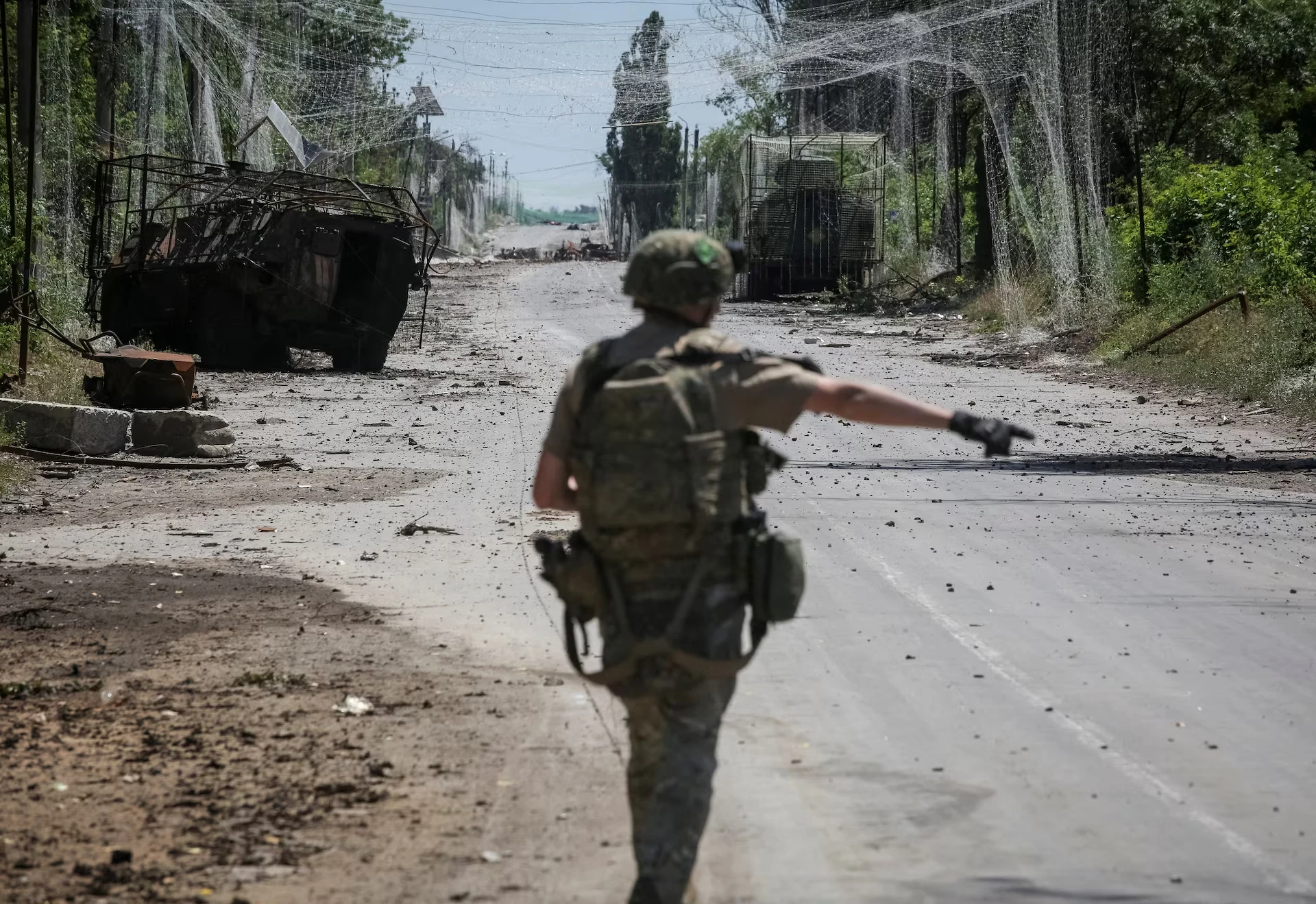
The southern Kosmos district is among the most exposed areas. Sections of road are being covered with anti-drone netting designed to prevent FPV aircraft from hitting windshields or vehicle roofs. The protection is local, fragile and largely useless against heavier munitions.
The municipal transport system is testing drone detectors for drivers and stronger, shatter-resistant glass. Twelve city buses and trams have been damaged this year by FPV attacks or larger explosions. Officials do not plan to reduce services, because entire neighborhoods depend on those routes for access to work, hospitals and the city center.
Keeping buses on the road is an act of resilience, but it also transfers danger to drivers and passengers. Each vehicle has become more than a means of transport. It is proof that the city still functions despite an effort to paralyze it.
Even when Ukrainian defenses stop the overwhelming majority of incoming FPV drones, a handful of successful attacks can shape the behavior of an entire district. One damaged bus, one wounded driver or one strike near a stop can cause thousands of people to alter their routes and schedules.
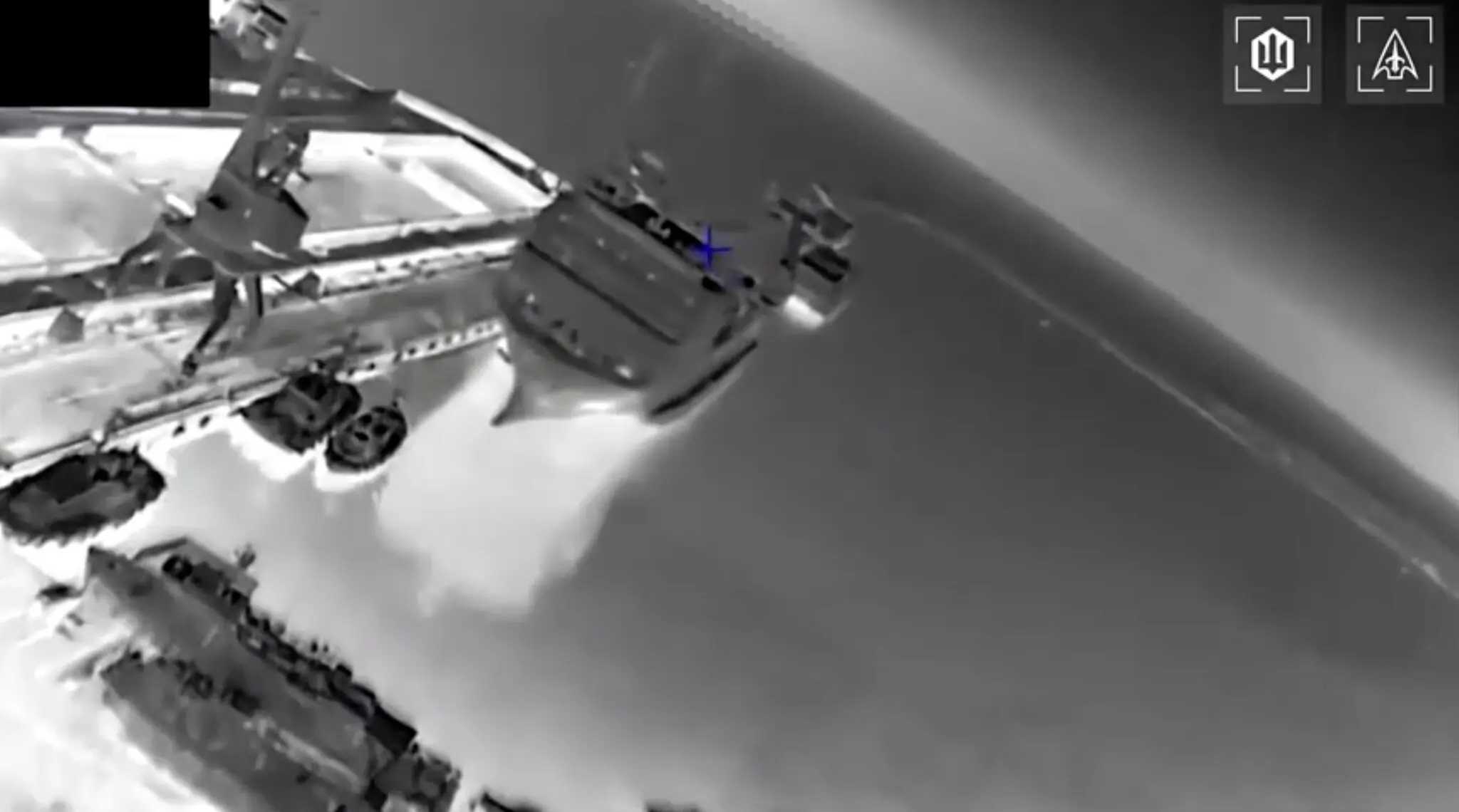
The small drones are only one layer of the threat. Russia is also using glide bombs, against which the city has far fewer defensive options. Russian aircraft release them from a distance, allowing the munitions to travel tens of kilometers without forcing the launch platform close to Ukrainian air defenses.
These bombs carry far larger warheads than FPV drones. They can destroy apartment buildings and industrial facilities, and they may arrive several times in a single day. Their interception requires advanced air-defense systems that Ukraine does not possess in sufficient numbers.
During one recent assault, Russia dropped eight bombs on residential areas in roughly ninety minutes. One person was killed and 31 were wounded. The attacks occurred not in the middle of the night, but during hours when residents were commuting, shopping or returning home.
Midday and early evening are becoming new periods of heightened risk. Striking at those times increases the probability of civilian casualties and deepens the psychological effect. Residents can no longer treat danger as something confined to nighttime alerts or industrial zones.
Around the Motor Sich complex, repeated bombardment has scarred both office buildings and apartment blocks. Zaporizhzhia’s industrial geography is tightly interwoven with civilian life: factories, schools, homes and transport junctions often stand within the same urban space.
A strike that Russia may describe as directed at military production therefore creates an almost unavoidable threat to civilians. A large glide bomb cannot confine its effects to a single workshop in a densely built neighborhood.
Ania Syvova, a 34-year-old seamstress, watched an FPV drone slam into a nearby bus while she was returning home. Her husband is fighting in the war, and their six-year-old daughter attends an underground kindergarten. The family has rebuilt its routine around a danger that no longer has a clear boundary.
There is no true normality in this adaptation. It is a survival mechanism: learning to work, take a child to school and buy groceries under the possibility of an attack. Fear becomes background noise so that daily life can continue.
Adaptation, however, has limits. Tetiana, a government employee, endured six attacks on her neighborhood in one week. Burned vehicles remain outside her damaged building. She no longer describes herself as frightened, but emotionally empty.
She considers leaving, yet knows that other people depend on the services she helps maintain. Doctors, utility workers, teachers, drivers and civil servants face the same decision. Leaving may save an individual; staying helps prevent the city from unraveling.
The intimidation campaign is designed to exploit precisely that contradiction. Russia does not need to destroy every factory or transport route. It can gradually exhaust the people who keep them operating until the psychological and economic cost of urban life becomes intolerable.
The spread of FPV strikes to Zaporizhzhia also shows how rapidly the distinction between front and rear is disappearing. Technologies developed to attack a soldier or armored vehicle are increasingly being used against civilian movement inside a large city.
Similar tactics are intensifying in Kharkiv. As drone range expands, operators gain access to neighborhoods previously beyond their reach. What began as a defining feature of terror in Kherson is becoming a broader model for attacking Ukraine’s front-line cities.
Protection requires layers rather than a single answer: electronic warfare, radars, detectors, mobile firing teams, netting, shelters and rapid-warning systems. Even combined, these measures can reduce danger but cannot eliminate it across an entire urban area.
The most effective defense would be to push Russian launch positions farther away and destroy the aircraft carrying glide bombs. Without that, Zaporizhzhia must attempt to protect every road and bus from weapons launched beyond the immediate reach of most local defenses.
Russia has failed to move rapidly toward the city on the ground. It is now trying to bring the front to every resident through the buzz above a road, an explosion beside a bus, a burned factory or a kindergarten built underground.
Zaporizhzhia has not yielded. Businesses restart operations, transport continues to run and residents return to damaged homes. Yet beneath the appearance of normal urban life, exhaustion is accumulating faster than it can be repaired.
The “safari” is intended to empty the city before Russian troops can reach it. Its ultimate target is not one bus, one company or one pedestrian. It is the belief that a person in Zaporizhzhia can still make plans for tomorrow.