



















The arrival of Russian lawmakers in the United States for talks with members of Congress is more significant than the format itself might suggest. Russian and Ukrainian outlets reported that this is the first such visit by State Duma deputies since the start of Russia’s full-scale invasion in 2022, and that the meetings were arranged after months of quiet preparation rather than as a spontaneous contact.
That matters because the U.S. government itself spent the past four years treating the Russian parliament not as a neutral legislative body, but as part of the machinery that enabled the war. On March 24, 2022, the Treasury sanctioned 328 members of the State Duma and the Duma as an institution, explicitly saying they had supported the Kremlin’s effort to violate Ukraine’s sovereignty. A Treasury fact sheet issued a year later said all 450 members of the State Duma had been sanctioned.
This is why the visit cannot be dismissed as routine parliamentary diplomacy. If sanctioned Duma members were able to enter the United States for official political meetings, then some form of waiver, exception, or non-enforcement had to be applied in practice, even if Washington has not publicly spelled out the precise mechanism. That is an inference from the existing sanctions regime and the fact of the visit.
In Deikom’s view, that is the real story. The news is not simply that Moscow and Washington are talking again. It is that sanctions are beginning to function less as an absolute political barrier and more as a flexible tool of access. Once sanctioned representatives of a parliament that helped legitimize aggression are allowed back into the American political space before any meaningful Russian de-escalation, the meaning of “isolation” changes.
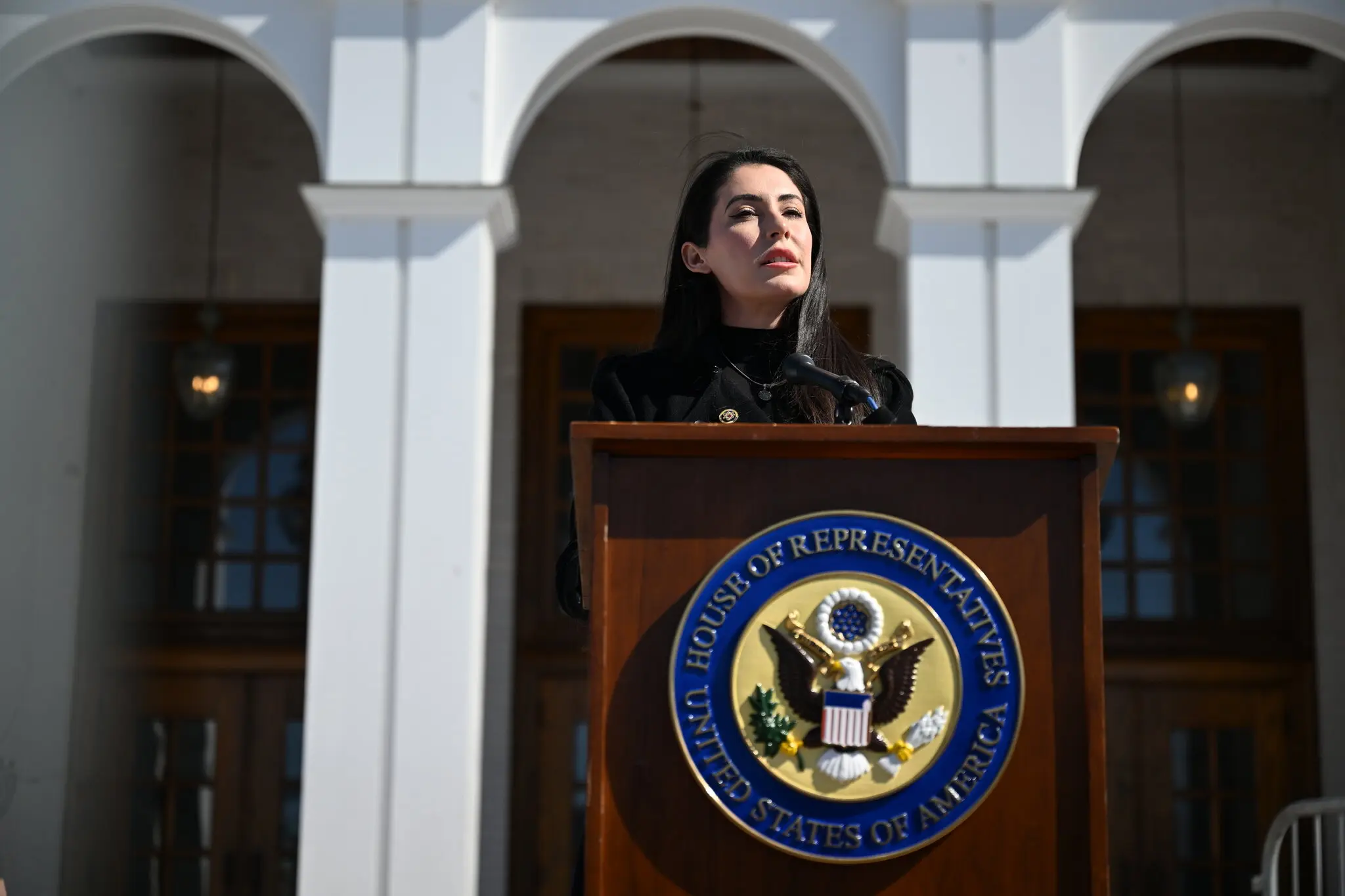 Переговори були організовані представницею Палати представників Анною Пауліною Луною, яка у січні заявила, що отримала дозвіл на поїздку російських законодавців для участі у мирних переговорах — Кенні Голстон
The American side of this episode is just as revealing. In January, Representative Anna Paulina Luna said she had received authorization from the State Department for four members of the Russian Duma to come to Washington to meet with members of Congress regarding peace talks. RBC-Ukraine also noted that Luna had previously co-sponsored the “Ukraine Fatigue Resolution” and later voted against aid packages for Ukraine.
That means the March visit was not improvised. It had already been politically prepared inside a part of Washington that sees renewed contact with Moscow not as a concession, but as a legitimate instrument of negotiation. In that sense, the trip is best understood not as an isolated event, but as the congressional edge of a broader Trump-era effort to reopen channels with Russia.
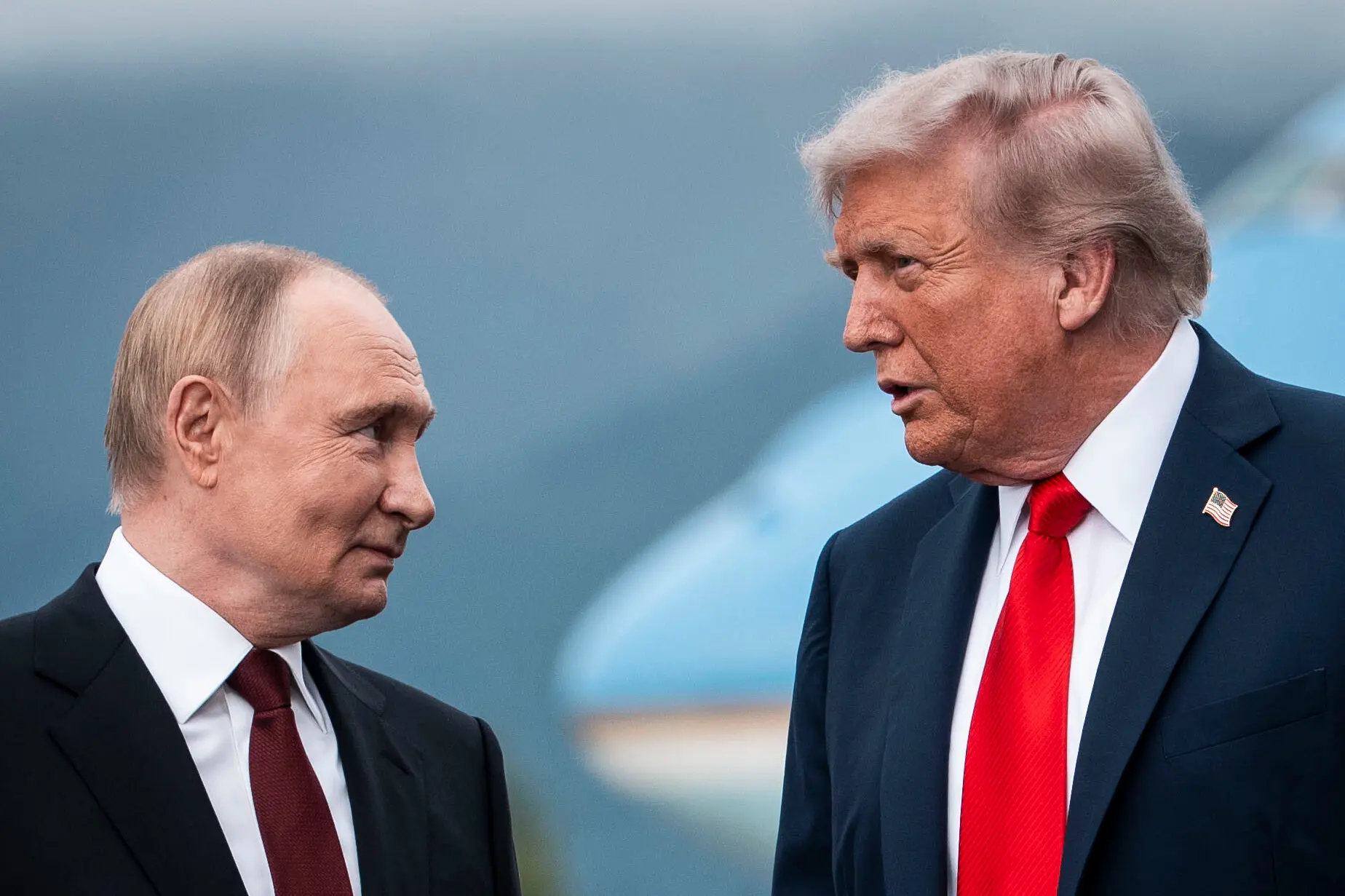
The official U.S. line from early 2025 points in the same direction. After Secretary Marco Rubio met Russian Foreign Minister Sergei Lavrov in February 2025, the State Department said Rubio had been joined by the team “chosen by President Trump to reestablish the bilateral relationship.” The same readout said the two sides agreed to create a consultation mechanism on bilateral irritants and to lay the groundwork for future geopolitical and economic cooperation once the Ukraine war was resolved.
Seen in that light, the Duma visit is not a diplomatic accident. It is one more step in a gradual thaw that has been advancing through elite channels first: ministerial meetings, leader-level contact, envoy diplomacy, and now legislative outreach. Each step may look limited on its own. Together, they suggest that the Trump administration is increasingly treating normalization with Moscow as a parallel objective, not merely a reward to be granted after Russia changes course.

For the Kremlin, that has value even before any concrete agreement is reached. The symbolic image is powerful: sanctioned Russian lawmakers are no longer confined to denunciations from afar but are again being received in Washington as interlocutors. Inside Russia, that can be presented as proof that waiting out Western pressure works. Outside Russia, it signals that diplomatic quarantine is becoming negotiable before the war’s core issues are settled. This is an inference from the sanctions history and the renewed U.S.-Russia contacts.
For Ukraine, the problem is deeper than optics. The State Duma is not an independent parliament in the Western sense; it is a political body that the U.S. Treasury itself described as having enabled Russia’s assault on Ukrainian sovereignty. When representatives of that body are brought into Washington by a member of Congress who has argued against continued military support for Ukraine, Kyiv is likely to read the gesture as another sign that part of the American political class is moving from punishing aggression toward managing coexistence with it.
That is also why this episode should not be mistaken for peace progress. Restored contact is not the same thing as strategic convergence. The State Department’s own 2025 language tied the Ukraine track to a broader effort to rebuild bilateral relations. That creates a built-in danger for Kyiv: once U.S.-Russia normalization acquires value in itself, Moscow gains an incentive to prolong hard disputes over territory and war aims while still collecting diplomatic benefits from simply remaining in dialogue.
In the end, the visit by Russian lawmakers is not a side story about congressional courtesy. It is an indicator of a larger shift. The United States has not dismantled the sanctions architecture imposed after the invasion, but it is showing that politically meaningful exceptions are possible. For Moscow, that is an opening. For Ukraine, it is a warning that parts of Washington are becoming increasingly willing to talk to Russia about the future of European security before the Kremlin has paid a real political price for the war it started.