













The events of April 18 in Kyiv unfolded according to a logic cities usually rehearse in drills, not in real life. An armed man opened fire on a street in the Holosiivskyi district, killed at least five people, wounded others, and then barricaded himself inside a supermarket, taking hostages. Within minutes, a local episode turned into a full-scale urban security crisis.
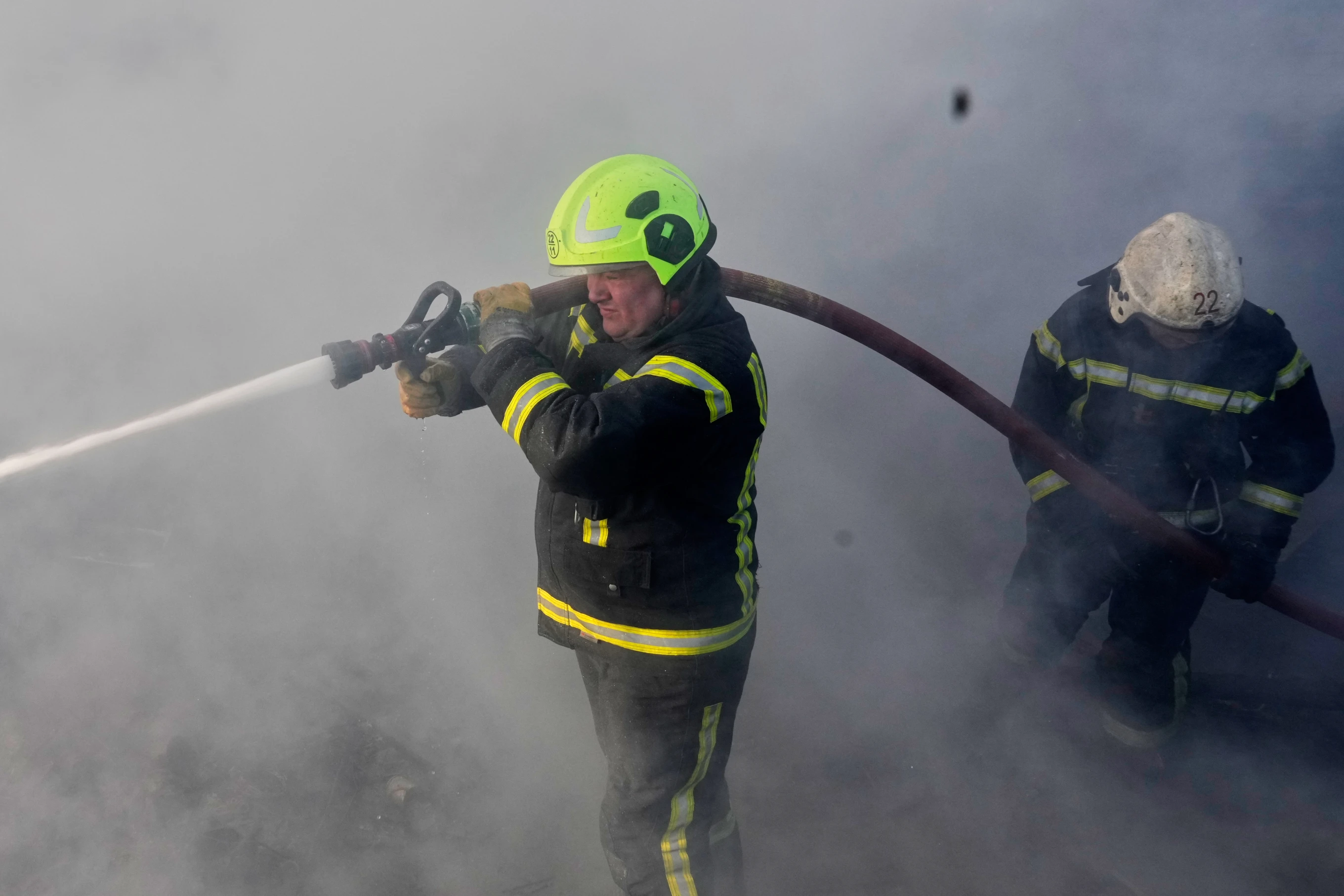
The assault became the final act after roughly forty minutes of unsuccessful negotiations. Negotiators tried to persuade the attacker to surrender, working on the assumption that there was likely a wounded person still inside. He was even offered tourniquets to stop the bleeding. No contact was established. Special units then moved in, and the gunman was killed while resisting arrest. Ten wounded people were hospitalized.
The most important thing in this story is not to surrender to the temptation of explaining everything with a single word: “madman,” “personal breakdown,” “war.” As Daycom has noted in earlier analysis, high-impact acts of violence almost never emerge from one impulse alone. They arise at the point where personal crisis, access to weapons, an exhausted society and delayed institutional response converge. That is why the Kyiv shooting is not only a criminal episode, but also a test for the entire response system.
The first conclusion is blunt, but accurate: at this point there is no evidence that this was a two-sided armed clash. What is publicly known suggests something else — a one-sided attack on civilians. The gunman first shot at people in the street and then shifted the violence into a closed commercial space, where any delay automatically increased the risk of further deaths.
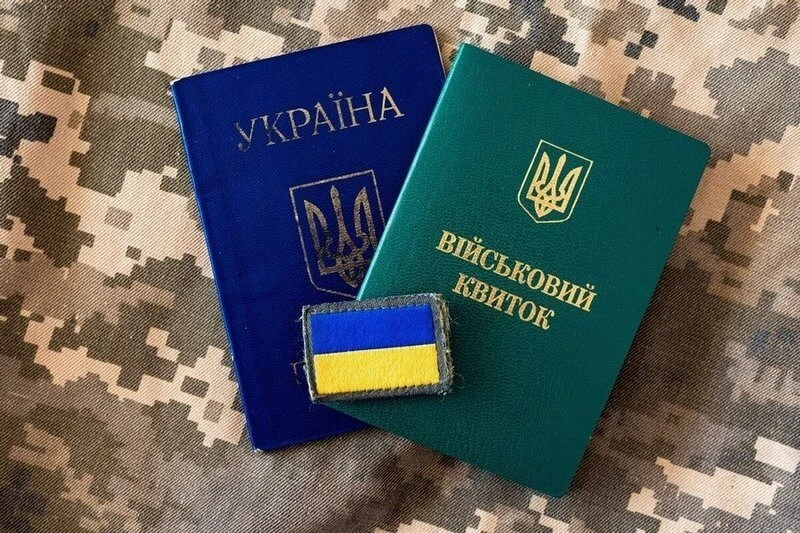
The second conclusion is even more troubling: the weapon in this case was not a случайная находка or an undocumented black-market arsenal. The interior minister said the gunman had a legally registered carbine. At the end of 2025, he had approached the licensing authorities because his permit was expiring, submitted a medical certificate and filed an application to renew the permit. Investigators are now separately establishing which institution issued that document.
This is where the central analytical line runs. The problem is not that legal gun ownership automatically produces violent crime. The problem is that there is often a gap between the formal legality of possession and the actual safety of possession. If a man who later commits mass violence can pass through the licensing process without triggering red flags, then the question does not belong only to him. It belongs to the quality of the filters meant to screen for danger.
In recent years, Ukraine has been trying to build a more manageable system of weapons circulation through the Unified Weapons Register. The purpose is to automate records, identification, verification of ownership rights, and tighter state oversight of acquisition, storage and use. At the level of design, that is the right direction. But the Kyiv case shows that a digital system alone does not guarantee that a dangerous individual will be cut off from access to a firearm in time.
The broader context of weapons circulation in the capital matters as well. Wartime inevitably expands the zone of risk: more legal firearms in the civilian environment means a higher price for any failure in screening, medical oversight or behavioral monitoring. That is not an argument against all gun owners, nor is it proof that the city is criminalized. It is a reminder that every institutional mistake becomes far more costly in such an environment.
A third layer of this tragedy is the unknown motive. And this is not a minor detail, but the central fact. The authorities deliberately refused to speculate about the attacker’s motives. That restraint is correct: in the first hours after mass violence, the information space is almost always flooded with rumors that later prove difficult to separate from fact. But it is precisely the absence of an answer to the question of why that deepens the public shock.
At the level of analysis, this means one cannot honestly claim yet that the shooting began because of a defined ideology, personal revenge, psychiatric condition or family conflict. All of that remains hypothetical. But one can state something else: the tragedy became possible because individual dangerousness intersected with an instrument of lethal force in an environment where prevention is systematically weaker than reaction.
In this structure, wartime is not a convenient all-purpose explanation, but an essential backdrop. Three years of full-scale war have sharply worsened the condition of the population, and among the most widespread effects, mental exhaustion stands out. That does not mean war automatically produces gunmen. It means society is living through mass fatigue, chronic stress and accumulated trauma, conditions in which the risk of breakdowns is objectively higher.


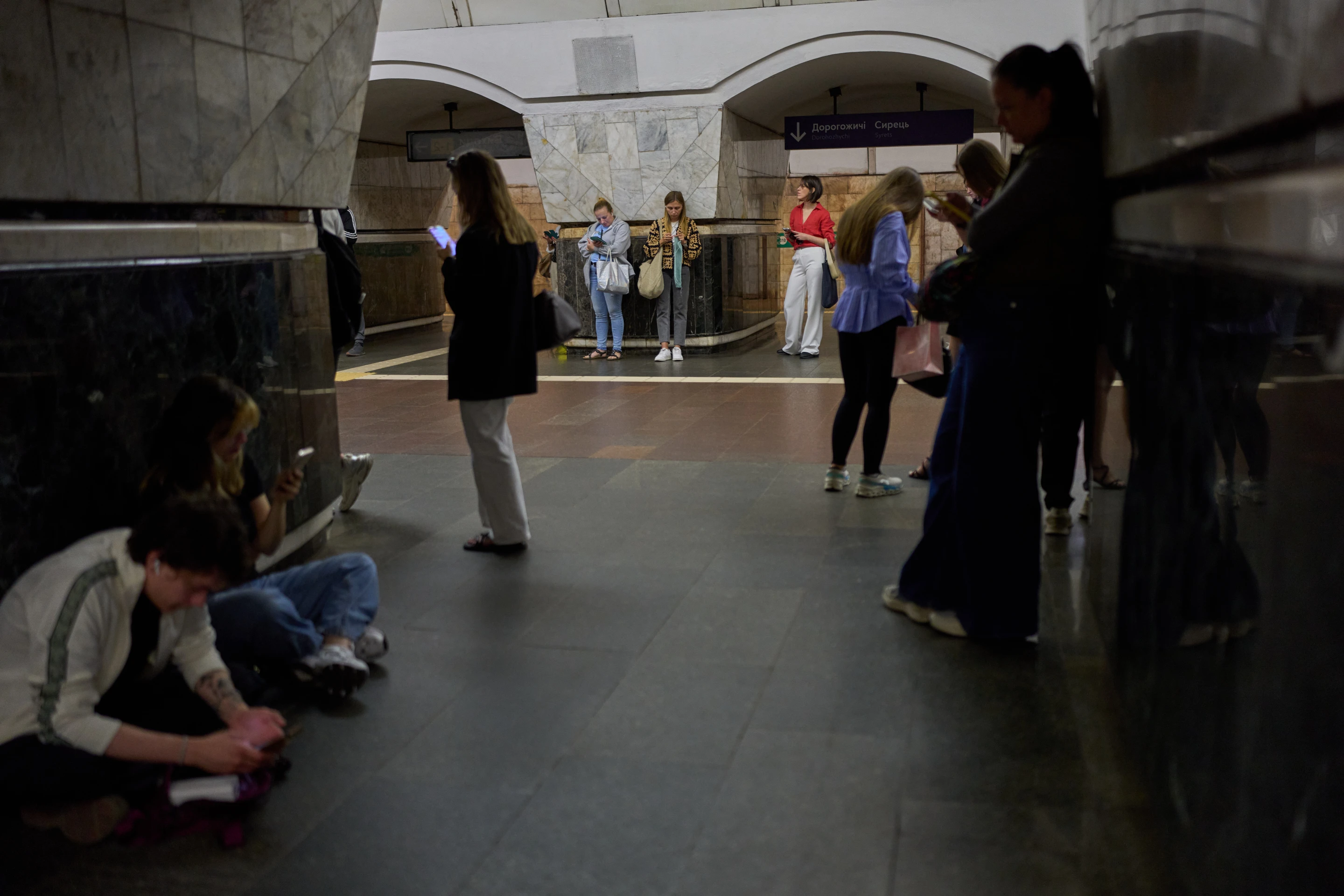
That background matters especially in rear cities. Kyiv is not formally on the front line, but it has long ceased to be a space of psychological peace. People live between missile strikes, losses, uncertainty and a habituation to danger. In such an environment, internal violence acquires a different force of resonance: it does not merely disrupt daily life, it proves that danger can come not only from the sky or the front, but from the next street over.
This leads to a fourth conclusion: the security system proved strong in tactical response, but that is not the same as strength in prevention. The police and KORD acted quickly; negotiations took place; and, based on the available information, the assault was launched only after contact with the attacker collapsed and the risk to the hostages became unacceptable. In the moment, that looks like a professional response. But a professional response does not remove the question of why it became necessary at all.
Every event of this kind exposes an imbalance that has become typical of states operating under wartime pressure. Resources are found faster for assault, evacuation, cordons, emergency medical deployment and crisis command because those belong to the zone of immediate danger. Early identification of a person entering a dangerous phase is almost always weaker. It requires not heroism in the frame, but routine coordination between medicine, the licensing system, the police, local communities and the person’s close environment.
In the Kyiv shooting, the chain “medical certificate — gun permit — subsequent crime” is especially revealing. If investigators determine that the document was issued formally, without a real assessment of the man’s condition, then this will not be a story about one fatal certificate, but about bureaucratic blindness. If the procedure was legal and proper, then an even harder question emerges: how often dangerous deterioration simply never enters any official system until the irreversible happens.
This case also changes the way a supermarket is understood as a space of urban security. A retail site in a densely populated district is a location full of random people, complicated entry and exit routes, limited decision time and a high risk of panic. When an attacker shifts violence into such a space, he is effectively using the architecture of civilian life as a multiplier of threat. A hostage-taking inside a store is therefore not only a criminal episode, but a distinct crisis-violence scenario of its own.
The communication dimension matters no less. In cases like this, society lives on fragments of information: there are shots, there are dead, there is an assault, there are wounded, there are hostages — and each new sentence changes the level of panic in the city. That is why official restraint regarding motive, casualties and operational details, however frustrating it may seem to the public, is in fact an element of security. Premature detail during an active assault can cost more than an information vacuum.
But once the operation is over, restraint must enter another phase — hard explanation. The city needs more than the news that the attacker was killed. It needs a full reconstruction: who he was, how he lived, whether there were signs of maladjustment, who saw the risks, whether he sought help, how exactly he passed through the licensing process, and whether communication between institutions broke down. Without that, the tragedy remains emotion rather than lesson.
Another crucial point is not to replace analysis with moralizing. The claim that “society has become harsher because of war” is too broad to explain anything. It may be partly true, but it does not answer why one specific man with one specific carbine moved from licensed ownership to the shooting of civilians. The cause here is likely layered: personal condition, a moment of crisis, access to a weapon, the absence of early intervention, and perhaps further circumstances that the investigation has not yet brought to light.
For the state, the conclusion is uncomfortable but necessary: even a capable KORD unit and a professional police force cannot be the only answer to mass violence. When the forceful scenario becomes the primary mechanism of resolution, it means the earlier barriers — medical, licensing, social and psychological — either failed or were not dense enough. The assault saved those who could still be saved. But the assault does not explain why the city once again reached the point where rescue began only after the first bodies were already lying in the street.
That is why the central question after April 18 is not whether the security forces were right to kill the gunman. Based on what is publicly known, they had almost no alternative. The more important question is whether Ukraine, under wartime conditions, is capable of building a model of public safety in which a legal weapon, a medical certificate and a man in crisis do not converge into one lethal point in the middle of a major city.
The Kyiv shooting is not only a tragedy for the Holosiivskyi district. It is a warning for the entire country. War has expanded the circulation of weapons, increased the level of trauma, altered the threshold of public exhaustion and complicated the work of every civilian institution. If the state responds only by tightening security after tragedy, rather than strengthening control before tragedy, similar episodes will return in a different form and in a different district.
In the end, this story has only one undisputed center of gravity for now: the attacker’s motive remains unknown, but the systemic conditions that made the shooting of civilians possible are already visible with enough clarity. They include legal access to a carbine, wartime exhaustion across society, insufficiently dense preventive filters, and the near inevitability of a forceful ending once all earlier lines of defense have already been crossed. That is the real meaning of Kyiv’s tragedy on April 18.