




















The idea that a U.S.-Iran agreement may take roughly six months matters for more than diplomatic scheduling. It signals that, across the region, few serious actors still believe in a rapid breakthrough. Too many disputes remain fused into one package: Iran’s nuclear program, ballistic missiles, sanctions relief, security guarantees, the future of the Strait of Hormuz, and the destabilizing overlap with the Lebanese front.
When so many strategic files are tied together, diplomacy stops looking like a path to imminent peace and starts to resemble a slow, punishing negotiation over who can endure uncertainty longer. The present phase is no longer about designing a final settlement in the near term. It is about preventing the conflict from sliding back into open warfare while all sides test the outer limits of what they can concede without appearing weak.
That is why Gulf capitals are thinking less in terms of “a deal at any cost” and more in terms of “a pause at any cost.” Their immediate priority is the reopening of the Strait of Hormuz. Not because that would solve the war, but because without restoring normal maritime traffic, the wider negotiation risks collapsing under the weight of its own economic consequences.
According to Daycom’s earlier analysis, the real dividing line in crises like this is not whether the parties are theoretically open to compromise, but whether they can negotiate faster than the price of uncertainty rises. That is the line now coming into view. If Hormuz remains only partially functional, the U.S.-Iran confrontation will stop being a regional diplomatic problem and become, fully and unmistakably, a test of the global energy market, food security and transport stability.
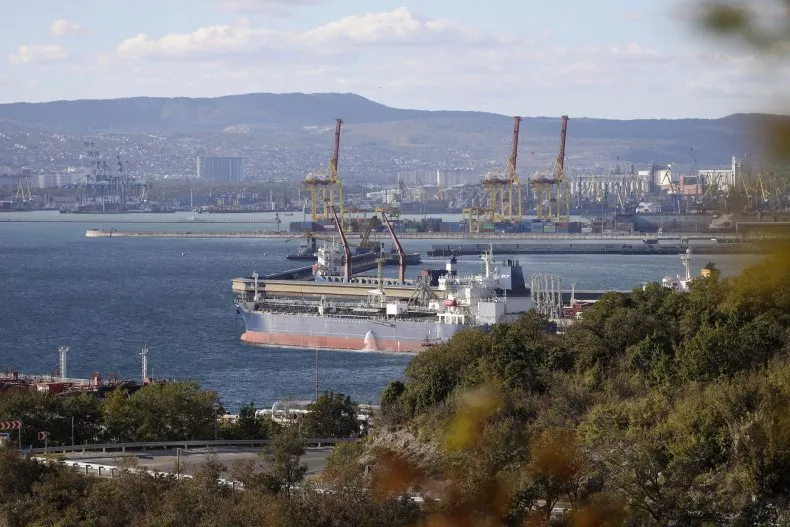
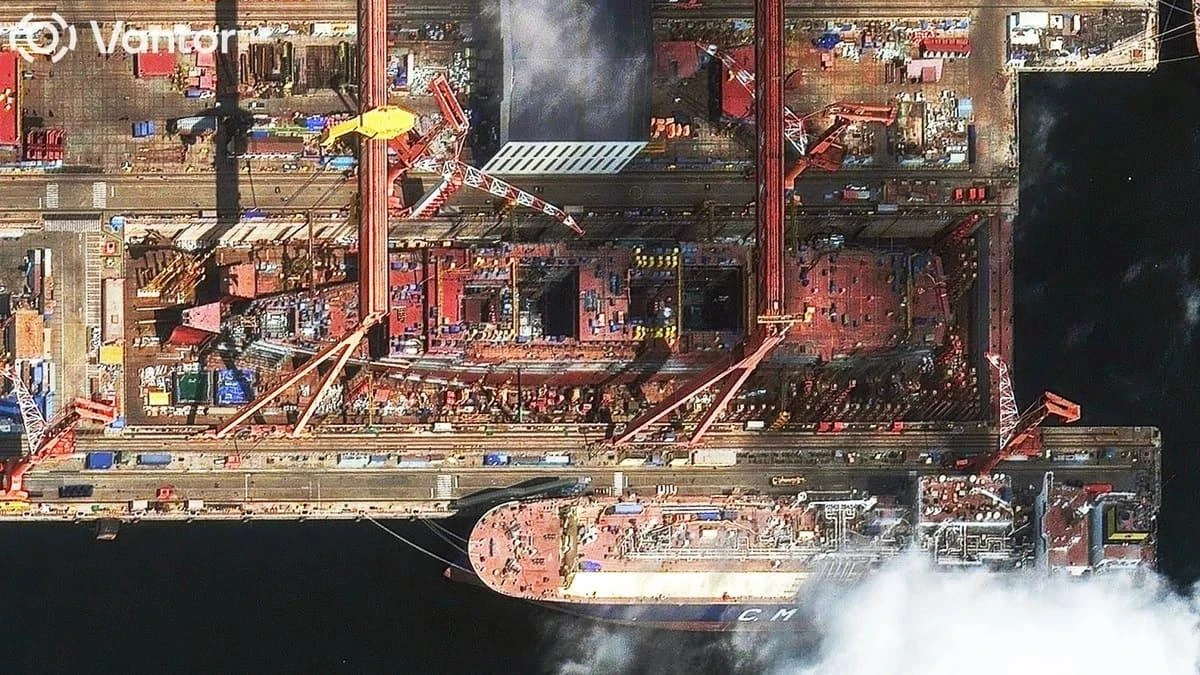
Hormuz is not just geography in this story. It is the central economic pressure valve. A huge share of global oil trade moves through the strait, along with major LNG flows and industrial inputs such as fertilizers. Its near paralysis already affects far more than energy pricing. It is disrupting supply chains, freight planning, insurance calculations and the broader psychology of international commerce. In Washington, that can be framed as leverage on Tehran. In the Gulf, it is seen more bluntly: as a choke point through which a regional war can become a global economic event.
That is what gives the private warnings about a possible food crisis their real force. In Gulf states, the fear centers on blocked exports, fertilizer disruption and maritime bottlenecks. In Europe, concern is widening into fuel vulnerability and the stability of high-dependency sectors such as aviation and transport. The longer the strait remains effectively constricted, the more the crisis expands beyond oil and begins to infect a broader inflationary and logistical system.
This is also why the political stance of Gulf governments matters so much. Their view of Iran has not softened. On the contrary, many in the region continue to believe that Tehran’s nuclear ambitions remain intact despite bombardment, and that any serious agreement must therefore go well beyond a temporary cease-fire. In their view, a viable deal would have to restrict uranium enrichment, long-range ballistic missiles, drones, military capabilities and the network of allied armed proxies through which Iran projects influence.
Yet that harder view of Iran coexists with a deep aversion to renewed war. This is one of the defining paradoxes of the moment. The Gulf has not become more forgiving toward Tehran. It has simply become much more frightened of the cost of another escalation. Even a limited conflict between the United States, Israel and Iran now appears capable of ricocheting through oil exports, LNG shipments, insurance markets, port infrastructure and domestic political stability across neighboring states.
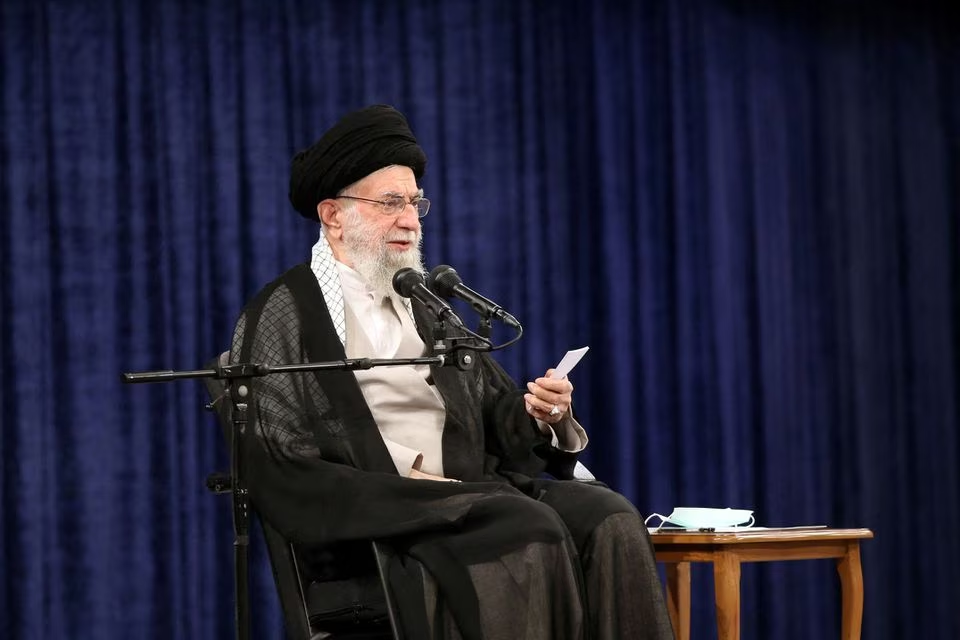
This helps explain the cautious way many capitals are reading Donald Trump’s public optimism. His suggestions that a deal may be within reach are often interpreted less as proof of progress than as an attempt to stabilize market expectations. The need to buy time is obvious. Oil prices reacted sharply once the conflict escalated, and each new signal from the region now moves Brent as if the market itself has become a negotiating party. Every phrase about extending the truce, every hint of collapse, every suggestion of movement on Hormuz is instantly translated into the price of a barrel.
That is where the weakness of the entire process becomes harder to ignore. Six months is a manageable time frame for diplomacy. It is an eternity for a market already operating under pressure. Even if Washington and Tehran manage to prolong the cease-fire beyond the next deadline, that will not be enough without some meaningful restoration of normal shipping through the strait. Otherwise, the diplomatic track will exist formally while being undermined materially by higher energy prices, disrupted exports and rising fears of another inflationary spike.
Lebanon makes the picture even more fragile. The recently announced pause between Israel and Lebanon may ease pressure on the regional system for a short time, but it does not remove one of the key strategic irritants in Tehran’s calculus. If the Lebanese front reignites, the U.S.-Iran talks will lose one of the few temporary buffers that currently keep the crisis from spreading further. That is why any future agreement with Iran increasingly looks less like a standalone document and more like a complex balancing structure resting simultaneously on Hormuz, Israel, Lebanon, sanctions and Tehran’s nuclear threshold.
The larger point is that the world is already entering a phase in which the absence of a quick agreement becomes a crisis in its own right. A long negotiation might be tolerable in a stable environment. It becomes dangerous in a system where the main maritime artery remains constrained, oil flows remain uncertain and every delay increases the political and economic price of patience. Under those conditions, time does not simply pass. It compounds the risk.
That is why the current phase should not be mistaken for the opening chapter of a grand settlement. It is better understood as a struggle over time itself. Washington wants to prevent another sharp return to war. Tehran wants to preserve its leverage while avoiding strategic surrender. Gulf states want exports restored before the crisis hardens into a systemic shock. Europe wants to avoid another energy disruption with broader industrial and political consequences.
For now, this is not peace in formation. It is equilibrium under duress.
And that is the central tension of the moment. The longer diplomacy continues without a real answer on Hormuz, sanctions, the nuclear file and regional spillover, the greater the chance that negotiation will cease to be a road toward peace and become merely an instrument for postponing the next explosion. In that scenario, six months would not be the time needed to secure a deal. They would be the time in which the conflict simply becomes more expensive for everyone.