


















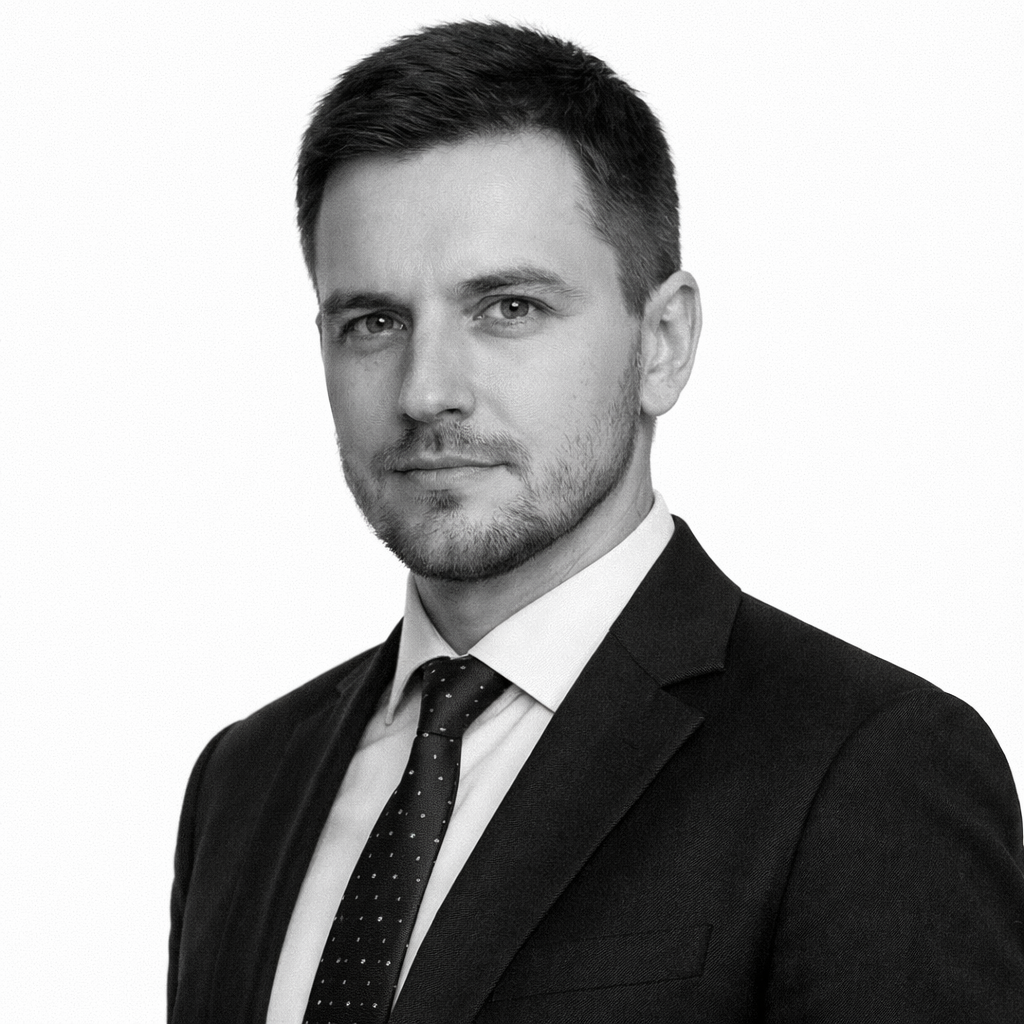



Oleksandr Syrskyi’s removal as commander in chief of Ukraine’s armed forces marks more than the end of one military career. It signals the retreat of a generation shaped by Soviet academies, rigid hierarchy and a conception of war in which massed troops and heavy equipment remained the central measure of power.
Syrskyi was among Ukraine’s most consequential commanders from the beginning of Russia’s aggression in 2014. He played a central role in the defense of Kyiv, directed the rapid Kharkiv counteroffensive and later led the armed forces through a grinding phase in which the front became a contest of manpower, ammunition and endurance.
His dismissal does not erase those achievements. It does, however, show that battlefield experience and personal resilience are no longer enough to preserve authority. Ukraine has entered a stage of the war in which the speed of technological adaptation matters as much as the ability to hold defensive lines.
According to Daycom’s earlier analysis, Syrskyi’s departure reflects a change in the very idea of military leadership. Commanders are now judged not only by victories already won, but by whether they can transform institutions, reduce losses and give greater initiative to those who see the battlefield most directly.
Syrskyi belonged to the kind of officer for whom military service was not merely a profession but an entire way of life. He worked punishing hours, maintained strict physical discipline, immersed himself in operational detail and expected the same intensity from those around him.
Those qualities were most valuable at the beginning of the full-scale invasion. Before Russian forces crossed the border in February 2022, Syrskyi argued that one commander should assume direct responsibility for Kyiv’s defense and volunteered for the task himself. He studied historical records, inspected old fortifications and prepared the capital for a war many still struggled to imagine.
That preparation helped derail Russia’s attempt to seize Kyiv quickly. Syrskyi remained calm during the most dangerous weeks, coordinated defenses across the complex terrain surrounding the capital and earned the confidence of Ukraine’s political leadership at a moment when the survival of the state was uncertain.
Later that year, he identified a weakness in Russian lines in the Kharkiv region. Ukrainian troops broke through, liberated a broad stretch of territory and restored a sense of strategic initiative. The operation confirmed Syrskyi’s reputation as a commander capable of surprise and unconventional planning.
The battles that followed revealed the harder side of his command style. The prolonged defense of Bakhmut became a symbol of Ukrainian courage, but it also raised questions about the relationship between the city’s political significance, its military value and the human cost of holding it.
Syrskyi argued that the battle exhausted Russian forces and destroyed much of the offensive potential of the Wagner mercenary organization. His supporters viewed the defense as strategically justified. Critics saw an unwillingness to leave positions that had already lost much of their operational value.
It was during Bakhmut that Syrskyi became associated with an image he never accepted: a commander prepared to pay too high a price for limited territorial results. He insisted that preserving soldiers’ lives was always a priority. Yet public perception increasingly diverged from his own account of his decisions.
When he became commander in chief in February 2024, Syrskyi inherited an exceptionally difficult position. He replaced the widely admired Valerii Zaluzhnyi, took control after a failed counteroffensive and was expected to contain Russia while rebuilding reserves and managing an army suffering from acute shortages of personnel and ammunition.
In the summer of 2024, he again relied on surprise by moving the war into Russia’s Kursk region. The operation lifted morale, forced Moscow to redeploy forces and demonstrated that Ukraine could still act beyond a predictable defensive framework.
But Russia eventually concentrated reserves, while Ukraine lost experienced troops and equipment that were already scarce elsewhere. The Kursk operation became another expression of Syrskyi’s complicated legacy: a bold plan that produced political and tactical benefits, but whose long-term cost remained disputed.
In his final years in command, criticism focused less on individual battles than on the management system itself. Syrskyi was accused of micromanagement, repeatedly moving units to close gaps along the front, promoting loyal officers and withholding authority from lower-level commanders.
His defenders described this as necessary oversight across a front stretching more than a thousand kilometers. In a war where one mistake can open the way to an operational breakthrough, the commander in chief cannot afford to lose touch with detail. But the line between control and the suppression of initiative gradually became the central problem of his leadership.
The conflict with Mykhailo Fedorov brought that contradiction into public view. The former defense minister demanded faster drone contracts, more competitive procurement and a more decisive shift toward robotic warfare. Syrskyi was accused of slowing the process in order to preserve the General Staff’s control over military decisions.
Yet Syrskyi was not an opponent of technology. Under his command, Ukraine expanded its use of strike drones, maritime systems, ground robots and long-range attacks on targets inside Russia. The dispute was not about whether change was necessary, but about how quickly the military had to be rebuilt around it.
For younger officers and reformers, technology could no longer remain an addition to a traditional army. They wanted a force in which drones, digital command systems, automated reconnaissance and decentralized decision-making shaped the basic logic of operations.
Syrskyi represented a transitional model. He understood the value of new technology but placed it inside a rigid chain of command. His critics wanted the reverse: to reshape the hierarchy around the possibilities of new weapons, give units greater autonomy and shorten the path from innovation to battlefield deployment.
The confrontation therefore reached far beyond personal ambition. It exposed two different answers to the defining question of the war: whether Ukraine should improve the army it already had or create a fundamentally different force capable of offsetting its manpower disadvantage through technological superiority.
The protests that followed Fedorov’s dismissal showed that much of society had already made an emotional choice. Younger reformers came to symbolize a war in which machines could save human lives. Syrskyi increasingly represented an older model in which results were achieved through endurance and attrition.
That contrast was never entirely fair. No technology can hold a trench without infantry, replace discipline or eliminate the need for severe decisions. But years of war have changed public expectations. Ukrainians now want not only proof that the army can endure, but evidence that the state is doing everything possible to limit losses.
Syrskyi handed his successor a force that had not been defeated and still retained the ability to strike deep inside Russia. He left office not after a strategic collapse, but after a political and institutional crisis caused by the widening gap between the pace of reform and the pace of public demand.
His legacy cannot be reduced to the simple category of hero or failed commander. He helped save the capital, directed one of the war’s most successful offensives and held the front during an exceptionally difficult period. At the same time, he became the symbol of a military system Ukraine decided it could no longer afford to preserve unchanged.
The end of Syrskyi’s era does not guarantee the success of the next one. Younger commanders inherit the same constraints: insufficient manpower, Russia’s deeper resources, dependence on foreign assistance and a front where mistakes can cost entire cities.
They will now have to prove that a new command culture can produce more than hope. It must improve battlefield coordination, accelerate innovation, preserve soldiers’ lives and create measurable operational advantages.
Syrskyi leaves as a general of the war of attrition — disciplined, experienced and deeply contested. The era that follows promises to be more technological, flexible and collaborative. Its value, however, will not be measured by the age of its commanders or the number of drones in the arsenal, but by whether Ukraine can fight more effectively while preserving the people who hold the line.