






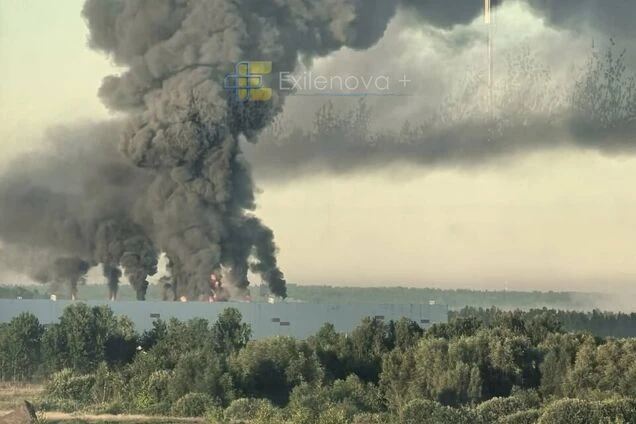
















Not long ago, striking a power plant, oil depot or water system was widely treated as an extreme measure — the kind of military action that immediately raised questions about proportionality and civilian protection. Today, energy infrastructure is increasingly becoming not collateral damage, but a deliberate battlefield.
The shift is visible from Ukraine to Iran, Sudan and the Red Sea. Power grids, oil refineries, pipelines, fuel terminals and port infrastructure have moved toward the center of military strategy. An attack on energy can now exert pressure as strategically significant as the destruction of a combat formation.
The paradox is that this change has been enabled by the same technological revolution that was supposed to make warfare more precise. Drones, satellite navigation and precision-guided weapons do make it easier to hit a specific object. But they also make thousands of targets far behind the front newly accessible.
As Daycom has previously noted, the most important consequence of this revolution is not merely greater accuracy, but the expansion of what counts as a battlefield. When a relatively inexpensive drone can travel hundreds or thousands of miles, an industrial complex, electrical substation or refinery can no longer be assumed to sit safely in the deep rear.
Military analysts increasingly describe this as an age of energy warfare. The logic is straightforward: modern economies depend so heavily on electricity, fuel and uninterrupted logistics that damaging those systems can impose strategic costs without capturing a single mile of territory.
Ukraine offers one of the clearest examples. Since the beginning of Russia’s full-scale invasion, Moscow has repeatedly attacked power plants, substations, transformers and transmission networks. The objective has extended beyond immediate military effect: disrupt urban life, weaken industry and raise the social cost of continuing the war.
Ukraine later developed its own model of long-range pressure. Its drones began striking Russian refineries, storage facilities, export terminals, energy hubs and other infrastructure far from the border. What looked experimental in 2022 gradually evolved into a systematic campaign.
The drone revolution made that possible. A front line can remain nearly static while the effective strike zone expands by thousands of miles. Geographic depth, once one of the basic protections of industrial capacity, is no longer a guarantee of security.
This is one of the defining logics of modern conflict. When a fortified front becomes too expensive to penetrate, war moves around it. Instead of forcing a breakthrough across minefields and defensive belts, an adversary can target factories, power systems, fuel storage and transportation routes that sustain the front itself.
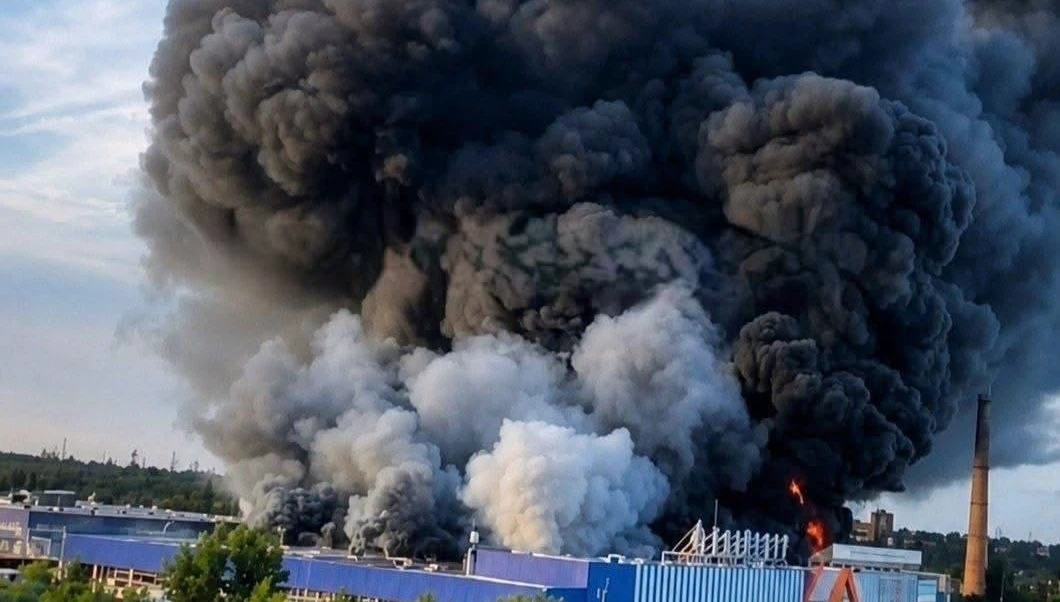
Ukrainian strikes on Russian oil refining illustrate the method. The goal is not simply to hit large industrial sites, but to damage technologically vulnerable components whose repair requires time, specialized equipment and difficult-to-replace parts.
The economic effect accumulates. A refinery does not have to be destroyed to lose meaningful output. Damage to a single processing unit can reduce production for months. When similar attacks recur across multiple regions, fuel shortages, logistical bottlenecks and price pressures can begin to reinforce one another.
Russia’s campaign against Ukrainian energy operates on a similar principle. A grid does not need to be permanently destroyed. It is enough to keep forcing repairs, consume scarce equipment, push operators into emergency distribution and leave cities anticipating the next strike.
Energy warfare is therefore a contest not only against infrastructure but against time. The attacker seeks to make destruction occur faster than repair. The defender tries to rebuild and reroute faster than the next wave can undo the work.
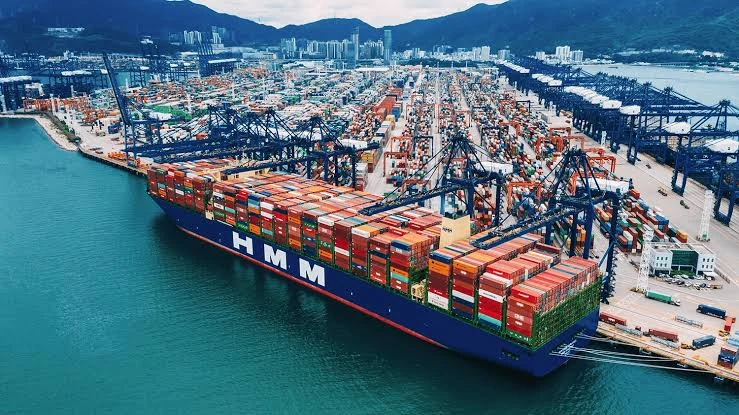
That logic is even more visible around Iran and the Persian Gulf. There, the struggle is not only over specific pipelines or terminals, but over the ability to influence global energy prices. The Strait of Hormuz becomes a strategic lever capable of transmitting the effects of war far beyond the region.
In such a conflict, oil itself becomes a weapon. Restrictions on shipping, attacks on tankers, strikes on export terminals or gas fields can force reactions not only from militaries, but from traders, insurers, governments and central banks.
That radically expands the scale of military pressure. A single drone may have limited tactical significance. But if its strike increases the perceived risk along a route carrying a substantial share of global oil trade, the economic consequences can become international.
The most dangerous development is the gradual normalization of these attacks. Power plants, water systems, hospitals and civilian energy networks remain protected under international humanitarian law unless their use makes them lawful military objectives. Yet technological accessibility is increasingly outrunning political restraint.
What can be reached quickly becomes something planners are tempted to consider targetable. That logic is more consequential than any single weapon system. It steadily erodes the boundary between the combat zone and the civilian economy.
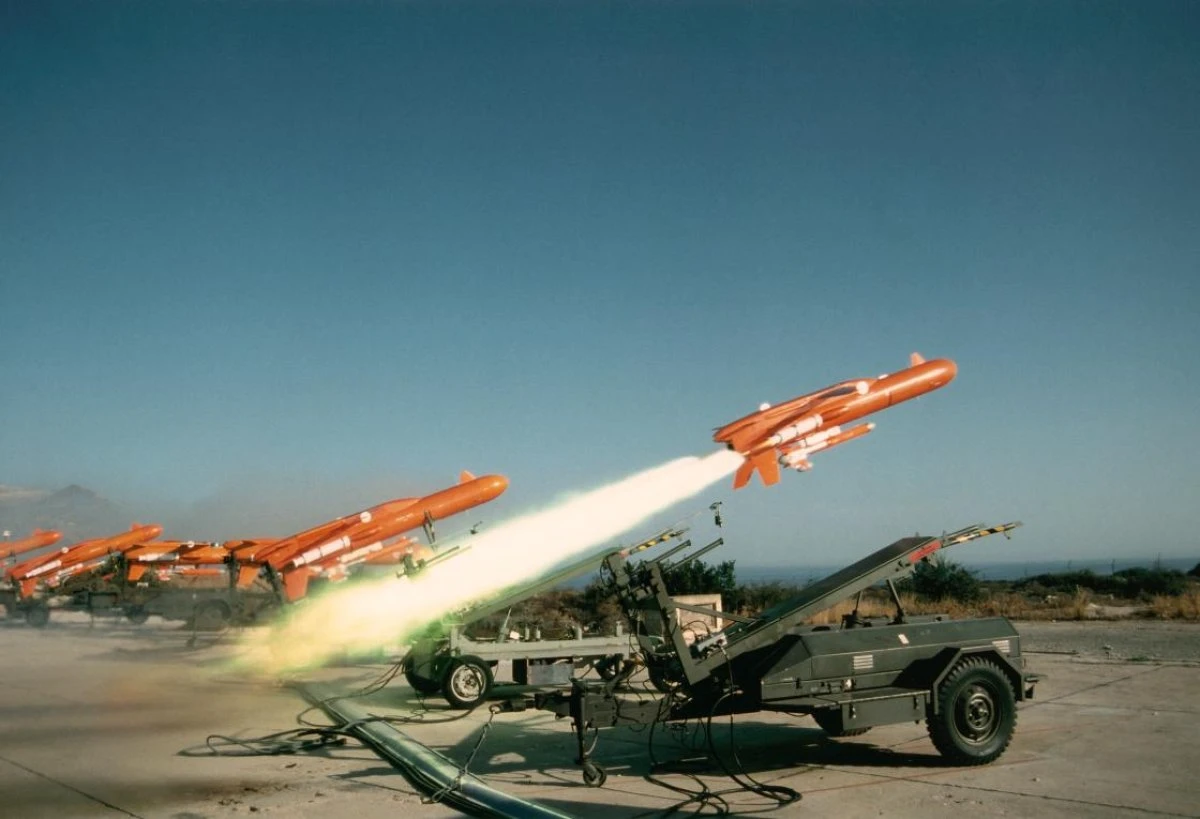
Drones accelerate the process. They are cheaper than crewed aircraft, do not put a pilot at risk, can fly low and can reach targets that once required complex air operations. Mass production makes it possible to send dozens or hundreds of systems until one finds a gap in the defenses.
Precision, as a result, no longer automatically means humanity. A weapon can strike a transformer, fuel tank or pumping station with extraordinary accuracy and still leave hundreds of thousands of people without electricity, heat or water. A technically “clean” strike can produce a vast civilian effect.
This is where one of the central assumptions of the post-Cold War era begins to collapse. Precision-guided weapons were often presented as the path toward more limited, controlled and almost surgical warfare. But the accuracy of a weapon says nothing about the political decision behind the target.
In fact, cheaper and more accessible precision can expand the target list. A distant energy facility that once required a major air operation may now require only a few drones and accurate coordinates.
That is also changing the meaning of strategic depth. Large territory no longer guarantees industrial safety. Maritime distance does not ensure that ports are secure. Even sophisticated air-defense networks cannot simultaneously protect every power station, refinery, warehouse, terminal and transport hub.
Modern warfare is therefore becoming a competition between systems. The decisive factors are not only how many missiles or drones each side possesses, but how quickly an energy network can recover, how dispersed industrial capacity is, whether backup systems exist and how many critical nodes cannot be easily replaced.
Civilian infrastructure acquires strategic significance in this environment even when it is not formally part of the military. Electricity powers factories and railways. Fuel moves both armies and economies. Water determines whether cities remain livable. The distinction between front and rear becomes increasingly unstable.
The central question is no longer whether technology can make a strike precise. It can. The real question is what governments decide they are willing to hit with that precision.
The answer emerging from recent wars is unsettling. The longer conflicts continue, the broader the target set becomes, and the more easily military logic spreads into civilian systems. Energy, transportation, communications and water increasingly become instruments of coercion.
The future of warfare may therefore be not cleaner, but more encompassing. Precision weapons did not remove civilian life from the battlefield. They simply made it possible to strike the foundations of that life with far greater accuracy.