





















The world is entering a new energy era in which the central word is no longer efficiency, but protection. The closure of the Strait of Hormuz has delivered a painful reminder to governments and businesses: imported oil and gas are cheap only as long as they can be delivered safely.
The war around Iran has turned the familiar logic of global markets into a source of vulnerability. For decades, specialization, trade and cheap maritime routes looked like advantages. Suddenly, one narrow passage can determine prices, shortages and political stability across continents.
From South America to Southeast Asia, countries are looking inward. They are not searching for perfect energy systems, but for energy they can control: solar power, coal, nuclear plants, refineries, fuel reserves, electric vehicles, batteries and anything else that can provide a buffer against the next crisis.
According to Daycom’s earlier analysis, this is not a return to old-style autarky, but the rise of a new kind of energy self-interest. States are not abandoning global trade. They are simply becoming less willing to remain hostage to one route, one supplier or one type of fuel.
The shift will be expensive. Building domestic capacity is often less efficient than buying resources on the global market. But after Russia’s invasion of Ukraine, Europe’s gas crisis and the current Middle East shock, low cost is no longer the only measure of energy policy.
Guyana, which has rapidly become a major oil producer, has run into the paradox of a raw-material economy. It extracts large volumes of crude but lacks sufficient refining capacity to reliably supply itself with gasoline and diesel. Talk of building its first refinery is therefore no longer about prestige, but resilience.
Indonesia is looking in the opposite direction: toward the sun. Its government is accelerating plans for solar power to reduce dependence on imported fuel and preserve foreign exchange reserves. For a large island nation, energy independence does not mean isolation. It means not allowing a foreign war to stop the economy.
The Philippines has become one of the clearest examples of this new behaviour. With high electricity prices and heavy import dependence, demand for solar panels, batteries and electric vehicles has risen sharply. Households are beginning to act like governments: creating their own buffer against shocks.
That is a significant change. Rooftop solar systems were once often seen as technological novelties or gestures of environmental awareness. Now they are becoming tools of household security. People are installing panels not only for the climate, but to survive price spikes, shortages and an unstable grid.
In this logic, renewable energy gains a new argument. Solar panels and batteries also depend on global supply chains, especially Chinese ones. But unlike oil and gas, they do not need to be imported every week. Once installed, they can work for years, reducing exposure to each new crisis.
Europe has already gone through the first stage of this rethinking after losing Russian gas. It cut consumption, accelerated renewable energy, rebuilt LNG routes and reopened the debate over nuclear power. The latest crisis only strengthens the lesson: excessive dependence on any single region is dangerous.
Belgium has become a symbol of this new attitude toward nuclear energy. Talks about bringing nuclear assets under state control show that nuclear power is again being considered not only through the lens of climate policy or old political disputes, but as a resource of sovereignty.
A similar reassessment is taking place in Asia. Some countries are turning back to coal, at least temporarily, to close energy gaps. This is bad news for climate policy, but it reflects a clear political fear: governments are worried not only about high prices, but about the physical shortage of energy.
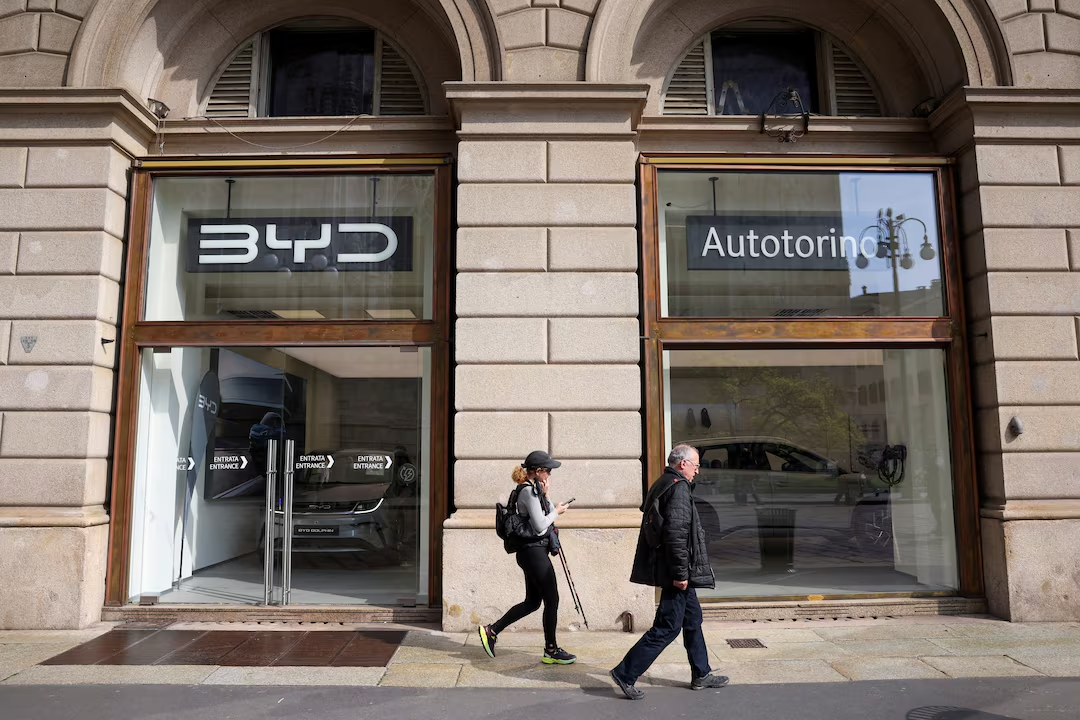
The war has hit oil and transport fuels most directly. That is why electric vehicles are becoming not only part of the green transition, but a way to escape gasoline vulnerability. When fuel prices depend on a missile, a strait or a military convoy, an electric car begins to look like an element of national security.
China has a particular advantage in this environment. For years it built coal capacity, renewable power, electric vehicle manufacturing, industrial depth and oil stockpiles at the same time. What once looked excessive now looks strategic.
Still, the age of energy self-interest does not mean the world can easily untangle the global system. Even the largest producers are not fully independent. The United States produces vast amounts of oil and gas, but still imports certain crude grades while exporting fuel and energy products abroad.
Energy independence in the twenty-first century is not complete self-sufficiency. It is the ability to absorb a shock: reserves, alternative routes, domestic generation, flexible demand, storage technologies and a policy system that does not collapse after the first price surge.
That is why fuel stockpiles are becoming fashionable again. The Philippines, Pakistan and other importers are considering larger reserves, even though they are expensive and unevenly affordable. Wealthier states can buy themselves more time; poorer ones will remain more exposed to each new wave of panic.
Oil-producing countries are also changing course. Kuwait, constrained by the closure of Hormuz, is looking for ways to build storage outside the narrow maritime corridor. Other Gulf states are again studying pipelines that could bypass the region’s main chokepoint.
A new energy map is taking shape. It does not abolish globalisation, but it makes it more cautious, more expensive and more politically sober. Countries will continue trading oil, gas, electric vehicles, panels and technology, but with a different question in mind: what happens if this connection breaks tomorrow?
The deepest consequence of the current crisis is that the energy transition is no longer only a climate project. It is becoming a security project. Solar power, nuclear energy, batteries, electric transport, efficiency and reserves now work not only against emissions, but against blackmail, blockades and geopolitical dependence.
The world will not become calm after the war around Iran ends. But it may become more cautious. Every local kilowatt, every home battery, every fuel tank and every diversified supply route now carries a new value. This is not just savings. It is insurance for an age in which energy has once again become a weapon.